

Crime Dynamics
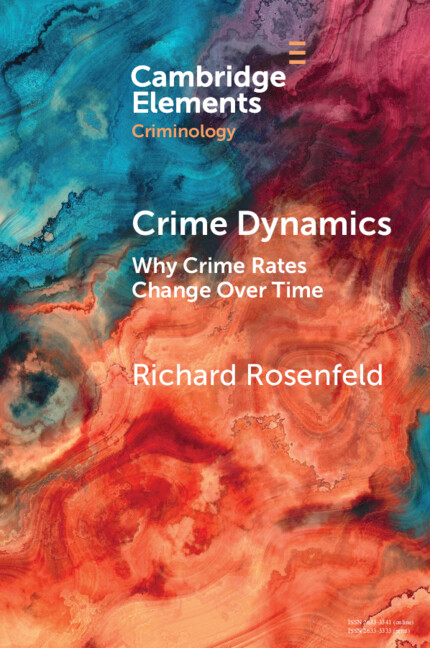
Crime Dynamics
Looking for an examination copy?
If you are interested in the title for your course we can consider offering an examination copy. To register your interest please contact collegesales@cambridge.org providing details of the course you are teaching.
This Element reviews and augments research on changes over time in U.S. crime rates during the past several decades. Major topics include the data sources for studying crime trends; the relationship between homicide rates and rates of property crime, imprisonment, and firearm availability; trends in crime by sex, race, and age; the relationship between crime trends and economic conditions; crime trends and social institutions; abrupt changes in crime rates and exogenous shocks; forecasting crime rates; and the future of crime trends theory and research. The study of crime trends is as intellectually rewarding and practically important as any topic in criminology. But attracting scholars to this field of study of crime trends will require significant advancements in theory, methods, and policy application.
Product details
- Published: June 2024
- Format: Paperback
- ISBN: 9781009420334
- Length: 86 pages
- Dimensions: 229 × 152 × 5 mm
- Weight: 0.138kg
- Availability: Available




Table of Contents
- 1. Why Study Crime Trends?
- 2. Crime Trends Data
- 3. The Impact on Violent Crime of Property Crime, Prisons, and Guns
- 4. Different Levels, Common Trends: Crime, Race-Ethnicity, and Gender
- 5. Crime, Age, and Birth Cohorts
- 6. Crime and the Economy
- 7. Crime Trends and the Institutional Order
- 8. Bumps Along the Way: Crime Trends and Exogenous Shocks
- 9. Forecasting Crime Rates
- 10. The Future of Crime Trends Theory and Research
- Appendix I: Crime Data Sources
- Appendix II. Forecasting Methods and Models
- References.
- Show more



