

The Art of Being a Scientist
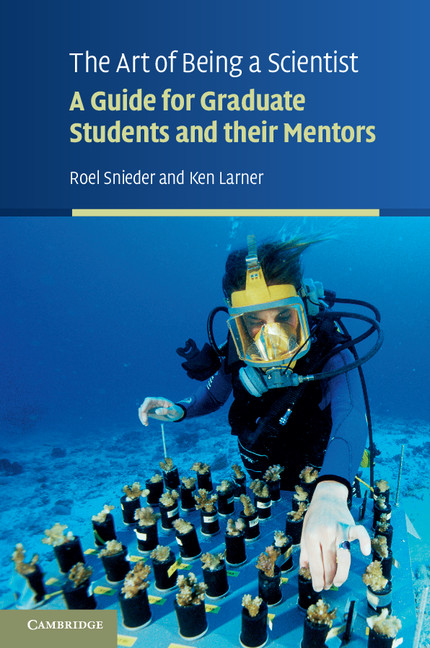
The Art of Being a Scientist
Looking for an examination copy?
If you are interested in the title for your course we can consider offering an examination copy. To register your interest please contact collegesales@cambridge.org providing details of the course you are teaching.
This is a hands-on guide for graduate students and young researchers wishing to perfect the practical skills needed for a successful research career. By teaching junior scientists to develop effective research habits, the book helps to make the experience of graduate study a more efficient and rewarding one. The authors have taught a graduate course on the topics covered for many years, and provide a sample curriculum for instructors in graduate schools wanting to teach a similar course. Topics covered include choosing a research topic, department, and advisor; making workplans; the ethics of research; using scientific literature; perfecting oral and written communication; publishing papers; writing proposals; managing time effectively; and planning a scientific career and applying for jobs in research and industry. The wealth of advice is invaluable to students, junior researchers and mentors in all fields of science, engineering, and the humanities. The authors have taught a graduate course on the topics covered for many years, and provide a sample curriculum for instructors in graduate schools wanting to teach a similar course. The sample curriculum is available in the book as Appendix B, and as an online resource.
- Teaches practical skills for doing research, enabling young researchers to develop useful research habits and avoid time-consuming pitfalls
- Provides a sample curriculum of a course for graduate students, supplying professors with ideas on how to educate their graduate students more effectively
- Provides clear advice on career development, allowing students to make informed decisions about career options and strategies for a successful research career
Reviews & endorsements
"… a must for any graduate student.’ ‘I enjoyed your approach to academic planning, problem solving and personal development. I will certainly recommend your class to other students!’ ‘… I learned a lot of things that will carry into my future research."
Comments from students on Professor Snieder and Professor Larner’s course
"… this book will be an important resource for students considering entering careers in science, and I would definitely encourage students to read it."
Kurt Haas, Cold Spring Harbor Laboratory
"… conveys a healthy balance between research as a passion and as a practical reality. It contains a wealth of positive and useful advice that should be of great benefit to young researchers."
Frits van Oostrom, Utrecht University, Emeritus President of the Royal Netherlands Academy of Arts and Sciences
"… so full of useful, considered and well-balanced advice that … the main thought provoked by it is 'why wasn't it around when I was a graduate student?' … littered with relevant and interesting quotes from a wide range of sources … the chapter on communication should be mandatory reading for all scientists, young or old."
The Leading Edge
"Graduate students will find [this book] particularly useful and will likely consult it throughout their academic experience and beyond; it will be valuable as well to undergraduate students as they consider graduate school ... It should be an excellent guide for graduate school mentors, particularly those who endeavor to offer more comprehensive training to their students."
Renee Diehl, Physics Today
"...valuable to students and their mentors in all sciences, hard or soft, and engineering. ...Recommended."
CHOICE
"If only I had seen this book when I did my Ph.D. Or when I started supervising graduate students. … This book discusses choosing a university and an advisor, then moves onto choosing a topic and asking questions to drive one's research. It covers such topics as research ethics, reading the literature, writing papers and the thesis, time management, skilful communications, writing research proposals, looking for a position at the end of the degree, and much more. It's unlikely that the authors will have omitted anything that anyone might ever have wondered about being a graduate student. … I strongly recommend this book. I believe that every potential graduate student or mentor should read it. Reading it ‘late’ is better than not at all, but the greatest benefit will come if you can read it before you start in your role."
International Statistical Review
"The writing is approachable and conversational, with a deliberate, endearing use of the feminine pronoun to describe the graduate student. In short, this "hands-on guide" is a solid reference for an undergraduate or early graduate, to be consulted as needed throughout her graduate career."
Susannah Moore Dickerson, PhD Candidate in physics, Stanford University for CSWP & COM Gazette
Product details
- Published: July 2013
- Format: Adobe eBook Reader
- ISBN: 9781107266513
- Length: 0 pages
- Weight: 0kg
- Contains: 6 b/w illus.
- Availability: This ISBN is for an eBook version which is distributed on our behalf by a third party.




Table of Contents
- 1. Introduction
- 2. What is science?
- 3. Choices, choices, choices
- 4. The adviser and thesis committee
- 5. Questions drive research
- 6. Giving direction to your work
- 7. Turning challenges into opportunities
- 8. Ethics of research
- 9. Using the scientific literature
- 10. Communication
- 11. Publishing a paper
- 12. Time management
- 13. Writing proposals
- 14. The scientific career
- 15. Applying for a job
- 16. Concluding remarks
- Appendix A. Further reading
- Appendix B. A sample curriculum
- Appendix C. The Refer and BibTeX format
- Index.
- Show more



