

Ritual, Belief and the Dead in Early Modern Britain and Ireland
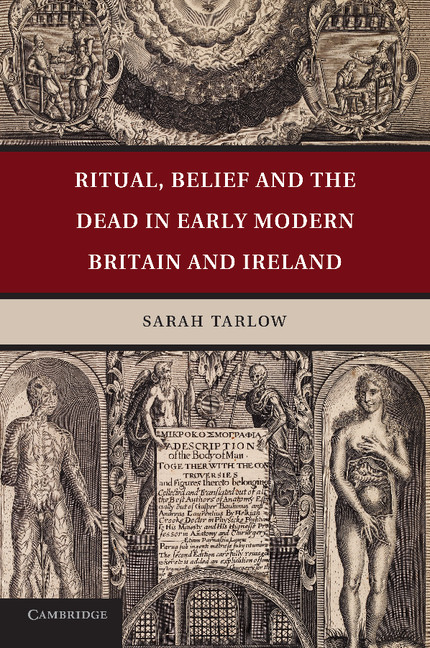
Ritual, Belief and the Dead in Early Modern Britain and Ireland
Looking for an examination copy?
If you are interested in the title for your course we can consider offering an examination copy. To register your interest please contact collegesales@cambridge.org providing details of the course you are teaching.
Drawing on archaeological, historical, theological, scientific, and folkloric sources, Sarah Tarlow’s interdisciplinary study examines belief as it relates to the dead body in early modern Britain and Ireland. From the theological discussion of bodily resurrection to the folkloric use of body parts as remedies, and from the judicial punishment of the corpse to the ceremonial interment of the social elite, this book discusses how seemingly incompatible beliefs about the dead body existed in parallel through this tumultuous period. This study, which is the first to incorporate archaeological evidence of early modern death and burial from across Britain and Ireland, addresses new questions about the materiality of death: what the dead body means, and how its physical substance could be attributed with sentience and even agency. It provides a sophisticated original interpretive framework for the growing quantities of archaeological and historical evidence about mortuary beliefs and practices in early modernity.
- Truly interdisciplinary, combining evidence derived from archaeology, history, history of science, folklore and theology
- The first synthetic attempt to interpret primary archaeological evidence of early modern death and burial from across Britain and Ireland
- Deals with 'big questions' of belief, the material body, life and death
Reviews & endorsements
"For those interested in either early modern England or the history of modern mortuary beliefs and practices, this study will undoubtedly be indispensible. Highly recommended."
Choice
"The body is a current obsession in the Western world; in this excellent book, the early modern dead body gets its turn to be center stage."
Clare Gittings, Journal of British Studies
"This is an accessible and stimulating book, offering by its scope and breadth a penetrative insight into early modern attitudes to the body, whether recently-deceased or long dead … This book should be required reading for archaeology students and others interested in how past societies have dealt with the consequences of that last great leap in the dark."
Alison Smithson, The Archaeological Journal
Product details
- Published: October 2013
- Format: Paperback
- ISBN: 9781107667983
- Length: 240 pages
- Dimensions: 229 × 152 × 13 mm
- Weight: 0.33kg
- Contains: 36 b/w illus. 1 table
- Availability: Available





Table of Contents
- 1. Introduction
- 2. Religious belief
- 3. Scientific belief
- 4. Social belief
- 5. Folk belief
- 6. Conclusions.
- Show more



