

The Body of the Conquistador
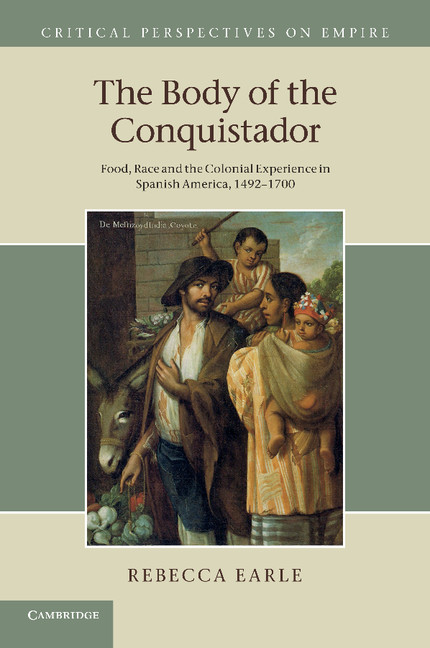
The Body of the Conquistador
Looking for an examination copy?
If you are interested in the title for your course we can consider offering an examination copy. To register your interest please contact collegesales@cambridge.org providing details of the course you are teaching.
This fascinating history explores the dynamic relationship between overseas colonisation and the bodily experience of eating. It reveals the importance of food to the colonial project in Spanish America and reconceptualises the role of European colonial expansion in shaping the emergence of ideas of race during the Age of Discovery. Rebecca Earle shows that anxieties about food were fundamental to Spanish understandings of the new environment they inhabited and their interactions with the native populations of the New World. Settlers wondered whether Europeans could eat New World food, whether Indians could eat European food and what would happen to each if they did. By taking seriously their ideas about food we gain a richer understanding of how settlers understood the physical experience of colonialism and of how they thought about one of the central features of the colonial project. The result is simultaneously a history of food, colonialism and race.
- One of the first major studies of the centrality of food to colonialism
- Revises our understandings of early modern concepts of race and physical difference
- Presents a multi-dimensional view of Spanish America using sources ranging from Spanish Golden Age art to medical treatises and private letters
Reviews & endorsements
"With its focus on food and corporeal well-being, The Body of the Conquistador opens a fascinating new chapter in Spain’s conquest and colonization of the Americas. What were Spaniards to eat as they encountered unfamiliar foodstuffs - avocados, maize, sweet potatoes, tomatoes and more - that reportedly did irreparable damage to both body and mind? As for the natives, was their stature and temperament connected to 'the poor quality of the food they eat'? Would the ingestion of wheat, pork, and other Iberian staples hasten their conversion to Christianity? to a more European style of life? As Earle explains in this new important study, these and related questions sparked lively debate on both sides of the Atlantic. Stunningly original and deeply researched, her book is not to be missed. It is essential reading for both the history of the Americas and early modern ideas about the relationship between food, culture, bodies, and health."
Richard L. Kagan, The Johns Hopkins University
"Clearly written and based on impressive primary and secondary research, Earle's book belongs in every academic and large public library. Essential."
Choice
"This book is a highly original study that uses a new and very fruitful methodological approach. Earle's research is superb and far-ranging. This is certainly a study that specialists of the colonial world, food history, and race should read."
Hispanic American Historical Review
"With this well-researched, erudite, and nuanced work, Earle has fundamentally shifted discussions of the colonial body, environmental history and the colonial enterprise itself … This fine book deserves a place on every Hispanist’s bookshelf and will serve admirably in seminars on colonial Latin American and environmental history."
Jacqueline Holler, Journal of Colonialism and Colonial History
Product details
- Published: May 2012
- Format: Adobe eBook Reader
- ISBN: 9781139415408
- Length: 0 pages
- Weight: 0kg
- Contains: 21 b/w illus.
- Availability: This ISBN is for an eBook version which is distributed on our behalf by a third party.
Related links


Table of Contents
- Introduction: food and the colonial experience
- 1. Humoralism and the colonial body
- 2. Protecting the European body
- 3. Providential fertility
- 4. Maize, which is their wheat
- 5. You will become the same if you eat their food
- 6. Mutable bodies in Spain and the Indies
- Epilogue
- Bibliography.
- Show more



