

Progress and the Scale of History
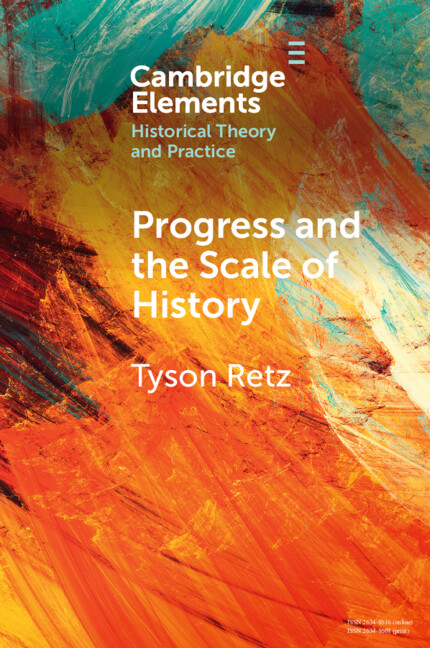
Progress and the Scale of History
Looking for an examination copy?
If you are interested in the title for your course we can consider offering an examination copy. To register your interest please contact collegesales@cambridge.org providing details of the course you are teaching.
The idea of progress is a product of historical thinking. It is a bold interpretation of history that combines understandings of the past, perceptions of the present and expectations of the future. This Element examines the shifting scale of this past, present and future configuration from antiquity to the present day. It develops five categories that reveal the conceptual features of progress together with the philosophies of history in which they have been enmeshed, from temporal outlooks that held no notion of progress to universal histories that viewed progress as a law of nature, from speculation on the meaning and direction of history to the total rejection of all historical constructions. Global in scope and conversant with present-day debates in the theory and philosophy of history, the argument throughout is that the scale on which we conceive history plays a determining role in how we think about progress.
Product details
- Published: October 2022
- Format: Paperback
- ISBN: 9781009011761
- Length: 78 pages
- Dimensions: 228 × 152 × 5 mm
- Weight: 0.13kg
- Availability: Available





Table of Contents
- Introduction
- 1. No Progress
- 2. Absolute Progress
- 3. Relative Progress
- 4. Everybody's Progress
- 5. Anti-Progress
- Epilogue.
- Show more



