

Dynamic Approaches to Phonological Processing
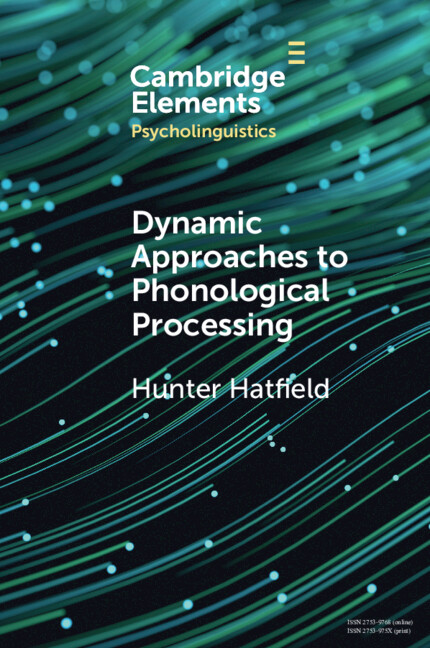
Dynamic Approaches to Phonological Processing
Looking for an examination copy?
If you are interested in the title for your course we can consider offering an examination copy. To register your interest please contact collegesales@cambridge.org providing details of the course you are teaching.
Natural language occurs in time. Events happen earlier, later, or simultaneously with other events; however, this temporal dimension is often downplayed or overlooked. This Element introduces readers with a background in structural linguistics to dynamic approaches to phonological processing. It covers models of serial order, speech production and speech perception, with special attention to how they can enhance one another. The work then asks whether dynamic approaches have the potential to change how we think of phonological structure. Key ideas discussed include phonemes and auditory targets, control mechanisms creating structure, and the shape of phonological representations in a dynamic context. The work should function as a bridge for those with linguistic questions who want to learn answers derived from the study of speech as a dynamic system.
Product details
- Published: May 2023
- Format: Paperback
- ISBN: 9781009258685
- Length: 84 pages
- Dimensions: 230 × 154 × 5 mm
- Weight: 0.15kg
- Availability: Available





Table of Contents
- 1. Introduction
- 2. Serial Order
- 3. Speech Production
- 4. Speech Perception
- 5. Dynamic Intention Selection and Coordination
- 6. Gathering Key Ideas
- 7. Approaching a Dynamic Model of Speech and Phonology
- 8. Conclusions
- References.
- Show more



