

Communal Societies and New Religious Movements
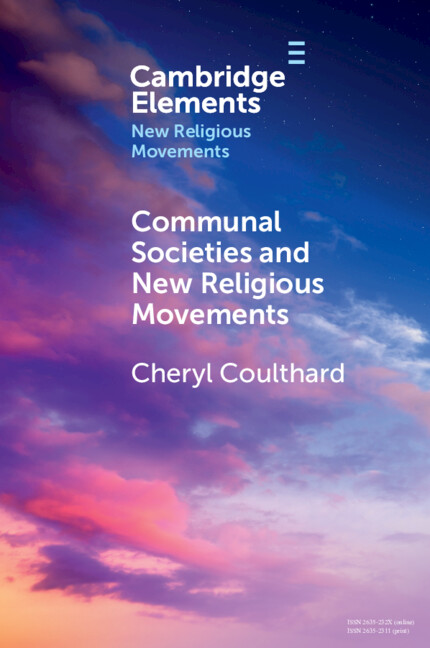
Communal Societies and New Religious Movements
Looking for an examination copy?
If you are interested in the title for your course we can consider offering an examination copy. To register your interest please contact collegesales@cambridge.org providing details of the course you are teaching.
Popular understanding of communal societies tends to focus on the 1960s hippie colonies and ignores the rich and long history of communalism in the United States. This Element corrects that misperception by exploring the synergy between new religious movements and communal living, including the benefits and challenges that grow out of this connection. It introduces definitions of key terms and vocabulary in the fields of new religious movements and communal studies. Discussion of major theories of communal success and the role of religion follows. The Element includes historical examples to demonstrate the ways in which new religious movements used communalism as a safe space to grow and develop their religion. The Element also analyzes why these groups have tended to experience conflicts with mainstream society.
Product details
- Published: February 2024
- Format: Hardback
- ISBN: 9781009454216
- Length: 60 pages
- Dimensions: 235 × 159 × 6 mm
- Weight: 0.24kg
- Availability: Available




Table of Contents
- 1. Introduction
- 2. Terms, concepts and debates
- 3. Religion communities and social structure-historical examples
- 4. Religion, communities, and leadership-historical examples
- 5. Conclusion
- Bibliography.
- Show more
