

Hieratic
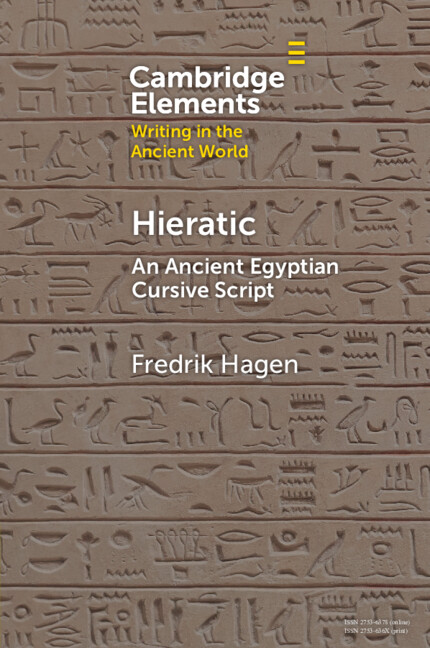
Hieratic
Looking for an examination copy?
If you are interested in the title for your course we can consider offering an examination copy. To register your interest please contact collegesales@cambridge.org providing details of the course you are teaching.
Hieratic was the most widely used script in ancient Egypt, but is today relatively unknown outside Egyptology. Generally written with ink and a brush, it was the script of choice for most genres of text, in contrast to hieroglyphs which was effectively a monumental script. The surviving papyri, ostraca and writing boards attest to the central role of hieratic in Egyptian written culture, and suggest that the majority of literate people were first (and not infrequently only) trained in the cursive script. This Element traces the long history of hieratic from its decipherment in the nineteenth century back to its origins around 2500 BC, and explores its development over time, the different factors influencing its appearance, and the way it was taught and used.
Product details
- Published: August 2025
- Format: Hardback
- ISBN: 9781009673655
- Length: 118 pages
- Dimensions: 229 × 152 × 8 mm
- Weight: 0.312kg
- Availability: Available


Table of Contents
- 1. Decipherment and history of hieratic studies
- 2. The diachronic development of the script
- 3. Factors governing the visual appearance of hieratic
- 4. Uses
- 5. Scribal training in hieratic
- 6. Modern research tools
- 7. Publication practices
- 8. Future perspectives.
- Show more
