

Cultures of Programming
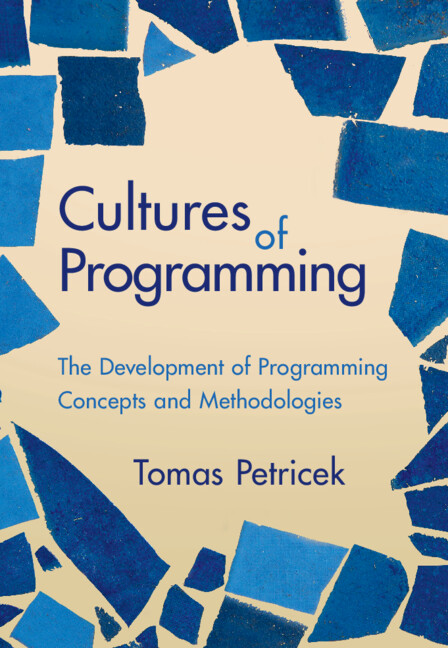
Cultures of Programming
Looking for an examination copy?
This title is not currently available for examination. However, if you are interested in the title for your course we can consider offering an examination copy. To register your interest please contact collegesales@cambridge.org providing details of the course you are teaching.
What defines a correct program? What education makes a good programmer? The answers to these questions depend on whether programs are seen as mathematical entities, engineered socio-technical systems or media for assisting human thought. Programmers have developed a wide range of concepts and methodologies to construct programs of increasing complexity. This book shows how those concepts and methodologies emerged and developed from the 1940s to the present. It follows several strands in the history of programming and interprets key historical moments as interactions between five different cultures of programming. Rooted in disciplines such as mathematics, electrical engineering, business management or psychology, the different cultures of programming have exchanged ideas and given rise to novel programming concepts and methodologies. They have also clashed about the nature of programming; those clashes remain at the core of many questions about programming today. This title is also available as Open Access on Cambridge Core.
- Relates the history of programming to contemporary issues and debates
- Provides a rigorous basis for folklore ideas such as the hacker culture
- This title is also available as Open Access on Cambridge Core
Reviews & endorsements
‘Tomas Petricek's engaging and very readable book argues that programming is a complex human activity that must be understood from multiple perspectives. Written with deep and sympathetic understanding, it provides a unique overview of the history of programming and programming languages and profound insights into current practice that will help demystify the ‘black art’ of coding.’ Mark Priestley, National Museum of Computing
‘Is programming a practice of hacking, engineering, mathematics, management, or humanities? As a computer scientist with the insights and style of a humanist, Petricek leads the reader through the last seventy years of programming to show how these practices have both persisted independently and interacted to produce key technical and methodological innovations through their disputes and synergies.’ Warren Sack, University of California, Santa Cruz, author of The Software Arts
‘For some, computer programming is an abstract activity like mathematics; for others, an act of craftsmanship; for others, an industrial tool of organisation and control. This book presents a history of programming that preserves all these different points of view; indeed, it shows that these different ‘cultures’ (and others) have been crucial to its development and success.’ Simone Martini, University of Bologna
‘The book succeeds not only as a readable story that subject matter enthusiasts can revel in, but it also provides the tools to resolve ingrained disagreements between colleagues. For it is quite possible that your manager is not hopelessly stuck in the past when he characterizes testing as a phase; he may be starting from a different assumption regarding the role of testing in the process. And perhaps your colleague who used to study mathematics is not a hopeless theorist, but his view of what good code looks like is shaped by notions of elegance rather than readability. The fact that we all write Java or C# turns out to be no guarantee that we speak the same language.’ Karl van Heijster, Boekenkrant
Product details
- Published: January 2026
- Format: Hardback
- ISBN: 9781009492348
- Length: 368 pages
- Dimensions: 244 × 170 × 21 mm
- Weight: 0.84kg
- Availability: Available



Table of Contents
- 1. Introduction
- 2. Mathematisation of programming
- 3. Interactive programming
- 4. Software engineering
- 5. Programming with types
- 6. Object-oriented programming
- 7. Conclusion: cultures of programming
- References
- Index.
- Show more



