To save content items to your account,
please confirm that you agree to abide by our usage policies.
If this is the first time you use this feature, you will be asked to authorise Cambridge Core to connect with your account.
Find out more about saving content to .
To save content items to your Kindle, first ensure no-reply@cambridge.org
is added to your Approved Personal Document E-mail List under your Personal Document Settings
on the Manage Your Content and Devices page of your Amazon account. Then enter the ‘name’ part
of your Kindle email address below.
Find out more about saving to your Kindle.
Note you can select to save to either the @free.kindle.com or @kindle.com variations.
‘@free.kindle.com’ emails are free but can only be saved to your device when it is connected to wi-fi.
‘@kindle.com’ emails can be delivered even when you are not connected to wi-fi, but note that service fees apply.
Since the 1990s, the relocation of psychiatric patients from long-stay institutions to community-based supported living has increased globally. However, most evidence on suitable residential services comes from high-income countries, with little from low- and middle-income contexts. This study explored the experiences of residents and carers in three residential care homes for people living with serious mental illness in Sedibeng District, South Africa.
Methods
Three organisations were purposefully selected as in-depth case studies. Ninety-one face-to-face qualitative interviews were conducted with service providers, residents, and family members between October 2022 and June 2023.
Findings
Residents described severe psychosocial disability when living with families, but improved functioning in residential homes. Organisations 1 and 3 operated small 3–4-roomed houses in township areas, accommodating 21 and 40 residents respectively, who had community access and social interaction. In Organisation 3, residents formed romantic relationships, undertook paid work, and lived semi-independently. Organisation 2, a repurposed school-like building with four large dormitories for 86 residents, imposed strict movement controls; medication was used to manage behaviour, and caregivers reported safety concerns.
Conclusions
Smaller residential homes offer more autonomy and integration than large dormitory-style facilities. Policies and funding should support smaller, community-based supported accommodation for people with serious mental illness.
Background: Black, Asian and Minority Ethnic (BAME) people continue to present later to specialist care centres and services for memory problems. This poses significant concerns due to implications for poorer treatment outcomes and higher treatment cost among this population. While diverse interventions to support improved help seeking for dementia have been proffered for other BAME communities, there is a paucity of research involving the Black African and Caribbean community. Furthermore, whilst community health professionals like the doctors and community nurses have been involved in such interventions, no previous research has considered the role of the community pharmacist. This research explored opportunities for community pharmacists to support improved help seeking for dementia among the Black African and Caribbean population.
Methods: This research was a multi-stage project involving surveys and interviews with community pharmacists and Black Africans and Caribbeans as participants.
Results: Knowledge, attitude and beliefs around dementia and it’s causes appeared to be major barriers to help seeking among the Black African and Caribbean population. For example, beliefs that dementia is caused by ‘the spirits’ and dementia is a repercussion for past wrongdoing and therefore not amenable to medical intervention. The community pharmacists believe they are well positioned to spot initial signs of dementia among their clients and are therefore willing to offer help seeking support to this population.
Conclusions: To offer intervention for timely help-seeking for dementia, a culturally tailored dementia education for the Black African and Caribbean population should be considered. In addition, training on the impact of cultural beliefs on help seeking for dementia should be considered for the communitypharmacists.
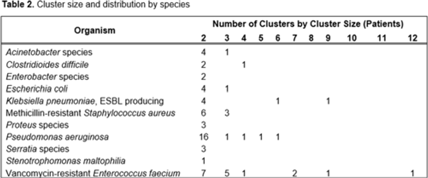
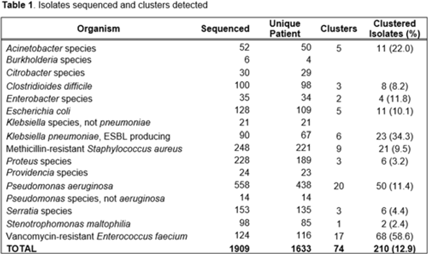
Background: Detecting healthcare-associated transmission and outbreaks often relies on reactive whole-genome sequencing (WGS), which occurs after the suspected transmission has occurred. Additionally, reactive WGS frequently misidentifies transmission and misses transmission when it has occurred. We initiated weekly real-time WGS to detect bacterial transmission and direct infection prevention interventions. We describe our experience after 1 year of real-time WGS surveillance at the University of Pittsburgh Medical Center–Presbyterian Hospital, a large, tertiary-care facility. Methods: Weekly WGS surveillance was performed from November 1, 2021, to October 31, 2022. Cultured isolates of select bacterial pathogens from patients who were hospitalized for ≥3 days or had a recent healthcare exposure in the prior 30 days were collected and sequenced. Isolates that were ≤15 single-nucleotide polymorphisms (SNPs) were considered genetically related clusters except for Clostridioides difficile (≤2 SNPs). Genetically related clusters were investigated for epidemiological links and interventions to interrupt transmission were implemented at the discretion of the infection prevention team. We analyzed subsequent infections that occurred within an outbreak after an intervention was in place. Results: In total, 1,909 isolates were sequenced. Of 1,633 unique patient isolates clustered by sequence type, 74 clusters were identified comprising 210 (12.9%) patient isolates (Table 1). The median time from culture date to sequencing was 14 days (IQR, 5.25). The median cluster size was 2 (IQR, 1) (Table 2). Overall, 118 patient isolates (56.2%) had an epidemiological link to a prior isolate, indicating potential transmission. Of 74 clusters, 66 (89.2%) received infection prevention interventions after notification based upon epidemiological data. The infection prevention team performed 69 total interventions, which included unit education (n = 28), hand hygiene observations (n = 16), enhanced cleaning (n = 16), environmental cultures or removal of endoscope (n = 7), and enhanced microbiology surveillance (n = 2). The 59 subsequent infections after infection prevention notification included 17 (28.8%) with no clear epidemiological link, and 41 (69.5%) with an epidemiological link either to a new transmission route (n = 37) or the same route prior to infection prevention intervention (n = 4). Only 1 (1.7%) subsequent infection within a cluster occurred after an infection prevention intervention from the same potential route, which was a suspected unit-based transmission of vancomycin-resistant Enterococcus faecium. Conclusions: Real-time WGS was effective at detecting genetically related clusters, finding potential sources, and halting further transmission after interventions by the infection prevention team. Quick turnaround times from patient culture to sequencing and analysis were vital for successful WGS surveillance. Real-time WGS surveillance has the potential to substantially shift the infection prevention paradigm for outbreak detection.
Background: Traditional infection prevention (IP) methods for outbreak detection often rely on geotemporal clustering confined to single locations. We recently developed the Enhanced Detection System for Healthcare-Associated Transmission (EDS-HAT), which combines whole-genome sequencing (WGS) surveillance and machine learning of the electronic health record (EHR). Our retrospective research findings show potential transmissions averted and cost savings using EDS-HAT in real time. Here, we describe the process and initial findings from EDS-HAT real-time implementation. Methods: Real-time whole-genome sequencing surveillance began on November 1, 2021. Patient cultures positive for select bacterial pathogens who were hospitalized for ≥3 days or had a recent healthcare exposure in the prior 30-days were collected. Isolates were deemed genetically related if ≤15 single-nucleotide polymorphisms (SNPs) were identified for all organisms except Clostridioides difficile (≤2 SNPs). Clusters were manually investigated by both research and IP teams, and interventions were performed by the IP team. Data on collection, analysis, notification, and intervention dates were gathered. Results: As of January 11, 2022, 413 isolates had undergone whole-genome sequencing. Among them, 18 unique patient isolates were genetically related to ≥1 other isolate, comprising 7 clusters (range, 2–6 patients). Notable findings include a Pseudomonas aeruginosa cluster possibly related to a shared bronchoscope, a pseudo-outbreak of Serratia marcescens related to autopsy blood culture practice, and a cluster of vancomycin-resistant Enterococcus faecium on a shared transplant unit. Only 1 cluster of 2 isolates of Klebsiella pneumoniae had no known possible transmission routes. The median turnaround time from patient’s culture date to IP notification was 19 days (range, 13–28), with noted delays over the winter holiday. Concusions: Real-time WGS can identify small clusters including potentially interruptible transmission routes. Rapid turnaround time, coordination between clinical and genomic laboratories, and a robust IP team are key factors in implementing a WGS surveillance program. Real-time WGS surveillance has the potential to reduce costs for hospitals, improve patient safety, and save lives.
Little is known about mental health problems of children and young people (CYP) involved with public and private law family court proceedings, and how these CYP fare compared to those not involved in these significant disruptions to family life.
Aims
This study examined records of depression/anxiety in CYP involved in public and private law proceedings using linked population-level data across Wales.
Method
Retrospective e-cohort study. We calculated the incidence of primary-care-recorded depression/anxiety among CYP involved in these proceedings and in a comparison group, using Poisson regression. Depression/anxiety outcomes following proceedings were evaluated using pairwise Cox regression, with age- and gender-matched controls of CYP who had no involvement with the courts.
Results
CYP in the public group had twice the risk of depression (adjusted incidence rate ratio aIRR = 2.2; 95% CI 1.9–2.6) and 20% higher risk of anxiety (aIRR = 1.2; 95% CI 1.0–1.5) relative to the comparison group. The private group had 60% higher risk of depression (aIRR = 1.6; 95% CI 1.4–1.7) and 30% higher risk of anxiety (aIRR = 1.3; 95% CI 1.2–1.4). Following private law proceedings, CYP were more likely to have depression (hazard ratio HR = 1.9; 95% CI 1.7–2.1), and anxiety (HR = 1.4; 95% CI 1.2–1.6) than the control group. Following public proceedings, CYP were more likely to have depression (HR = 2.1; 95% CI 1.7–2.5). Incidence of anxiety or depression following court proceedings was around 4%.
Conclusions
Findings highlight the vulnerability of CYP involved in family court proceedings and increased risk of depression and anxiety. Schools, health professionals, social and family support workers have a role to play in identifying needs and ensuring CYP receive appropriate support before, during and after proceedings.
The COVID-19 pandemic has disrupted lives and livelihoods, and people already experiencing mental ill health may have been especially vulnerable.
Aims
Quantify mental health inequalities in disruptions to healthcare, economic activity and housing.
Method
We examined data from 59 482 participants in 12 UK longitudinal studies with data collected before and during the COVID-19 pandemic. Within each study, we estimated the association between psychological distress assessed pre-pandemic and disruptions since the start of the pandemic to healthcare (medication access, procedures or appointments), economic activity (employment, income or working hours) and housing (change of address or household composition). Estimates were pooled across studies.
Results
Across the analysed data-sets, 28% to 77% of participants experienced at least one disruption, with 2.3–33.2% experiencing disruptions in two or more domains. We found 1 s.d. higher pre-pandemic psychological distress was associated with (a) increased odds of any healthcare disruptions (odds ratio (OR) 1.30, 95% CI 1.20–1.40), with fully adjusted odds ratios ranging from 1.24 (95% CI 1.09–1.41) for disruption to procedures to 1.33 (95% CI 1.20–1.49) for disruptions to prescriptions or medication access; (b) loss of employment (odds ratio 1.13, 95% CI 1.06–1.21) and income (OR 1.12, 95% CI 1.06 –1.19), and reductions in working hours/furlough (odds ratio 1.05, 95% CI 1.00–1.09) and (c) increased likelihood of experiencing a disruption in at least two domains (OR 1.25, 95% CI 1.18–1.32) or in one domain (OR 1.11, 95% CI 1.07–1.16), relative to no disruption. There were no associations with housing disruptions (OR 1.00, 95% CI 0.97–1.03).
Conclusions
People experiencing psychological distress pre-pandemic were more likely to experience healthcare and economic disruptions, and clusters of disruptions across multiple domains during the pandemic. Failing to address these disruptions risks further widening mental health inequalities.
In 2015, Melbourne’s Malthouse Theatre staged a highly controversial adaptation of Sophocles’ Antigone. The critical reception could not have been more polarised and was seemingly entirely split down gendered lines. This chapter, written by the author of (and an actor in) that adaptation, provides both a personal account and academic theorisation of the production. Analysing the context of the Malthouse Antigone, the chapter explores issues of cultural appropriation, national identity, gender performativity, and creative pragmatism that underpinned the creation of the show and contributed to the controversy surrounding it. The chapter also proposes a pragmatic twist to the tendency of classical reception studies to attribute intentionality to production decisions. Whereas analysis of the finished production can give a false sense of a secure directorial intention, analysis of the process demonstrates that the journey from page to stage is constantly at the mercy of contingencies, collaborations, and compromises.
In-patients in crisis report poor experiences of mental healthcare not conducive to recovery. Concerns include coercion by staff, fear of assault from other patients, lack of therapeutic opportunities and limited support. There is little high-quality evidence on what is important to patients to inform recovery-focused care.
Aims
To conduct a systematic review of published literature, identifying key themes for improving experiences of in-patient mental healthcare.
Method
A systematic search of online databases (MEDLINE, PsycINFO and CINAHL) for primary research published between January 2000 and January 2016. All study designs from all countries were eligible. A qualitative analysis was undertaken and study quality was appraised. A patient and public reference group contributed to the review.
Results
Studies (72) from 16 countries found four dimensions were consistently related to significantly influencing in-patients' experiences of crisis and recovery-focused care: the importance of high-quality relationships; averting negative experiences of coercion; a healthy, safe and enabling physical and social environment; and authentic experiences of patient-centred care. Critical elements for patients were trust, respect, safe wards, information and explanation about clinical decisions, therapeutic activities, and family inclusion in care.
Conclusions
A number of experiences hinder recovery-focused care and must be addressed with the involvement of staff to provide high-quality in-patient services. Future evaluations of service quality and development of practice guidance should embed these four dimensions.
Declaration of interest
K.B. is editor of British Journal of Psychiatry and leads a national programme (Synergi Collaborative Centre) on patient experiences driving change in services and inequalities.
Age- and sex-based BMI cut-offs are used to define overweight and obesity, but the relationship between BMI and body composition has not been very well studied in children or compared between children of different ethnic groups. Body size and composition in childhood are also influenced by size at birth. Our aim was to compare body size and composition at 2 years in children with different ethnicity and size at birth. We prospectively followed a multi-ethnic cohort of 300 children born with risk factors for neonatal hypoglycaemia (infants of diabetics, large or small at birth or late preterm) to 2 years corrected age. Complete data on weight, height and head circumference and body composition using bioelectrical impedance 24±1 months corrected age were available in 209 children. At birth, compared with European children, Chinese, Indian and other ethnicity children were lighter, and Indian children had smaller head circumferences, but birth lengths were similar in all ethnic groups. At 2 years, Pacific children were heavier and had higher BMI z scores, and Indian children had smaller head circumferences and lower BMI z scores than those from other ethnic groups. However, fat mass and fat-free mass indices were similar in all groups. At median BMI, fat mass:fat-free mass ratio was 23 % lower in Pacific than in Indian children (0·22 v. 0·27, P=0·03). BMI is not a good indicator of adiposity in this multi-ethnic cohort of 2-year-old New Zealand children.
Skelton's writing has long been understood as a mix of conventional and idiosyncratic elements. It draws on numerous established motifs, genres and poetic traditions: his earliest known works show him experimenting with lyric, with elegy and with an aureate style derived from Lydgate; his many invectives draw on the conventions of the flyting; his surviving dramatic work shows him adapting the form of the morality play to secular ends; the satires of the 1520s fuse bitter Juvenalian satire with native complaint; his dream visions place him in a Chaucerian tradition; his impassioned claim to divine inspiration in his final poem, A Replycacion (1528), can be linked to earlier Continental defences of poetry, most notably Boccaccio's in his De genealogia deorum gentilium. Even the most ostentatiously peculiar aspect of his writing, the skeltonic verse form, with its short lines and irregular rhyme leashes, has demonstrable connections to existing genres, among them alliterative Latin prose and Middle English lyric. Taking as its starting-point the neglected poem Against Venemous Tongues (c. 1516), this chapter will explore a range of ways in which literary traditions manifest in Skelton's work, ranging from playful allusion and rhetorical self-fashioning to fully assimilated and internalised influence on Skelton's composition techniques.
Against Venemous Tongues is a relatively short and strikingly odd poem. Whilst it is clearly an attack on slanderers, its occasion remains obscure: Skelton defends himself against a charge which is never fully specified, but which may have been that he criticised one or more lords for the number of servants wearing their liveries at a ceremonial meeting between Henry VIII and his sister Margaret in the spring of 1516; since a household livery was a kind of uniform, a visual statement of the household to which someone belonged, a display of numbers amounted to an assertion of power. The crux of Skelton's defence, that the accusation levelled against him is untrue, occupies a very few lines, and is notably slippery:
For before on your brest, and behind on your back
In Romaine letters I never founde lack.
(16–17)
Although the primary sense of to ‘find lack’ is ‘to find fault with’, there is a pun on the sense ‘to find wanting’ or ‘to find to be too few’; even as he claims not to have said that there were too many people in livery, Skelton implies that there were plenty of them, nonetheless.
Despite recent work by Susanna Fein and others, Audelay and his writing remain relatively unfamiliar. His poems survive in a single manuscript, Oxford, Bodleian Library, MS Douce 302, which was produced during Audelay's lifetime (c.1426–31) at the Augustinian Haughmond Abbey, where he was a priest in the Lestrange chantry. It consists of four main parts: a collection of poems under the title The Counsel of Conscience, a series of ‘salutations’, a collection of carols, and what Fein describes in her edition as a ‘meditative close’ to the manuscript as a whole. Although it is likely that not all poems in the manuscript are of Audelay's own composition, it is evidently a compilation that combines Audelay's own writing with that of others in a highly purposeful way. The paratext repeatedly emphasises Audelay's close association with the manuscript; within the lyrics, too, he is frequently named, and the final colophon includes a prayer for his soul. He is thus among a relatively small number of fifteenthcentury authors who seek systematically to attach their name to their work. Focusing primarily on The Counsel of Conscience, this chapter will argue that he is also among those whose writing constitutes a practical poetics: that is, among those whose views on poetry are both governed by their experience of writing and expressed through their poems. Specifically, it will suggest that his view of poetry as spiritual instruction is reflected in the form as well as the content of his lyrics.
Although Audelay is closely associated with Douce 302, the manuscript is not a holograph; it was written by two scribes at the abbey, very possibly because Audelay himself was blind. This is of more than incidental importance; the epithet ‘blind’ is used of him so consistently that it effectively becomes part of his name. As a result, his frequent association of blindness with spiritual failings, as in Marcolf and Solomon (lines 298, 629) and the Epilogue to The Counsel of Conscience (line 381), has a particular resonance; there is a strong implication that Audelay's own blindness is a punishment for the sins of his youth. Yet Audelay's condition also allows him to define himself as a seer: one whose lack of physical sight enables his spiritual vision.
To determine the reliability, validity and correlates of measures of food insecurity (FI) obtained using an individually focused food insecurity access scale (IFIAS) among pregnant women of mixed HIV status in northern Uganda.
Design
A mixed-methods study involving cognitive interviews nested within a cross-sectional survey.
Setting
The antenatal care clinic of Gulu Regional Referral Hospital.
Subjects
Survey respondents included 403 pregnant women, recruited in a ratio of one HIV-infected to two HIV-uninfected respondents, twenty-six (nine of them HIV-infected) of whom were asked to participate in the cognitive interviews.
Results
Over 80 % of cognitive interview participants reported understanding the respective meanings of six of the nine items (i.e. items 4 to 9) on the IFIAS. Two main factors emerged from rotated exploratory factor analysis of the IFIAS: mild to moderate FI (IFIAS items 1–6) and severe FI (items 7–9). Together, they explained 90·4 % of the FI measure’s variance. The full IFIAS and the two subscales had moderate to high internal consistency (Cronbach’s α ranged from 0.75 to 0.87). Dose–response associations between IFIAS scores, and measures of socio-economic status and women’s diet quality, were observed. Multivariate linear regression revealed significant positive associations between IFIAS scores and HIV infection, maternal age, number of children and a history of internal displacement. IFIAS scores were negatively associated with women’s diet diversity score, asset index and being employed.
Conclusions
The IFIAS showed strong reliability, validity and contextual relevance among women attending antenatal care in northern Uganda.
Edited by
Carol M. Meale, Senior Research Fellow at the University of Bristol,Derek Pearsall, Professor Emeritus at Harvard University and Honorary Research Professor at the University of York
We must begin with names. ‘Tony Edwards’ is the person to whom this volume is dedicated, but it is not a name that everyone will immediately recognize, particularly those who know him only from his published work, for he has made himself known in public, from the first, as A. S. G. Edwards. When he began his career, this was the manner in which most scholars, most men at least, named themselves. Fashions have changed, and given names, one, two, or more, are now almost universal. But Tony has held on tenaciously to his initials, perhaps because he has three of them. We do not believe that he did so in any spirit of emulation of or desire to align himself with ‘Edwards A. S. G.’, the Edwards Active Strain Gauge well known to Google, an advanced form of technical engineering equipment which guarantees the vacuum conditions needed for the manufacture of certain precision instruments, such as aircraft engine turbine blades. It seems strangely apt as an analogous form of ‘A. S. G.’, whether one thinks of the ‘active strain’ involved as what he exerts upon himself or upon other people. The analogy fails, of course, when one comes to the creation of vacuum, where it works back to front, for Tony's work has essentially been to fill the vacuum that once existed in the study of manuscript history.
Edited by
Carol M. Meale, Senior Research Fellow at the University of Bristol,Derek Pearsall, Professor Emeritus at Harvard University and Honorary Research Professor at the University of York
Edited by
Carol M. Meale, Senior Research Fellow at the University of Bristol,Derek Pearsall, Professor Emeritus at Harvard University and Honorary Research Professor at the University of York
Edited by
Carol M. Meale, Senior Research Fellow at the University of Bristol,Derek Pearsall, Professor Emeritus at Harvard University and Honorary Research Professor at the University of York
Edited by
Carol M. Meale, Senior Research Fellow at the University of Bristol,Derek Pearsall, Professor Emeritus at Harvard University and Honorary Research Professor at the University of York
Edited by
Carol M. Meale, Senior Research Fellow at the University of Bristol,Derek Pearsall, Professor Emeritus at Harvard University and Honorary Research Professor at the University of York
Robert Crowley's editing of Piers Plowman was long considered as an instance of Reformist appropriation of a pre-Reformation text. The case was influentially made by John N. King, who argued that Crowley's interpretation of Langland's work ‘marks the culmination of the Piers Plowman apocrypha that had grown up during the previous two centuries’, and that had transformed the medieval ploughman figure from Langland's complex symbol into a stock spokesperson for religious reform. However, recent scholarship has modified this understanding of Crowley's work. Building on the findings of critics including Mike Rodman Jones, Larry Scanlon and Rebecca Schoff, this article will re-examine the paratexts of Crowley's first and second editions of Piers Plowman (1550). It will argue that the scope for differing interpretations arises from the experimental quality of Crowley's glossing, as he tests its potential both to establish Langland as part of the developing vernacular literary canon, and to encourage his readers actively to reflect on and engage with the text. Central to both aims is his insistence that Langland's work should not be read as prophecy, yet at least one early reader strenuously resists Crowley's guidance on this point; the numerous annotations in this reader's copy of Crowley's second edition – now British Library, C.122.d.9 – insist that the poem is prophetic of the Reformation. This difference of opinion not only reveals two distinct ways of reading Piers Plowman, but also indicates something about the way in which the annotator thought about the relationship between Langland's text and Crowley's glosses, and thus about the status of a printed text.
Edited by
Carol M. Meale, Senior Research Fellow at the University of Bristol,Derek Pearsall, Professor Emeritus at Harvard University and Honorary Research Professor at the University of York