Refine search
Actions for selected content:
8 results
TRACE FORMULAS IN NONCOMMUTATIVE GEOMETRY
- Part of
-
- Journal:
- Bulletin of the Australian Mathematical Society , First View
- Published online by Cambridge University Press:
- 28 November 2025, pp. 1-2
-
- Article
-
- You have access
- HTML
- Export citation
Gaussian fluctuations in the equipartition principle for Wigner matrices
- Part of
-
- Journal:
- Forum of Mathematics, Sigma / Volume 11 / 2023
- Published online by Cambridge University Press:
- 23 August 2023, e74
-
- Article
-
- You have access
- Open access
- HTML
- Export citation
Superscars for arithmetic point scatters II
- Part of
-
- Journal:
- Forum of Mathematics, Sigma / Volume 11 / 2023
- Published online by Cambridge University Press:
- 04 May 2023, e37
-
- Article
-
- You have access
- Open access
- HTML
- Export citation
-
We consider momentum push-forwards of measures arising as quantum limits (semiclassical measures) of eigenfunctions of a point scatterer on the standard flat torus ${\mathbb T}^2 = {\mathbb R}^2/{\mathbb Z}^{2}$. Given any probability measure arising by placing delta masses, with equal weights, on ${\mathbb Z}^2$-lattice points on circles and projecting to the unit circle, we show that the mass of certain subsequences of eigenfunctions, in momentum space, completely localizes on that measure and are completely delocalized in position (i.e., concentration on Lagrangian states). We also show that the mass, in momentum, can fully localize on more exotic measures, for example, singular continuous ones with support on Cantor sets. Further, we can give examples of quantum limits that are certain convex combinations of such measures, in particular showing that the set of quantum limits is richer than the ones arising only from weak limits of lattice points on circles. The proofs exploit features of the half-dimensional sieve and behavior of multiplicative functions in short intervals, enabling precise control of the location of perturbed eigenvalues.


QUANTUM ERGODICITY FOR COMPACT QUOTIENTS OF $\operatorname {SL}_d({\mathbb R})/\textrm {SO}(d)$ IN THE BENJAMINI–SCHRAMM LIMIT
- Part of
-
- Journal:
- Journal of the Institute of Mathematics of Jussieu / Volume 22 / Issue 5 / September 2023
- Published online by Cambridge University Press:
- 13 December 2021, pp. 2075-2115
- Print publication:
- September 2023
-
- Article
- Export citation
-
We study the limiting behavior of Maass forms on sequences of large-volume compact quotients of $\operatorname {SL}_d({\mathbb R})/\textrm {SO}(d)$, $d\ge 3$, whose spectral parameter stays in a fixed window. We prove a form of quantum ergodicity in this level aspect which extends results of Le Masson and Sahlsten to the higher rank case.

MOMENTS AND HYBRID SUBCONVEXITY FOR SYMMETRIC-SQUARE L-FUNCTIONS
- Part of
-
- Journal:
- Journal of the Institute of Mathematics of Jussieu / Volume 22 / Issue 5 / September 2023
- Published online by Cambridge University Press:
- 06 December 2021, pp. 2029-2073
- Print publication:
- September 2023
-
- Article
- Export citation
-
We establish sharp bounds for the second moment of symmetric-square L-functions attached to Hecke Maass cusp forms $u_j$ with spectral parameter $t_j$, where the second moment is a sum over $t_j$ in a short interval. At the central point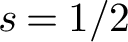 $s=1/2$ of the L-function, our interval is smaller than previous known results. More specifically, for $\left \lvert t_j\right \rvert $ of size T, our interval is of size $T^{1/5}$, whereas the previous best was $T^{1/3}$, from work of Lam. A little higher up on the critical line, our second moment yields a subconvexity bound for the symmetric-square L-function. More specifically, we get subconvexity at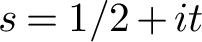 $s=1/2+it$ provided $\left \lvert t_j\right \rvert ^{6/7+\delta }\le \lvert t\rvert \le (2-\delta )\left \lvert t_j\right \rvert $ for any fixed $\delta>0$. Since $\lvert t\rvert $ can be taken significantly smaller than $\left \lvert t_j\right \rvert $, this may be viewed as an approximation to the notorious subconvexity problem for the symmetric-square L-function in the spectral aspect at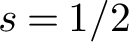 $s=1/2$.


Bounds for twisted symmetric square L-functions via half-integral weight periods
- Part of
-
- Journal:
- Forum of Mathematics, Sigma / Volume 8 / 2020
- Published online by Cambridge University Press:
- 09 November 2020, e44
-
- Article
-
- You have access
- Open access
- Export citation
-
We establish the first moment bound
$$\begin{align*}\sum_{\varphi} L(\varphi \otimes \varphi \otimes \Psi, \tfrac{1}{2}) \ll_\varepsilon p^{5/4+\varepsilon} \end{align*}$$for triple product L-functions, where $\Psi $ is a fixed Hecke–Maass form on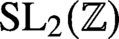 $\operatorname {\mathrm {SL}}_2(\mathbb {Z})$ and $\varphi $ runs over the Hecke–Maass newforms on $\Gamma _0(p)$ of bounded eigenvalue. The proof is via the theta correspondence and analysis of periods of half-integral weight modular forms. This estimate is not expected to be optimal, but the exponent $5/4$ is the strongest obtained to date for a moment problem of this shape. We show that the expected upper bound follows if one assumes the Ramanujan conjecture in both the integral and half-integral weight cases.
Under the triple product formula, our result may be understood as a strong level aspect form of quantum ergodicity: for a large prime p, all but very few Hecke–Maass newforms on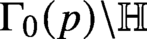 $\Gamma _0(p) \backslash \mathbb {H}$ of bounded eigenvalue have very uniformly distributed mass after pushforward to $\operatorname {\mathrm {SL}}_2(\mathbb {Z}) \backslash \mathbb {H}$.
Our main result turns out to be closely related to estimates such as
$$\begin{align*}\sum_{|n| < p} L(\Psi \otimes \chi_{n p},\tfrac{1}{2}) \ll p, \end{align*}$$where the sum is over those n for which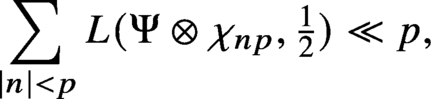 $n p$ is a fundamental discriminant and $\chi _{n p}$ denotes the corresponding quadratic character. Such estimates improve upon bounds of Duke–Iwaniec.


Ergodic properties of the Anzai skew-product for the non-commutative torus
- Part of
-
- Journal:
- Ergodic Theory and Dynamical Systems / Volume 41 / Issue 4 / April 2021
- Published online by Cambridge University Press:
- 14 January 2020, pp. 1064-1085
- Print publication:
- April 2021
-
- Article
- Export citation
-
We provide a systematic study of a non-commutative extension of the classical Anzai skew-product for the cartesian product of two copies of the unit circle to the non-commutative 2-tori. In particular, some relevant ergodic properties are proved for these quantum dynamical systems, extending the corresponding ones enjoyed by the classical Anzai skew-product. As an application, for a uniquely ergodic Anzai skew-product $\unicode[STIX]{x1D6F7}$ on the non-commutative $2$ -torus $\mathbb{A}_{\unicode[STIX]{x1D6FC}}$ , $\unicode[STIX]{x1D6FC}\in \mathbb{R}$ , we investigate the pointwise limit, $\lim _{n\rightarrow +\infty }(1/n)\sum _{k=0}^{n-1}\unicode[STIX]{x1D706}^{-k}\unicode[STIX]{x1D6F7}^{k}(x)$ , for $x\in \mathbb{A}_{\unicode[STIX]{x1D6FC}}$ and $\unicode[STIX]{x1D706}$ a point in the unit circle, and show that there are examples for which the limit does not exist, even in the weak topology.


PERTURBATION OF THE SEMICLASSICAL SCHRÖDINGER EQUATION ON NEGATIVELY CURVED SURFACES
- Part of
-
- Journal:
- Journal of the Institute of Mathematics of Jussieu / Volume 16 / Issue 4 / September 2017
- Published online by Cambridge University Press:
- 27 August 2015, pp. 787-835
- Print publication:
- September 2017
-
- Article
- Export citation
