Refine listing
Actions for selected content:
124 results in 58Jxx
A note on the Maxwell’s eigenvalues on thin sets
- Part of
-
- Journal:
- Proceedings of the Royal Society of Edinburgh. Section A: Mathematics , First View
- Published online by Cambridge University Press:
- 31 March 2026, pp. 1-27
-
- Article
-
- You have access
- Open access
- HTML
- Export citation
-
We analyse the Maxwell’s spectrum on thin tubular neighbourhoods of embedded surfaces of $\mathbb R^3$. We show that the Maxwell’s eigenvalues converge to the Laplacian eigenvalues of the surface as the thin parameter tends to zero. To achieve this, we reformulate the problem in terms of the spectrum of the Hodge Laplacian with relative conditions acting on co-closed differential $1$-forms. The result leads to new examples of domains where the Faber–Krahn inequality for Maxwell’s eigenvalues fails, examples of domains with any number of arbitrarily small eigenvalues, and underlines the failure of spectral stability under singular perturbations changing the topology of the domain. Additionally, we explicitly produce Maxwell’s eigenfunctions on product domains with the product metric, extending previous constructions valid in the Euclidean case.


TOPOLOGY OF THE DIRAC EQUATION ON SPECTRALLY LARGE THREE-MANIFOLDS
- Part of
-
- Journal:
- Journal of the Institute of Mathematics of Jussieu , First View
- Published online by Cambridge University Press:
- 30 March 2026, pp. 1-29
-
- Article
-
- You have access
- Open access
- HTML
- Export citation
-
A closed Riemannian three-manifold $(Y,g)$ equipped with a torsion spin $^c$ structure determines a family of Dirac operators $\{D_B\}$ parametrized by a $b_1(Y)$-dimensional torus $\mathbb {T}_Y$. In this paper, we develop techniques to study how the topology of the locus $\mathsf {K}\subset \mathbb {T}_Y$ corresponding to operators with non-trivial kernel (the three-dimensional analogue of the theta divisor of a Riemann surface) depends on the geometry of the metric. As a concrete example of our methods, we show that for any metric on the three-torus $Y=T^3$ for which the spectral gap $\lambda _1^*$ on coexact $1$-forms is large, after a small perturbation of the family, the locus $\mathsf {K}$ is a two-sphere.
While the result only involves linear operators, its proof relies on the non-linear analysis of the Seiberg-Witten equations. It follows from a more general understanding of transversality in the context of the monopole Floer homology of a torsion spin $^c$ three-manifold $(Y,\mathfrak {s})$ with a large $\lambda _1^*$. When $b_1>0$, this gives rise to a very rich setup and we discuss a framework to describe explicitly in certain situations the Floer homology groups of $(Y,\mathfrak {s})$ in terms of the topology of the family of Dirac operators $\{D_B\}$.


Nonlinear stability of extremal Reissner–Nordström black holes in spherical symmetry
- Part of
-
- Journal:
- Forum of Mathematics, Pi / Volume 14 / 2026
- Published online by Cambridge University Press:
- 14 January 2026, e3
-
- Article
-
- You have access
- Open access
- HTML
- Export citation
-
In this paper, we prove the codimension-one nonlinear asymptotic stability of the extremal Reissner–Nordström family of black holes in the spherically symmetric Einstein–Maxwell-neutral scalar field model, up to and including the event horizon. More precisely, we show that there exists a teleologically defined, codimension-one “submanifold” ${\mathfrak{M}}_{\mathrm{stab}}$ of the moduli space of spherically symmetric characteristic data for the Einstein–Maxwell-scalar field system lying close to the extremal Reissner–Nordström family, such that any data in ${\mathfrak{M}}_{\mathrm{stab}}$ evolve into a solution with the following properties as time goes to infinity: (i) the metric decays to a member of the extremal Reissner–Nordström family uniformly up to the event horizon, (ii) the scalar field decays to zero pointwise and in an appropriate energy norm, (iii) the first translation-invariant ingoing null derivative of the scalar field is approximately constant on the event horizon $\mathcal H^+$, (iv) for “generic” data, the second translation-invariant ingoing null derivative of the scalar field grows linearly along the event horizon. Due to the coupling of the scalar field to the geometry via the Einstein equations, suitable components of the Ricci tensor exhibit nondecay and growth phenomena along the event horizon. Points (i) and (ii) above reflect the “stability” of the extremal Reissner–Nordström family and points (iii) and (iv) verify the presence of the celebrated Aretakis instability [11] for the linear wave equation on extremal Reissner–Nordström black holes in the full nonlinear Einstein–Maxwell-scalar field model.


Competition of small targets in planar domains: from Dirichlet to Robin and Steklov boundary condition
- Part of
-
- Journal:
- European Journal of Applied Mathematics , First View
- Published online by Cambridge University Press:
- 12 January 2026, pp. 1-48
-
- Article
-
- You have access
- Open access
- HTML
- Export citation
Rigidity for the heat equation with density on Riemannian manifolds through a conformal change
- Part of
-
- Journal:
- Proceedings of the Royal Society of Edinburgh. Section A: Mathematics , First View
- Published online by Cambridge University Press:
- 12 January 2026, pp. 1-41
-
- Article
- Export citation
-
We investigate uniqueness of solution to the heat equation with a density $\rho$ on complete, non-compact weighted Riemannian manifolds of infinite volume. Our main goal is to identify sufficient conditions under which the solution $u$ vanishes identically, assuming that $u$ belongs to a certain weighted Lebesgue space with exponential or polynomial weight, $L^p_{\phi}$. We distinguish between the cases $p \gt 1$ and $p = 1$ which required stronger assumptions on the manifold and the density function $\rho$. We develop a unified method based on a conformal transformation of the metric, which allows us to reduce the problem to a standard heat equation on a suitably weighted manifold. In addition, we construct explicit counterexamples on model manifolds which demonstrate optimality of our assumptions on the density $\rho$.


Multipeak solutions for fractional elliptic equations on conformal infinities
- Part of
-
- Journal:
- Proceedings of the Royal Society of Edinburgh. Section A: Mathematics , First View
- Published online by Cambridge University Press:
- 19 December 2025, pp. 1-55
-
- Article
- Export citation
-
We consider the following problem
on an asymptotically hyperbolic manifold \begin{equation*}\varepsilon^{2 s} P_{\hat{h}}^s u+u=u^p, \quad u \gt 0 \quad \text {on } \,(M, \hat{h}),\end{equation*} $(X, g^{+})$ with conformal infinity $(M,[\hat{h}])$, where $s\in (0,1)$, $P_{\hat{h}}^s$ is the fractional conformally invariant operators, $1 \lt p \lt \frac{n+2s}{n-2s}$. By Lyapunov–Schmidt reduction method, we prove the existence of solutions whose peaks collapse, as $\varepsilon$ goes to zero, to a $C^1$-stable critical point of the mean curvature $H$ for $0 \lt s \lt {1}/{2}$ or a $C^1$-stable critical point of a function involving the scalar curvature and the second fundamental form for ${1}/{2}\le s \lt 1$.


Intrinsic stochastic differential equations and the extended Itô formula on manifolds
- Part of
-
- Journal:
- Proceedings of the Royal Society of Edinburgh. Section A: Mathematics , First View
- Published online by Cambridge University Press:
- 12 December 2025, pp. 1-33
-
- Article
-
- You have access
- Open access
- HTML
- Export citation
-
A general way to represent stochastic differential equations (SDEs) on smooth manifolds is based on the Schwartz morphism. In this manuscript, we are interested in SDEs on a smooth manifold $M$ that are driven by p-dimensional Wiener process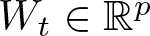 $W_t \in \mathbb{R}^p$ and time $t$. In terms of the Schwartz morphism, such an SDE is represented by a Schwartz morphism that morphs the semimartingale $(t,W_t)\in\mathbb{R}^{p+1}$ into a semimartingale on the manifold $M$. We show that it is possible to construct such Schwartz morphisms using special maps that we call diffusion generators. We show that one of the ways to construct a diffusion generator is by considering the flow of differential equations. One particular case is the construction of diffusion generators using Lagrangian vector fields. Using the diffusion generator approach, we also give the extended Itô formula (also known as generalized Itô formula or Itô–Wentzell formula) for SDEs on manifolds.


Sharp bounds for higher Steklov–Dirichlet eigenvalues on domains with spherical holes
- Part of
-
- Journal:
- Canadian Mathematical Bulletin , First View
- Published online by Cambridge University Press:
- 01 December 2025, pp. 1-20
-
- Article
- Export citation
-
We consider a mixed Steklov–Dirichlet eigenvalue problem on a smooth bounded domain having a spherical hole. In this article, we take Dirichlet condition on the boundary of the spherical hole and Steklov condition on the other boundary component/s. Under certain symmetry assumptions on multiconnected domains in $\mathbb {R}^{n}$ having a spherical hole, we obtain isoperimetric inequalities for the k-th Steklov–Dirichlet eigenvalues for each $k \in \{2, 3, \dots , n+1\}$. We provide examples to emphasise the fact that the symmetry assumptions, on the family of domains considered, are crucial. We also extend Theorem 3.1 of “Gavitone et al. (2023), An isoperimetric inequality for the first Steklov–Dirichlet Laplacian eigenvalue of convex sets with a spherical hole, Pacific Journal of Mathematics, 320(2): 241–259” not only from Euclidean domains to domains in space forms but also from convex domains to star-shaped domains. In particular, we obtain sharp lower and upper bounds for the first Steklov–Dirichlet eigenvalue on the family of all bounded star-shaped domains on the hemisphere as well as on the hyperbolic space.

TRACE FORMULAS IN NONCOMMUTATIVE GEOMETRY
- Part of
-
- Journal:
- Bulletin of the Australian Mathematical Society / Volume 113 / Issue 1 / February 2026
- Published online by Cambridge University Press:
- 28 November 2025, pp. 175-176
- Print publication:
- February 2026
-
- Article
-
- You have access
- HTML
- Export citation
A deformation approach to the BFK formula
- Part of
-
- Journal:
- Canadian Mathematical Bulletin , First View
- Published online by Cambridge University Press:
- 13 November 2025, pp. 1-14
-
- Article
-
- You have access
- Open access
- HTML
- Export citation
On integral rigidity in Seiberg–Witten theory
- Part of
-
- Journal:
- Forum of Mathematics, Sigma / Volume 13 / 2025
- Published online by Cambridge University Press:
- 07 November 2025, e184
-
- Article
-
- You have access
- Open access
- HTML
- Export citation
-
We introduce a framework to prove integral rigidity results for the Seiberg–Witten invariants of a closed $4$-manifold X containing a nonseparating hypersurface Y satisfying suitable (chain-level) Floer theoretic conditions. As a concrete application, we show that if X has the homology of a four-torus, and it contains a nonseparating three-torus, then the sum of all Seiberg–Witten invariants of X is determined in purely cohomological terms.
Our results can be interpreted as $(3+1)$-dimensional versions of Donaldson’s TQFT approach to the formula of Meng–Taubes, and build upon a subtle interplay between irreducible solutions to the Seiberg–Witten equations on X and reducible ones on Y and its complement. Along the way, we provide a concrete description of the associated graded map (for a suitable filtration) of the map on $\overline {\mathit {HM}}_*$ induced by a negative-definite cobordism between three-manifolds, which might be of independent interest.


ANALYSIS OF THE LAPLACIAN ON A CLASS OF NONDOUBLING CONNECTED SUMS AND MANIFOLDS WITH QUADRATICALLY DECAYING RICCI CURVATURE
- Part of
-
- Journal:
- Bulletin of the Australian Mathematical Society / Volume 113 / Issue 1 / February 2026
- Published online by Cambridge University Press:
- 17 October 2025, pp. 173-174
- Print publication:
- February 2026
-
- Article
-
- You have access
- HTML
- Export citation
Constructing surfaces with first Steklov eigenvalue of arbitrarily large multiplicity
- Part of
-
- Journal:
- Canadian Mathematical Bulletin , First View
- Published online by Cambridge University Press:
- 06 October 2025, pp. 1-15
-
- Article
-
- You have access
- Open access
- HTML
- Export citation
-
We construct surfaces with arbitrarily large multiplicity for their first nonzero Steklov eigenvalue. The proof is based on a technique by Burger and Colbois originally used to prove a similar result for the Laplacian spectrum. We start by constructing surfaces $S_p$ with a specific subgroup of isometry $G_p:= \mathbb {Z}_p \rtimes \mathbb {Z}_p^*$ for each prime p. We do so by gluing surfaces with boundary following the structure of the Cayley graph of $G_p$. We then exploit the properties of $G_p$ and $S_p$ in order to show that an irreducible representation of high degree (depending on p) acts on the eigenspace of functions associated with $\sigma _1(S_p)$, leading to the desired result.


Explicit spectral gap for Hecke congruence covers of arithmetic Schottky surfaces
- Part of
-
- Journal:
- Glasgow Mathematical Journal / Volume 68 / Issue 2 / May 2026
- Published online by Cambridge University Press:
- 26 September 2025, pp. 345-385
-
- Article
- Export citation
-
Let $\Gamma$ be a Schottky subgroup of $\mathrm{SL}_2(\mathbb{Z})$ and let $X=\Gamma \backslash {\mathbb{H}}^2$ be the associated hyperbolic surface. We consider the family of Hecke congruence coverings of $X$, which we denote as usual by $ X_0(q) = \Gamma _0(q)\backslash {\mathbb{H}}^2$. Conditional on the Lindelöf Hypothesis for quadratic L-functions, we establish a uniform and explicit spectral gap for the Laplacian on $ X_0(q)$ for “almost” all prime levels $q$. Assuming the generalized Riemann hypothesis for quadratic $L$-functions, we obtain an even larger spectral gap.


Sharp Hardy and spectral gap inequalities on special irreversible Finsler manifolds
- Part of
-
- Journal:
- Proceedings of the Royal Society of Edinburgh. Section A: Mathematics , First View
- Published online by Cambridge University Press:
- 09 September 2025, pp. 1-36
-
- Article
-
- You have access
- Open access
- HTML
- Export citation
Existence of ground states for free energies on the hyperbolic space
- Part of
-
- Journal:
- Canadian Journal of Mathematics , First View
- Published online by Cambridge University Press:
- 07 August 2025, pp. 1-43
-
- Article
-
- You have access
- Open access
- HTML
- Export citation
-
We investigate a free energy functional that arises in aggregation-diffusion phenomena modelled by nonlocal interactions and local repulsion on the hyperbolic space ${\mathbb H}^n$. The free energy consists of two competing terms: an entropy, corresponding to slow nonlinear diffusion, that favours spreading, and an attractive interaction potential energy that favours aggregation. We establish necessary and sufficient conditions on the interaction potential for ground states to exist on the hyperbolic space ${\mathbb H}^n$. To prove our results, we derived several Hardy–Littlewood–Sobolev (HLS)-type inequalities on general Cartan–Hadamard manifolds of bounded curvature, which have an interest in their own.


Collapsing immortal Kähler-Ricci flows
- Part of
-
- Journal:
- Forum of Mathematics, Pi / Volume 13 / 2025
- Published online by Cambridge University Press:
- 19 May 2025, e18
-
- Article
-
- You have access
- Open access
- HTML
- Export citation
Correspondence between Pestov and Weitzenböck identities
- Part of
-
- Journal:
- Mathematical Proceedings of the Cambridge Philosophical Society / Volume 178 / Issue 3 / May 2025
- Published online by Cambridge University Press:
- 02 May 2025, pp. 443-463
- Print publication:
- May 2025
-
- Article
-
- You have access
- Open access
- HTML
- Export citation
Relative quantum cohomology of the Chiang Lagrangian
- Part of
-
- Journal:
- Forum of Mathematics, Sigma / Volume 13 / 2025
- Published online by Cambridge University Press:
- 17 March 2025, e56
-
- Article
-
- You have access
- Open access
- HTML
- Export citation
-
We compute the open Gromov-Witten disk invariants and the relative quantum cohomology of the Chiang Lagrangian $L_\triangle \subset \mathbb {C}P^3$. Since $L_\triangle $ is not fixed by any anti-symplectic involution, the invariants may augment straightforward J-holomorphic disk counts with correction terms arising from the formalism of Fukaya $A_\infty $-algebras and bounding cochains. These correction terms are shown in fact to be nontrivial for many invariants. Moreover, examples of nonvanishing mixed disk and sphere invariants are obtained.
We characterize a class of open Gromov-Witten invariants, called basic, which coincide with straightforward counts of J-holomorphic disks. Basic invariants for the Chiang Lagrangian are computed using the theory of axial disks developed by Evans-Lekili and Smith in the context of Floer cohomology. The open WDVV equations give recursive relations which determine all invariants from the basic ones. The denominators of all invariants are observed to be powers of $2$ indicating a nontrivial arithmetic structure of the open WDVV equations. The magnitude of invariants is not monotonically increasing with degree. Periodic behavior is observed with periods $8$ and $16.$
$16.$


Elliptic Pre-Complexes, Hodge-like Decompositions and Overdetermined Boundary-Value Problems
- Part of
-
- Journal:
- Forum of Mathematics, Sigma / Volume 13 / 2025
- Published online by Cambridge University Press:
- 05 March 2025, e51
-
- Article
-
- You have access
- Open access
- HTML
- Export citation
-
We solve a problem posed by Calabi more than 60 years ago, known as the Saint-Venant compatibility problem: Given a compact Riemannian manifold, generally with boundary, find a compatibility operator for Lie derivatives of the metric tensor. This problem is related to other compatibility problems in mathematical physics, and to their inherent gauge freedom. To this end, we develop a framework generalizing the theory of elliptic complexes for sequences of linear differential operators $(A_{\bullet })$ between sections of vector bundles. We call such a sequence an elliptic pre-complex if the operators satisfy overdetermined ellipticity conditions and the order of $A_{k+1}A_k$ does not exceed the order of $A_k$. We show that every elliptic pre-complex $(A_{\bullet })$ can be ‘corrected’ into a complex $({\mathcal {A}}_{\bullet })$ of pseudodifferential operators, where ${\mathcal {A}}_k - A_k$ is a zero-order correction within this class. The induced complex $({\mathcal {A}}_{\bullet })$ yields Hodge-like decompositions, which in turn lead to explicit integrability conditions for overdetermined boundary-value problems, with uniqueness and gauge freedom clauses. We apply the theory on elliptic pre-complexes of exterior covariant derivatives of vector-valued forms and double forms satisfying generalized algebraic Bianchi identities, thus resolving a set of compatibility and gauge problems, among which one is the Saint-Venant problem.


