Refine listing
Actions for selected content:
343 results in 60Hxx
Mean-field stochastic Volterra equations
- Part of
-
- Journal:
- Journal of Applied Probability , First View
- Published online by Cambridge University Press:
- 07 April 2026, pp. 1-25
-
- Article
-
- You have access
- Open access
- HTML
- Export citation
Monochromatic subgraphs in randomly colored dense multiplex networks
- Part of
-
- Journal:
- Advances in Applied Probability , First View
- Published online by Cambridge University Press:
- 05 March 2026, pp. 1-36
-
- Article
- Export citation
-
Given a sequence of graphs $G_n$ and a fixed graph H, denote by $T(H, G_n)$ the number of monochromatic copies of the graph H in a uniformly random c-coloring of the vertices of $G_n$. In this paper we study the joint distribution of a finite collection of monochromatic graph counts in networks with multiple layers (multiplex networks). Specifically, given a finite collection of graphs $H_1, H_2, \ldots, H_d$ we derive the joint distribution of $(T(H_1, G_n^{(1)}), T(H_2, G_n^{(2)}), \ldots, T(H_d, G_n^{(d)}))$, where $\mathbf{G}_n = (G_n^{(1)}, G_n^{(2)}, \ldots, G_n^{(d)})$ is a collection of dense graphs on the same vertex set converging in the multiplex cut-metric. The limiting distribution is the sum of two independent components: a multivariate Gaussian and a sum of independent bivariate stochastic integrals. This extends previous results on the marginal convergence of monochromatic subgraphs in a sequence of graphs to the joint convergence of a finite collection of monochromatic subgraphs in a sequence of multiplex networks. Several applications and examples are discussed.


Non-asymptotic analysis of online noisy stochastic gradient descent
- Part of
-
- Journal:
- Advances in Applied Probability , First View
- Published online by Cambridge University Press:
- 03 March 2026, pp. 1-50
-
- Article
-
- You have access
- Open access
- HTML
- Export citation
Limiting behaviour of smooth inertial manifolds for random retarded differential equations and their Galerkin approximations
- Part of
-
- Journal:
- Proceedings of the Edinburgh Mathematical Society , First View
- Published online by Cambridge University Press:
- 23 February 2026, pp. 1-58
-
- Article
- Export citation
-
In this paper, we are mainly devoted to the limiting behaviour of smooth inertial manifolds for a class of random retarded differential equations with a singular parameter $\delta$ and their Galerkin approximations, which have not been considered before. Under appropriate conditions, we show not only that the inertial manifolds for this class of random retarded equations converge pointwise to those of the corresponding stochastic equations driven by white noise as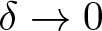 $\delta\rightarrow 0$, but also that the inertial manifolds of their Galerkin approximations converge pointwise to those of stochastic equations driven by white noise described above under the simultaneous limits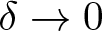 $\delta\rightarrow 0$ and $M\rightarrow +\infty$, where $M$ denotes the dimension index of the orthogonal projection operator $P_M$ in the Galerkin scheme.


Total variation distance between SDEs with stable noise and Brownian motion
- Part of
-
- Journal:
- Journal of Applied Probability , First View
- Published online by Cambridge University Press:
- 23 February 2026, pp. 1-19
-
- Article
- Export citation
-
We consider d-dimensional stochastic differential equations (SDEs) of the form $\textrm{d}U_t = b(U_t)\,\textrm{d}t + \sigma\,\textrm{d}Z_t$. Let $X_t$ denote the solution if the driving noise $Z_t$ is a d-dimensional rotationally symmetric $\alpha$-stable process ( $1\lt \alpha\lt 2$), and let $Y_t$ be the solution if the driving noise is a d-dimensional Brownian motion. Continuing the work started in Deng et al. (2025), we derive an estimate of the total variation distance $\|\textrm{law}(X_{t})-\textrm{law}(Y_{t})\|_\textrm{TV}$ for all $t \gt 0$, and we show that the ergodic measures $\mu_\alpha$ and $\mu_2$ of $X_t$ and $Y_t$, respectively, satisfy $\|\mu_\alpha-\mu_2\|_\textrm{TV} \leq {Cd\log(1+d)}(2-\alpha)/({\alpha-1})$. We show that this bound is optimal with respect to $\alpha$ by an Ornstein–Uhlenbeck SDE. Combining this bound with a recent interpolation result from Huang et al. (2023), we can derive a bound in the Wasserstein-p distance ( $0 \lt p \lt 1$): $\|\mu_\alpha-\mu_2\|_{W_p} \leq {Cd^{(p+3)/2}\log(1+d)}(2-\alpha)/{\alpha-1}$.


Frequently hypercyclic random vectors for $C_{0}$-semigroups
- Part of
-
- Journal:
- Ergodic Theory and Dynamical Systems , First View
- Published online by Cambridge University Press:
- 18 February 2026, pp. 1-30
-
- Article
- Export citation

Space-grid approximations of hybrid stochastic differential equations and first-passage properties
- Part of
-
- Journal:
- Journal of Applied Probability , First View
- Published online by Cambridge University Press:
- 19 December 2025, pp. 1-25
-
- Article
-
- You have access
- Open access
- HTML
- Export citation
Intrinsic stochastic differential equations and the extended Itô formula on manifolds
- Part of
-
- Journal:
- Proceedings of the Royal Society of Edinburgh. Section A: Mathematics , First View
- Published online by Cambridge University Press:
- 12 December 2025, pp. 1-33
-
- Article
-
- You have access
- Open access
- HTML
- Export citation
-
A general way to represent stochastic differential equations (SDEs) on smooth manifolds is based on the Schwartz morphism. In this manuscript, we are interested in SDEs on a smooth manifold $M$ that are driven by p-dimensional Wiener process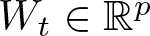 $W_t \in \mathbb{R}^p$ and time $t$. In terms of the Schwartz morphism, such an SDE is represented by a Schwartz morphism that morphs the semimartingale $(t,W_t)\in\mathbb{R}^{p+1}$ into a semimartingale on the manifold $M$. We show that it is possible to construct such Schwartz morphisms using special maps that we call diffusion generators. We show that one of the ways to construct a diffusion generator is by considering the flow of differential equations. One particular case is the construction of diffusion generators using Lagrangian vector fields. Using the diffusion generator approach, we also give the extended Itô formula (also known as generalized Itô formula or Itô–Wentzell formula) for SDEs on manifolds.


A NEW PROOF OF THE SINGULAR CONTINUITY OF THE MINKOWSKI $?$-FUNCTION
- Part of
-
- Journal:
- Bulletin of the Australian Mathematical Society , First View
- Published online by Cambridge University Press:
- 04 December 2025, pp. 1-6
-
- Article
- Export citation
-
We give a new proof of the singular continuity of Minkowski’s $?$-function. Our proof follows by showing that the maximal Lyapunov exponent of a specific pair of $3\times 3$ nonnegative integer matrices related to Stern’s diatomic sequence is strictly greater than $\log 2$.


Stochastic Volterra integral equations with ranks as scaling limits of parallel infinite-server queues under weighted shortest queue policy
- Part of
-
- Journal:
- Journal of Applied Probability , First View
- Published online by Cambridge University Press:
- 02 December 2025, pp. 1-17
-
- Article
-
- You have access
- Open access
- HTML
- Export citation
-
We study a queueing system with a fixed number of parallel service stations of infinite servers, each having a dedicated arrival process, and one flexible arrival stream that is routed to one of the service stations according to a ‘weighted’ shortest queue policy. We consider the model with general arrival processes and general service time distributions. Assuming that the dedicated arrival rates are of order n and the flexible arrival rate is of order $\sqrt{n}$, we show that the diffusion-scaled queueing processes converge to a stochastic Volterra integral equation with ‘ranks’ driven by a continuous Gaussian process. It reduces to the limiting diffusion with a discontinuous drift in the Markovian setting.

DYNAMICS OF NONLOCAL KURAMOTO–SIVASHINSHY EQUATIONS WITH MULTIPLICATIVE WHITE NOISE
- Part of
-
- Journal:
- The ANZIAM Journal / Volume 67 / 2025
- Published online by Cambridge University Press:
- 23 October 2025, e34
-
- Article
- Export citation
Mixed-state branching evolution for cell division models
- Part of
-
- Journal:
- Journal of Applied Probability / Volume 63 / Issue 1 / March 2026
- Published online by Cambridge University Press:
- 29 September 2025, pp. 135-156
- Print publication:
- March 2026
-
- Article
- Export citation
-
We prove a scaling limit theorem for two-type Galton–Watson branching processes with interaction. The limit theorem gives rise to a class of mixed-state branching processes with interaction used to simulate evolution for cell division affected by parasites. Such processes can also be obtained by the pathwise-unique solution to a stochastic equation system. Moreover, we present sufficient conditions for extinction with probability 1 and the exponential ergodicity in the $L^1$-Wasserstein distance of such processes in some cases.

Explicit pathwise expansion for multivariate diffusions with applications
- Part of
-
- Journal:
- Advances in Applied Probability , First View
- Published online by Cambridge University Press:
- 29 September 2025, pp. 1-34
-
- Article
- Export citation
Well-posedness and averaging principle for non-Gaussian McKean–Vlasov stochastic differential equations with locally Lipschitz coefficients
- Part of
-
- Journal:
- Advances in Applied Probability / Volume 58 / Issue 1 / March 2026
- Published online by Cambridge University Press:
- 09 September 2025, pp. 301-344
- Print publication:
- March 2026
-
- Article
- Export citation
Pullback measure attractors for stochastic p-Laplacian parabolic equations on thin domains
- Part of
-
- Journal:
- Proceedings of the Royal Society of Edinburgh. Section A: Mathematics , First View
- Published online by Cambridge University Press:
- 05 August 2025, pp. 1-28
-
- Article
- Export citation
-
We investigate the pullback measure attractors for non-autonomous stochastic p-Laplacian equations driven by nonlinear noise on thin domains. The concept of complete orbits for such systems is presented to establish the structures of pullback measure attractors. We first present some essential uniform estimates, as well as the existence and uniqueness of pullback measure attractors. A novel technical proof method is shown to overcome the difficulty of the estimates of the solutions in $W^{1,p}$ on thin domains. Then, we prove the upper semicontinuity of these measure attractors as the $(n + 1)$-dimensional thin domains collapse onto the lower n-dimensional space.


STOCHASTIC MODELLING OF WILDFIRE SPREAD
- Part of
-
- Journal:
- Bulletin of the Australian Mathematical Society / Volume 112 / Issue 2 / October 2025
- Published online by Cambridge University Press:
- 28 July 2025, pp. 399-400
- Print publication:
- October 2025
-
- Article
-
- You have access
- HTML
- Export citation
Optimal multiple stopping problem with irregular reward
- Part of
-
- Journal:
- Journal of Applied Probability / Volume 62 / Issue 4 / December 2025
- Published online by Cambridge University Press:
- 14 July 2025, pp. 1607-1622
- Print publication:
- December 2025
-
- Article
- Export citation
Limit theorems of stochastic differential equations with jumps
- Part of
-
- Journal:
- Journal of Applied Probability / Volume 62 / Issue 4 / December 2025
- Published online by Cambridge University Press:
- 16 June 2025, pp. 1429-1445
- Print publication:
- December 2025
-
- Article
- Export citation
Averaging principle for the fast–slow McKean–Vlasov stochastic differential equations driven by mixed fractional Brownian motion
- Part of
-
- Journal:
- Journal of Applied Probability / Volume 62 / Issue 4 / December 2025
- Published online by Cambridge University Press:
- 05 June 2025, pp. 1260-1279
- Print publication:
- December 2025
-
- Article
- Export citation
-
This paper focuses on the averaging principle concerning the fast–slow McKean–Vlasov stochastic differential equations driven by mixed fractional Brownian motion with Hurst parameter $\tfrac{1}{2} < H < 1$. The integral associated with Brownian motion is the standard Itô integral, while the integral with respect to fractional Brownian motion is a generalized Riemann–Stieltjes integral. Under the non-Lipschitz condition and certain appropriate assumptions regarding the coefficients, we initially establish the existence and uniqueness theorem for the fast–slow McKean–Vlasov stochastic differential equation driven by mixed fractional Brownian motion. Subsequently, we demonstrate the averaging principle of the fast–slow McKean–Vlasov stochastic differential equations, signifying that the slow stochastic differential equation converges to the associated averaged equation in terms of mean-square convergence.

Remark on the local well-posedness for NLS with the modulated dispersion
- Part of
-
- Journal:
- Proceedings of the Royal Society of Edinburgh. Section A: Mathematics , First View
- Published online by Cambridge University Press:
- 02 April 2025, pp. 1-12
-
- Article
- Export citation
