





Introduction
The main goal of the present paper is to develop some foundational aspects of monopole Floer homology (a package of topological invariants of three-manifolds introduced by Kronheimer and Mrowka in [Reference Kronheimer and MrowkaKM07]) and discuss some concrete applications to the spin geometry of three-manifolds.
To set the stage for the latter, recall (see, for example, [Reference RoeRoe98]) that given a closed Riemannian manifold $(M^n,g)$
equipped with a torsion spin
$(M^n,g)$
equipped with a torsion spin $^c$
structure
$^c$
structure $\mathfrak {s}$
(e.g. one induced by a spin structure), one obtains a natural family of spin
$\mathfrak {s}$
(e.g. one induced by a spin structure), one obtains a natural family of spin $^c$
Dirac operators
$^c$
Dirac operators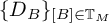 $\{D_B\}_{[B]\in \mathbb {T}_M}$
parametrized by the
$\{D_B\}_{[B]\in \mathbb {T}_M}$
parametrized by the $b_1(M)$
-dimensional torus
$b_1(M)$
-dimensional torus
 $$ \begin{align*} \mathbb{T}_{M}={H^1(M;i\mathbb{R})}/{H^1(M;2\pi i\mathbb{Z})}, \end{align*} $$
which we can think of as the equivalence classes of flat $U(1)$
-connections on the trivial line bundle
$U(1)$
-connections on the trivial line bundle $\underline {\mathbb {C}}\rightarrow M$
. This paper concerns the study of the locus
$\underline {\mathbb {C}}\rightarrow M$
. This paper concerns the study of the locus
 $$ \begin{align*} \mathsf{K}=\left\{[B]\lvert D_B\text{ has non-trivial kernel}\right\}\subset \mathbb{T}_{M}. \end{align*} $$
For $n=1$
, M is
$n=1$
, M is $S^1$
and the family can be identified with
$S^1$
and the family can be identified with $\{i\frac {d}{dx}+c\}$
acting on complex-valued functions, so that
$\{i\frac {d}{dx}+c\}$
acting on complex-valued functions, so that $\mathsf {K}\subset \mathbb {T}_{S^1}$
is a single point.
$\mathsf {K}\subset \mathbb {T}_{S^1}$
is a single point.
For $n=2$
, the family can be interpreted in a holomorphic fashion [Reference HitchinHit74] in terms of the underlying Riemann surface
$n=2$
, the family can be interpreted in a holomorphic fashion [Reference HitchinHit74] in terms of the underlying Riemann surface $\Sigma $
. In particular, one can identify
$\Sigma $
. In particular, one can identify $\mathbb {T}_{\Sigma }$
with the torus
$\mathbb {T}_{\Sigma }$
with the torus $\mathrm {Pic}^{h-1}(\Sigma )$
of holomorphic line bundles of degree
$\mathrm {Pic}^{h-1}(\Sigma )$
of holomorphic line bundles of degree $h-1$
(where h is the genus), and under this identification
$h-1$
(where h is the genus), and under this identification $\mathsf {K}$
corresponds to the theta divisor
$\mathsf {K}$
corresponds to the theta divisor $\Theta $
, i.e. the locus of line bundles with non-trivial holomorphic sections. Hence in this case the study of
$\Theta $
, i.e. the locus of line bundles with non-trivial holomorphic sections. Hence in this case the study of $\mathsf {K}$
has a very long history dating back to the work of Abel, Jacobi and Riemann (see, for example, [Reference Arbarello, Cornalba, Griffiths and HarrisACGH85]), and its topology and geometry highly depend on the conformal structure of
$\mathsf {K}$
has a very long history dating back to the work of Abel, Jacobi and Riemann (see, for example, [Reference Arbarello, Cornalba, Griffiths and HarrisACGH85]), and its topology and geometry highly depend on the conformal structure of ${\Sigma }$
.
${\Sigma }$
.
We will focus on the case of $n=3$
, with the goal of taking some first steps towards understanding
$n=3$
, with the goal of taking some first steps towards understanding $\mathsf {K}\subset \mathbb {T}_Y$
(which we think of as a three-dimensional analogue of the theta divisor).
$\mathsf {K}\subset \mathbb {T}_Y$
(which we think of as a three-dimensional analogue of the theta divisor).
Question 1. Given a closed Riemannian three-manifold $(Y^3,g)$
equipped with a torsion spin
$(Y^3,g)$
equipped with a torsion spin $^c$
structure, can one describe the topology and geometry of the locus
$^c$
structure, can one describe the topology and geometry of the locus $\mathsf {K}\subset \mathbb {T}_{Y}$
? More generally, how does this locus depend on the choice of metric g?
$\mathsf {K}\subset \mathbb {T}_{Y}$
? More generally, how does this locus depend on the choice of metric g?
For context, the interplay between the geometry of Dirac operators and scalar curvature has been intensively explored since the foundational work of Lichnerowicz and Atiyah-Singer (see, for example, [Reference RoeRoe98]). A milestone in the theory is Gromov and Lawson’s proof that the torus $T^n$
does not admit metrics of positive scalar curvature [Reference Gromov and LawsonGL80]. The key point in their approach is that for metrics of positive scalar curvature the locus
$T^n$
does not admit metrics of positive scalar curvature [Reference Gromov and LawsonGL80]. The key point in their approach is that for metrics of positive scalar curvature the locus $\mathsf {K}$
is empty, which contradicts the fact that the Atiyah-Singer index theory for families implies that it is not for
$\mathsf {K}$
is empty, which contradicts the fact that the Atiyah-Singer index theory for families implies that it is not for $T^n$
(independently of the metric). Notice that in three dimensions, the topology of closed orientable manifolds admitting a metric of positive scalar curvature is in fact very restricted: any such manifold is a connected sum of spherical space forms and
$T^n$
(independently of the metric). Notice that in three dimensions, the topology of closed orientable manifolds admitting a metric of positive scalar curvature is in fact very restricted: any such manifold is a connected sum of spherical space forms and $S^1\times S^2$
s ([Per02], see also [Reference Morgan and TianMT07]).
$S^1\times S^2$
s ([Per02], see also [Reference Morgan and TianMT07]).
Because of this, it is natural to ask whether there are interactions between Dirac operators and other natural geometric notions. In our main result, we will be interested in Riemannian three-manifolds $(Y,g)$
satisfying assumptions of spectral nature. More specifically, we will consider the first eigenvalue
$(Y,g)$
satisfying assumptions of spectral nature. More specifically, we will consider the first eigenvalue $\lambda _1^*>0$
of the Hodge Laplacian
$\lambda _1^*>0$
of the Hodge Laplacian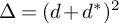 ${\Delta =(d+d^*)^2}$
acting on coexact
${\Delta =(d+d^*)^2}$
acting on coexact $1$
-forms
$1$
-forms $d^*\Omega ^2$
, and focus on the situation in which this quantity is large in the following sense.
$d^*\Omega ^2$
, and focus on the situation in which this quantity is large in the following sense.
Definition 0.1. A Riemannian $3$
-manifold
$3$
-manifold $(Y,g)$
is spectrally large if the inequality
$(Y,g)$
is spectrally large if the inequality
 $$ \begin{align} \lambda_1^*>-\frac{1}{2}\mathrm{inf}_{p\in Y}\tilde{s}(p) \end{align} $$
holds, where $\tilde {s}(p)$
is the sum of the two least eigenvalues of the Ricci curvature at p.
$\tilde {s}(p)$
is the sum of the two least eigenvalues of the Ricci curvature at p.
Remark 0.1. In particular, for a metric satisfying $\mathrm {Ricci}\geq -k$
for some
$\mathrm {Ricci}\geq -k$
for some $k\geq 0$
everywhere, if
$k\geq 0$
everywhere, if $\lambda _1^*>k$
then
$\lambda _1^*>k$
then $(Y,g)$
is spectrally large.
$(Y,g)$
is spectrally large.
As a case study, we will focus on the three-torus $T^3$
(the simplest example of a three-manifold without metrics of positive scalar curvature) even though we will develop techniques that apply in greater generality. Notice that the flat metric on the three-torus
$T^3$
(the simplest example of a three-manifold without metrics of positive scalar curvature) even though we will develop techniques that apply in greater generality. Notice that the flat metric on the three-torus $T^3$
is spectrally large; furthermore, the condition is open in the
$T^3$
is spectrally large; furthermore, the condition is open in the $C^2$
-topology in the space of metrics, hence there are plenty of non-flat metrics on
$C^2$
-topology in the space of metrics, hence there are plenty of non-flat metrics on $T^3$
which are spectrally large. Both determining whether a given metric on
$T^3$
which are spectrally large. Both determining whether a given metric on $T^3$
is spectrally large and understanding the basic properties of the space of such metrics (e.g. connectedness) are very challenging questions.
$T^3$
is spectrally large and understanding the basic properties of the space of such metrics (e.g. connectedness) are very challenging questions.
Remark 0.2. Of course, it is also in general very hard to determine whether a given Y admits a spectrally large metric at all; we will discuss some concrete examples later in the text.
In order to obtain a topological description of $\mathsf {K}$
, we will consider a small perturbation of our original question. More specifically, for a fixed section
$\mathsf {K}$
, we will consider a small perturbation of our original question. More specifically, for a fixed section $A\in \Gamma (i\mathfrak {u}(S))$
of the bundle of (complex-linear) self-adjoint endomorphisms of S (which we assume for simplicity to be smooth), we will consider the family of perturbed Dirac equations
$A\in \Gamma (i\mathfrak {u}(S))$
of the bundle of (complex-linear) self-adjoint endomorphisms of S (which we assume for simplicity to be smooth), we will consider the family of perturbed Dirac equations
 $$ \begin{align} D_B\Psi =A\Psi, \end{align} $$
again parametrized by the torus $\mathbb {T}_{T^3}$
. Our main result is then the following.
$\mathbb {T}_{T^3}$
. Our main result is then the following.
Theorem 0.2. Let g be a spectrally large metric on $T^3$
. For a generic
$T^3$
. For a generic $C^0$
-small
$C^0$
-small ${A\in \Gamma ( i\mathfrak {u}(S))}$
, the locus
${A\in \Gamma ( i\mathfrak {u}(S))}$
, the locus $\mathsf {K}$
consisting of
$\mathsf {K}$
consisting of $[B]\in \mathbb {T}_{T^3}$
for which the perturbed Dirac equation (2) has non-zero solutions is diffeomorphic to a two-sphere.
$[B]\in \mathbb {T}_{T^3}$
for which the perturbed Dirac equation (2) has non-zero solutions is diffeomorphic to a two-sphere.
Let us point out the following remarks to provide context and motivation for the result.
-
• Some genericity assumptions are necessary because for a flat metric $g_{\mathrm {flat}}$
and
$A\equiv 0$
, the Lichnerowicz formula implies that a harmonic spinor is necessarily parallel, and one checks directly that there is exactly one point in
$\mathbb {T}_{T^3}$
for which (2) has non-zero solutions.
$g_{\mathrm {flat}}$
and
$A\equiv 0$
, the Lichnerowicz formula implies that a harmonic spinor is necessarily parallel, and one checks directly that there is exactly one point in
$\mathbb {T}_{T^3}$
for which (2) has non-zero solutions. -
• On the other hand, we will see in Section 1 that for a generic choice of A, the locus
$\mathsf {K}$
is a smooth hypersurface (possibly disconnected). -
• As briefly mentioned above,
$\mathsf {K}$
is non-empty for any choice of metric g and A as a consequence of the Atiyah-Singer index theorem for families (see [Reference Atiyah and SingerAS69] and [Reference Atiyah, Patodi and SingerAPS76]), and the non-triviality of the triple cup product on
$T^3$
.


Of course, in general the locus $\mathsf {K}$
for which (2) has solutions will be very complicated. For
$\mathsf {K}$
for which (2) has solutions will be very complicated. For $g_{\mathrm {flat}}$
, one can also verify explicitly that the statement of Theorem 0.2 holds for A a constant multiple of the identity,
$g_{\mathrm {flat}}$
, one can also verify explicitly that the statement of Theorem 0.2 holds for A a constant multiple of the identity, $\delta \neq 0$
small. This explicit computation is in fact the main inspiration behind our result, which extends its conclusion to the setup of spectrally large metrics where a direct analysis is not available.
$\delta \neq 0$
small. This explicit computation is in fact the main inspiration behind our result, which extends its conclusion to the setup of spectrally large metrics where a direct analysis is not available.
While the statement and conclusion of Theorem 0.2 only involves linear operators, its proof relies on the non-linear analysis of the Seiberg-Witten equations on $(T^3,g)$
. More generally, we will consider a Riemannian three-manifold
$(T^3,g)$
. More generally, we will consider a Riemannian three-manifold $(Y,g)$
equipped with a torsion spin
$(Y,g)$
equipped with a torsion spin $^c$
structure
$^c$
structure $\mathfrak {s}$
. For a pair
$\mathfrak {s}$
. For a pair $(B,\Psi )$
consisting of a general spin
$(B,\Psi )$
consisting of a general spin $^c$
connection B on the spinor bundle S (i.e., the connection
$^c$
connection B on the spinor bundle S (i.e., the connection $B^t$
induced on
$B^t$
induced on $\mathrm {det}(S)$
is not necessarily flat) and spinor
$\mathrm {det}(S)$
is not necessarily flat) and spinor $\Psi $
, the unperturbed version of the equations are given by
$\Psi $
, the unperturbed version of the equations are given by
 $$ \begin{align} \begin{aligned} D_B\Psi&=0\\ \frac{1}{2}\rho(\ast F_{B^t})+(\Psi\Psi^*)_0&=0. \end{aligned} \end{align} $$
Here $\rho $
denotes the Clifford multiplication,
$\rho $
denotes the Clifford multiplication, $F_{B^t}$
is the curvature of
$F_{B^t}$
is the curvature of $B^t$
, and
$B^t$
, and $(\Psi \Psi ^*)_0$
is the traceless part of the endomorphism
$(\Psi \Psi ^*)_0$
is the traceless part of the endomorphism $\Psi \Psi ^*$
of S. These are the equations for the critical points of the Chern-Simons-Dirac functional
$\Psi \Psi ^*$
of S. These are the equations for the critical points of the Chern-Simons-Dirac functional
 $$ \begin{align*} \mathcal{L}(B,\Psi)=-\frac{1}{8}\int_{Y}(B^t-B_0^t)\wedge(F_{B^t}+F_{B^t_0})+\frac{1}{2}\int_{Y} \langle D_B\Psi,\Psi\rangle d\mathrm{vol}, \end{align*} $$
where $B_0$
is a fixed reference connection (which we can assume for simplicity to have
$B_0$
is a fixed reference connection (which we can assume for simplicity to have ${F_{B_0^t}=0}$
). In [Reference Kronheimer and MrowkaKM07], the authors introduce the monopole Floer homology group
${F_{B_0^t}=0}$
). In [Reference Kronheimer and MrowkaKM07], the authors introduce the monopole Floer homology group  , a topological invariant (hence independent of the metric) obtained by suitably counting solutions to these equations in a way formally analogous to the $S^1$
-equivariant Morse homology of
$S^1$
-equivariant Morse homology of $\mathcal {L}$
.
$\mathcal {L}$
.
Remark 0.3. To simplify the discussion, when discussing Floer homology we will use $\mathbb {Q}$
coefficients throughout the paper (and keep it implicit in our notation).
$\mathbb {Q}$
coefficients throughout the paper (and keep it implicit in our notation).
The starting point of our analysis is the results from [Reference LinLin20] and [Reference Lin and LipnowskiLL22] stating that when $(Y,g)$
is spectrally large, the set of solutions to the unperturbed equations (3) up to gauge consists exactly of configurations
$(Y,g)$
is spectrally large, the set of solutions to the unperturbed equations (3) up to gauge consists exactly of configurations $(B,0)$
where
$(B,0)$
where $[B]\in \mathbb {T}_Y$
. When
$[B]\in \mathbb {T}_Y$
. When $b_1(Y)=0$
, the latter consists of a single point and one readily concludes (being careful with transversality) that Y is an L-space (i.e. it has trivial reduced Floer homology for all spin
$b_1(Y)=0$
, the latter consists of a single point and one readily concludes (being careful with transversality) that Y is an L-space (i.e. it has trivial reduced Floer homology for all spin $^c$
structures).
$^c$
structures).
The situation when $b_1>0$
is much richer and complicated because
$b_1>0$
is much richer and complicated because $\mathbb {T}_Y$
is now a critical submanifold of
$\mathbb {T}_Y$
is now a critical submanifold of $\mathcal {L}$
hence in order to determine
$\mathcal {L}$
hence in order to determine  one must always perturb the equations. Furthermore, $\mathbb {T}_Y$
is in general not a Morse-Bott singularity, the Hessian of
$\mathbb {T}_Y$
is in general not a Morse-Bott singularity, the Hessian of $\mathcal {L}$
being degenerate in the normal directions exactly where the Dirac operator
$\mathcal {L}$
being degenerate in the normal directions exactly where the Dirac operator $D_B$
has kernel. The key technical content of the paper will be then to provide a framework (general enough for future applications) to perturb the equations that allows to achieve transversality while maintaining a detailed understanding of the solutions to the equations in order to obtain a somewhat concrete description of the chain complex computing
$D_B$
has kernel. The key technical content of the paper will be then to provide a framework (general enough for future applications) to perturb the equations that allows to achieve transversality while maintaining a detailed understanding of the solutions to the equations in order to obtain a somewhat concrete description of the chain complex computing  .
.
Remark 0.4. Unlike the case $b_1=0$
,
$b_1=0$
,  will be highly dependent on the choice of torsion spin $^c$
structure.
$^c$
structure.
A simple observation is that the family of equations (2) for $[B]\in \mathbb {T}_Y$
naturally arises when considering perturbations of the Chern-Simons functional of the form
$[B]\in \mathbb {T}_Y$
naturally arises when considering perturbations of the Chern-Simons functional of the form
 $$ \begin{align} \mathcal{L}(B,\Psi)-\frac{1}{2}\langle \Psi,A\Psi\rangle_{L^2}, \end{align} $$
which we call of spinorial type. As we will see, on a spectrally large manifold the corresponding perturbed Seiberg-Witten equations for small A still have no irreducible solutions. Furthermore, for generic spinorial perturbations the locus $\mathsf {K}\subset \mathbb {T}_Y$
is a codimension one hypersurface which has singularities in codimension in
$\mathsf {K}\subset \mathbb {T}_Y$
is a codimension one hypersurface which has singularities in codimension in $\mathbb {T}_Y$
at least
$\mathbb {T}_Y$
at least $4$
(corresponding to the locus where the kernel has multiplicity); in particular, when
$4$
(corresponding to the locus where the kernel has multiplicity); in particular, when $b_1(Y)\leq 3$
it is smooth. To achieve transversality, we will then add additional perturbations arising from a suitable Morse function on
$b_1(Y)\leq 3$
it is smooth. To achieve transversality, we will then add additional perturbations arising from a suitable Morse function on $\mathbb {T}_Y$
adapted to
$\mathbb {T}_Y$
adapted to $\mathsf {K}$
.
$\mathsf {K}$
.
It has to be noted that in general, even though one can describe the generators of the Floer chain complex explicitly in terms of the family of perturbed Dirac operators, the determination of the differential is not possible. Nevertheless, we will be able to provide an explicit computation of the invariants under the additional assumption that the spectral flow between any two points in $\mathbb {T}_Y\setminus \mathsf {K}$
is at most one, as in the case of
$\mathbb {T}_Y\setminus \mathsf {K}$
is at most one, as in the case of $(T^3,{g}_{\mathrm {flat}})$
. We will say that a manifold with this property is of the simplest type (see Definition 3). As a concrete example, we will also show that (for specific metrics modelled on
$(T^3,{g}_{\mathrm {flat}})$
. We will say that a manifold with this property is of the simplest type (see Definition 3). As a concrete example, we will also show that (for specific metrics modelled on $\mathbb {R}\times \mathbb {H}^2$
) the manifolds
$\mathbb {R}\times \mathbb {H}^2$
) the manifolds $S^1\times \Sigma _h$
for
$S^1\times \Sigma _h$
for $h=2,3$
are spectrally large of the simplest type, and combining our methods with classical results in algebraic geometry we will recover the analogous computations obtained in Heegaard Floer homology by Ozsváth-Szabó [Reference Ozsváth and SzabóOS03] and Jabuka-Mark [Reference Jabuka and MarkJM08] using surgery techniques. The spectral theory of the famous curves of Bolza and Klein will play a central role in the process.
$h=2,3$
are spectrally large of the simplest type, and combining our methods with classical results in algebraic geometry we will recover the analogous computations obtained in Heegaard Floer homology by Ozsváth-Szabó [Reference Ozsváth and SzabóOS03] and Jabuka-Mark [Reference Jabuka and MarkJM08] using surgery techniques. The spectral theory of the famous curves of Bolza and Klein will play a central role in the process.
With this in hand, the proof of the main result Theorem 0.2 will follow by a detailed analysis (via arguments involving spectral sequences) of which submanifolds $\mathsf {K}\subset \mathbb {T}_{T^3}$
give rise to Floer chain complexes computing the correct homology group
$\mathsf {K}\subset \mathbb {T}_{T^3}$
give rise to Floer chain complexes computing the correct homology group 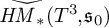 (where $\mathfrak {s}_0$
denotes the unique torsion spin
$\mathfrak {s}_0$
denotes the unique torsion spin $^c$
structure). In particular, the conclusion also holds for any torsion spin
$^c$
structure). In particular, the conclusion also holds for any torsion spin $^c$
three-manifold
$^c$
three-manifold $(Y,\mathfrak {s})$
with
$(Y,\mathfrak {s})$
with $b_1=3$
for which
$b_1=3$
for which  (as absolutely graded $\mathbb {Q}[U]\otimes \Lambda ^*(H_1/\mathrm {tors})$
-modules, up to an overall grading shift).
$\mathbb {Q}[U]\otimes \Lambda ^*(H_1/\mathrm {tors})$
-modules, up to an overall grading shift).
We conclude by remarking that the determination of 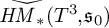 has been of fundamental importance in Seiberg-Witten theory and its applications to four-dimensional topology [Reference Morgan, Mrowka and SzabóMMS97],[Reference Henry TaubesTau01].
Organization. In Section 1 we recollect some background material in monopole Floer homology and the geometry of Dirac operators necessary for our discussion. In Section 2 we provide a description of the generators of the Floer chain complex of a spectrally large three-manifold in terms of Morse theory on the torus of flat connections. In Section 3 we introduce a special class of three-manifolds, which we call of the simplest type, and provide a concrete computation of their Floer homology groups. In Section 4 we discuss in detail two interesting examples of manifolds of the simplest type, namely $S^1\times \Sigma _h$
for
$S^1\times \Sigma _h$
for $h=2,3$
. Finally, in Section 5 we prove the main results of the paper, Theorems 0.2 and 5.1.
$h=2,3$
. Finally, in Section 5 we prove the main results of the paper, Theorems 0.2 and 5.1.
1 Background material
We recall some essential ideas about monopole Floer homology; we refer the reader to [Reference Kronheimer and MrowkaKM07] for the definitive reference, and [Reference LinLin16] for a friendly introduction to the topic. Fix a spin $^c 3$
-manifold
$^c 3$
-manifold $(Y,\mathfrak {s})$
. Given a spin
$(Y,\mathfrak {s})$
. Given a spin $^c$
connection B, the curvature
$^c$
connection B, the curvature $2$
-form
$2$
-form $F_{B^t}$
of the connection
$F_{B^t}$
of the connection $B^t$
induced on the determinant line bundle is always closed. Throughout the paper, we will only consider torsion spin
$B^t$
induced on the determinant line bundle is always closed. Throughout the paper, we will only consider torsion spin $^c$
structures; by Chern-Weil theory, this implies that
$^c$
structures; by Chern-Weil theory, this implies that $F_{B^t}$
is an exact
$F_{B^t}$
is an exact $2$
-form. Because of this one sees that reducible solutions
$2$
-form. Because of this one sees that reducible solutions $(B,0)$
of the equations (3) up to gauge are in correspondence with the torus
$(B,0)$
of the equations (3) up to gauge are in correspondence with the torus $\mathbb {T}_Y$
of spin
$\mathbb {T}_Y$
of spin $^c$
connections B with
$^c$
connections B with $B^t$
flat, see [Reference Kronheimer and MrowkaKM07, Section 4.2].
$B^t$
flat, see [Reference Kronheimer and MrowkaKM07, Section 4.2].
In particular, when $b_1>0$
, the unperturbed equations are never transversely cut out. Furthermore, in order to define the monopole Floer homology groups one needs to work in the blown-up configuration space consisting of triples
$b_1>0$
, the unperturbed equations are never transversely cut out. Furthermore, in order to define the monopole Floer homology groups one needs to work in the blown-up configuration space consisting of triples $(B,r,\psi )$
with
$(B,r,\psi )$
with $r\in \mathbb {R}^{\geq 0}$
and
$r\in \mathbb {R}^{\geq 0}$
and $\|\psi \|_{L^2}=1$
. In this setup, one needs to introduce suitable perturbations and transversality for the three-dimensional equations can be phrased in terms of the following criteria:
$\|\psi \|_{L^2}=1$
. In this setup, one needs to introduce suitable perturbations and transversality for the three-dimensional equations can be phrased in terms of the following criteria:
-
• the critical points of (the perturbation of)
$\mathrm {grad}\mathcal {L}$
in the blow-down are non-degenerate. -
• at each reducible critical point
$(B,0)$
of the (perturbation of)
$\mathrm {grad}\mathcal {L}$
, the (perturbation of the) Dirac operator
$D_B$
has simple spectrum and trivial kernel.


In [Reference Kronheimer and MrowkaKM07, Ch. 11] a large space of perturbations is introduced so that these conditions can be achieved. Of course, even if one had a concrete understanding of the solutions to the unperturbed equations, this might not be the case anymore after appealing to the general results for achieving transversality. Our goal in this paper is to study a concrete instance in which one can both achieve transversality and maintain a concrete understanding of the space of solutions. For example, in the context of transversality for the flat torus [Reference Kronheimer and MrowkaKM07, Ch. 37] and mapping tori of cyclic coverings $\Sigma \rightarrow \mathbb {P}^1$
in [Reference LinLin22b], for
$\Sigma \rightarrow \mathbb {P}^1$
in [Reference LinLin22b], for $\delta ,\varepsilon> 0$
perturbations of the Chern-Simons functional of the form
$\delta ,\varepsilon> 0$
perturbations of the Chern-Simons functional of the form
 $$ \begin{align*} \widetilde{\mathcal{L}}(B,\Psi)=\mathcal{L}(B,\Psi)-\frac{\delta}{2}\|\Psi\|^2+\varepsilon f(B) \end{align*} $$
were considered. Here for a function $f:\mathbb {T}_Y\rightarrow \mathbb {R}$
we define (abusing notation)
$f:\mathbb {T}_Y\rightarrow \mathbb {R}$
we define (abusing notation) $f(B)$
to be the evaluation at the harmonic part of
$f(B)$
to be the evaluation at the harmonic part of $B-B_0$
(thought of as an element in
$B-B_0$
(thought of as an element in $ H^1(Y,i\mathbb {R})$
).
$ H^1(Y,i\mathbb {R})$
).
In those situations, the analysis of transversality begins by studying the perturbations for which $\varepsilon =0$
. In this context, the first of the Seiberg-Witten equations (3) is replaced by the eigenvalue equation
$\varepsilon =0$
. In this context, the first of the Seiberg-Witten equations (3) is replaced by the eigenvalue equation
 $$ \begin{align} D_B\Psi=\delta\Psi. \end{align} $$
In the level of generality we are interested in, we will need to introduce additional perturbations involving only spinors that generalize the ${\delta }\|\Psi \|^2/2$
term. In particular, we will consider for a section
${\delta }\|\Psi \|^2/2$
term. In particular, we will consider for a section $A\in \Gamma ( i\mathfrak {u}(S))$
the perturbed Chern-Simons-Dirac functional (4), for which the corresponding perturbed Seiberg-Witten equations are
$A\in \Gamma ( i\mathfrak {u}(S))$
the perturbed Chern-Simons-Dirac functional (4), for which the corresponding perturbed Seiberg-Witten equations are
 $$ \begin{align} \begin{aligned} D_B\Psi&=A\Psi\\ \frac{1}{2}\rho(\ast F_{B^t})+(\Psi\Psi^*)_0&=0. \end{aligned} \end{align} $$
We will refer to these perturbations as of spinorial type. Notice that they are not of cylinder type in the sense of [Reference Kronheimer and MrowkaKM07, Ch. 11]; nevertheless, it is readily checked that they define k-tame perturbations, hence can be used to perturb the equations in the relevant functional setup. The main advantage of using them is that, while the first equation changes in an understandable way, the second equation is left unchanged. In particular, reducible solutions $(B,0)$
to the equations are still identified with the torus
$(B,0)$
to the equations are still identified with the torus $\mathbb {T}_Y$
.
$\mathbb {T}_Y$
.
Remark 1.1. Under the decomposition $A=A_0+\tau \cdot I$
with
$A=A_0+\tau \cdot I$
with $A_0$
traceless, we can rewrite (2) as
$A_0$
traceless, we can rewrite (2) as
 $$ \begin{align*} D_{\tilde{B}}\Psi=\tau\cdot \Psi \end{align*} $$
where $\tilde {B}=B-\rho ^{-1}(A_0)$
is a new spin
$\tilde {B}=B-\rho ^{-1}(A_0)$
is a new spin $^c$
connection. Hence we can interpret the family of equations (2) for
$^c$
connection. Hence we can interpret the family of equations (2) for $[B]\in \mathbb {T}_Y$
as a family of equations where
$[B]\in \mathbb {T}_Y$
as a family of equations where $\tilde {B}$
varies in the torus of spin
$\tilde {B}$
varies in the torus of spin $^c$
connections with fixed (exact) curvature.
$^c$
connections with fixed (exact) curvature.
Of course, in general the equations (6) will admit irreducible solutions $(B,\Psi )$
(i.e.
$(B,\Psi )$
(i.e. $\Psi $
not identically zero), and it is in general quite challenging to understand explicitly whether they do. In [Reference LinLin20] and [Reference Lin and LipnowskiLL22] it is proved that a suitable condition of spectral nature guarantees that there are no such solutions. While those results were focused towards the case
$\Psi $
not identically zero), and it is in general quite challenging to understand explicitly whether they do. In [Reference LinLin20] and [Reference Lin and LipnowskiLL22] it is proved that a suitable condition of spectral nature guarantees that there are no such solutions. While those results were focused towards the case $b_1=0$
, we will now adapt the discussion to fit our needs.
$b_1=0$
, we will now adapt the discussion to fit our needs.
Recall that we denote by $\lambda _1^*$
the least eigenvalue of the Hodge Laplacian
$\lambda _1^*$
the least eigenvalue of the Hodge Laplacian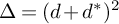 $\Delta =(d+d^*)^2$
on coexact
$\Delta =(d+d^*)^2$
on coexact $1$
-forms, and by
$1$
-forms, and by $\tilde {s}(p)$
the sum of the two least eigenvalues of the Ricci curvature at
$\tilde {s}(p)$
the sum of the two least eigenvalues of the Ricci curvature at $p\in Y$
, and we say that the metric g is spectrally large if the inequality
$p\in Y$
, and we say that the metric g is spectrally large if the inequality
 $$ \begin{align*} \lambda_1^*>-\frac{1}{2}\inf_{p\in Y} \tilde{s}(p) \end{align*} $$
holds (cf. Definition 0.1).
Proposition 1.1. Suppose $(Y,g)$
is spectrally large. Then for a spinorial type perturbation
$(Y,g)$
is spectrally large. Then for a spinorial type perturbation $A\in \Gamma (i\mathfrak {u}(S))$
of sufficiently small
$A\in \Gamma (i\mathfrak {u}(S))$
of sufficiently small $C^0$
norm, the A-perturbed Seiberg–Witten equations (6) do not admit irreducible solutions for all torsion spin
$C^0$
norm, the A-perturbed Seiberg–Witten equations (6) do not admit irreducible solutions for all torsion spin $^c$
structures
$^c$
structures $\mathfrak {s}$
on Y.
$\mathfrak {s}$
on Y.
Proof. The way in which $\lambda _1^*$
comes into play in the proofs in [Reference LinLin20] and [Reference Lin and LipnowskiLL22] is through its Rayleigh quotient interpretation:
$\lambda _1^*$
comes into play in the proofs in [Reference LinLin20] and [Reference Lin and LipnowskiLL22] is through its Rayleigh quotient interpretation:
 $$ \begin{align} \|d\xi\|^2_{L^2}\geq \lambda_1^*\|\xi\|^2_{L^2}\text{ for any coexact} 1\text{-form } \xi. \end{align} $$
In our setup, $\ast F_{B^t}$
is coexact
$\ast F_{B^t}$
is coexact $1$
-form, and the second Seiberg-Witten equation is unchanged, so the proof applies without changes. For completeness, let us point out how to deal with the perturbed operator
$1$
-form, and the second Seiberg-Witten equation is unchanged, so the proof applies without changes. For completeness, let us point out how to deal with the perturbed operator $D_B-A$
. The main effect is that the pointwise inner product
$D_B-A$
. The main effect is that the pointwise inner product $\langle \Psi ,D_B^2\Psi \rangle $
does not vanish identically. In the argument one takes its integral after multiplying by
$\langle \Psi ,D_B^2\Psi \rangle $
does not vanish identically. In the argument one takes its integral after multiplying by $|\Psi |^2$
; integrating by parts, we obtain
$|\Psi |^2$
; integrating by parts, we obtain
 $$ \begin{align*} \int_Y|\Psi|^2\langle \Psi,D_B^2\Psi\rangle d\mathrm{vol}&=\int_Y\langle |\Psi|^2 \Psi,D_B^2\Psi\rangle d\mathrm{vol}=\\ &=\int_Y\langle D_B|\Psi|^2 \Psi,D_B\Psi\rangle d\mathrm{vol}\\ &=\int_Y\langle D_B|\Psi|^2 \Psi,A\Psi\rangle d\mathrm{vol}. \end{align*} $$
We can then bound the integrand
 $$ \begin{align*} \lvert\langle D_B|\Psi|^2 \Psi,A\Psi\rangle\lvert\leq C_A |\nabla_B\Psi|\cdot|\Psi|^3\leq \frac{C_A}{2}\cdot(|\Psi|^4+|\nabla_B\Psi|^2|\Psi|^2) \end{align*} $$
where we used $2ab\leq a^2+b^2$
and
$2ab\leq a^2+b^2$
and $C_A$
is a constant depending only on the
$C_A$
is a constant depending only on the $C^0$
norm of A. The rest of the argument then is carried in exactly the same way without major changes.
$C^0$
norm of A. The rest of the argument then is carried in exactly the same way without major changes.
Remark 1.2. The key point is that a spinorial perturbation does not change the second equation (6) so that one can use the Rayleigh quotient interpretation of the first eigenvalue on coexact forms (7). In general, the issue lies in controlling the perturbation in the direction of harmonic forms (the tangent space to $\mathbb {T}_Y$
); we will discuss this in detail when adding Morse perturbations in Section 2.
$\mathbb {T}_Y$
); we will discuss this in detail when adding Morse perturbations in Section 2.
In the case $b_1=0$
, the perturbed Dirac operator at the (unique up to gauge) flat connection is
$b_1=0$
, the perturbed Dirac operator at the (unique up to gauge) flat connection is $D_{B}-\delta $
, hence it has no kernel for generic
$D_{B}-\delta $
, hence it has no kernel for generic $\delta $
; furthermore, one can add additional small perturbations as in [Reference Kronheimer and MrowkaKM07, Ch. 12] to make its spectrum simple. Hence a space satisfying the assumption of Proposition 1.1 is an L-space.
$\delta $
; furthermore, one can add additional small perturbations as in [Reference Kronheimer and MrowkaKM07, Ch. 12] to make its spectrum simple. Hence a space satisfying the assumption of Proposition 1.1 is an L-space.
By contrast when $b_1>0$
, the A-perturbed equations still have
$b_1>0$
, the A-perturbed equations still have $\mathbb {T}_Y$
as reducible critical set, so the set of solutions to (6) is never transversely cut out in the sense of [Reference Kronheimer and MrowkaKM07]. Furthermore, even though
$\mathbb {T}_Y$
as reducible critical set, so the set of solutions to (6) is never transversely cut out in the sense of [Reference Kronheimer and MrowkaKM07]. Furthermore, even though $\mathbb {T}_Y$
is a smooth manifold, it is in general not a Morse-Bott critical submanifold: this fails exactly on the locus
$\mathbb {T}_Y$
is a smooth manifold, it is in general not a Morse-Bott critical submanifold: this fails exactly on the locus $\mathsf {K}\subset \mathbb {T}_Y$
where
$\mathsf {K}\subset \mathbb {T}_Y$
where $D_{B}-A$
has kernel. Our main goal is to extract information about the Floer homology groups of
$D_{B}-A$
has kernel. Our main goal is to extract information about the Floer homology groups of $(Y,\mathfrak {s})$
in terms of the pair
$(Y,\mathfrak {s})$
in terms of the pair $(\mathbb {T}_Y,\mathsf {K})$
.
$(\mathbb {T}_Y,\mathsf {K})$
.
In order to do so, we begin by reviewing some well-known facts on the space $\mathrm {Op}^{sa}$
of Dirac type operators of the form
$\mathrm {Op}^{sa}$
of Dirac type operators of the form $D_{B_0}+h$
where
$D_{B_0}+h$
where $B_0$
is a fixed reference connection and h is a
$B_0$
is a fixed reference connection and h is a $0$
-th order perturbation. For the sake of the exposition, we will not be too detailed about the functional setup, and refer the reader to [Reference Kronheimer and MrowkaKM07, Ch. 12] for details.
$0$
-th order perturbation. For the sake of the exposition, we will not be too detailed about the functional setup, and refer the reader to [Reference Kronheimer and MrowkaKM07, Ch. 12] for details.
We can consider the subspace of $\mathcal {K}\subset \mathrm {Op}^{sa}$
consisting of operators with non-trivial kernel. This admits a stratification
$\mathcal {K}\subset \mathrm {Op}^{sa}$
consisting of operators with non-trivial kernel. This admits a stratification
 $$ \begin{align*} \mathcal{K}=\coprod_{i>0}\mathcal{K}_i \end{align*} $$
where $\mathcal {K}_i$
is the subspace of operators with kernel having dimension exactly i. The latter is a smooth Banach submanifold of
$\mathcal {K}_i$
is the subspace of operators with kernel having dimension exactly i. The latter is a smooth Banach submanifold of $\mathrm {Op}^{sa}$
of codimension
$\mathrm {Op}^{sa}$
of codimension $i^2$
, where the normal bundle at an operator
$i^2$
, where the normal bundle at an operator $T\in \mathcal {K}_i$
is naturally identified with the space of self-adjoint operators on
$T\in \mathcal {K}_i$
is naturally identified with the space of self-adjoint operators on $\mathrm {ker}T$
:
$\mathrm {ker}T$
:
 $$ \begin{align} N_T\mathcal{K}_i=i\mathfrak{u}(\mathrm{ker}T). \end{align} $$
Given this discussion, we can state the following well-known results (see, for example, [Reference Kronheimer and MrowkaKM07, Section 12.6]).
Lemma 1.2. For generic spinorial perturbation $A\in \Gamma ( i\mathfrak {u}(S))$
, the locus
$A\in \Gamma ( i\mathfrak {u}(S))$
, the locus $\mathsf {K}\subset \mathbb {T}_Y$
for which
$\mathsf {K}\subset \mathbb {T}_Y$
for which $D_B-A$
has kernel admits a stratification
$D_B-A$
has kernel admits a stratification
 $$ \begin{align*} \mathsf{K}=\coprod_{i>0}\mathsf{K}_i \end{align*} $$
corresponding to the dimension of the kernel, and $\mathsf {K}_i\subset \mathbb {T}_Y$
is a smooth submanifold of codimension
$\mathsf {K}_i\subset \mathbb {T}_Y$
is a smooth submanifold of codimension $i^2$
.
$i^2$
.
Proof. This follows from a standard transversality argument. In particular (again being imprecise about the functional setup) we can consider the map
 $$ \begin{align*} F:\mathbb{T}_Y\times \Gamma(i\mathfrak{u}(S))&\rightarrow \mathrm{Op}^{sa}\\ (B,A)&\mapsto D_{B}-A. \end{align*} $$
Because the normal bundle of each stratum is given by (8), we readily see that F is transverse to all strata, hence by Sard-Smale for a generic $A\in \Gamma (i\mathfrak {u}(S))$
the map
$A\in \Gamma (i\mathfrak {u}(S))$
the map $F(-,A)$
is also transverse to all strata.
$F(-,A)$
is also transverse to all strata.
While the discussion above is local in nature, for our purposes we will need to discuss some global aspects of the family of operators $\{D_B-A\}$
. In our setup, the Atiyah-Singer index theorem for families [Reference Atiyah, Patodi and SingerAPS76], determines the classifying map
$\{D_B-A\}$
. In our setup, the Atiyah-Singer index theorem for families [Reference Atiyah, Patodi and SingerAPS76], determines the classifying map
 $$ \begin{align*} \mathrm{ind}:\mathbb{T}_Y\rightarrow U(\infty) \end{align*} $$
of the family up to homotopy in terms of the triple cup-product
 $$ \begin{align*} \cup_Y^3:\Lambda^3H^1(Y;\mathbb{Z})\rightarrow \mathbb{Z}, \end{align*} $$
thought of as an element in
 $$ \begin{align} \cup_Y^3\in H^3(\mathbb{T}_Y;\mathbb{Z})\cong \Lambda^3 H^1(\mathbb{T}_Y;\mathbb{Z})\cong \Lambda^3 H^1(Y;\mathbb{Z})^*. \end{align} $$
We refer the reader to [Reference LinLin22a] for a quick introduction to the topic geared towards our needs. We have the following.
Lemma 1.3. The hypersurface $\mathsf {K}\subset \mathbb {T}_Y$
(which is possibly singular and disconnected) defines the zero class in
$\mathsf {K}\subset \mathbb {T}_Y$
(which is possibly singular and disconnected) defines the zero class in $H_{n-1}(\mathbb {T}_Y;\mathbb {Z})$
. The restriction of the family of operators
$H_{n-1}(\mathbb {T}_Y;\mathbb {Z})$
. The restriction of the family of operators $\{D_B-A\}$
to each component U of
$\{D_B-A\}$
to each component U of $\mathbb {T}_Y\setminus \mathsf {K}$
is homotopically trivial. In particular,
$\mathbb {T}_Y\setminus \mathsf {K}$
is homotopically trivial. In particular, $\cup _Y^3\in H^3(\mathbb {T}_Y;\mathbb {Z})$
restricts to zero on each component U.
$\cup _Y^3\in H^3(\mathbb {T}_Y;\mathbb {Z})$
restricts to zero on each component U.
Remark 1.3. Notice that the top stratum $\mathsf {K}_1\subset \mathsf {K}$
is naturally oriented because its normal bundle can be identified with the multiples of the identity.
$\mathsf {K}_1\subset \mathsf {K}$
is naturally oriented because its normal bundle can be identified with the multiples of the identity.
Proof. When $\mathfrak {s}$
is torsion, the index theorem implies that the family of operators
$\mathfrak {s}$
is torsion, the index theorem implies that the family of operators ${\{D_B-A\}}$
has no spectral flow around loops; the first part then follows from the fact that the spectral flow around a loop
${\{D_B-A\}}$
has no spectral flow around loops; the first part then follows from the fact that the spectral flow around a loop $\gamma $
can be interpreted as the (well-defined) intersection number
$\gamma $
can be interpreted as the (well-defined) intersection number $\gamma \cdot \mathsf {K}$
. For the second part, by definition the restriction to U gives rise to a family of operators with no kernel, hence invertible. We conclude because families of invertible operators are homotopically trivial (see [Reference Atiyah and SingerAS69]).
$\gamma \cdot \mathsf {K}$
. For the second part, by definition the restriction to U gives rise to a family of operators with no kernel, hence invertible. We conclude because families of invertible operators are homotopically trivial (see [Reference Atiyah and SingerAS69]).
Remark 1.4. While the remainder of the paper we will only focus on the case in which $\mathsf {K}=\mathsf {K}_1$
is smooth, we will say a couple of words about the simplest situation in which the
$\mathsf {K}=\mathsf {K}_1$
is smooth, we will say a couple of words about the simplest situation in which the $\mathsf {K}$
has singularities, namely the case in which there are points for which
$\mathsf {K}$
has singularities, namely the case in which there are points for which $D_B-A$
has two-dimensional kernel. The locus where the kernel has dimension at least 3 has codimension
$D_B-A$
has two-dimensional kernel. The locus where the kernel has dimension at least 3 has codimension $9$
, so this is generically true for
$9$
, so this is generically true for $b_1(Y)\leq 8$
.
$b_1(Y)\leq 8$
.
We will denote the locus by $\mathsf {K}_2\subset \mathbb {T}$
. By (8), the normal bundle at a point
$\mathsf {K}_2\subset \mathbb {T}$
. By (8), the normal bundle at a point $T\in \mathsf {K}_2$
is naturally identified with
$T\in \mathsf {K}_2$
is naturally identified with $i\mathfrak {u}(\mathrm {ker}(T))$
, the real
$i\mathfrak {u}(\mathrm {ker}(T))$
, the real $4$
-dimensional space of hermitian operators on
$4$
-dimensional space of hermitian operators on $\mathrm {ker}(T)$
. Identifying
$\mathrm {ker}(T)$
. Identifying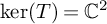 $\mathrm {ker}(T)=\mathbb {C}^2$
, we have
$\mathrm {ker}(T)=\mathbb {C}^2$
, we have
 $$ \begin{align*} i\mathfrak{u}(2)=\left\{ \begin{bmatrix} a& z\\ \bar{z}& b \end{bmatrix}\lvert a,b\in\mathbb{R},z\in\mathbb{C}. \right\} \end{align*} $$
In this model, the locus of matrices with kernel is given by the quadric in $\mathbb {R}^4$
 $$ \begin{align*} Q=\{ab-|z|^2=0\}, \end{align*} $$
which is a quadratic form with signature $(1,3)$
, and the only matrix with multiplicity
$(1,3)$
, and the only matrix with multiplicity $2$
is the zero matrix. Topologically, Q is the union over two disjoint copies of
$2$
is the zero matrix. Topologically, Q is the union over two disjoint copies of $S^2$
; in general, when transversely cut out (cf. Lemma 1.2), the locus in
$S^2$
; in general, when transversely cut out (cf. Lemma 1.2), the locus in $\mathsf {K}$
where the dimension of the kernel is at most
$\mathsf {K}$
where the dimension of the kernel is at most $2$
is a Q bundle over
$2$
is a Q bundle over $\mathsf {K}_2$
near
$\mathsf {K}_2$
near $\mathsf {K}_2$
.
$\mathsf {K}_2$
.
2 Morse functions on the Jacobian
Suppose now that we fixed a spinorial perturbation A small and generic so that the conclusions of Propositions 1.1 and 1.2 both hold. Let us also make the following.
Assumption 2.1. The hypersurface $\mathsf {K}\subset \mathbb {T}_Y$
is smooth, i.e.
$\mathsf {K}\subset \mathbb {T}_Y$
is smooth, i.e. $\mathsf {K}=\mathsf {K}_1$
.
$\mathsf {K}=\mathsf {K}_1$
.
This is indeed the case when $b_1\leq 3$
for dimensional reasons, and will also hold in the explicit examples with
$b_1\leq 3$
for dimensional reasons, and will also hold in the explicit examples with $b_1>3$
that we will consider later. By Lemma 1.3, the spectral flow between any two points in
$b_1>3$
that we will consider later. By Lemma 1.3, the spectral flow between any two points in $\mathbb {T}_Y\setminus \mathsf {K}$
is well-defined, and we make the following definition.
$\mathbb {T}_Y\setminus \mathsf {K}$
is well-defined, and we make the following definition.
Definition 2.1. We say that the family of Dirac operators (perturbed by A) has type k if the spectral flow between any two points in $\mathbb {T}_Y\setminus \mathsf {K}$
is bounded above in absolute value by k, and there are two points with spectral flow exactly k. We call a manifold
$\mathbb {T}_Y\setminus \mathsf {K}$
is bounded above in absolute value by k, and there are two points with spectral flow exactly k. We call a manifold $(Y,\mathfrak {s})$
of the simplest type if it has type
$(Y,\mathfrak {s})$
of the simplest type if it has type $1$
.
$1$
.
When our family of Dirac operators (perturbed by A) has type k, we can fix a basepoint $B_0$
so that all other points have positive spectral flow from it; this gives us a inclusion of subspaces
$B_0$
so that all other points have positive spectral flow from it; this gives us a inclusion of subspaces
 $$ \begin{align} \mathbb{T}_0\subset\mathbb{T}_1\subset\cdots\subset\mathbb{T}_k=\mathbb{T}_Y \end{align} $$
so that $\mathsf {K}=\amalg \partial \mathbb {T}_i$
and the points of
$\mathsf {K}=\amalg \partial \mathbb {T}_i$
and the points of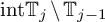 $\mathrm {int}\mathbb {T}_j\setminus \mathbb {T}_{j-1}$
have spectral flow from
$\mathrm {int}\mathbb {T}_j\setminus \mathbb {T}_{j-1}$
have spectral flow from $B_0$
exactly j.
$B_0$
exactly j.
Remark 2.1. Of course, both the hypersurface $\mathsf {K}$
and the filtration (10) depend on the choice of spinorial perturbation A, but we do not incorporate this dependence for readability.
$\mathsf {K}$
and the filtration (10) depend on the choice of spinorial perturbation A, but we do not incorporate this dependence for readability.
Definition 2.2. We say that a Morse function $f:\mathbb {T}_Y\rightarrow \mathbb {R}$
is A-transverse if for each point
$f:\mathbb {T}_Y\rightarrow \mathbb {R}$
is A-transverse if for each point $x\in \partial \mathbb {T}_j$
, the vector field
$x\in \partial \mathbb {T}_j$
, the vector field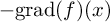 $-\mathrm {grad}(f)(x)$
is transverse to
$-\mathrm {grad}(f)(x)$
is transverse to $\partial \mathbb {T}_j$
and points towards the interior of
$\partial \mathbb {T}_j$
and points towards the interior of $\mathbb {T}_j$
.
$\mathbb {T}_j$
.
Notice that A-transverse Morse functions always exist by Lemma 1.3 and its proof.
The fact that $\mathsf {K}=\mathsf {K}_1$
is transversely cut out in the space of operators readily implies the following.
$\mathsf {K}=\mathsf {K}_1$
is transversely cut out in the space of operators readily implies the following.
Lemma 2.3. Fix an A-transverse Morse function f, and consider a smooth curve ${\gamma :(-\epsilon ,\epsilon )\rightarrow \mathbb {T}_Y}$
with the following properties:
${\gamma :(-\epsilon ,\epsilon )\rightarrow \mathbb {T}_Y}$
with the following properties:
-
•
$\gamma $
intersects
$\mathsf {K}$
transversely at
$t=0$
at a point
$\gamma (0)$
; -
•
$f(\gamma (t))> f(\gamma (0))$
(resp
$<f(\gamma (0))$
) for
$t<0$
(resp
$t>0$
).





Then, after possibly restricting the interval, the operator $D_{\gamma (t)}-A$
has a well defined eigenvalue
$D_{\gamma (t)}-A$
has a well defined eigenvalue $\lambda (t)$
of smallest absolute value. Furthermore this eigenvalue is simple, and the function
$\lambda (t)$
of smallest absolute value. Furthermore this eigenvalue is simple, and the function $t\mapsto \lambda (t)$
is differentiable and
$t\mapsto \lambda (t)$
is differentiable and $\lambda '(0)<0$
.
$\lambda '(0)<0$
.
We consider then an additional perturbation of the form
 $$ \begin{align} \widetilde{\mathcal{L}}(B,\Psi)=\mathcal{L}(B,\Psi)-\frac{1}{2}\langle\Psi, A \Psi\rangle_{L^2}+\varepsilon f(B) \end{align} $$
for our A-transverse Morse function $f:\mathbb {T}_Y\rightarrow \mathbb {R}$
.
$f:\mathbb {T}_Y\rightarrow \mathbb {R}$
.
Proposition 2.4. Suppose we are in the situation above. Then for $\varepsilon>0$
sufficiently small, the perturbed Seiberg-Witten equations corresponding to the critical points of (11), namely
$\varepsilon>0$
sufficiently small, the perturbed Seiberg-Witten equations corresponding to the critical points of (11), namely
 $$ \begin{align} \begin{aligned} D_{B}\Psi&=A\Psi\\ \frac{1}{2}\rho(\ast F_{B^t})+(\Psi\Psi^*)_0&=-\varepsilon\cdot \rho\left(\mathrm{grad}f(B)\right). \end{aligned} \end{align} $$
do not have irreducible solutions.
Here, $\mathrm {grad}f(B)$
is a tangent vector on
$\mathrm {grad}f(B)$
is a tangent vector on $\mathbb {T}_Y$
, which we interpret as an imaginary-valued harmonic
$\mathbb {T}_Y$
, which we interpret as an imaginary-valued harmonic $1$
-form on Y.
$1$
-form on Y.
Proof. Let us denote for simplicity $D_{B,A}:=D_B-A$
throughout the proof. Suppose that there is a sequence
$D_{B,A}:=D_B-A$
throughout the proof. Suppose that there is a sequence $\varepsilon _i>0$
converging to zero such that the equation have an irreducible solution
$\varepsilon _i>0$
converging to zero such that the equation have an irreducible solution $(B_i,\Psi _i)$
; these solve the equations in the blow-up
$(B_i,\Psi _i)$
; these solve the equations in the blow-up $(B_i,r_i,\psi _i)$
given by
$(B_i,r_i,\psi _i)$
given by

where $\|\psi _i\|_{L^2}=1$
. We can then extract a sequence converging to a solution
$\|\psi _i\|_{L^2}=1$
. We can then extract a sequence converging to a solution $(B,r,\psi )$
with
$(B,r,\psi )$
with $\|\psi \|_{L^2}=1$
to the equations with
$\|\psi \|_{L^2}=1$
to the equations with $\varepsilon =0$
; by Proposition 1.1 we necessarily have
$\varepsilon =0$
; by Proposition 1.1 we necessarily have $r=0$
. In particular,
$r=0$
. In particular, $B^t$
is flat hence
$B^t$
is flat hence $B\in \mathbb {T}_Y$
, and the equation
$B\in \mathbb {T}_Y$
, and the equation
 $$ \begin{align*} D_{B,A}\psi=0 \end{align*} $$
then implies that $B\in \mathsf {K}$
.
$B\in \mathsf {K}$
.
Consider now a short piece of flowline $B(t)$
of
$B(t)$
of $-\mathrm {grad}f$
in
$-\mathrm {grad}f$
in $\mathbb {T}$
such that
$\mathbb {T}$
such that $\gamma (0)=B$
. There is a smooth parametrization
$\gamma (0)=B$
. There is a smooth parametrization $\lambda (t)$
of the smallest eigenvalue by Lemma 2.3, and because the eigenvalue is simple we can choose a
$\lambda (t)$
of the smallest eigenvalue by Lemma 2.3, and because the eigenvalue is simple we can choose a $1$
-parameter family of non-zero eigenspinors
$1$
-parameter family of non-zero eigenspinors $\varphi (t)$
:
$\varphi (t)$
:
 $$ \begin{align*} D_{B(t),A}\varphi(t)=\lambda(t)\varphi(t) \end{align*} $$
with $\varphi (0)=\psi $
.
$\varphi (0)=\psi $
.
Differentiating we obtain
 $$ \begin{align*} D_{B(t),A}\dot{\varphi}(t)+\rho(\dot{B}(t))\varphi(t)=\dot{\lambda}(t)\varphi(t)+\lambda(t)\dot{\varphi}(t) \end{align*} $$
hence evaluating at $t=0$
we have
$t=0$
we have
 $$ \begin{align*} D_{B,A}\dot{\varphi}(0)+\rho(-\mathrm{grad}f(B))\psi=\dot{\lambda}(0)\psi. \end{align*} $$
Taking $L^2$
inner products with
$L^2$
inner products with $\psi $
, and using that
$\psi $
, and using that $D_{B,A}$
is self-adjoint, so that
$D_{B,A}$
is self-adjoint, so that
 $$ \begin{align*} \langle D_{B,A}\dot{\varphi}(0),\psi\rangle_{L^2}=\langle \dot{\varphi}(0),D_{B,A}\psi\rangle_{L^2}=0 \end{align*} $$
we obtain that
 $$ \begin{align*} \langle \rho\left(\mathrm{grad}f(B)\right), (\psi\psi^*)_0\rangle_{L^2}=\frac{1}{2}\langle\psi ,\rho(\mathrm{grad}f(B))\psi\rangle_{L^2}=-\frac{\dot{\lambda}(0)}{2}\|\psi\|_{L^2}^2>0. \end{align*} $$
where we used Lemma 2.3 for the sign on $\dot {\lambda }(0)$
.
$\dot {\lambda }(0)$
.
On the other hand, we can take the $L^2$
inner product of the second equation in (13) with
$L^2$
inner product of the second equation in (13) with $\varepsilon _i\cdot \mathrm {grad}f(B_i)$
; because
$\varepsilon _i\cdot \mathrm {grad}f(B_i)$
; because $\ast F_{B^t}$
is exact (hence orthogonal to harmonic forms), we obtain that
$\ast F_{B^t}$
is exact (hence orthogonal to harmonic forms), we obtain that
 $$ \begin{align*} r_i^2\langle \rho\left(\mathrm{grad}f(B_i)\right), (\psi_i\psi_i^*)_0\rangle_{L^2}=-\varepsilon_i\|\mathrm{grad}f(B_i)\|^2_{L^2}\leq 0. \end{align*} $$
Because $r_i\neq 0$
, we can conclude passing to the limit that
$r_i\neq 0$
, we can conclude passing to the limit that
 $$ \begin{align*} \langle \rho\left(\mathrm{grad}f(B)\right), (\psi\psi^*)_0\rangle_{L^2}\leq 0, \end{align*} $$
which is a contradiction.
With this in hand, we can furthermore add a small additional perturbation as in [Reference Kronheimer and MrowkaKM07] to make first the spectra of the perturbed Dirac operators simple at the critical points of f, and then to arrange regularity for the moduli spaces of flowlines, hence achieving transversality without introducing irreducible critical points.
The Floer chain complex computing  is then is generated by the stable critical points in the blow-up $\check {C}_*=C^s$
; these form an infinite tower over each critical point of f in
$\check {C}_*=C^s$
; these form an infinite tower over each critical point of f in $\mathbb {T}_Y$
. The differential is given by
$\mathbb {T}_Y$
. The differential is given by
 $$ \begin{align*} \check{\partial}=\bar{\partial}^s_s-\partial^u_s\bar{\partial}^s_u. \end{align*} $$
Unfortunately, in this level of generality, the latter cannot be described concretely for two reasons:
-
• the term
$\partial ^u_s$
involves irreducible solutions to the Seiberg-Witten equations on
$\mathbb {R}\times Y$
, of which we do not have any understanding. -
• the counts of reducible trajectories
$\bar {\partial }^s_s$
and
$\bar {\partial }^s_u$
will in general involve families of Dirac operators parametrized by higher dimensional spaces of Morse flowlines.


We conclude this section by describing two useful tools that allow to obtain partial information about  ; we will see in the next section that when combined, these provide a complete description of the homology group in the simplest type case.
First of all, one can compare the Floer chain complex $\check {C}_*$
with the Floer chain complex computing the U-localized version
$\check {C}_*$
with the Floer chain complex computing the U-localized version $\overline {\mathit {HM}}_*(Y,\mathfrak {s})$
. This is given by
$\overline {\mathit {HM}}_*(Y,\mathfrak {s})$
. This is given by $\bar {C}_*=C^s\oplus C^u$
with differential
$\bar {C}_*=C^s\oplus C^u$
with differential
 $$ \begin{align*}\bar{\partial}= \begin{bmatrix} \bar{\partial}^s_s & \bar{\partial}^u_s\\ \bar{\partial}^s_u & \bar{\partial}^u_u\\ \end{bmatrix}. \end{align*} $$
The map  , which is induced by the chain map
 $$ \begin{align*} i:C^s\oplus C^u\rightarrow C^s \end{align*} $$
given by $i=\mathrm {id}-\partial ^u_s$
induces an isomorphism in degrees high enough. This is helpful because even though one cannot describe explicitly the differential
$i=\mathrm {id}-\partial ^u_s$
induces an isomorphism in degrees high enough. This is helpful because even though one cannot describe explicitly the differential $\bar {\partial }$
, the resulting homology groups
$\bar {\partial }$
, the resulting homology groups $\overline {\mathit {HM}}_*(Y,\mathfrak {s})$
can be readily computed in terms of the triple cup product
$\overline {\mathit {HM}}_*(Y,\mathfrak {s})$
can be readily computed in terms of the triple cup product $\cup _Y^3$
, as we briefly recall.
$\cup _Y^3$
, as we briefly recall.
In [Reference Kronheimer and MrowkaKM07, Ch. 33], the authors define for a closed smooth manifold Q equipped with a family L of Dirac type operators the coupled Morse homology group $\bar {H}_*(Q,L)$
. This is an invariant of the homotopy type of L, and is obtained by choosing a Morse function
$\bar {H}_*(Q,L)$
. This is an invariant of the homotopy type of L, and is obtained by choosing a Morse function $f:Q\rightarrow \mathbb {R}$
and studying the negative gradient flow equation for f suitably coupled with the Dirac equation. When
$f:Q\rightarrow \mathbb {R}$
and studying the negative gradient flow equation for f suitably coupled with the Dirac equation. When $Q=\mathbb {T}_Y$
and L is the corresponding family of Dirac operators, the outcome is exactly
$Q=\mathbb {T}_Y$
and L is the corresponding family of Dirac operators, the outcome is exactly $\overline {\mathit {HM}}_*(Y,\mathfrak {s})$
. Using the extra flexibility afforded by homotopy invariance, the authors were able to provide the following general computation of
$\overline {\mathit {HM}}_*(Y,\mathfrak {s})$
. Using the extra flexibility afforded by homotopy invariance, the authors were able to provide the following general computation of $\overline {\mathit {HM}}_*(Y,\mathfrak {s})$
over
$\overline {\mathit {HM}}_*(Y,\mathfrak {s})$
over $\mathbb {Q}$
. Consider
$\mathbb {Q}$
. Consider $H_*(\mathbb {T}_Y)\otimes \mathbb {Q}[U,U^{-1}]$
. Identifying
$H_*(\mathbb {T}_Y)\otimes \mathbb {Q}[U,U^{-1}]$
. Identifying $H_k(\mathbb {T}_Y)=\Lambda ^k H_1(\mathbb {T}_Y)=\Lambda ^k H^1(Y)$
, we can consider the degree
$H_k(\mathbb {T}_Y)=\Lambda ^k H_1(\mathbb {T}_Y)=\Lambda ^k H^1(Y)$
, we can consider the degree $-1$
map
$-1$
map
 $$ \begin{align*} d:=\iota_{\cup_Y^3}\otimes U^{-1}, \end{align*} $$
where $\iota _{\cup _Y^3}$
is the contraction with
$\iota _{\cup _Y^3}$
is the contraction with $\cup _Y^3\in \left (\Lambda ^k H^1(Y)\right )^*$
. Then
$\cup _Y^3\in \left (\Lambda ^k H^1(Y)\right )^*$
. Then $\overline {\mathit {HM}}_*(Y,\mathfrak {s})=\mathrm {ker}d/\mathrm {im}d$
.
$\overline {\mathit {HM}}_*(Y,\mathfrak {s})=\mathrm {ker}d/\mathrm {im}d$
.
The second tool arises from the filtration of spaces (10). Let us introduce the following refinement of the notion of A-transverse Morse function.
Definition 2.5. We say that a Morse function $f:\mathbb {T}_Y\rightarrow \mathbb {R}$
is A-adapted if:
$f:\mathbb {T}_Y\rightarrow \mathbb {R}$
is A-adapted if:
-
• each
$j=0,\dots , k$
is a regular value of f and
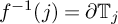
$f^{-1}(j)=\partial \mathbb {T}_j$
; -
• for each j,
$f(\mathbb {T}_j\setminus \mathrm {int}\mathbb {T}_{j-1})=[j-1,j]$
.


In particular, $f(\mathbb {T}_Y)=[-1,k]$
.
$f(\mathbb {T}_Y)=[-1,k]$
.
Again, A-adapted Morse functions exist by Lemma 1.3 and its proof. The meaning of this condition is the following. The value of the perturbed functional (11) at a reducible critical point $(B,0)$
is given by
$(B,0)$
is given by $f(B)$
. Because of this, for a given choice of A-adapted f, we then see that the differential of a critical point lying in
$f(B)$
. Because of this, for a given choice of A-adapted f, we then see that the differential of a critical point lying in $\mathbb {T}_j$
still lies in
$\mathbb {T}_j$
still lies in $\mathbb {T}_j$
, hence we obtain a natural filtration of
$\mathbb {T}_j$
, hence we obtain a natural filtration of $\check {C}_*$
.
$\check {C}_*$
.
Our discussion in the next section (which we will spell out in detail in the case of simplest type, in which more can be said) will imply the following result (the non-obvious part being the identification of the $E^1$
-page).
$E^1$
-page).
Proposition 2.6. In our setup, there exists a spectral sequence whose $E^1$
page is given by
$E^1$
page is given by
 $$ \begin{align*} E^1=\bigoplus H_*(\mathbb{T}_j,\mathbb{T}_{j-1})\langle -2j\rangle\otimes \mathcal{T}_+ \end{align*} $$
and which converges to  .
.
Here $\mathcal {T}_+$
is the
$\mathcal {T}_+$
is the $\mathbb {Q}[U]$
-module
$\mathbb {Q}[U]$
-module $\mathbb {Q}[U^{-1},U]/U\cdot \mathbb {Q}[U]$
, commonly referred to as ‘tower’. Let us point out that in many situations it is very important to understand the U-action on
$\mathbb {Q}[U^{-1},U]/U\cdot \mathbb {Q}[U]$
, commonly referred to as ‘tower’. Let us point out that in many situations it is very important to understand the U-action on  ; while the spectral sequence is compatible with the U-action, it is in general non-trivial to reconstruct the U-action on
  from that on the $E^{\infty }$
-page.
$E^{\infty }$
-page.
We conclude by pointing out the following result.
Lemma 2.7. In our setup, the differentials $\check {\partial },\bar {\partial }$
, the map i all preserve the filtrations on
$\check {\partial },\bar {\partial }$
, the map i all preserve the filtrations on $\check {C}$
and
$\check {C}$
and $\bar {C}$
by Morse index.
$\bar {C}$
by Morse index.
Proof. It is clear that the maps involving reducible trajectories preserve the Morse filtration, so we only need to show that the map $\partial ^u_s$
involving irreducible trajectories preserves the Morse filtration. Given two critical points x and y of the Morse function f on
$\partial ^u_s$
involving irreducible trajectories preserves the Morse filtration. Given two critical points x and y of the Morse function f on $\mathbb {T}_Y$
, suppose there is an irreducible trajectory from the mth unstable critical point lying over x to the nth stable critical point lying over x. Here we choose the enumeration so that
$\mathbb {T}_Y$
, suppose there is an irreducible trajectory from the mth unstable critical point lying over x to the nth stable critical point lying over x. Here we choose the enumeration so that $m,n\geq 0$
and the first unstable and stable critical points correspond to m and
$m,n\geq 0$
and the first unstable and stable critical points correspond to m and $n=0$
respectively. The value of the Chern-Simons-Dirac functional (11) at reducible critical points is given by
$n=0$
respectively. The value of the Chern-Simons-Dirac functional (11) at reducible critical points is given by $\varepsilon f$
, hence
$\varepsilon f$
, hence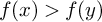 $f(x)>f(y)$
. Because of this, if
$f(x)>f(y)$
. Because of this, if $x\in \mathrm {int}T_j\setminus T_{j-1}$
and
$x\in \mathrm {int}T_j\setminus T_{j-1}$
and $y\in \mathrm {int}T_k\setminus T_{k-1}$
the second bullet in Definition 2.5 implies
$y\in \mathrm {int}T_k\setminus T_{k-1}$
the second bullet in Definition 2.5 implies $j\geq k$
. Denoting the Morse index by
$j\geq k$
. Denoting the Morse index by $\mathrm {ind}_f$
, the relative grading between the reducible critical points in the blow-up we are considering is then
$\mathrm {ind}_f$
, the relative grading between the reducible critical points in the blow-up we are considering is then
 $$ \begin{align*} \mathrm{ind}_f(x)-1-2m-(\mathrm{ind}_f(y)+2n+2(j-k)), \end{align*} $$
where the additional term $2(j-k)$
arises from the spectral flow between x and y. This number is at least one because of the existence of a trajectory, and the result follows.
$2(j-k)$
arises from the spectral flow between x and y. This number is at least one because of the existence of a trajectory, and the result follows.
Remark 2.2. In fact, the same argument implies that the chain map inducing the U-action also preserves the Morse filtration. Note that the top filtration part of this map will send the generator corresponding to the nth stable critical point over x with $n\geq 1$
to the one corresponding to the
$n\geq 1$
to the one corresponding to the $(n-1)$
th stable critical point over x; on the other hand, there will be in general non vanishing filtration-lowering contributions. While we cannot determine these in general, their contribution can be implicitly ‘absorbed’ in the identification with a direct sum of towers
$(n-1)$
th stable critical point over x; on the other hand, there will be in general non vanishing filtration-lowering contributions. While we cannot determine these in general, their contribution can be implicitly ‘absorbed’ in the identification with a direct sum of towers $\mathcal {T}_+$
as
$\mathcal {T}_+$
as $\mathbb {Q}[U]$
-modules. This process is inconsequential for our purposes, except for the fact that it does not allow to determine the U-action on reduced Floer homology in Theorem 3.3.
$\mathbb {Q}[U]$
-modules. This process is inconsequential for our purposes, except for the fact that it does not allow to determine the U-action on reduced Floer homology in Theorem 3.3.
3 Spin
$^c$
Manifolds of the simplest type

We focus on the case of a spin $^c$
manifold
$^c$
manifold $(Y,\mathfrak {s})$
of the simplest type (where we keep the metric g and spinorial perturbation A implicit in our discussion). In this situation, we denote the filtration (10) simply by
$(Y,\mathfrak {s})$
of the simplest type (where we keep the metric g and spinorial perturbation A implicit in our discussion). In this situation, we denote the filtration (10) simply by
 $$ \begin{align*} \mathbb{T}_-\subset\mathbb{T}_Y. \end{align*} $$
By Lemma 1.3, the restriction of the family of Dirac operators $\{D_B-A\}$
is homotopically trivial on both
$\{D_B-A\}$
is homotopically trivial on both $\mathbb {T}_-$
and
$\mathbb {T}_-$
and $\mathbb {T}_Y\setminus \mathrm {int}\mathbb {T}_-$
. On the other hand, the family on
$\mathbb {T}_Y\setminus \mathrm {int}\mathbb {T}_-$
. On the other hand, the family on $\mathbb {T}_Y$
itself is not homotopically trivial in general, the obstruction being the triple cup product of the three-manifold (9).
$\mathbb {T}_Y$
itself is not homotopically trivial in general, the obstruction being the triple cup product of the three-manifold (9).
Remark 3.1. We can interpret this in terms of the cofibration
 $$ \begin{align*} \mathbb{T}_-\stackrel{\iota}{\hookrightarrow} \mathbb{T}_Y\rightarrow \mathbb{T}_Y/\mathbb{T}_- \end{align*} $$
as follows. Families of Dirac type operators are classified up to homotopy by maps to $U(\mathbb {\infty })$
(see [Reference Atiyah and SingerAS69] and [Reference Kronheimer and MrowkaKM07, Section 33.1]). Using
$U(\mathbb {\infty })$
(see [Reference Atiyah and SingerAS69] and [Reference Kronheimer and MrowkaKM07, Section 33.1]). Using
 $$ \begin{align*} [X,U(\infty)]=K^1(X), \end{align*} $$
we can consider then the morphism of exact sequences

where the vertical maps are given by the Chern character. In particular we know from the Atiyah-Singer index theorem for families [Reference Atiyah, Patodi and SingerAPS76] (see also [Reference Kronheimer and MrowkaKM07, Lemma 35.2.1]) that
 $$ \begin{align*} \mathrm{ch}(\mathrm{ind}\{D_B-A\})=\cup_Y^3\in H^3(\mathbb{T}_Y)=\left(\Lambda^1H^1(Y)\right)^* \end{align*} $$
so that $i^*(\cup _Y^3)=0\in H^3(\mathbb {T}_-)$
, hence
$i^*(\cup _Y^3)=0\in H^3(\mathbb {T}_-)$
, hence $\cup _Y^3$
arises from an element of
$\cup _Y^3$
arises from an element of $H^3(\mathbb {T}_Y,\mathbb {T}_-;\mathbb {Q})$
.
$H^3(\mathbb {T}_Y,\mathbb {T}_-;\mathbb {Q})$
.
We then choose an adapted Morse function f, see Definition 2.5. The Floer chain complex $\check {C}$
is naturally relatively
$\check {C}$
is naturally relatively $\mathbb {Z}$
-graded in this situation. For our purposes it is convenient to fix the absolute grading of the first stable critical point over an index zero critical point in
$\mathbb {Z}$
-graded in this situation. For our purposes it is convenient to fix the absolute grading of the first stable critical point over an index zero critical point in $\mathbb {T}_-$
to be
$\mathbb {T}_-$
to be $0$
; this is well-defined because there is no spectral flow between points in
$0$
; this is well-defined because there is no spectral flow between points in $\mathbb {T}_-$
of f given our definition.
$\mathbb {T}_-$
of f given our definition.
Remark 3.2. Notice that this is not the canonical absolute $\mathbb {Q}$
-grading introduced in [Reference Kronheimer and MrowkaKM07, Ch. 28].
$\mathbb {Q}$
-grading introduced in [Reference Kronheimer and MrowkaKM07, Ch. 28].
Let us consider the filtration on critical points induced by the value of $\widetilde {\mathcal {L}}$
. We obtain subcomplexes
$\widetilde {\mathcal {L}}$
. We obtain subcomplexes
 $$ \begin{align*} \check{C}^-\subset \check{C}\text{ and }\bar{C}^-\subset \bar{C}. \end{align*} $$
Denoting by $\check {C}^+$
and
$\check {C}^+$
and $\bar {C}^+$
the respective quotient chain complexes, these all fit in the diagram
$\bar {C}^+$
the respective quotient chain complexes, these all fit in the diagram

Calling the vertical maps i, we have the following observation.
Lemma 3.1. The induced maps $i_*:H_*(\bar {C}^{\pm })\rightarrow H_*(\check {C}^{\pm })$
are surjective, and isomorphisms in degrees high enough.
$i_*:H_*(\bar {C}^{\pm })\rightarrow H_*(\check {C}^{\pm })$
are surjective, and isomorphisms in degrees high enough.
Notice that the analogous statement does not hold for the map $i_*$
on the full complexes; indeed, in that situation the cokernel is the reduced Floer homology, which we will see to be not-trivial in concrete examples.
$i_*$
on the full complexes; indeed, in that situation the cokernel is the reduced Floer homology, which we will see to be not-trivial in concrete examples.
Proof. The key point here is that the restrictions of the family of operators to the complement of $\mathsf {K}\subset \mathbb {T}_Y$
have no kernel, hence there is no spectral flow along paths contained in either
$\mathsf {K}\subset \mathbb {T}_Y$
have no kernel, hence there is no spectral flow along paths contained in either $\mathrm {int}\mathbb {T}_-$
or
$\mathrm {int}\mathbb {T}_-$
or $\mathbb {T}_Y\setminus \mathrm {int}\mathbb {T}_-$
. More specifically, let us consider
$\mathbb {T}_Y\setminus \mathrm {int}\mathbb {T}_-$
. More specifically, let us consider $\mathbb {T}_-$
, the other case being the same.
$\mathbb {T}_-$
, the other case being the same.
We first show that $\bar {\partial }^s_u=0$
. The kth stable critical point over an index i critical point (where the bottom corresponds to
$\bar {\partial }^s_u=0$
. The kth stable critical point over an index i critical point (where the bottom corresponds to $k=0$
) of f has grading
$k=0$
) of f has grading $i+2k$
. On the other hand, the jth unstable critical point (where the top corresponds to
$i+2k$
. On the other hand, the jth unstable critical point (where the top corresponds to $j=0$
) has grading
$j=0$
) has grading $i-1-2j$
. Because trajectories decrease Morse indices by at least
$i-1-2j$
. Because trajectories decrease Morse indices by at least $1$
, we conclude for grading reasons.
$1$
, we conclude for grading reasons.
Inspecting the definition of $\bar {\partial }$
, we see that
$\bar {\partial }$
, we see that $\bar {\partial }^s_u=0$
implies that if
$\bar {\partial }^s_u=0$
implies that if $x\in \check {C}^-=C^s$
is a cycle, then
$x\in \check {C}^-=C^s$
is a cycle, then $(x,0)\in \bar {C}^-$
is also a cycle, so that
$(x,0)\in \bar {C}^-$
is also a cycle, so that $i_*$
is surjective. Finally,
$i_*$
is surjective. Finally, $i_*$
is an isomorphism in degrees high enough because there is an upper bound on the degree of unstable critical points.
$i_*$
is an isomorphism in degrees high enough because there is an upper bound on the degree of unstable critical points.
We now discuss the groups $H_*(\bar {C}^{\pm })$
in more detail. In order to do so, we generalize the framework of coupled Morse homology [Reference Kronheimer and MrowkaKM07, Ch. 33] from the setup of closed manifolds Q to the case of non-empty boundary
$H_*(\bar {C}^{\pm })$
in more detail. In order to do so, we generalize the framework of coupled Morse homology [Reference Kronheimer and MrowkaKM07, Ch. 33] from the setup of closed manifolds Q to the case of non-empty boundary $\partial Q\neq 0$
. In this situation, as in classical Morse theory with boundary, one can look at Morse functions f for which
$\partial Q\neq 0$
. In this situation, as in classical Morse theory with boundary, one can look at Morse functions f for which $-\mathrm {grad}f$
points either outwards or inwards at the boundary; in the former case one obtains
$-\mathrm {grad}f$
points either outwards or inwards at the boundary; in the former case one obtains $H_*(Q,\partial Q)$
while in the latter one obtains
$H_*(Q,\partial Q)$
while in the latter one obtains $H_*(Q)$
. When Q is equipped with a family L of Dirac-type operators, one can then construct the corresponding coupled Morse homology groups by
$H_*(Q)$
. When Q is equipped with a family L of Dirac-type operators, one can then construct the corresponding coupled Morse homology groups by $\bar {H}^{\pm }_*(Q;L)$
. These are again invariant under homotopy of L.
$\bar {H}^{\pm }_*(Q;L)$
. These are again invariant under homotopy of L.
In our situation, we apply this discussion to $\mathbb {T}_-$
and
$\mathbb {T}_-$
and $\mathbb {T}_Y\setminus \mathrm {int}\mathbb {T}_-$
with a Morse function on
$\mathbb {T}_Y\setminus \mathrm {int}\mathbb {T}_-$
with a Morse function on $\mathbb {T}_Y$
as above; thought of a Morse function on
$\mathbb {T}_Y$
as above; thought of a Morse function on $\mathbb {T}_Y\setminus \mathrm {int}\mathbb {T}_-$
(resp
$\mathbb {T}_Y\setminus \mathrm {int}\mathbb {T}_-$
(resp $\mathbb {T}_-$
), the vector field
$\mathbb {T}_-$
), the vector field $-\mathrm {grad}f$
points outwards (resp. inwards), and the respective coupled Morse chain complexes are identified with
$-\mathrm {grad}f$
points outwards (resp. inwards), and the respective coupled Morse chain complexes are identified with $\bar {C}^+$
(resp.
$\bar {C}^+$
(resp. $\bar {C}^-$
). Hence we get the exact triangle
$\bar {C}^-$
). Hence we get the exact triangle

where the horizontal arrow has degree $-1$
.
$-1$
.
Because the restriction of the family $\{D_B-A\}$
to
$\{D_B-A\}$
to $\mathbb {T}_Y\setminus \mathsf {K}$
is homotopically trivial, we also have the further identifications
$\mathbb {T}_Y\setminus \mathsf {K}$
is homotopically trivial, we also have the further identifications

where we identified the homology of $\mathbb {T}_Y\setminus \mathrm {int}\mathbb {T}_-$
relative to its boundary with the homology of the pair
$\mathbb {T}_Y\setminus \mathrm {int}\mathbb {T}_-$
relative to its boundary with the homology of the pair $(\mathbb {T}_Y,\mathbb {T}_-)$
using excision.
$(\mathbb {T}_Y,\mathbb {T}_-)$
using excision.
Using this, we can obtain a description of the groups $H_*(\check {C}^{\pm })$
as follows.
$H_*(\check {C}^{\pm })$
as follows.
Lemma 3.2. We have the identifications
 $$ \begin{align*} H_*(\check{C}^-)&\cong H_*(\mathbb{T}_-)\otimes\mathcal{T}_+\\ H_*(\check{C}^+)&\cong H_*(\mathbb{T}_Y,\mathbb{T}_-)\otimes\mathcal{T}_+\langle-2\rangle \end{align*} $$
as graded $\mathbb {Q}[U]$
-modules (up to an overall shift).
$\mathbb {Q}[U]$
-modules (up to an overall shift).
Proof. By Lemma 2.7, the Morse index induces filtrations on our complexes, and furthermore the map i is filtered. The corresponding spectral sequences on $\bar {C}^{\pm }$
have
$\bar {C}^{\pm }$
have $E^2$
pages given by
$E^2$
pages given by $H_*(\mathbb {T}_Y,\mathbb {T}_-)\otimes \mathbb {Q}[U,U^{-1}]$
and
$H_*(\mathbb {T}_Y,\mathbb {T}_-)\otimes \mathbb {Q}[U,U^{-1}]$
and $H_*(\mathbb {T}^-)\otimes \mathbb {Q}[U,U^{-1}]$
respectively, so that by the computation of the homologies in (14) they collapse at the
$H_*(\mathbb {T}^-)\otimes \mathbb {Q}[U,U^{-1}]$
respectively, so that by the computation of the homologies in (14) they collapse at the $E^2$
page. Our claimed computation is the
$E^2$
page. Our claimed computation is the $E^2$
page of the spectral sequence on
$E^2$
page of the spectral sequence on $\check {C}^{\pm }$
; we conclude that the spectral sequence collapses at this stage because the map induced by i on the
$\check {C}^{\pm }$
; we conclude that the spectral sequence collapses at this stage because the map induced by i on the $E^2$
page is surjective.
$E^2$
page is surjective.
Finally, the grading shift in $H_*(\check {C}^+)$
arising from the spectral flow when crossing
$H_*(\check {C}^+)$
arising from the spectral flow when crossing $\mathsf {K}$
.
$\mathsf {K}$
.
In particular, we have an exact triangle

where again the horizontal arrow has degree $-1$
. Furthermore, the natural maps
$-1$
. Furthermore, the natural maps $i_*$
from the bar version triangle are all surjective. Because of this, in order to describe
$i_*$
from the bar version triangle are all surjective. Because of this, in order to describe $\check {\partial }$
it will suffice to describe
$\check {\partial }$
it will suffice to describe $\bar {\partial }$
, which we now do.
$\bar {\partial }$
, which we now do.
Consider the long exact sequence of the pair $(\mathbb {T}_Y,\mathbb {T}_-)$
in usual homology with
$(\mathbb {T}_Y,\mathbb {T}_-)$
in usual homology with $\mathbb {Q}$
-coefficients
$\mathbb {Q}$
-coefficients

where $\partial $
has degree
$\partial $
has degree $-1$
. Because we are using
$-1$
. Because we are using $\mathbb {Q}$
-coefficients, this breaks into the short exact sequences
$\mathbb {Q}$
-coefficients, this breaks into the short exact sequences
 $$ \begin{align} 0 \rightarrow {i_*(H_k(\mathbb{T}_-))} \rightarrow {H_k(\mathbb{T}_Y)} \rightarrow {q_*(H_k(\mathbb{T}_Y))} \rightarrow 0 \end{align} $$
and the degree $-1$
isomorphism
$-1$
isomorphism
 $$ \begin{align} \mathrm{coker}\left(q_*:H_k(\mathbb{T}_Y)\rightarrow{H}_k(\mathbb{T}_Y,\mathbb{T}_-)\right)\cong\mathrm{ker}\left(i_*:H_{k-1}(\mathbb{T}_-)\rightarrow H_{k-1}(\mathbb{T}_Y)\right) \end{align} $$
Denoting the pieces in (15) by $I^\pm _*$
respectively, and (16) by
$I^\pm _*$
respectively, and (16) by $E_*$
, we see can consider the map
$E_*$
, we see can consider the map $\bar {\partial }$
under the identification (14) as a map
$\bar {\partial }$
under the identification (14) as a map
 $$ \begin{align*} \bar{\partial}:(I^+_*\oplus E_*)\otimes \mathbb{Q}[U,U^{-1}]\rightarrow (I^-_*\oplus E_*\langle-1\rangle)\otimes\mathbb{Q}[U,U^{-1}]. \end{align*} $$
As we are working in the localized (bar) version of the invariants, this map is in fact independent of the specific family of operators up to homotopy and choice of Morse function. In order to obtain a concrete description, we look at the determination of the chain complex for a family pulled-back from $SU(2)$
as discussed in [Reference Kronheimer and MrowkaKM07, Ch. 34], and in particular Proposition
$SU(2)$
as discussed in [Reference Kronheimer and MrowkaKM07, Ch. 34], and in particular Proposition $34.2.1$
and its proof.
$34.2.1$
and its proof.
Referring to the construction and notation there, because in our setup the restriction of the family on $\mathbb {T}_Y\setminus \mathrm {int}\mathbb {T}_-$
is homotopically trivial, we can begin by homotoping the whole family to a map
$\mathbb {T}_Y\setminus \mathrm {int}\mathbb {T}_-$
is homotopically trivial, we can begin by homotoping the whole family to a map $v:\mathbb {T}_Y\rightarrow SU(2)$
so that the restriction to it is the constant operator taking values in the north pole of
$v:\mathbb {T}_Y\rightarrow SU(2)$
so that the restriction to it is the constant operator taking values in the north pole of $SU(2)$
. In particular,
$SU(2)$
. In particular, $v^{-1}(W)\subset \mathbb {T}_-$
, and we can furthermore choose the Morse function to take a fixed regular value on
$v^{-1}(W)\subset \mathbb {T}_-$
, and we can furthermore choose the Morse function to take a fixed regular value on $\mathsf {K}$
.
$\mathsf {K}$
.
With this setup, the coupled Morse chain complex is then $C_*(\mathbb {T}_Y,f)\otimes \mathbb {Q}[T,T^{-1}]$
equipped with the differential
$C_*(\mathbb {T}_Y,f)\otimes \mathbb {Q}[T,T^{-1}]$
equipped with the differential
 $$ \begin{align*} \bar{\partial}x=\partial x+ (\tilde{\xi}\cap x)T \end{align*} $$
where $\tilde {\xi }$
is a Čech cochain representing
$\tilde {\xi }$
is a Čech cochain representing $\cup ^3_Y$
supported in
$\cup ^3_Y$
supported in $\mathbb {T}_-$
. When considering the filtration induced by
$\mathbb {T}_-$
. When considering the filtration induced by $\mathbb {T}_-\subset \mathbb {T}_Y$
, we see then that
$\mathbb {T}_-\subset \mathbb {T}_Y$
, we see then that $\bar {\partial }x=\partial x$
on
$\bar {\partial }x=\partial x$
on $C_*(\mathbb {T}_Y,\mathbb {T}_-)\otimes \mathbb {Q}[T,T^{-1}]$
. In particular we conclude (omitting the powers of T from the notation for simplicity) that:
$C_*(\mathbb {T}_Y,\mathbb {T}_-)\otimes \mathbb {Q}[T,T^{-1}]$
. In particular we conclude (omitting the powers of T from the notation for simplicity) that:
-
• on
$I_+$
,
$\bar {\partial }$
coincides with cap product with
$[\tilde {\xi }]=\cup _Y^3$
; -
• on E,
$\bar {\partial }$
is given by the isomorphism (16) (which decreases the Morse filtration index by
$1$
) plus higher order terms (possibly involving
$I_-$
); in particular it is an isomorphism onto its image.


Putting everything together, we finally get the following.
Theorem 3.3. Suppose $(Y,\mathfrak {s})$
is of the simplest type. We have the direct sum decomposition of
$(Y,\mathfrak {s})$
is of the simplest type. We have the direct sum decomposition of $\mathbb {Q}[U]$
-modules
$\mathbb {Q}[U]$
-modules

where
 $$ \begin{align*} i_*\left(\overline{\mathit{HM}}_*(Y,\mathfrak{s})\right)&\cong \mathrm{Cone}\left(\cup_Y^3:I^+\langle-2\rangle\rightarrow I^-\right)\otimes \mathcal{T}_+\\ {\mathit{HM}}_*(Y,\mathfrak{s})&\cong E_*\langle-2\rangle; \end{align*} $$
this holds at the level of graded modules up to an overall grading shift.
Note that we do not identify the U-action on ${\mathit {HM}}_*(Y,\mathfrak {s})$
, cf. Remark 2.2.
${\mathit {HM}}_*(Y,\mathfrak {s})$
, cf. Remark 2.2.
Proof. All the pieces are in places so we will comment on the remaining details. The grading shifts arise from the spectral flow when crossing $\mathsf {K}$
, and the reduced Floer homology arises as the kernel of
$\mathsf {K}$
, and the reduced Floer homology arises as the kernel of $\check {\partial }$
from parts of the triangle of the form
$\check {\partial }$
from parts of the triangle of the form
 $$ \begin{align} U:\mathcal{T}^+\langle-2\rangle\rightarrow \mathcal{T}^+\langle-1\rangle, \end{align} $$
where the $-1$
shift is the one from (16). Finally, there are no extension problems to worry about (up to isomorphism of
$-1$
shift is the one from (16). Finally, there are no extension problems to worry about (up to isomorphism of $\mathbb {Q}[U]$
-modules) because the reduced homology on the
$\mathbb {Q}[U]$
-modules) because the reduced homology on the $E^{\infty }$
page lies in the top filtration level, and U-action from towers can only decrease it.
$E^{\infty }$
page lies in the top filtration level, and U-action from towers can only decrease it.
4 Concrete examples
In this section we study two concrete examples of spin $^c$
manifolds of simplest type (for suitable metric g and perturbation A), namely
$^c$
manifolds of simplest type (for suitable metric g and perturbation A), namely $S^1\times \Sigma _h$
with
$S^1\times \Sigma _h$
with $h=2,3$
equipped with the unique torsion spin
$h=2,3$
equipped with the unique torsion spin $^c$
structure
$^c$
structure $\mathfrak {s}_0$
, and use Theorem 3.3 to provide a computation of their Floer homology. We will suppress the genus of the surface from our notation when unnecessary.
$\mathfrak {s}_0$
, and use Theorem 3.3 to provide a computation of their Floer homology. We will suppress the genus of the surface from our notation when unnecessary.
It is well-known that the unperturbed equations on $(S^1\times \Sigma ,\mathfrak {s}_0)$
equipped with a product metric do not admit irreducible solutions for all h, see, for example, [Reference LinLin22b] for an exposition. Furthermore the torus
$(S^1\times \Sigma ,\mathfrak {s}_0)$
equipped with a product metric do not admit irreducible solutions for all h, see, for example, [Reference LinLin22b] for an exposition. Furthermore the torus $\mathbb {T}_{S^1\times \Sigma }$
of flat connections can be identified with
$\mathbb {T}_{S^1\times \Sigma }$
of flat connections can be identified with ${S^1\times \mathrm {Jac}(\Sigma )}$
. The corresponding Dirac operator has kernel exactly at points in
${S^1\times \mathrm {Jac}(\Sigma )}$
. The corresponding Dirac operator has kernel exactly at points in $\{0\}\times \Theta $
, where
$\{0\}\times \Theta $
, where $\Theta $
is the classical theta divisor of the complex curve: after identifying
$\Theta $
is the classical theta divisor of the complex curve: after identifying $\mathrm {Jac}(\Sigma )$
with the torus of degree
$\mathrm {Jac}(\Sigma )$
with the torus of degree $h-1$
holomorphic line bundles
$h-1$
holomorphic line bundles $\Theta \subset \mathrm {Jac}(\Sigma )$
is the locus consisting of bundles admitting non-zero holomorphic sections. Notice that this depends on the metric on
$\Theta \subset \mathrm {Jac}(\Sigma )$
is the locus consisting of bundles admitting non-zero holomorphic sections. Notice that this depends on the metric on $\Sigma $
only through its underlying conformal structure.
$\Sigma $
only through its underlying conformal structure.
Unfortunately, the argument for the absence of irreducible solutions (which involves dimensional reduction) is quite subtle and does not apply to the perturbed equations. We will therefore take an alternative route involving spectral geometry. In particular, we have the following.
Proposition 4.1. Consider the product metric on $S^1\times \Sigma $
for which the length of the
$S^1\times \Sigma $
for which the length of the $S^1$
factor is small enough. Then
$S^1$
factor is small enough. Then $\lambda _1^*=\lambda _1(\Sigma )$
, where the latter is the first non-zero eigenvalue of the Laplacian on functions on
$\lambda _1^*=\lambda _1(\Sigma )$
, where the latter is the first non-zero eigenvalue of the Laplacian on functions on $\Sigma $
.
$\Sigma $
.
Proof. The result follows from a direct computation which is well-known in classical electromagnetism in relation to the propagation of the electromagnetic field in a waveguide [Reference WaldWal22]. We denote by $\ast _\Sigma $
and
$\ast _\Sigma $
and $\ast $
the Hodge star on
$\ast $
the Hodge star on $\Sigma $
and
$\Sigma $
and $S^1\times \Sigma $
respectively. For a
$S^1\times \Sigma $
respectively. For a $1$
-form a on
$1$
-form a on $\Sigma $
, we have that
$\Sigma $
, we have that
 $$ \begin{align*} \ast a&=\ast_\Sigma a\wedge dt\\ \ast(a\wedge dt)&=-\ast_\Sigma a. \end{align*} $$
Consider a general $1$
-form
$1$
-form
 $$ \begin{align*} b=fdt+\alpha \end{align*} $$
where f is a function on Y and $\alpha $
is a
$\alpha $
is a $1$
-parameter family of
$1$
-parameter family of $1$
-forms on
$1$
-forms on $\Sigma $
. Let us consider the operator
$\Sigma $
. Let us consider the operator $\ast d$
(which squares to
$\ast d$
(which squares to $\Delta $
on coclosed
$\Delta $
on coclosed $1$
-forms)
$1$
-forms)
 $$ \begin{align*} \ast db&=\ast(d_{\Sigma}fdt+d_\Sigma\alpha-\alpha'dt)=\\ &=-\ast_\Sigma d_\Sigma f+\ast_\Sigma \alpha'+(\ast_{\Sigma}d_\Sigma \alpha)dt. \end{align*} $$
Hence the eigenvalue equation $\ast db=\mu b$
takes the form
$\ast db=\mu b$
takes the form
 $$ \begin{align*} \ast_{\Sigma}d_\Sigma \alpha&=\mu f\\ -\ast_\Sigma d_\Sigma f+\ast_\Sigma \alpha'&=\mu\alpha. \end{align*} $$
Notice that solutions to the eigenvalue equation are automatically coclosed, and correspond to eigenforms with eigenvalue $\mu ^2$
. Let us assume
$\mu ^2$
. Let us assume $\mu \neq 0$
(harmonic forms are spanned by
$\mu \neq 0$
(harmonic forms are spanned by $dt$
and the harmonic forms on
$dt$
and the harmonic forms on $\Sigma $
). Substituting the first equation in the second one we then get (as
$\Sigma $
). Substituting the first equation in the second one we then get (as $d^*_\Sigma =-\ast _\Sigma d_\Sigma \ast _\Sigma $
on
$d^*_\Sigma =-\ast _\Sigma d_\Sigma \ast _\Sigma $
on $2$
-forms on a surface)
$2$
-forms on a surface)
 $$ \begin{align*} d^*_\Sigma d_\Sigma {\alpha}+\mu\ast_\Sigma \alpha'=\mu^2\alpha. \end{align*} $$
We now consider a basis of $1$
-eigenforms
$1$
-eigenforms $e_n$
,
$e_n$
, $h_k$
and
$h_k$
and $c_n$
(exact, harmonic and coexact respectively), where we can assume
$c_n$
(exact, harmonic and coexact respectively), where we can assume $c_n=\ast _\Sigma e_n$
have eigenvalue
$c_n=\ast _\Sigma e_n$
have eigenvalue $\lambda _n\neq 0$
for
$\lambda _n\neq 0$
for $\Delta _\Sigma =d_\Sigma d^*_\Sigma +d^*_\Sigma d_\Sigma $
, and
$\Delta _\Sigma =d_\Sigma d^*_\Sigma +d^*_\Sigma d_\Sigma $
, and $\ast h_i=h_{i+g}$
for
$\ast h_i=h_{i+g}$
for $i=1,\dots , g$
. If
$i=1,\dots , g$
. If $S^1=\mathbb {R}/2\pi L \mathbb {Z}$
has coordinate t, expanding in Fourier series in the t variable
$S^1=\mathbb {R}/2\pi L \mathbb {Z}$
has coordinate t, expanding in Fourier series in the t variable
 $$ \begin{align*} \alpha(t)=\sum E_n(t)e_n+\sum C_n(t)c_n+\sum_{i\leq g} H_i(t)h_i+ H_{i+g}(t)h_{i+g}, \end{align*} $$
with $E_n, C_n$
and
$E_n, C_n$
and $H_k$
periodic of period
$H_k$
periodic of period $2\pi L$
, we have then
$2\pi L$
, we have then
 $$ \begin{align*} d^*_\Sigma d_\Sigma\alpha(t)&=\sum \lambda_n\cdot C_n(t)c_n\\ \ast_\Sigma \alpha'&=-\sum C_n'(t)e_n+\sum E_n'(t)c_n+\sum_{i\leq g}-H_{i+g}'(t)h_{i}+H_i'(t)h_{i+g}. \end{align*} $$
Hence, looking at the $c_n$
and
$c_n$
and $e_n$
component we get the system
$e_n$
component we get the system
 $$ \begin{align*} \lambda_n C_n(t)+\mu E^{\prime}_n(t)&=\mu^2C_n(t)\\ -\mu C_n'(t)&=\mu^2 E_n(t). \end{align*} $$
and looking at the $h_i$
components we obtain the system
$h_i$
components we obtain the system
 $$ \begin{align*} H_i'&=\mu H_{i+g}\\ H_{i+g}'&=-\mu H_{i}, \end{align*} $$
which we can address separately. In the first system, differentiating the second equation, and substituting in the first, we obtain
 $$ \begin{align*} C_n"(t)=(\lambda_n-\mu^2)C_n(t). \end{align*} $$
In order for this equation to have periodic solutions (as $C_n$
has to be) we necessarily need
$C_n$
has to be) we necessarily need $\lambda _n\leq \mu ^2$
. Conversely, one readily sees that
$\lambda _n\leq \mu ^2$
. Conversely, one readily sees that $c_1$
defines a coexact eigenform on
$c_1$
defines a coexact eigenform on $S^1\times \Sigma $
with eigenvalue
$S^1\times \Sigma $
with eigenvalue $\lambda _1(\Sigma )$
.
$\lambda _1(\Sigma )$
.
The second system involves the equation
 $$ \begin{align*} H_k"(t)=-\mu^2 H_k(t). \end{align*} $$
On $S^1=\mathbb {R}/2\pi L \mathbb {Z}$
, the Fourier eigenmodes are
$S^1=\mathbb {R}/2\pi L \mathbb {Z}$
, the Fourier eigenmodes are $\{e^{int/L}\}$
with respective eigenvalue
$\{e^{int/L}\}$
with respective eigenvalue $n^2/L^2$
. Hence by choosing L sufficiently small these corresponding coexact eigenforms will have eigenvalue strictly larger than
$n^2/L^2$
. Hence by choosing L sufficiently small these corresponding coexact eigenforms will have eigenvalue strictly larger than $\lambda _1(\Sigma )$
.
$\lambda _1(\Sigma )$
.
Suppose now that $\Sigma $
is equipped with a hyperbolic metric (by uniformization, there is a unique one in any conformal class). Then the Ricci tensor of
$\Sigma $
is equipped with a hyperbolic metric (by uniformization, there is a unique one in any conformal class). Then the Ricci tensor of $S^1\times \Sigma $
for the product metric is
$S^1\times \Sigma $
for the product metric is
 $$ \begin{align*} \begin{bmatrix} 0&0&0\\ 0&-1&0\\ 0&0&-1 \end{bmatrix} \end{align*} $$
so that $\tilde {s}\equiv -2$
. By Proposition 1.1 we can therefore conclude the following.
$\tilde {s}\equiv -2$
. By Proposition 1.1 we can therefore conclude the following.
Corollary 4.2. Suppose $(\Sigma ,g_{hyp})$
is a hyperbolic surface for which
$(\Sigma ,g_{hyp})$
is a hyperbolic surface for which $\lambda _1>1$
. Then for the product metric on
$\lambda _1>1$
. Then for the product metric on $S^1\times \Sigma $
, where the
$S^1\times \Sigma $
, where the $S^1$
component has sufficiently small length, small spinorial perturbations of the Seiberg-Witten equations do not have irreducible solutions.
$S^1$
component has sufficiently small length, small spinorial perturbations of the Seiberg-Witten equations do not have irreducible solutions.
We will focus on the two following examples of low-genus hyperbolic surfaces for which $\lambda _1>1$
:
$\lambda _1>1$
:
-
• the Bolza surface (which corresponds to the affine equation
$y^2=x^5-x$
) has genus
$2$
and
$\lambda _1\approx 3.84$
[Reference Strohmaier and UskiSU13]. -
• the Klein quartic (which corresponds to the homogeneous equation
$x^3y+y^3z+z^3x=0$
) has genus
$3$
and
$\lambda _1\approx 2.68$
[Reference CookCoo18].





To proceed further, we need to study the locus in $\mathbb {T}_{S^1\times \Sigma }$
where the perturbed Dirac equation has solutions. Let us briefly recall the situation for the unperturbed Dirac equation, see [Reference LinLin22b] for more details. Fix a square root L of the canonical line bundle K on
$\mathbb {T}_{S^1\times \Sigma }$
where the perturbed Dirac equation has solutions. Let us briefly recall the situation for the unperturbed Dirac equation, see [Reference LinLin22b] for more details. Fix a square root L of the canonical line bundle K on $\Sigma $
, so that
$\Sigma $
, so that $L\otimes \bar {K}\equiv \bar {L}$
; this is equivalent to a choice of spin structure on
$L\otimes \bar {K}\equiv \bar {L}$
; this is equivalent to a choice of spin structure on $\Sigma $
. We then have for C a connection obtained from the spin connection one by twisting by a flat
$\Sigma $
. We then have for C a connection obtained from the spin connection one by twisting by a flat $U(1)$
-connection on
$U(1)$
-connection on $\Sigma $
the operator
$\Sigma $
the operator
 $$ \begin{align*} \bar{\partial}_C:\Gamma(L)\rightarrow\Gamma(\bar{L}) \end{align*} $$
and its adjoint $\bar {\partial }^*_C$
. The spinor bundle on
$\bar {\partial }^*_C$
. The spinor bundle on $S^1\times \Sigma $
(equipped with the product metric) is then
$S^1\times \Sigma $
(equipped with the product metric) is then $S=L\oplus \bar {L}$
, and the Dirac operator corresponding to
$S=L\oplus \bar {L}$
, and the Dirac operator corresponding to $B=C+i\lambda dt$
is
$B=C+i\lambda dt$
is
 $$ \begin{align*} D_B= \begin{bmatrix} i\frac{d}{dt}-\lambda& \sqrt{2}\bar{\partial}^*_C\\ \sqrt{2}\bar{\partial}_C&-i\frac{d}{dt}+\lambda \end{bmatrix} \end{align*} $$
From here one concludes that if $D_B$
has non-trivial kernel, after gauge transformation
$D_B$
has non-trivial kernel, after gauge transformation $\lambda =0$
and solutions
$\lambda =0$
and solutions $(\alpha ,\beta )$
satisfy
$(\alpha ,\beta )$
satisfy $\bar {\partial }_C\alpha =0$
and
$\bar {\partial }_C\alpha =0$
and $\bar {\partial }_C^*\beta =0$
(cf. [Reference LinLin22b] for an exposition). In particular B defines a holomorphic line bundle of degree
$\bar {\partial }_C^*\beta =0$
(cf. [Reference LinLin22b] for an exposition). In particular B defines a holomorphic line bundle of degree $h-1$
with non-trivial holomorphic sections, i.e. it belongs to the theta divisor
$h-1$
with non-trivial holomorphic sections, i.e. it belongs to the theta divisor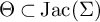 $\Theta \subset \mathrm {Jac}(\Sigma )$
as previously mentioned. The latter is a very well-studied object in the geometry of algebraic curves. It is the image of the Abel-Jacobi map
$\Theta \subset \mathrm {Jac}(\Sigma )$
as previously mentioned. The latter is a very well-studied object in the geometry of algebraic curves. It is the image of the Abel-Jacobi map
 $$ \begin{align*} \mathcal{A}:\mathrm{Sym}^{h-1}(\Sigma_{h})\rightarrow\mathrm{Jac}(\Sigma_h). \end{align*} $$
This map is generically injective (because the degree of the line bundles is less than the genus of the surface), and the inverse image of a holomorphic line bundle is the projectivization of its space of holomorphic sections. In low genus, we have the following results (see, for example, [Reference Arbarello, Cornalba, Griffiths and HarrisACGH85]):
-
• When
$h=2$
, the map is always an isomorphism onto its image. -
• When
$h=3$
is generic (not hyperelliptic), the map is again an isomorphism onto its image.


Notice that the Klein quartic is non-hyperelliptic, because smooth quartics are canonically embedded (see, for example, [Reference MirandaMir95, Ch. VII]). Let us recall some well-known facts about the topology of symmetric products [Reference MacdonaldMac62]:
-
• When
$h=2$
, the map
$\mathcal {A}:\Sigma \rightarrow \mathrm {Jac}(\Sigma )$
induces an injection in homology. -
• When
$h=3$
, we have (18)Furthermore, the induced map
$$ \begin{align} H_i\left(\mathrm{Sym}^2(\Sigma_3)\right)= \begin{cases} \mathbb{Q}\text{ if }i=0,4\\ H_1(\Sigma)\text{ if }i=1,3\\ \Lambda^2H_1(\Sigma)\oplus\mathbb{Q}\text{ if }i=2. \end{cases} \end{align} $$
$\mathcal {A}_*$
has kernel given by the extra
$\mathbb {Q}$
summand in
$H_2$
.




When perturbing the equations, we have the following.
Lemma 4.3. Consider a genus $2$
surface or a non-hyperelliptic genus
$2$
surface or a non-hyperelliptic genus $3$
surface. For
$3$
surface. For $\delta>0$
small enough the locus
$\delta>0$
small enough the locus $\mathsf {K}\subset \mathbb {T}_Y$
for which the perturbed Dirac operator
$\mathsf {K}\subset \mathbb {T}_Y$
for which the perturbed Dirac operator $\{D_B-\delta \}$
has kernel is transversely cut out, smooth and diffeomorphic to an
$\{D_B-\delta \}$
has kernel is transversely cut out, smooth and diffeomorphic to an $S^2$
-bundle over
$S^2$
-bundle over $\Theta $
. The component
$\Theta $
. The component $\mathbb {T}_-$
is diffeomorphic to a disk bundle over
$\mathbb {T}_-$
is diffeomorphic to a disk bundle over $\Theta $
, hence in particular
$\Theta $
, hence in particular $\mathbb {T}_-$
has the same homology as
$\mathbb {T}_-$
has the same homology as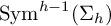 $\mathrm {Sym}^{h-1}(\Sigma _h)$
.
$\mathrm {Sym}^{h-1}(\Sigma _h)$
.
Remark 4.1. The same is true in the case of genus $0$
and
$0$
and $1$
surfaces, in which case
$1$
surfaces, in which case $\Theta $
are empty and a point respectively.
$\Theta $
are empty and a point respectively.
Proof. The theta divisor is the zero set of the theta function, and the Riemann singularity theorem says that the multiplicity of the theta function at a point L is given by $h^0(L)$
[Reference Arbarello, Cornalba, Griffiths and HarrisACGH85, Ch. VI] by our discussion above, this is
$h^0(L)$
[Reference Arbarello, Cornalba, Griffiths and HarrisACGH85, Ch. VI] by our discussion above, this is $1$
at all points under the assumption of the lemma. In our context, the Riemann singularity theorem and its proof mean that the map
$1$
at all points under the assumption of the lemma. In our context, the Riemann singularity theorem and its proof mean that the map
 $$ \begin{align*} \mathrm{Jac}(\Sigma)&\rightarrow\mathrm{Fred}_0\\ C&\mapsto \bar{\partial}_C, \end{align*} $$
where $\mathrm {Fred}_0$
is the space of index zero Fredholm operators (in a suitable analytical setup) and is transverse to the locus of operators with kernel. This is because
$\mathrm {Fred}_0$
is the space of index zero Fredholm operators (in a suitable analytical setup) and is transverse to the locus of operators with kernel. This is because $\bar {\partial }_C$
, the normal bundle is identified with operators on
$\bar {\partial }_C$
, the normal bundle is identified with operators on $\mathrm {ker}(\bar {\partial }_C)$
, i.e. a copy of
$\mathrm {ker}(\bar {\partial }_C)$
, i.e. a copy of $\mathbb {C}$
.
$\mathbb {C}$
.
We can then reduce to study the linearization of the local model in the normal directions. In particular, after a quick analysis of the Fourier expansion as in [Reference LinLin22b], we are left to understand the locus is the space of matrices
 $$ \begin{align*} \begin{bmatrix} -\lambda& \bar{a}\\ a& \lambda \end{bmatrix}\text{ where }\lambda\in\mathbb{R},a\in\mathbb{C} \end{align*} $$
having eigenvalue $\delta $
. This is exactly the locus
$\delta $
. This is exactly the locus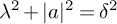 $\lambda ^2+|a|^2=\delta ^2$
(where the multiplicity is always
$\lambda ^2+|a|^2=\delta ^2$
(where the multiplicity is always $1$
), i.e. a copy of
$1$
), i.e. a copy of $S^2$
.
$S^2$
.
Putting everything together, we have proved the following.
Corollary 4.4. Consider on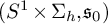 $(S^1\times \Sigma _h,\mathfrak {s}_0)$
a product metric with a short length
$(S^1\times \Sigma _h,\mathfrak {s}_0)$
a product metric with a short length $S^1$
and either the Bolza surface (
$S^1$
and either the Bolza surface ( $h=2$
) or the Klein quartic (
$h=2$
) or the Klein quartic ( $h=3$
). Then for small
$h=3$
). Then for small $\delta \neq 0$
, the perturbation is of the simplest type.
$\delta \neq 0$
, the perturbation is of the simplest type.
Using Theorem 3.3 we then obtain the following concrete computations; the analogue in Heegaard Floer homology was proved using surgery techniques in [Reference Ozsváth and SzabóOS03], [Reference Jabuka and MarkJM08].
Corollary 4.5. We have the isomorphism of absolutely graded $\mathbb {Q}[U]$
-modules
$\mathbb {Q}[U]$
-modules

where ${\mathit {HM}}_*(S^1\times \Sigma _3,\mathfrak {s}_0)=\mathbb {Q}_{-4}$
and the indices denote the absolute grading.
${\mathit {HM}}_*(S^1\times \Sigma _3,\mathfrak {s}_0)=\mathbb {Q}_{-4}$
and the indices denote the absolute grading.
Remark 4.2. The conventions for absolute gradings in monopole Floer homology differ from those in Heegaard Floer by shifting down by $b_1(Y)/2$
.
$b_1(Y)/2$
.
Proof. We begin with the case $g=2$
, and set
$g=2$
, and set $\delta>0$
. Consider a basis of
$\delta>0$
. Consider a basis of $H_1(\mathbb {T})=H^1(S^1)\oplus H^1(\Sigma _2)$
of the form
$H_1(\mathbb {T})=H^1(S^1)\oplus H^1(\Sigma _2)$
of the form $z,x_1,y_1,x_2,y_2$
where the latter is symplectic for the cup product on
$z,x_1,y_1,x_2,y_2$
where the latter is symplectic for the cup product on $H^1(\Sigma _2)$
. The triple cup product is then given by
$H^1(\Sigma _2)$
. The triple cup product is then given by
 $$ \begin{align*} \cup_Y^3 =z\cup x_1\cup y_1+z\cup x_2\cup y_2. \end{align*} $$
Theorem 3.3 then identifies  with the homology of the following complex:

The underlined towers correspond to $H_*(\mathbb {T}_-)\otimes \mathcal {T}_+$
because by Lemma 4.3 the subset
$H_*(\mathbb {T}_-)\otimes \mathcal {T}_+$
because by Lemma 4.3 the subset $\mathbb {T}_-$
is a disk bundle over
$\mathbb {T}_-$
is a disk bundle over $\Sigma _2$
, the latter being the theta divisor; the shift comes from the spectral flow. The summands which are not underlined correspond to
$\Sigma _2$
, the latter being the theta divisor; the shift comes from the spectral flow. The summands which are not underlined correspond to $H_*(\mathbb {T}_Y,\mathbb {T}_-)\otimes \mathcal {T}_+$
. Here the ith column corresponds to Morse index filtration
$H_*(\mathbb {T}_Y,\mathbb {T}_-)\otimes \mathcal {T}_+$
. Here the ith column corresponds to Morse index filtration $5-i$
on each of the pieces of
$5-i$
on each of the pieces of $\mathbb {T}_Y\setminus \mathsf {K}$
. The fact that the arrows are surjections readily follows from the description of the triple cup product and the computation in
$\mathbb {T}_Y\setminus \mathsf {K}$
. The fact that the arrows are surjections readily follows from the description of the triple cup product and the computation in $\overline {\mathit {HM}}_*$
.
$\overline {\mathit {HM}}_*$
.
In the genus three case the situation is more complicated because the map
 $$ \begin{align*} H_2(\mathbb{T}_-)\rightarrow H_2(\mathbb{T}_Y) \end{align*} $$
has one dimensional kernel corresponding to the extra $\mathbb {Q}$
summand
$\mathbb {Q}$
summand $\mathrm {ker}\mathcal {A}_*$
in the homology of
$\mathrm {ker}\mathcal {A}_*$
in the homology of $\mathrm {Sym}^2(\Sigma _3)$
, see (18). Theorem 3.3 identifies
$\mathrm {Sym}^2(\Sigma _3)$
, see (18). Theorem 3.3 identifies  with the homology of the following complex:

Again, the underlined terms correspond to $H_*(\mathbb {T}_-)\otimes \mathcal {T}_+$
, while the non-underlined ones to
$H_*(\mathbb {T}_-)\otimes \mathcal {T}_+$
, while the non-underlined ones to $H_*(\mathbb {T}_Y,\mathbb {T}_-)\otimes \mathcal {T}_+$
, the non-underlined term
$H_*(\mathbb {T}_Y,\mathbb {T}_-)\otimes \mathcal {T}_+$
, the non-underlined term $\mathrm {ker}\mathcal {A}_*\otimes {\mathcal {T}_+}$
arising from the connecting map (16).
$\mathrm {ker}\mathcal {A}_*\otimes {\mathcal {T}_+}$
arising from the connecting map (16).
We used solid arrows to indicate maps that do not interact with the two $\mathrm {ker}\mathcal {A}_*\otimes {\mathcal {T}_+}$
terms; as in the genus
$\mathrm {ker}\mathcal {A}_*\otimes {\mathcal {T}_+}$
terms; as in the genus $2$
case, these are directly computed in terms of the triple cup product and the computation in
$2$
case, these are directly computed in terms of the triple cup product and the computation in $\overline {\mathit {HM}}_*$
. The dashed map only involves the two
$\overline {\mathit {HM}}_*$
. The dashed map only involves the two $\mathrm {ker}\mathcal {A}_*\otimes {\mathcal {T}_+}$
terms and is of the form (17); its kernel gives rise to the one dimensional reduced homology in the statement.
$\mathrm {ker}\mathcal {A}_*\otimes {\mathcal {T}_+}$
terms and is of the form (17); its kernel gives rise to the one dimensional reduced homology in the statement.
Finally, absolute gradings can be determined by noticing that the manifolds admit an orientation reversing diffeomorphism and the duality isomorphism

maps elements of degree j to elements of degree $-1-b_1(Y)-j$
, see [Reference Kronheimer and MrowkaKM07, Ch. 28].
$-1-b_1(Y)-j$
, see [Reference Kronheimer and MrowkaKM07, Ch. 28].
Remark 4.3. It is natural to ask whether our approach applies to higher genus surfaces; there are two aspects of the story related to spectral and algebraic geometry respectively.
On the spectral side, there are some known examples of surfaces of genus with $\lambda _1^*>1$
. For example, the Bring curve (the common zero locus of the equations
$\lambda _1^*>1$
. For example, the Bring curve (the common zero locus of the equations ${v^k+w^k+x^k+y^k+z^k}$
for
${v^k+w^k+x^k+y^k+z^k}$
for $k=1,2,3$
) has genus
$k=1,2,3$
) has genus $4$
and
$4$
and $\lambda _1\approx 1.92$
[Reference CookCoo18] while the Fricke-Macbeath surface, the unique Hurwitz surface of genus
$\lambda _1\approx 1.92$
[Reference CookCoo18] while the Fricke-Macbeath surface, the unique Hurwitz surface of genus $7$
, satisfies
$7$
, satisfies $\lambda _1\in [1.23,1.26]$
[Reference C-hLee23]. Notice though that for genus high enough there are no hyperbolic surfaces with
$\lambda _1\in [1.23,1.26]$
[Reference C-hLee23]. Notice though that for genus high enough there are no hyperbolic surfaces with $\lambda _1^*>1$
(see, for example, [Reference Fortier Borque and PetriFBP23]). Indeed, from the point of view of spectral theory of the Laplacian of functions on a hyperbolic surface it is natural to divide eigenvalues in small or large, the threshold being
$\lambda _1^*>1$
(see, for example, [Reference Fortier Borque and PetriFBP23]). Indeed, from the point of view of spectral theory of the Laplacian of functions on a hyperbolic surface it is natural to divide eigenvalues in small or large, the threshold being $1/4$
(significance of the latter is that it is the spectral gap in
$1/4$
(significance of the latter is that it is the spectral gap in $L^2$
of the hyperbolic plane
$L^2$
of the hyperbolic plane $\mathbb {H}^2$
).
$\mathbb {H}^2$
).
The main complication arises on the algebro-geometric side, as the theta divisor is never smooth when $g\geq 4$
[Reference Arbarello, Cornalba, Griffiths and HarrisACGH85]. Smoothness was a key input in proving that our examples are of the simplest type in Lemma 4.3. For example, for a generic genus
$g\geq 4$
[Reference Arbarello, Cornalba, Griffiths and HarrisACGH85]. Smoothness was a key input in proving that our examples are of the simplest type in Lemma 4.3. For example, for a generic genus $4$
surface, there are exactly two singular points in
$4$
surface, there are exactly two singular points in $\Theta $
consisting of line bundles with
$\Theta $
consisting of line bundles with $h^0=2$
; furthermore the singular point
$h^0=2$
; furthermore the singular point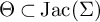 $\Theta \subset \mathrm {Jac}(\Sigma )$
is modelled after the singular quadric
$\Theta \subset \mathrm {Jac}(\Sigma )$
is modelled after the singular quadric
 $$ \begin{align*} \{xy=tz\}\subset\mathbb{C}^4 \end{align*} $$
and the Abel-Jacobi map $\mathcal {A}$
is given by the small resolution.
$\mathcal {A}$
is given by the small resolution.
5 The three-torus
We will prove our main results, Theorem 0.2 and 5.1. We begin by briefly recalling how to determine the Floer homology group

by looking at a flat metric (cf. [Reference Kronheimer and MrowkaKM07, Ch. $38$
]). There is a unique flat spin
$38$
]). There is a unique flat spin $^c$
connection
$^c$
connection $B_0$
for which
$B_0$
for which $B_0$
has kernel, corresponding to the two dimensional space of parallel spinors. By adding a
$B_0$
has kernel, corresponding to the two dimensional space of parallel spinors. By adding a $\delta $
-perturbation to the equations, this gives rise to a small
$\delta $
-perturbation to the equations, this gives rise to a small $S^2\subset \mathbb {T}_{T^3}$
of operators having kernel as in Lemma 4.3. Choosing a standard Morse function on
$S^2\subset \mathbb {T}_{T^3}$
of operators having kernel as in Lemma 4.3. Choosing a standard Morse function on $\mathbb {T}_{T^3}$
so that minimum lies inside
$\mathbb {T}_{T^3}$
so that minimum lies inside $S^2$
, the Floer chain complex is then directly determined to be
$S^2$
, the Floer chain complex is then directly determined to be

where the underlined summand is shifted up because of the spectral flow.
We are now ready to prove our main result.
Proof of Theorem 0.2
For a generic spinorial perturbation A, $\mathsf {K}$
is smooth for dimensional reasons, see Remark 1.4. Of course, it will in general not be of the simplest type. For a component
$\mathsf {K}$
is smooth for dimensional reasons, see Remark 1.4. Of course, it will in general not be of the simplest type. For a component $U\subset \mathbb {T}_Y\setminus \mathsf {K}$
, so that U is a component of
$U\subset \mathbb {T}_Y\setminus \mathsf {K}$
, so that U is a component of $\mathrm {U}\subset \mathrm {int}\mathbb {T}_j\setminus \mathbb {T}_{j-1}$
for some j, we call its upper boundary the intersection of
$\mathrm {U}\subset \mathrm {int}\mathbb {T}_j\setminus \mathbb {T}_{j-1}$
for some j, we call its upper boundary the intersection of $\bar {U}\cap \partial \mathbb {T}_j$
and its lower boundary the intersection of
$\bar {U}\cap \partial \mathbb {T}_j$
and its lower boundary the intersection of $\bar {U}\cap \partial \mathbb {T}_{j-1}$
. We can then find an A-transverse Morse function
$\bar {U}\cap \partial \mathbb {T}_{j-1}$
. We can then find an A-transverse Morse function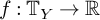 $f:\mathbb {T}_Y\rightarrow \mathbb {R}$
satisfying the following property: f has maxima only in the components of
$f:\mathbb {T}_Y\rightarrow \mathbb {R}$
satisfying the following property: f has maxima only in the components of $\mathbb {T}_Y\setminus \mathsf {K}$
with no upper boundary, and has exactly one maximum in each of them; similarly, f has minima only in the components of
$\mathbb {T}_Y\setminus \mathsf {K}$
with no upper boundary, and has exactly one maximum in each of them; similarly, f has minima only in the components of $\mathbb {T}_Y\setminus \mathsf {K}$
with no lower boundary, and has exactly one maximum in each of them. This can be achieved by suitable canceling
$\mathbb {T}_Y\setminus \mathsf {K}$
with no lower boundary, and has exactly one maximum in each of them. This can be achieved by suitable canceling $0$
-
$0$
- $1$
and
$1$
and $2$
-
$2$
- $3$
handle pairs.
$3$
handle pairs.
Fix an A-transverse Morse function f satisfying the condition above. By Lemma 2.7 we can consider the spectral sequence induced by the Morse filtration. Let us denote
 $$ \begin{align*} E^2=\mathcal{F}_3\oplus \mathcal{F}_2\oplus \mathcal{F}_1\oplus \mathcal{F}_0 \end{align*} $$
where the subscripts denote the filtration index. Notice that $\mathcal {F}_i$
lies in degree i modulo
$\mathcal {F}_i$
lies in degree i modulo $2$
, so that
$2$
, so that $d_2=0$
and
$d_2=0$
and $E^2=E^3$
. In degrees high enough,
$E^2=E^3$
. In degrees high enough, $(E^3,d_3)$
is forced to look like the Floer chain complex of the flat torus described above. In particular we have
$(E^3,d_3)$
is forced to look like the Floer chain complex of the flat torus described above. In particular we have
 $$ \begin{align*} \mathcal{F}_i= \begin{cases} \mathcal{T}_+\langle d_i\rangle\oplus G_i \text{ if }i=0,3\\ \mathcal{T}_+^{\oplus3}\langle d_i\rangle\oplus G_i \text{ if }i=1,2 \end{cases} \end{align*} $$
for some integer $d_i$
and
$d_i$
and $\mathbb {Q}[U]$
-modules
$\mathbb {Q}[U]$
-modules $G_i$
which are finite dimensional
$G_i$
which are finite dimensional $\mathbb {Q}$
-vector spaces.
$\mathbb {Q}$
-vector spaces.
Consider the collection of all minima $x_i$
for
$x_i$
for $i=1,\dots ,n$
of
$i=1,\dots ,n$
of ${f}$
. Because
${f}$
. Because $\mathbb {T}$
is connected, we can find (up to reordering) critical points
$\mathbb {T}$
is connected, we can find (up to reordering) critical points $y_i$
for
$y_i$
for $1\leq i\leq n-1$
of index
$1\leq i\leq n-1$
of index $1$
such that
$1$
such that $\partial y_i=x_i-x_{i+1}$
. Our choice of Morse function f assures that there is non-zero spectral flow on the trajectories between
$\partial y_i=x_i-x_{i+1}$
. Our choice of Morse function f assures that there is non-zero spectral flow on the trajectories between $y_i$
and
$y_i$
and $x_i$
or
$x_i$
or $x_{i+1}$
. Hence, using Lemma 2.7, these critical points determine a subcomplex in
$x_{i+1}$
. Hence, using Lemma 2.7, these critical points determine a subcomplex in $\check {C}_*$
of the form
$\check {C}_*$
of the form

where the top (resp. bottom) row consists of the $y_i$
(resp
$y_i$
(resp $x_i$
), and each arrow is multiplication by
$x_i$
), and each arrow is multiplication by $U^{k}$
for some
$U^{k}$
for some $k\geq 1$
because of the spectral flow (we are not keeping track of gradings in the figure). From here we see that in fact
$k\geq 1$
because of the spectral flow (we are not keeping track of gradings in the figure). From here we see that in fact
 $$ \begin{align} \mathcal{F}_0=\mathcal{T}_+\langle d_0\rangle \end{align} $$
i.e. $G_0=0$
, and
$G_0=0$
, and $G_1\neq 0$
as soon as there is more than one minimum (cf. the analogous computations for the case
$G_1\neq 0$
as soon as there is more than one minimum (cf. the analogous computations for the case $b_1=1$
in [Reference LinLin22b]). Considering now the higher differential
$b_1=1$
in [Reference LinLin22b]). Considering now the higher differential
 $$ \begin{align} d_3:\mathcal{F}_3\rightarrow \mathcal{F}_0, \end{align} $$
which is clearly surjective because of the $\mathbb {Q}[U]$
-module structure, we see that it is injective. This follows because anything in the kernel would lead to non-trivial reduced homology in
$\mathbb {Q}[U]$
-module structure, we see that it is injective. This follows because anything in the kernel would lead to non-trivial reduced homology in 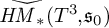 , again because the U-action from towers lowers the filtration level. Hence we conclude that
 $$ \begin{align} \mathcal{F}_3=\mathcal{T}_+\langle d_0+1\rangle. \end{align} $$
Turning upside down the argument for critical points of Morse index $0$
and
$0$
and $1$
above (20), this implies that f has exactly one maximum. Furthermore, for grading reasons (22) is the only non-zero component of
$1$
above (20), this implies that f has exactly one maximum. Furthermore, for grading reasons (22) is the only non-zero component of $d_3$
. In particular,
$d_3$
. In particular, $G_1$
survives in the
$G_1$
survives in the $E^{\infty }$
page. Because of filtration reasons, it contributes to reduced homology, hence it vanishes, and f has exactly one minimum as well.
$E^{\infty }$
page. Because of filtration reasons, it contributes to reduced homology, hence it vanishes, and f has exactly one minimum as well.
Furthermore, comparing the gradings in (21) and (23), we see that any path between the maximum and the minimum has spectral flow $-1$
. This implies in particular that
$-1$
. This implies in particular that $\mathsf {K}$
is of the simplest type, so that we can apply Theorem 3.3. Because
$\mathsf {K}$
is of the simplest type, so that we can apply Theorem 3.3. Because $T^3$
has trivial reduced Floer homology, we see that
$T^3$
has trivial reduced Floer homology, we see that $i_*:H_*(\mathbb {T}_-)\rightarrow H_*(\mathbb {T})$
is injective. By inspecting the compatibility with the
$i_*:H_*(\mathbb {T}_-)\rightarrow H_*(\mathbb {T})$
is injective. By inspecting the compatibility with the $\Lambda ^* H_1(T^3)$
-action, the
$\Lambda ^* H_1(T^3)$
-action, the $E^1$
page of the simplest type spectral sequence is forced to be either that of the flat torus described above or
$E^1$
page of the simplest type spectral sequence is forced to be either that of the flat torus described above or

which is simply the chain complex corresponding to $(-\delta ,-\varepsilon )$
. Let us focus on the former as the latter case is identical. We see that
$(-\delta ,-\varepsilon )$
. Let us focus on the former as the latter case is identical. We see that $H_*(\mathbb {T}_-)=H_*(\mathrm {pt})$
. This implies that
$H_*(\mathbb {T}_-)=H_*(\mathrm {pt})$
. This implies that $\mathsf {K}$
is a union of spheres, because for a general three-manifold M the inclusion of the boundary
$\mathsf {K}$
is a union of spheres, because for a general three-manifold M the inclusion of the boundary $\partial M\subset M$
satisfies the ‘half dies, half lives’ property, i.e. the map induced by the inclusion
$\partial M\subset M$
satisfies the ‘half dies, half lives’ property, i.e. the map induced by the inclusion
 $$ \begin{align*} H_1(\partial M;\mathbb{Q})\rightarrow H_1(M;\mathbb{Q}) \end{align*} $$
has kernel of dimension $b_1(\partial M)/2$
. Finally, there is only one boundary component because otherwise
$b_1(\partial M)/2$
. Finally, there is only one boundary component because otherwise $H_2(\mathbb {T}_-)=H^1(\mathbb {T_-},\mathsf {K})$
would be non-trivial; hence
$H_2(\mathbb {T}_-)=H^1(\mathbb {T_-},\mathsf {K})$
would be non-trivial; hence $\mathsf {K}$
is a two-sphere.
$\mathsf {K}$
is a two-sphere.
To conclude, we note that under some mild additional assumptions, we can say more about the location of the two-sphere $\mathsf {K}=S^2$
inside
$\mathsf {K}=S^2$
inside $\mathbb {T}_{T^3}$
. First of all, because
$\mathbb {T}_{T^3}$
. First of all, because $\mathbb {T}_{T^3}$
is an irreducible three-manifold, Alexander’s theorem implies that
$\mathbb {T}_{T^3}$
is an irreducible three-manifold, Alexander’s theorem implies that $\mathsf {K}$
separates
$\mathsf {K}$
separates $T^3$
in two components, one of which is diffeomorphic to the interior of an embedded ball
$T^3$
in two components, one of which is diffeomorphic to the interior of an embedded ball $B^3\hookrightarrow T^3$
(see, for example, [Reference RolfsenRol90]). In
$B^3\hookrightarrow T^3$
(see, for example, [Reference RolfsenRol90]). In $\mathbb {T}_{T^3}$
there are eight special points corresponding to the spin structures
$\mathbb {T}_{T^3}$
there are eight special points corresponding to the spin structures $\mathsf {s}$
on
$\mathsf {s}$
on $T^3$
; once one is fixed, the other ones are obtained by twisting by a flat line bundle with holonomy
$T^3$
; once one is fixed, the other ones are obtained by twisting by a flat line bundle with holonomy $\pm 1$
around each loop. Among these spin structures there is a special one
$\pm 1$
around each loop. Among these spin structures there is a special one $\mathsf {s}_0$
, which can be identified by the fact that it has Rokhlin invariant
$\mathsf {s}_0$
, which can be identified by the fact that it has Rokhlin invariant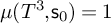 $\mu (T^3,\mathsf {s}_0)=1$
, while the other ones have
$\mu (T^3,\mathsf {s}_0)=1$
, while the other ones have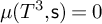 $\mu (T^3,\mathsf {s})=0$
(see [Reference KirbyKir89, Ch. 5]). We then have the following.
$\mu (T^3,\mathsf {s})=0$
(see [Reference KirbyKir89, Ch. 5]). We then have the following.
Theorem 5.1. In the setup the Theorem 0.2, assume that under the natural decomposition
 $$ \begin{align*} A=A_0+\tau\cdot I \end{align*} $$
with $A_0$
traceless and
$A_0$
traceless and $\tau =\mathrm {tr}A/2$
a function, the
$\tau =\mathrm {tr}A/2$
a function, the $C^0$
norm of
$C^0$
norm of $A_0$
is small compared to that of
$A_0$
is small compared to that of $\tau $
. Then the component of
$\tau $
. Then the component of $\mathbb {T}_{T^3}\setminus \mathsf {K}$
which is diffeomorphic to
$\mathbb {T}_{T^3}\setminus \mathsf {K}$
which is diffeomorphic to $\mathrm {int} B^3$
contains the spin structure
$\mathrm {int} B^3$
contains the spin structure $\mathsf {s}_0$
, while the other component contains all the remaining spin structures
$\mathsf {s}_0$
, while the other component contains all the remaining spin structures $\mathsf {s}\neq \mathsf {s}_0$
.
$\mathsf {s}\neq \mathsf {s}_0$
.
Notice that in the case of a flat metric $g_{\mathrm {flat}}$
, the spin structure
$g_{\mathrm {flat}}$
, the spin structure $\mathfrak {s}_0$
can be identified as the unique
$\mathfrak {s}_0$
can be identified as the unique $B_0$
for which
$B_0$
for which $D_{B_0}$
has non-trivial kernel, and the conclusion of the result can be again checked explicitly for
$D_{B_0}$
has non-trivial kernel, and the conclusion of the result can be again checked explicitly for $A=\delta \neq 0$
small.
$A=\delta \neq 0$
small.
Proof of Theorem 5.1
For a generic small function $\tau $
, none of the perturbed Dirac operators
$\tau $
, none of the perturbed Dirac operators $D_B-\tau $
where
$D_B-\tau $
where $B\in \mathbb {T}$
corresponds to one of the eight spin structures will have kernel. Now, in dimension three the spin Dirac operators are quaternionic linear, and the perturbations above are quaternionic as well. Because of this, there is a well defined value of the spectral flow between them modulo two. In [Reference LinLin18] it is shown that this value is precisely the difference of the corresponding Rokhlin invariants.
$B\in \mathbb {T}$
corresponds to one of the eight spin structures will have kernel. Now, in dimension three the spin Dirac operators are quaternionic linear, and the perturbations above are quaternionic as well. Because of this, there is a well defined value of the spectral flow between them modulo two. In [Reference LinLin18] it is shown that this value is precisely the difference of the corresponding Rokhlin invariants.
The additional perturbation $A_0$
is not quaternionic linear; but provided its norm is small enough so that none of
$A_0$
is not quaternionic linear; but provided its norm is small enough so that none of $D_B-\tau -tA_0$
for B spin and
$D_B-\tau -tA_0$
for B spin and $t\in [0,1]$
has kernel, it will not change the value of the spectral flow. In particular, two points
$t\in [0,1]$
has kernel, it will not change the value of the spectral flow. In particular, two points $B,B'$
corresponding to spin structures will be on the same component of
$B,B'$
corresponding to spin structures will be on the same component of $\mathbb {T}\setminus \mathsf {K}$
exactly when they have the same Rokhlin invariant. Finally, the component which is a ball contains
$\mathbb {T}\setminus \mathsf {K}$
exactly when they have the same Rokhlin invariant. Finally, the component which is a ball contains $\mathfrak {s}_0$
by examining the proof above.
$\mathfrak {s}_0$
by examining the proof above.
Acknowledgements
Understanding the Floer homology of $S^1\times \Sigma $
from a geometric viewpoint was a key motivation behind the project, and the author would like to thank Tom Mrowka for suggesting to think about it about a decade ago. He also thanks the anonymous referee of his previous paper [Reference LinLin22b] for some helpful comments, and Mike Miller Eismeier for pointing out Lemma 2.7. This work was partially supported by the Alfred P. Sloan Foundation and NSF grant DMS-2203498.
$S^1\times \Sigma $
from a geometric viewpoint was a key motivation behind the project, and the author would like to thank Tom Mrowka for suggesting to think about it about a decade ago. He also thanks the anonymous referee of his previous paper [Reference LinLin22b] for some helpful comments, and Mike Miller Eismeier for pointing out Lemma 2.7. This work was partially supported by the Alfred P. Sloan Foundation and NSF grant DMS-2203498.
Competing interests
The author has no competing interest to declare.
Data Availability
No data was generated during the development of this work.


 Open access

