To save content items to your account,
please confirm that you agree to abide by our usage policies.
If this is the first time you use this feature, you will be asked to authorise Cambridge Core to connect with your account.
Find out more about saving content to .
To save content items to your Kindle, first ensure no-reply@cambridge.org
is added to your Approved Personal Document E-mail List under your Personal Document Settings
on the Manage Your Content and Devices page of your Amazon account. Then enter the ‘name’ part
of your Kindle email address below.
Find out more about saving to your Kindle.
Note you can select to save to either the @free.kindle.com or @kindle.com variations.
‘@free.kindle.com’ emails are free but can only be saved to your device when it is connected to wi-fi.
‘@kindle.com’ emails can be delivered even when you are not connected to wi-fi, but note that service fees apply.
The American Society of Clinical Psychopharmacology convened a 45-member international expert task force to identify circumstances supporting the deprescribing of core psychotropic medications for major depressive disorder (MDD) and bipolar disorders. Three Delphi survey rounds plus a selective literature review identified points of consensus (predefined as ≥75% agreement) about when antidepressant, antipsychotic, mood stabiliser and sedative-hypnotic deprescribing is warranted. Twenty out of 32 statements (63%) achieved consensus across seven thematic areas. In MDD, panellists favoured discontinuing antidepressants when mechanisms of action are duplicative, adequate trials produce ≤25% improvement or loss of prior efficacy cannot be regained through dose increases or augmentations. Indefinite antidepressant maintenance in MDD was favoured after three or more lifetime episodes. In bipolar disorder, antidepressant deprescribing was favoured in the setting of rapid cycling, mixed features or emerging mania/hypomania symptoms; and discouraged if prior antidepressant cessation led to relapse. In nonpsychotic mood disorders, panellists favoured deprescribing antipsychotics that caused significant weight gain or tardive dyskinesia over adding pharmacological antidotes. Deprescribing to achieve an eventual medication-free status was considered inappropriate, in bipolar type 1, but not necessarily bipolar type 2 disorder. Although individualised circumstances necessarily inform psychopharmacology management, clinical presentations that misalign with existing pharmacotherapies may signal the desirability of cautious deprescribing.
Comorbid obsessive–compulsive disorder (OCD) or obsessive–compulsive symptoms (OCS) are common in people with severe mental illness (SMI; including schizophrenia, bipolar disorder and schizoaffective disorder), with little known about associations with smoking.
Aims
To estimate the association between OCD/OCS and smoking status among people with SMI in a huge electronic database.
Method
Using the Clinical Records Interactive Search (CRIS) platform for data of service users in the South London and Maudsley (SLaM) NHS Foundation Trust, tobacco smoking status was retrospectively detected through an algorithm of natural language processing technique, categorising into ‘current smoker’, ‘ex-smoker’ and ‘non-smoker’ by the clinical notes of SMI individuals during 2007–2015. A hierarchical assignment rule was applied following the order of ‘smoker’, ‘ex-smoker’ and then ‘non-smoker’ in an individual. Logistic regression was used to examine the association between smoking and OCS in people with SMI for univariable and multivariable analyses.
Results
We identified 15 479 SMI individuals (56% male; mean age 41 years old), with 90.4% ever smoked. Among them, 2320 (15%) had OCS (without OCD), while 2174 (14%) had a clinical diagnosis of comorbid OCD. After adjusting for demographics and functional status as confounders, both SMI individuals with OCS only and an OCD diagnosis were significantly more likely to have ever smoked (adj. odds ratio 1.47, 95% CI 1.23, 1.76 and adj. odds ratio 1.33, 95% CI 1.11, 1.60, respectively) compared with those without OCD/OCS.
Conclusions
In this large-scale analysis of people with SMI, we found that individuals with OCS or OCD were more likely to have ever smoked.
Glacier ice melt, a key driver of sea level rise, depends on how the ocean currents interact with ice. The roughness and shape of the ice on scales smaller than 10 m are important and remain poorly understood due to a lack of observations. We investigate submarine ice roughness using fine-resolution multibeam sonar measurements from 13 grounded icebergs and a drone survey of a recently capsized floating iceberg in the temperate tidewater glacial fjord Xeitl Geeyi’ (LeConte Bay), Alaska. From these 14 icebergs, 55 gridded iceberg surfaces (20–40 cm resolution) were derived. We apply a spectral, scale-resolved approach to quantify iceberg roughness. Spectral analysis shows that 40 of these surfaces were dominated by vertically oriented channels with wavelengths ranging from 0.9 m to 3.7 m, likely shaped by buoyancy-driven meltwater plumes. Statistical analyses reveal a mean peak wavelength of 1.9 m, RMS height of 0.3 m, skewness of -0.3 and kurtosis of 4.3. Roughness at medium- to small-scales $\mathcal{O}$(0.5-5 m) can nearly double the ice–ocean boundary surface area and, when combined with iceberg-scale morphology $\mathcal{O}$(10 m), underscores the need to integrate realistic roughness and morphology parameters into melt models, which may improve melt predictions.
Childhood maltreatment (CM) is related to structural alterations in adult limbic regions. However, the change in limbic structures remains unclear in adolescents from the general population since most reports stem from clinical samples. Additionally, large longitudinal neuroimaging studies in community adolescents reporting CM are scarce. Hence, we aimed to investigate the cross-sectional and longitudinal associations between CM and the structure and function of the extended limbic and reward systems throughout adolescence.
Methods
We analysed data of 634 community adolescents from the IMAGEN cohort at age 14, followed up at age 18. CM was inferred from the Childhood Trauma Questionnaire completed at age 18, yielding subgroups with CM (N = 105) or without CM (N = 529). Using 3-Tesla T1 MRI, we performed between-group voxel-wise analyses at ages 14 and 18 to investigate grey matter volumes (GMV). In addition, GMV were investigated longitudinally between ages 14 and 18. Finally, using functional MRI and the Monetary Incentive Delay task, we measured reward anticipation and feedback sensitivity between groups at ages 14 and 18.
Results
Both at ages 14 and 18, adolescents reporting CM had lower GMV in the right insula, left orbitofrontal cortex, putamen, superior medial frontal gyrus, paracentral lobule, and other paralimbic regions, but no significant differences in reward response. Longitudinal analyses revealed no GMV difference between age groups.
Conclusion
CM was associated with GMV alterations persisting from early to late adolescence in the limbic regions in community individuals. Therefore, these findings further support the need for research on targeted preventive interventions for adolescents who have experienced CM.
The Body Matrices (Frederick & Peplau, 2007; Gray & Frederick, 2012) contain 28 computer-generated images of shirtless men varying in body fat and muscularity and 32 images of women in bikinis varying in body fat and breast size. The male matrices present seven levels of muscularity and four levels of body fat. The female matrices present eight levels of body fat and four levels of breast size. Each matrix contains all possible combinations of these body fat and muscularity/breast size level (e.g., slender women with large breasts; heavier women with smaller breasts). Consistent with self-discrepancy theory (Higgins, 1987), they assess men’s and women’s perceptions of their current bodies and their ideal bodies, and discrepancies between these perceptions. They can be administered to adolescents and/or adults and are free to use. This chapter describes the development and psychometrics of The Body Matrices. Test-retest reliability was high for current and ideal bodies for men and women, and moderate to high for self-ideal discrepancies. BMI (self-reported height and weight) was strongly associated with current body images chosen by participants. The chapter provides the images, response scale, and scoring procedure. Logistics of use, such as permissions, copyright, and contact information, are provided for readers.
Because of the complexity of Alzheimer’s Disease (AD) clinical presentations across bio-psycho-social domains of functioning, data-reduction approaches, such as latent profile analysis (LPA), can be useful for studying profiles rather than individual symptoms. Previous LPA research has resulted in more precise characterization and understanding of patients, better clarity regarding the probability and rate of disease progression, and an empirical approach to identifying those who might benefit most from early intervention. Whereas previous LPA research has revealed useful cognitive, neuropsychiatric, or functional subtypes of patients with AD, no study has identified patient profiles that span the domains of health and functioning and that also include motor and sensory functioning.
Methods:
LPA was conducted with data from the Advancing Reliable Measurement in Alzheimer’s Disease and cognitive Aging study. Participants were 209 older adults with amnestic mild cognitive impairment (aMCI) or mild dementia of the Alzheimer’s type (DAT). LPA indicator variables were from the NIH Toolbox® and included cognitive, emotional, social, motor, and sensory domains of functioning.
Results:
The data were best modeled with a 4-profile solution. The latent profiles were most differentiated by indices of social and emotional functioning and least differentiated by motor and sensory function.
Conclusions:
These multi-domain patient profiles support and extend previous findings on single-domain profiles and highlight the importance of social and emotional factors for understanding patient experiences of aMCI/DAT. Future research should investigate these profiles further to better understand risk and resilience factors, the stability of these profiles over time, and responses to intervention.
Co-speech gestures accompany or replace speech in communication. Studies investigating how autistic children understand them are scarce and inconsistent and often focus on decontextualized, iconic gestures. This study compared 73 three- to twelve-year-old autistic children with 73 neurotypical peers matched on age, non-verbal IQ, and morphosyntax. Specifically, we examined (1) their ability to understand deictic (i.e., pointing), iconic (e.g., gesturing ball), and conventional (e.g., gesturing hello) speechless video-taped gestures following verbal information in a narrative and (2) the impact of linguistic (e.g., vocabulary, morphosyntax) and cognitive factors (i.e., working memory) on their performance, to infer on the underlying mechanisms involved. Autistic children displayed overall good performance in gesture comprehension, although a small but significant difference advantage was observed in neurotypical children. Findings suggest that combining speech and gesture sequentially may be relatively spared in autism and might represent a way to alleviate the demand for simultaneous cross-modal processing.
Objectives/Goals: Trainees in clinical and translational science (CTS) take courses in biostatistics, epidemiology, and other quantitative areas. To be most successful, trainees require competency in algebra. We developed a quantitative assessment and study guide to assess trainee’s quantitative skills and provide review material to address weaknesses. Methods/Study Population: The Tufts CTS Graduate Program is the training core of the Tufts CTSI and its associated pre- and post-doctoral T32 awards. Approximately 10 trainees with a range of backgrounds (e.g., physicians, medical students, master’s-level researchers, and basic science PhDs) and varying math education experiences matriculate each year. We wanted to address the resulting range of quantitative skills to help students succeed in our program. In Spring 2023, we met with faculty teaching quantitative courses to identify core algebra concepts needed to succeed in their classes. A graduate student in computational mathematics with extensive tutoring experience then drafted assessment questions, a comprehensive study guide, and brief cheat sheet. The material was reviewed and revised with input from quantitative faculty. Results/Anticipated Results: We developed a 20-item quantitative assessment covering properties of operators; identity elements and inverses; simplification of arithmetic and algebraic expressions; solving algebraic equations; functions; equations of a line; and exponents/logarithms. A cheat sheet provided trainees with a brief refresher for these topics. A study guide provided more detailed instruction, example exercises and solutions, and referenced publicly available, online resources (e.g., Khan Academy). During the introductory summer course for the Tufts CTS Program, trainees were allowed to use the cheat sheet and were given 1 hour to complete the assessment. Trainees who got questions incorrect were directed to relevant sections in the study guide. We anticipate collecting formal feedback to evaluate the material. Discussion/Significance of Impact: Trainees must have adequate foundational algebra skills to succeed in CTS graduate programs and as future researchers. Developing a quantitative assessment allowed us to identify areas of weakness resulting from educational disparities or reflecting other aspects of their backgrounds and to provide material to reinforce their preparation.
Objectives/Goals: Trainees in clinical and translational science (CTS) must learn to effectively communicate their research ideas and findings to a range of audiences. As part of our science communication curriculum, we developed ORAL and WRITTEN science communication rubrics for our trainees to use across their courses and research activities. Methods/Study Population: The Tufts CTS Graduate Program is the training core of the Tufts CTSI and its associated pre- and post-doctoral T32 awards. Approximately 10 trainees with a range of backgrounds (e.g., physicians, medical students, master’s-level researchers, and basic science PhDs) matriculate each year. Faculty members and staff with expertise in science communication and pedagogy formed a committee to develop the rubrics. Because oral and written communication require different skills, we developed separate rubrics for each. We reviewed our current science communication curriculum, reviewed existing communication rubrics, and identified common mistakes students make. Following pilot testing by students and faculty pilot for one semester, we modified the rubrics based on informal feedback. Results/Anticipated Results: Both rubrics include a section to identify the target audience and specific items organized by theme. Oral rubric themes include presentation content, slides, verbal communication, nonverbal communication, and following instructions. Written rubric themes include overall, manuscript/proposal sections, and following instructions. The rubrics serve as feedback tools for faculty and students to evaluate work others produce and as self-evaluation tools. Feedback elements include a 4-point rating for each rubric item, open text feedback for each theme, and an open text holistic assessment. We now use the rubrics in our study design course, which features student presentations of planned research, and in our writing course. We anticipate collecting formal student feedback to further evaluate the rubrics. Discussion/Significance of Impact: Our rubrics can supplement existing science communication training and can be integrated into all CTS coursework and research activities. For future clinical and translational scientists to have the greatest impact, they must learn to effectively communicate findings to multiple audiences, ranging from experts in their field to the general public.
This systematic review and meta-analysis evaluates the prevalence of disruptive mood dysregulation disorders (DMDD) in community-based and clinical populations.
Methods
PubMed and PsychINFO databases were searched, using terms specific to DMDD, for studies of prevalence and comorbidity rates conducted in youths below 18.
Results
Fourteen studies reporting data from 2013 to 2023 were included. The prevalence of DMDD in the community-based samples was 3.3% (95% confidence interval [CI], 1.4–6.0) and 21.9% (95% CI, 15.5–29.0) in the clinical population. The differences in the identification strategy of DMDD were associated with significant heterogeneity between studies in the community-based samples, with a prevalence of 0.82% (95% CI, 0.11–2.13) when all diagnosis criteria were considered. Anxiety, depressive disorders, and ADHD were the most frequent comorbidity present with DMDD. The association with other neurodevelopmental disorders remained poorly investigated.
Conclusions
Caution is required when interpreting these findings, considering the quality of the reviewed data and the level of unexplained heterogeneity among studies. This review stresses the importance of considering a strict adhesion to DMDD criteria when exploring its clinical correlates.
The timing of tracheostomy for intensive care unit patients is controversial, with conflicting findings on early versus late tracheostomy.
Methods
Patients undergoing tracheostomy from 2001through 2012 were identified from the Medical Information Mart for Intensive Care-III database. Early tracheostomy was defined as less than the 25th percentile of time from intensive care unit admission to tracheostomy (time to tracheostomy). Statistical analysis for tracheostomy timing on intensive care unit length of stay and mortality were conducted.
Results
Of the 1,566 patients that were included, patients with early tracheostomy had shorter intensive care unit length of stay (27.32 vs 12.55 days, p < 0.001) and lower mortality (12.9 per cent vs 9.0 per cent, p = 0.039). Multivariate logistic regression analysis found an association between increasing time to tracheostomy and mortality (odds ratio: 1.029, 95 per cent confidence interval 1.007–1.051, p = 0.009).
Conclusion
Our analysis revealed that patients with early tracheostomy were more likely to have shorter intensive care unit lengths of stay and lower mortality. Our data suggest that early tracheostomy should be given strong consideration in appropriately selected patients.
OBJECTIVES/GOALS: Many economic evaluations rely on clinical trial data that may not represent real world populations and intervention effectiveness. We compare risk and cost-effectiveness for the Diabetes Prevention Program (DPP) clinical trial cohort and a real world population eligible for the national DPP to assess the impact of using real world data. METHODS/STUDY POPULATION: To produce real world (US population) representative results, we identified National Health and Nutrition Examination Survey (NHANES) subjects eligible for the national DPP and adjusted projections using survey weights. We used clinical predictive models to estimate individual diabetes risk, and microsimulation to estimate lifetime costs, benefits, and net monetary benefits (NMB) for lifestyle intervention and metformin. We compared results across the DPP clinical trial and NHANES populations. RESULTS/ANTICIPATED RESULTS: Three-year risk of diabetes onset for the DPP trial population (mean of 19.7%, median of 10.3%) exceeded corresponding risk for the NHANES population (mean of 14.6%, median of 4.8%). The proportion of individuals with a three-year diabetes risk < 10% for the DPP trial population (49%) was less than the corresponding proportion for NHANES (67%). Mean NMB for metformin for the DPP trial population ($9,749) exceeded the corresponding value for NHANES ($5,391). The proportion of subjects with negative NMB was 49% for the DPP trial population and 67% for NHANES. Lifestyle intervention had a mean NMB of $34,889 for the DPP trial population and $28,652 for NHANES. Only 20% of the NHANES population eligible for national DPP met inclusion/exclusion criteria for the DPP trial. DISCUSSION/SIGNIFICANCE: Real world populations eligible for the national DPP include a greater proportion of low-risk individuals, and for these people, prevention programs may confer smaller benefits. Technology assessments based on clinical trial data should be revised using real world population and treatment effect data.
Previous pandemics have had negative effects on mental health, but there are few data on children and adolescents who were receiving ongoing psychiatric treatment.
Aims
To study changes in emotions and clinical state, and their predictors, during the COVID-19 pandemic in France.
Method
We administered (by interview) the baseline Youth Self-Report version of the CoRonavIruS Health Impact Survey v0.3 (CRISIS, French translation) to 123 adolescent patients and the Parent/Caregiver version to evaluate 99 child patients before and during the first ‘lockdown’. For 139 of these patients who received ongoing treatment in our centre, treating physicians retrospectively completed longitudinal global ratings for five time periods, masked to CRISIS ratings.
Results
The main outcome measure was the sum of eight mood state items, which formed a single factor in each age group. Overall, this score improved for each age group during the first lockdown. Clinician ratings modestly supported this result in patients without intellectual disability or autism spectrum disorder. Improvement of mood states was significantly associated with perceived improvement in family relationships in both age groups.
Conclusions
Consistent with previous studies of clinical cohorts, our patients had diverse responses during the pandemic. Several factors may have contributed to the finding of improvement in some individuals during the first lockdown, including the degree of family support or conflict, stress reduction owing to isolation, limitations of the outcome measures and/or possible selection bias. Ongoing treatment may have had a protective effect. Clinically, during crises additional support may be needed by families who experience increased conflict or who care for children with intellectual disability.
Symptom clustering research provides a unique opportunity for understanding complex medical conditions. The objective of this study was to apply a variable-centered analytic approach to understand how symptoms may cluster together, within and across domains of functioning in mild cognitive impairment (MCI) and dementia, to better understand these conditions and potential etiological, prevention, and intervention considerations.
Method:
Cognitive, motor, sensory, emotional, and social measures from the NIH Toolbox were analyzed using exploratory factor analysis (EFA) from a dataset of 165 individuals with a research diagnosis of either amnestic MCI or dementia of the Alzheimer’s type.
Results:
The six-factor EFA solution described here primarily replicated the intended structure of the NIH Toolbox with a few deviations, notably sensory and motor scores loading onto factors with measures of cognition, emotional, and social health. These findings suggest the presence of cross-domain symptom clusters in these populations. In particular, negative affect, stress, loneliness, and pain formed one unique symptom cluster that bridged the NIH Toolbox domains of physical, social, and emotional health. Olfaction and dexterity formed a second unique cluster with measures of executive functioning, working memory, episodic memory, and processing speed. A third novel cluster was detected for mobility, strength, and vision, which was considered to reflect a physical functioning factor. Somewhat unexpectedly, the hearing test included did not load strongly onto any factor.
Conclusion:
This research presents a preliminary effort to detect symptom clusters in amnestic MCI and dementia using an existing dataset of outcome measures from the NIH Toolbox.
Understanding the factors contributing to optimal cognitive function throughout the aging process is essential to better understand successful cognitive aging. Processing speed is an age sensitive cognitive domain that usually declines early in the aging process; however, this cognitive skill is essential for other cognitive tasks and everyday functioning. Evaluating brain network interactions in cognitively healthy older adults can help us understand how brain characteristics variations affect cognitive functioning. Functional connections among groups of brain areas give insight into the brain’s organization, and the cognitive effects of aging may relate to this large-scale organization. To follow-up on our prior work, we sought to replicate our findings regarding network segregation’s relationship with processing speed. In order to address possible influences of node location or network membership we replicated the analysis across 4 different node sets.
Participants and Methods:
Data were acquired as part of a multi-center study of 85+ cognitively normal individuals, the McKnight Brain Aging Registry (MBAR). For this analysis, we included 146 community-dwelling, cognitively unimpaired older adults, ages 85-99, who had undergone structural and BOLD resting state MRI scans and a battery of neuropsychological tests. Exploratory factor analysis identified the processing speed factor of interest. We preprocessed BOLD scans using fmriprep, Ciftify, and XCPEngine algorithms. We used 4 different sets of connectivity-based parcellation: 1)MBAR data used to define nodes and Power (2011) atlas used to determine node network membership, 2) Younger adults data used to define nodes (Chan 2014) and Power (2011) atlas used to determine node network membership, 3) Older adults data from a different study (Han 2018) used to define nodes and Power (2011) atlas used to determine node network membership, and 4) MBAR data used to define nodes and MBAR data based community detection used to determine node network membership.
Segregation (balance of within-network and between-network connections) was measured within the association system and three wellcharacterized networks: Default Mode Network (DMN), Cingulo-Opercular Network (CON), and Fronto-Parietal Network (FPN). Correlation between processing speed and association system and networks was performed for all 4 node sets.
Results:
We replicated prior work and found the segregation of both the cortical association system, the segregation of FPN and DMN had a consistent relationship with processing speed across all node sets (association system range of correlations: r=.294 to .342, FPN: r=.254 to .272, DMN: r=.263 to .273). Additionally, compared to parcellations created with older adults, the parcellation created based on younger individuals showed attenuated and less robust findings as those with older adults (association system r=.263, FPN r=.255, DMN r=.263).
Conclusions:
This study shows that network segregation of the oldest-old brain is closely linked with processing speed and this relationship is replicable across different node sets created with varied datasets. This work adds to the growing body of knowledge about age-related dedifferentiation by demonstrating replicability and consistency of the finding that as essential cognitive skill, processing speed, is associated with differentiated functional networks even in very old individuals experiencing successful cognitive aging.
The COVID-19 pandemic was associated with increased rates of hospital-acquired infections. During the early months of the pandemic, we observed high rates of hospital-acquired bloodstream infections (HA-BSIs) among COVID-19 patients, prompting the implementation of intensified prevention measures.
Objectives:
To assess the prevalence of HA-BSI among mechanically ventilated COVID-19 patients, identify risk factors, and evaluate the effect of prevention measures.
Methods:
We conducted a retrospective matched case-control study in adult medical step-up units between March 1, 2020, and March 31, 2021. We matched mechanically ventilated COVID-19 patients with ventilated non-COVID-19 patients based on age group and length of stay before ventilation. In response to the high rates of HA-BSI among COVID-19 patients, a comprehensive infection control intervention was implemented.
Results:
A total of 136 COVID-19 patients were matched with 136 non-COVID-19 patients. No significant differences were observed in pre-hospitalization characteristics. The central venous catheter utilization ratio was higher in COVID-19 patients (83.6%) versus 35.6% in the control group (p < 0.001). During pre-intervention, 35.2% (32/91) of COVID-19 patients developed HA-BSI, compared to 17.8% (13/73) in the control group (p < 0.001). Following the intervention, no significant difference was observed between the groups (17.8% (8/45) versus 15.9% (10 /63), p = 0.79). In a multivariate analysis, HA-BSI was associated with low body mass index (OR 0.9 (95% CI 0.9–1.0), p = 0.015)) and presence of temporary dialysis catheter (OR 2.7 (95% CI 1.0–7.3), p = 0.05)).
Conclusions:
Mechanically ventilated COVID-19 patients were at higher risk for developing HA-BSI compared to non-COVID-19 patients. Intensified prevention measures were associated with decreased rates of HA-BSI.
The COVID-19 pandemic accelerated the development of decentralized clinical trials (DCT). DCT’s are an important and pragmatic method for assessing health outcomes yet comprise only a minority of clinical trials, and few published methodologies exist. In this report, we detail the operational components of COVID-OUT, a decentralized, multicenter, quadruple-blinded, randomized trial that rapidly delivered study drugs nation-wide. The trial examined three medications (metformin, ivermectin, and fluvoxamine) as outpatient treatment of SARS-CoV-2 for their effectiveness in preventing severe or long COVID-19. Decentralized strategies included HIPAA-compliant electronic screening and consenting, prepacking investigational product to accelerate delivery after randomization, and remotely confirming participant-reported outcomes. Of the 1417 individuals with the intention-to-treat sample, the remote nature of the study caused an additional 94 participants to not take any doses of study drug. Therefore, 1323 participants were in the modified intention-to-treat sample, which was the a priori primary study sample. Only 1.4% of participants were lost to follow-up. Decentralized strategies facilitated the successful completion of the COVID-OUT trial without any in-person contact by expediting intervention delivery, expanding trial access geographically, limiting contagion exposure, and making it easy for participants to complete follow-up visits. Remotely completed consent and follow-up facilitated enrollment.
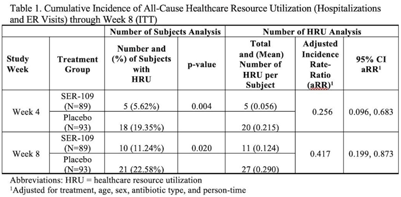
Background:Clostridioides difficile infection (CDI) often recurs in patients aged ≥65 years and those with comorbidities. Clinical trials often exclude patients with history of immunosuppression, malignancy, renal insufficiency, or other comorbidities. In a phase 3 trial (ECOSPOR III), SER-109 was superior to placebo in reducing recurrent CDI (rCDI) risk at week 8 and was well tolerated. We report integrated safety data for SER-109 in a broad patient population through week 24 from phase 3 studies: ECOSPOR III and ECOSPOR IV. Methods: ECOSPOR III was a double-blind, placebo-controlled trial conducted in participants with ≥2 CDI recurrences randomized 1:1 to placebo or SER-109. ECOSPOR IV was an open-label, single-arm study conducted in 263 patients with rCDI enrolled in 2 cohorts: (1) rollover participants from ECOSPOR III with on-study recurrence and (2) participants with ≥1 CDI recurrence, inclusive of the current episode. In both studies, the investigational product was administered as 4 oral capsules over 3 days. Treatment-emergent adverse events (TEAEs) were collected through week 8; serious TEAEs and TEAEs of special interest (ie, bacteremia, abscess, meningitis) were collected through week 24. Results: In total, 349 participants received SER-109 in ECOSPOR III and/or ECOSPOR IV (mean age 64.2; 68.8% female). Chronic diseases included cardiac disease (31.2%), immunocompromised or immunosuppressed (21.2%), diabetes (18.9% ), and renal impairment or failure (13.2%). Overall, 221 (63.3%) of 349 participants who received SER-109 experienced TEAEs through week 24. Most were mild to moderate and gastrointestinal. The most common (>5% of participants) treatment related TEAEs were flatulence, abdominal pain and distension, decreased appetite, constipation, nausea, fatigue, and diarrhea. No participants experienced a treatment-related TEAE leading to study withdrawal. Invasive infections were observed in 28 participants (8%); those with identified pathogens were unrelated to SER-109 species, and all were deemed unrelated to treatment by the investigators. There were 11 deaths (3.2%) and 48 participants (13.8%) with serious TEAEs, none of which were deemed treatment related. There were no clinically important differences in the safety profile across subgroups of sex, race, prior antibiotic regimen, or number of CDI recurrences. No safety signals were observed in participants with renal impairment or failure, diabetes, cardiac disease, or immunocompromised or immunosuppressed individuals. Conclusions: In this integrated analysis of phase 3 trials, SER-109, an investigational microbiome therapeutic, was well tolerated in this vulnerable patient population with prevalent comorbidities. No infections, nor those with identified pathogens, were attributed to SER-109 or product species. This safety profile might be expected because this purified product is composed of spore-forming Firmicutes normally abundant in the healthy microbiome.
Financial support: This study was funded by Seres Therapeutics.
Despite the increasing rates of carbapenem-resistant Acinetobacter baumannii (CRAB) carriage among hospitalized patients in endemic settings, the role of active surveillance cultures and cohorting is still debated. We sought to determine the long-term effect of a multifaceted infection-control intervention on the incidence of CRAB in an endemic setting.
Methods:
A prospective, quasi-experimental study was performed at a 670-bed, acute-care hospital. The study consisted of 4 phases. In phase I, basic infection control measures were used. In phase II, CRAB carriers were cohorted in a single ward with dedicated nursing and enhanced environmental cleaning. In phase III large-scale screening in high-risk units was implemented. Phase IV comprised a 15-month follow-up period.
Results:
During the baseline period, the mean incidence rate (IDR) of CRAB was 44 per 100,000 patient days (95% CI, 37.7–54.1). No significant decrease was observed during phase II (IDR, 40.8 per 100,000 patient days; 95% CI, 30.0–56.7; P = .97). During phase III, despite high compliance with control measures, ongoing transmission in several wards was observed and the mean IDR was 53.9 per 100,000 patient days (95% CI, 40.5–72.2; P = .55). In phase IV, following the implementation of large-scale screening, a significant decrease in the mean IDR was observed (25.8 per 100,000 patient days; 95% CI, 19.9–33.5; P = .03). An overall reduction of CRAB rate was observed between phase I and phase IV (rate ratio, 0.6; 95% CI, 0.4–0.9; P < .001).
Conclusions:
The comprehensive intervention that included intensified control measures with routine active screening cultures was effective in reducing the incidence of CRAB in an endemic hospital setting.
In anticipation of extraterritorial application of antiabortion laws, many states have enacted laws that attempt to shield abortion providers, helpers, and patients from civil, professional, or criminal liability associated with legal abortion care. This essay analyzes and compares the statutory schemes of the seven early adopting shield states: California, Connecticut, Delaware, Illinois, Massachusetts, New Jersey, and New York. After describing what the laws do and how they operate, we offer reflections on coming disputes, areas of legal uncertainty, and ways to improve future shield laws.