
430 results
The ameliorative and neuroprotective effects of dietary fibre on hyperuricaemia mice: a perspective from microbiome and metabolome
-
- Journal:
- British Journal of Nutrition , First View
- Published online by Cambridge University Press:
- 03 June 2024, pp. 1-14
-
- Article
- Export citation
Characterizing the distinct imaging phenotypes, clinical behavior, and genetic vulnerability of brain maturational subtypes in mood disorders
-
- Journal:
- Psychological Medicine , First View
- Published online by Cambridge University Press:
- 28 May 2024, pp. 1-11
-
- Article
-
- You have access
- Open access
- HTML
- Export citation
The long-term spatio-temporal trends in burden and attributable risk factors of major depressive disorder at global, regional and national levels during 1990–2019: a systematic analysis for GBD 2019
-
- Journal:
- Epidemiology and Psychiatric Sciences / Volume 33 / 2024
- Published online by Cambridge University Press:
- 20 May 2024, e28
-
- Article
-
- You have access
- Open access
- HTML
- Export citation
High-efficiency tandem Ho:YAG single-crystal fiber laser delivering more than 100 W output power
-
- Journal:
- High Power Laser Science and Engineering / Volume 12 / 2024
- Published online by Cambridge University Press:
- 13 May 2024, e41
-
- Article
-
- You have access
- Open access
- HTML
- Export citation
Development and characterization of novel EST-SSR markers for Gentiana straminea Maxim., a traditional Tibetan herb in China and cross-amplification in related species
-
- Journal:
- Plant Genetic Resources , First View
- Published online by Cambridge University Press:
- 09 May 2024, pp. 1-6
-
- Article
- Export citation
Flow–acoustic resonance mechanism in tandem deep cavities coupled with acoustic eigenmodes in turbulent shear layers
-
- Journal:
- Journal of Fluid Mechanics / Volume 984 / 10 April 2024
- Published online by Cambridge University Press:
- 05 April 2024, A19
-
- Article
- Export citation
-
This study presents the interplay of flow and acoustics within tandem deep cavities, focusing on the resonance mechanism occurring between turbulent shear layers and acoustic eigenmodes. The arrangement inside the tandem deep cavities includes both close and remote configurations. A combined fully coupled and decoupled aeroacoustic simulation strategy was devised. Employing an advanced high-order spectral/hp element method in conjunction with implicit large eddy simulation, the nonlinear compressible Navier–Stokes equations were solved to acquire internal flow–acoustic resonant field. In parallel, the linearized Navier–Stokes equations were tackled to determine coherent shear layer perturbations with external acoustic forcing. Based on acoustic measurements, the mainstream Reynolds number approaches approximately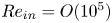 $R{e_{in}} = {O}({10^5})$, where we identified the presence of frequency lock-in and a resonance range. Aeroacoustic noise sources were examined by implementing spectral proper orthogonal decomposition to decompose the pressure fields into hydrodynamic and acoustic components. As feedback intensified, the flow characteristics by the acoustic forcing effect and the flow-interactive effect were categorized according to the development of concurrent turbulent shear layers. Subsequently, the alternating and synchronous behaviours of concurrent shear layers resonated with the out-of-phase and in-phase acoustic eigenmodes were identified, and the corresponding large-scale counter-rotating vortex pairs and co-rotating vortex structures at the cavity entrances were extracted. The acoustic power generated by the Coriolis force was calculated using Howe's vortex-sound analogy, and the aeroacoustic energy transfer mechanism between large-scale shear layer vortices with acoustic eigenmodes was further explored. Finally, a linear response of coherent perturbations of the concurrent shear layers by external acoustic forcing was established. The amplification of flow in the streamwise direction toward the main duct led to the formation of coherent vortex structures, accompanied by separation bubbles into the main duct.
Relationship between syncopal symptoms and head-up tilt test modes
-
- Journal:
- Cardiology in the Young , First View
- Published online by Cambridge University Press:
- 05 April 2024, pp. 1-6
-
- Article
- Export citation
Experimental study of the effect of particle–wall interactions on inertial particle dynamics in wall turbulence
-
- Journal:
- Journal of Fluid Mechanics / Volume 984 / 10 April 2024
- Published online by Cambridge University Press:
- 26 March 2024, A4
-
- Article
- Export citation
-
Based on Voronoi analysis, the properties related to the near-wall motion of particles in a turbulent boundary layer were experimentally investigated via different release modes, with a friction Reynolds number $Re_\tau =3530$. For high-inertia sand particles with Stokes number $St^+ \sim O(10^2\unicode{x2013}10^3)$ and a volume fraction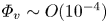 $\varPhi _v \sim O(10^{-4})$, particle image tracking velocimetry was used to determine the particle position and near-wall distribution properties. We established three particle release modes, including top-released, bottom overall-released and bottom partially released sand particles, under the same flow field conditions and calculated the differences in particle near-wall clustering and void properties. It was confirmed that wall effects (including collision and strike-splash) have a great influence on particle clustering and void behaviour near the wall. In the top-released sand particle and locally laid sand particle cases, particles bounced off the smooth walls and re-entered the carrier flow, causing significant clustering and sparsing of particles near the walls. In contrast, in the overall sand-laying case where the bottom wall was completely covered with sand particles, there is no apparent cluster or void phenomenon near the wall $(z/\delta <0.12)$ and the particles are randomly distributed, due to the combined effect of particle impact and splashing. In addition, the clustering and voids of particles become more pronounced with increasing wall-normal distance in the three release modes, and the particle distribution shows some self-similarity at each flow layer. The probability density function of the concentration of cluster particles decreases following a ‘ $-5/3$’ power law. However, due to the particle–wall interaction, the probability density function gradually deviates from the ‘ $-5/3$’ power law.


Modulations of turbulent/non-turbulent interfaces by particles in turbulent boundary layers
-
- Journal:
- Journal of Fluid Mechanics / Volume 983 / 25 March 2024
- Published online by Cambridge University Press:
- 15 March 2024, A15
-
- Article
- Export citation
-
A spatially developing flat-plate boundary layer free from and two-way coupled with inertial solid particles is simulated to investigate the interaction between particles and the turbulent/non-turbulent interface. Particle Stokes numbers based on the outer scale are $St=2$ (low), 11 (moderate) and 53 (high). The Eulerian–Lagrangian point-particle approach is deployed for the simulation of particle-laden flow. The outer edge of the turbulent/non-turbulent interface layer is detected as an iso-surface of vorticity magnitude. Results show that the particles tend to accumulate below the interface due to the centrifugal effect of large-scale vortices in the outer region of wall turbulence and the combined barrier effect of potential flow. Consequently, the conditionally averaged fluid velocity and vorticity vary more significantly across the interface through momentum exchange and the feedback of force in the enstrophy transport. The large-scale structures in the outer layer of turbulence become smoother and less inclined in particle-laden flow due to the modulation of turbulence by the inertial particles. As a result, the geometric features of the interface layer are changed, namely, the spatial undulation increases, the fractal dimension decreases and the thickness becomes thinner in particle-laden flow as compared with unladen case. These effects become more pronounced as particle inertia increases.

Epidemiology of tuberculosis among children in Beijing, China, 2012–2021
-
- Journal:
- Epidemiology & Infection / Volume 152 / 2024
- Published online by Cambridge University Press:
- 13 March 2024, e44
-
- Article
-
- You have access
- Open access
- HTML
- Export citation
Effectiveness of a WHO self-help psychological intervention to alleviate stress among healthcare workers in the context of COVID-19 in China: a randomised controlled trial
-
- Journal:
- Epidemiology and Psychiatric Sciences / Volume 33 / 2024
- Published online by Cambridge University Press:
- 07 March 2024, e11
-
- Article
-
- You have access
- Open access
- HTML
- Export citation
Modulational instability of the interacting electron whistlers and magnetosonic perturbations
-
- Journal:
- Journal of Plasma Physics / Volume 90 / Issue 1 / February 2024
- Published online by Cambridge University Press:
- 28 February 2024, 905900121
-
- Article
- Export citation
-
A modulational instability of nonlinearly interacting electron whistlers and magnetosonic perturbations is studied in the present paper. For typical parameters, there is no modulational instability. However, modulational instability appears in special cases. For example, when the whistler wavenumber is small enough, there is modulational instability. Its growth rate decreases as the angle between the external magnetic field and the perturbed wave's direction increases, while it increases as the whistler wavenumber increases. It is also found that there is no modulational instability when the whistler wavenumber is larger than a critical value ($k_0 > 0.05$
 ), in which the perturbed wave frequency increases as the angle between the external magnetic field and the perturbed wave's direction increases when the angle between the external magnetic field and the perturbed wave's direction is large enough. Whereas, the perturbed wave frequency first increases as the whistler wavenumber increases, reaches a peak value and then decreases as whistler wavenumber increases.

Binary collision dynamics of equal-sized nanodroplets
-
- Journal:
- Journal of Fluid Mechanics / Volume 979 / 25 January 2024
- Published online by Cambridge University Press:
- 11 January 2024, A25
-
- Article
- Export citation
Life history and mitochondrial genomes of Salassinae and Agliinae (Insecta, Lepidoptera): New insights into the loss of cocooning behaviour and phylogeny of Saturniidae
-
- Journal:
- Bulletin of Entomological Research / Volume 114 / Issue 1 / February 2024
- Published online by Cambridge University Press:
- 09 January 2024, pp. 107-123
-
- Article
- Export citation
Evaluation of suitable reference genes for expression profile analyses of target genes in the coffee berry borer, Hypothenemus hampei (Ferrari) (Coleoptera: Curculionidae)
-
- Journal:
- Bulletin of Entomological Research / Volume 114 / Issue 1 / February 2024
- Published online by Cambridge University Press:
- 05 January 2024, pp. 57-66
-
- Article
- Export citation
Sialic acid in human milk and infant formulas in China: concentration, distribution and type
-
- Journal:
- British Journal of Nutrition / Volume 131 / Issue 9 / 14 May 2024
- Published online by Cambridge University Press:
- 05 January 2024, pp. 1506-1512
- Print publication:
- 14 May 2024
-
- Article
- Export citation
Dynamic Adsorption of Cd2+ Onto Acid-Modified Attapulgite From Aqueous Solution
-
- Journal:
- Clays and Clay Minerals / Volume 62 / Issue 5 / October 2014
- Published online by Cambridge University Press:
- 01 January 2024, pp. 415-424
-
- Article
- Export citation
LncRNA HOXA-AS2 Promotes Temozolomide Resistance in Glioblastoma by Regulated miR-302a-3p/IGF1 Axis
-
- Journal:
- Genetics Research / Volume 2022 / 2022
- Published online by Cambridge University Press:
- 01 January 2024, e9
-
- Article
-
- You have access
- Open access
- HTML
- Export citation
Hsa-let-7c-5p, hsa-miR-130b-3p, and hsa-miR-142-3p as Novel miRNA Biomarkers for Melanoma Progression
-
- Journal:
- Genetics Research / Volume 2022 / 2022
- Published online by Cambridge University Press:
- 01 January 2024, e53
-
- Article
-
- You have access
- Open access
- HTML
- Export citation
Advanced Glycation End Products’ Receptor DNA Methylation Associated with Immune Infiltration and Prognosis of Lung Adenocarcinoma and Lung Squamous Cell Carcinoma
-
- Journal:
- Genetics Research / Volume 2023 / 2023
- Published online by Cambridge University Press:
- 01 January 2024, e4
-
- Article
-
- You have access
- Open access
- HTML
- Export citation
