To save content items to your account,
please confirm that you agree to abide by our usage policies.
If this is the first time you use this feature, you will be asked to authorise Cambridge Core to connect with your account.
Find out more about saving content to .
To save content items to your Kindle, first ensure no-reply@cambridge.org
is added to your Approved Personal Document E-mail List under your Personal Document Settings
on the Manage Your Content and Devices page of your Amazon account. Then enter the ‘name’ part
of your Kindle email address below.
Find out more about saving to your Kindle.
Note you can select to save to either the @free.kindle.com or @kindle.com variations.
‘@free.kindle.com’ emails are free but can only be saved to your device when it is connected to wi-fi.
‘@kindle.com’ emails can be delivered even when you are not connected to wi-fi, but note that service fees apply.
Social cognitive deficits are common across many psychiatric conditions and contribute to broader social dysfunction. One hypothesized mechanism involves altered basic visual processing, which may disrupt the perception of low-level social cues and, in turn, compromise broader social cognitive processes. Here, we examined relations between basic visual processing and different levels of social cognition in a transdiagnostic youth sample.
Methods
A sample of 148 youth, ranging from healthy individuals to individuals with neuropsychiatric diagnoses and significant social dysfunction, completed two measures of basic visual processing (contrast sensitivity and visual integration) and a battery of social cognition tasks spanning lower-level (gaze perception) to mid-level (emotion recognition) to higher-level (theory of mind) social cognition. We used a four-level path model to test whether basic visual processing predicts gaze perception, which in turn predicts emotion recognition, which predicts theory of mind.
Results
Poorer contrast sensitivity and visual integration were associated with less precise gaze perception, which was, in turn, associated with worse emotion recognition, which was associated with worse theory of mind. This four-level path model demonstrated good fit and showed superior fit compared to alternative models.
Conclusions
These findings suggest that basic visual processing influences the perception of basic social cues (e.g. gaze direction), which subsequently impairs more complex social perception and inference. Notably, this study extends prior observations from individuals with chronic schizophrenia to a transdiagnostic youth sample, indicating that altered basic visual processing may be a shared mechanism contributing to social cognitive deficits across psychiatric disorders and illness stages.
Explanatory frameworks for mental disorders influence stigmatisation and clinical attitudes. Mechanistic biological explanations often yield negative effects on prognostic optimism and empathy. Evolutionary framings might reduce stigma, but this has rarely been tested empirically.
Aims
To experimentally test whether a brief educational intervention presenting an evolutionary explanation of anxiety, compared with a genetic explanation, would influence clinicians’ attitudes in directions consistent with anti-stigma goals.
Method
In this pre-registered, multi-site, cluster-randomised trial, 171 practising mental health clinicians across the UK and Ireland were randomised by session to receive a 30 min educational presentation on either evolutionary or genetic explanations for anxiety. Pre- and post-session questionnaires assessed clinicians’ optimism regarding patient recovery, perceived efficacy of psychosocial interventions, expected patient willingness to share diagnosis and seek help and perceived usefulness of the information. Data were analysed using Bayesian cumulative ordinal regression models.
Results
In line with pre-registered hypotheses, clinicians rated evolutionary explanations as substantially more useful for patients (odds ratio 5.05, 95% credible interval [2.46, 10.28], latent standard deviation shift 1.07) and for clinicians (odds ratio 3.10, 95% credible interval [1.62, 5.81], latent standard deviation shift 0.76) compared with genetic explanations. Evolutionary explanations also resulted in higher anticipated public willingness to seek psychiatric help (odds ratio 1.79, 95% credible interval [0.93, 3.35]) and share a diagnosis (odds ratio 1.62, 95% credible interval [0.88, 2.97]); optimism about patient recovery (odds ratio 1.58, 95% credible interval [0.71, 3.46]); perceived effectiveness of psychosocial interventions (odds ratio 1.62, 95% credible interval [0.84, 3.10]); and belief in the functional usefulness of negative emotions (β = 0.25 s.d., 95% credible interval [0.01, 0.49]). These effects were driven by both positive pre–post effects of evolutionary education and negative pre–post effects of genetic education compared with pre-education baseline. Exploratory analysis showed further anti-stigma effects.
Conclusions
Framing anxiety through an evolutionary lens substantially improved clinicians’ attitudes on various measures of stigmatisation compared with genetic explanations, and was rated as highly useful for both clinicians and patients.
The growing utility and availability of genome-scale sequencing has led to increasingly broad incorporation across specialty disciplines of clinical research. However, classification of clinical relevance of genetic variation is an inherently clinical task, and the expertise to perform the necessary analysis, confirmation and reporting of these variants is not available in all research teams; consequently, disclosure of genomic variants to research participants remains challenging for many researchers. Advancing genomic medicine as a standard of care first requires institutional commitment and partnerships in supporting genomics in varied research studies that are inclusive of return of results to participants.
Materials and methods:
The University of North Carolina at Chapel Hill has vast experience with genetics in both clinical and research realms. By utilizing historical experience and input from key players, the Clinical GENomic analYSIS (GENYSIS) core facility was created as a case study and aims to provide a roadmap for research organizations to implement their own genomic sequencing core facilities.
Results:
The core has established a molecular sign-out conference, partnered with other core facilities on campus, and provides five main services: bioinformatics, variant analysis, clinical reporting, post-test services, and consultation with project advising. This paper presents case examples with discussion of continuous methodology improvements and embedded educational activities.
Conclusion:
This novel shared research resource enables clinical researchers with limited staff and genomics expertise to provide clinically relevant results to their study participants, expanding the reach of genomics research.
Inappropriate urine cultures (UCs) are common and lead to inappropriate antimicrobial use. Urinalyses (UAs) have been increasingly incorporated into diagnostic stewardship interventions, but the impact of these interventions nationally has not been assessed. We describe UA and UC utilization practices using a nationwide dataset of patients admitted to acute care hospitals.
Methods:
Design, Setting and Participants: We performed a retrospective cohort study of index UCs and their associated UAs performed for adult patients (age ≥ 18 years) admitted in U.S. acute care hospitals, participating in the PINC AI™ Healthcare Database (PHD) from January 1, 2017, through December 31, 2020. A positive UA was defined as >10 leukocytes per high power field, positive leukocyte esterase, or positive nitrite.
Results:
The overall rate of UCs in this study was 124.7 per 1000 discharges and annual UC rates decreased from 2017 (129.2) to 2020 (120.0). The proportion of UCs that had a positive UA increased from 60.5% in 2017 to 68.1% in 2020; UCs without a UA decreased from 19.3% to 10.5%, and UCs with a negative UA did not significantly change (20.2% to 21.5%). A multivariate multinomial logistic regression model identified male sex, age <65, and a diagnosis of cancer to be predictors of having a UC with a negative UA or no UA.
Conclusions:
UC utilization decreased over the study period. The proportion of UCs with a positive UA increased. This may suggest a positive impact of diagnostic stewardship practices at the national level although further progress is needed.
We present microsecond-resolution, coherently dedispersed, polarimetric measurements of 35 fast radio bursts (FRBs) detected during the Commensal Real-time ASKAP Fast Transients (CRAFT) incoherent sum (ICS) survey with the Australian Square Kilometre Array Pathfinder (ASKAP). We find a wide diversity of time–frequency morphology and polarisation properties broadly consistent with those of currently known non-repeating FRBs. The high S/N and fine time-resolution of our data however reveals a wealth of new information. Key results include (i) the distribution of scattering timescales, ${{{\unicode{x03C4}}_\textrm{obs}}}$, is limited purely by instrumental effects, with no downturn at high ${{{\unicode{x03C4}}_\textrm{obs}}}$ as expected from a log-normal distribution; (ii) for the 29 FRBs with known redshift, there is no detectable correlation between ${{{\unicode{x03C4}}_\textrm{obs}}}$ and dispersion measure (DM) fluctuations about the Macquart relation, in contrast to expectations from pulsar scattering–DM relations; (iii) all FRBs probably have multiple components, and at least a large fraction have variable PA, the identification of which is limited by scattering; (iv) at least half of all FRBs exhibit PA microstructure at 200 $\mu{}$s–200 ns timescales, with behaviour most closely resembling a sub-category of Crab main pulses; (v) that there is a break in the FRB circular polarisation distribution at Stokes $V \gtrsim 20$%, which is suggestive of a discrete sub-population.
Children with CHD are at risk of neurodevelopmental impairment. Modifiable risk factors associated with hospitalisation that could impact neurodevelopment include being left alone for long periods of time with minimal interaction or opportunity to engage in developmentally appropriate play. Volunteers are an underutilised resource to help the medical team and families support neurodevelopment in cardiac care. Our Cardiac Inpatient Neurodevelopmental Care Optimization or CINCO team aimed to develop a volunteer programme specific to paediatric cardiac inpatient units.
Methods:
CINCO volunteers were recruited from the hospital volunteer pool and, in 2022, partnered with the University of Colorado to recruit health profession-interested students from under-represented backgrounds. All underwent hospital volunteer orientation and CINCO-specific training with cardiac child life, including education and shadowing. Volunteers completed an activity log and provided qualitative feedback.
Results:
Between September 2021 and October 2024, 43 volunteers were onboarded and worked a total of 754 shifts. There were 2310 patient interactions, with an average of 3 patients seen per shift. Volunteers held patients 1231 times, played with patients 1230 times, and read to patients 780 times.
Conclusions:
A dedicated cardiac volunteer programme is a feasible, low-cost, and low-risk way to enhance neurodevelopmental care for inpatient children with CHD. When parents or caregivers are not present, volunteers participate as therapy extenders and may offset the care burden for nurses. Furthermore, allowing parents breaks may support their mental health, and increasing neurodevelopmental stimulation through volunteer interactions may mitigate disadvantageous aspects of a hospitalisation for neurodevelopment.
Patients with posttraumatic stress disorder (PTSD) exhibit smaller regional brain volumes in commonly reported regions including the amygdala and hippocampus, regions associated with fear and memory processing. In the current study, we have conducted a voxel-based morphometry (VBM) meta-analysis using whole-brain statistical maps with neuroimaging data from the ENIGMA-PGC PTSD working group.
Methods
T1-weighted structural neuroimaging scans from 36 cohorts (PTSD n = 1309; controls n = 2198) were processed using a standardized VBM pipeline (ENIGMA-VBM tool). We meta-analyzed the resulting statistical maps for voxel-wise differences in gray matter (GM) and white matter (WM) volumes between PTSD patients and controls, performed subgroup analyses considering the trauma exposure of the controls, and examined associations between regional brain volumes and clinical variables including PTSD (CAPS-4/5, PCL-5) and depression severity (BDI-II, PHQ-9).
Results
PTSD patients exhibited smaller GM volumes across the frontal and temporal lobes, and cerebellum, with the most significant effect in the left cerebellum (Hedges’ g = 0.22, pcorrected = .001), and smaller cerebellar WM volume (peak Hedges’ g = 0.14, pcorrected = .008). We observed similar regional differences when comparing patients to trauma-exposed controls, suggesting these structural abnormalities may be specific to PTSD. Regression analyses revealed PTSD severity was negatively associated with GM volumes within the cerebellum (pcorrected = .003), while depression severity was negatively associated with GM volumes within the cerebellum and superior frontal gyrus in patients (pcorrected = .001).
Conclusions
PTSD patients exhibited widespread, regional differences in brain volumes where greater regional deficits appeared to reflect more severe symptoms. Our findings add to the growing literature implicating the cerebellum in PTSD psychopathology.
Medicare claims are frequently used to study Clostridioides difficile infection (CDI) epidemiology. However, they lack specimen collection and diagnosis dates to assign location of onset. Algorithms to classify CDI onset location using claims data have been published, but the degree of misclassification is unknown.
Methods:
We linked patients with laboratory-confirmed CDI reported to four Emerging Infections Program (EIP) sites from 2016–2021 to Medicare beneficiaries with fee-for-service Part A/B coverage. We calculated sensitivity of ICD-10-CM codes in claims within ±28 days of EIP specimen collection. CDI was categorized as hospital, long-term care facility, or community-onset using three different Medicare claims-based algorithms based on claim type, ICD-10-CM code position, duration of hospitalization, and ICD-10-CM diagnosis code presence-on-admission indicators. We assessed concordance of EIP case classifications, based on chart review and specimen collection date, with claims case classifications using Cohen’s kappa statistic.
Results:
Of 12,671 CDI cases eligible for linkage, 9,032 (71%) were linked to a single, unique Medicare beneficiary. Compared to EIP, sensitivity of CDI ICD-10-CM codes was 81%; codes were more likely to be present for hospitalized patients (93.0%) than those who were not (56.2%). Concordance between EIP and Medicare claims algorithms ranged from 68% to 75%, depending on the algorithm used (κ = 0.56–0.66).
Conclusion:
ICD-10-CM codes in Medicare claims data had high sensitivity compared to laboratory-confirmed CDI reported to EIP. Claims-based epidemiologic classification algorithms had moderate concordance with EIP classification of onset location. Misclassification of CDI onset location using Medicare algorithms may bias findings of claims-based CDI studies.
With wide-field phased array feed technology, the Australian Square Kilometre Array Pathfinder (ASKAP) is ideally suited to search for seemingly rare radio transient sources that are difficult to discover previous-generation narrow-field telescopes. The Commensal Real-time ASKAP Fast Transient (CRAFT) Survey Science Project has developed instrumentation to continuously search for fast radio transients (duration $\lesssim$ 1 s) with ASKAP, with a particular focus on finding and localising fast radio bursts (FRBs). Since 2018, the CRAFT survey has been searching for FRBs and other fast transients by incoherently adding the intensities received by individual ASKAP antennas, and then correcting for the impact of frequency dispersion on these short-duration signals in the resultant incoherent sum (ICS) in real time. This low-latency detection enables the triggering of voltage buffers, which facilitates the localisation of the transient source and the study of spectro-polarimetric properties at high time resolution. Here we report the sample of 43 FRBs discovered in this CRAFT/ICS survey to date. This includes 22 FRBs that had not previously been reported: 16 FRBs localised by ASKAP to $\lesssim 1$ arcsec and 6 FRBs localised to $\sim 10$ arcmin. Of the new arcsecond-localised FRBs, we have identified and characterised host galaxies (and measured redshifts) for 11. The median of all 30 measured host redshifts from the survey to date is $z=0.23$. We summarise results from the searches, in particular those contributing to our understanding of the burst progenitors and emission mechanisms, and on the use of bursts as probes of intervening media. We conclude by foreshadowing future FRB surveys with ASKAP using a coherent detection system that is currently being commissioned. This will increase the burst detection rate by a factor of approximately ten and also the distance to which ASKAP can localise FRBs.
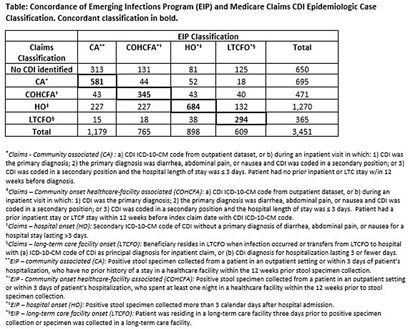
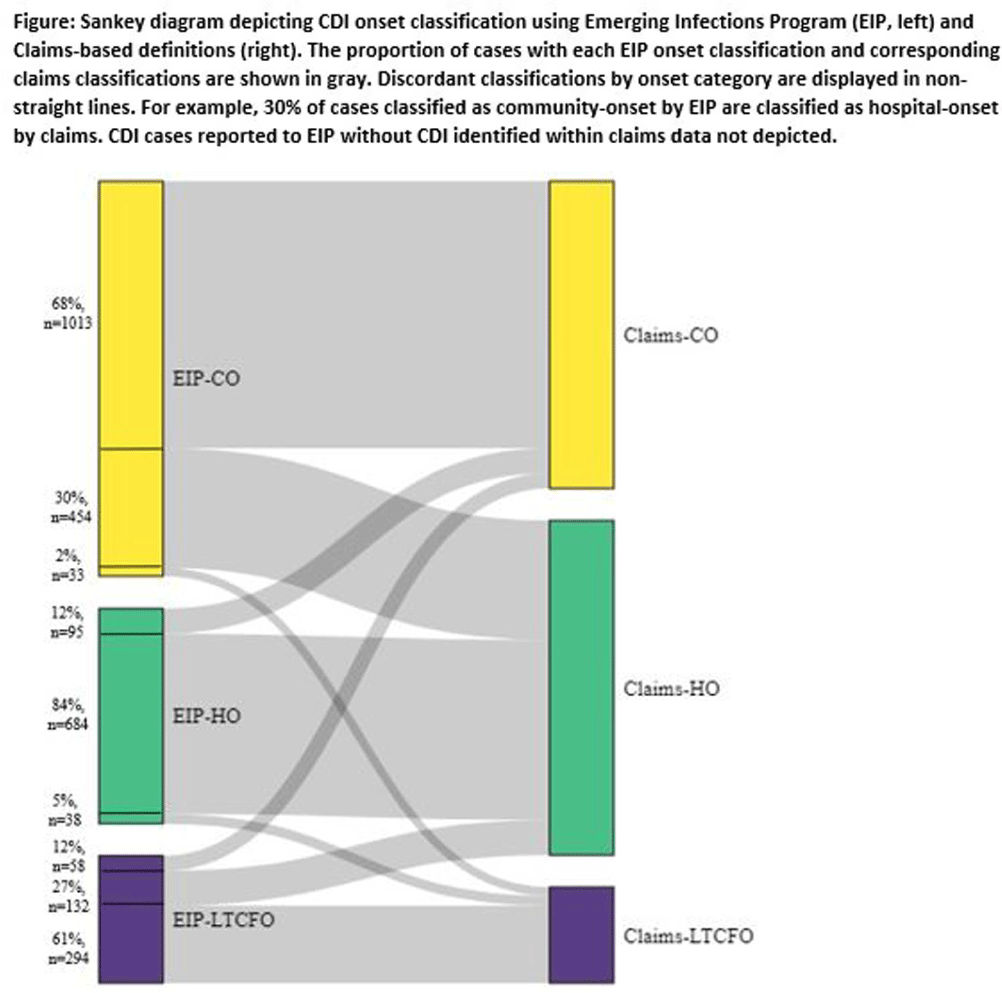
Background: Medicare claims are frequently used to study Clostridioides difficile infection (CDI) epidemiology. Categorizing CDI based on location of onset and potential exposure is critical in understanding transmission patterns and prevention strategies. While claims data are well-suited for identifying prior healthcare utilization exposures, they lack specimen collection and diagnosis dates to assign likely location of onset. Algorithms to classify CDI onset and healthcare association using claims data have been published, but the degree of misclassification is unknown. Methods: We linked patients with laboratory-confirmed CDI reported to four Emerging Infections Program (EIP) sites from 2016-2020 to Medicare beneficiaries using residence, birth date, sex, and hospitalization and/or healthcare exposure dates. Uniquely linked patients with fee-for-service Medicare A/B coverage and complete EIP case report forms were included. Patients with a claims CDI diagnosis code within ±28 days of a positive CDI test reported to EIP were categorized as hospital-onset (HO), long-term care facility onset (LTCFO), or community-onset (CO, either healthcare facility-associated [COHCFA] or community-associated [CA]) using a previously published algorithm based on claim type, ICD-10-CM code position, and duration of hospitalization (if applicable). EIP classifies CDI into these categories using positive specimen collection date and other information from chart review (e.g. admit/discharge dates). We assessed concordance of EIP and claims case classifications using Cohen’s kappa. Results: Of 10,002 eligible EIP-identified CDI cases, 7,064 were linked to a unique beneficiary; 3,451 met Medicare A/B fee-for-service coverage inclusion criteria. Of these, 650 (19%) did not have a claims diagnosis code ±28 days of the EIP specimen collection date (Table); 48% (313/650) of those without a claims diagnosis code were categorized by EIP as CA CDI. Among those with a CDI diagnosis code, concurrence of claims-based and EIP CDI classification was 68% (κ=0.56). Concurrence was highest for HO and lowest for COHCFA CDI. A substantial number of EIP-classified CO CDIs (30%, Figure) were misclassified as HO using the claims-based algorithm; half of these had a primary ICD-10 diagnosis code of sepsis (226/454; 50%). Conclusions: Evidence of CDI in claims data was found for 81% of EIP-reported CDI cases. Medicare classification algorithms concurred with the EIP classification in 68% of cases. Discordance was most common for community-onset CDI patients, many of whom were hospitalized with a primary diagnosis of sepsis. Misclassification of CO-CDI as HO may bias findings of claims-based CDI studies.
Empowering the Participant Voice (EPV) is an NCATS-funded six-CTSA collaboration to develop, demonstrate, and disseminate a low-cost infrastructure for collecting timely feedback from research participants, fostering trust, and providing data for improving clinical translational research. EPV leverages the validated Research Participant Perception Survey (RPPS) and the popular REDCap electronic data-capture platform. This report describes the development of infrastructure designed to overcome identified institutional barriers to routinely collecting participant feedback using RPPS and demonstration use cases. Sites engaged local stakeholders iteratively, incorporating feedback about anticipated value and potential concerns into project design. The team defined common standards and operations, developed software, and produced a detailed planning and implementation Guide. By May 2023, 2,575 participants diverse in age, race, ethnicity, and sex had responded to approximately 13,850 survey invitations (18.6%); 29% of responses included free-text comments. EPV infrastructure enabled sites to routinely access local and multi-site research participant experience data on an interactive analytics dashboard. The EPV learning collaborative continues to test initiatives to improve survey reach and optimize infrastructure and process. Broad uptake of EPV will expand the evidence base, enable hypothesis generation, and drive research-on-research locally and nationally to enhance the clinical research enterprise.
Cognitive reserve and health-related fitness are associated with favorable cognitive aging, but Black/African American older adults are underrepresented in extant research. Our objective was to explore the relative contributions and predictive value of cognitive reserve and health-related fitness metrics on cognitive performance at baseline and cognitive status at a 4-year follow up in a large sample of Black/African American older adults.
Participants and Methods:
Participants aged 65 years and older from the Health and Retirement Study (HRS) who identified as Black/African American and completed baseline and follow-up interviews (including physical, health, and cognitive assessments) were included in the study. The final sample included 321 Black/African American older adults (mean age = 72.8; sd = 4.8; mean years of education = 12.3; sd = 2.9; mean body mass index (BMI) = 29.1; sd = 5.2; 60.4% identified as female). A cross-sectional analysis of relative importance – a measure of partitioned variance controlling for collinearity and model order – was first used to explore predictor variables and inform the hierarchical model order. Next, hierarchical multiple regression was used to examine cross-sectional relationships between cognitive reserve (years of education), health-related fitness variables (grip strength, lung capacity, gait speed, BMI), and global cognition. Multiple logistic regression was used to examine prospective relationships between predictors and longitudinal cognitive status (maintainers versus decliners). Control variables in all models included age, gender identity, and a chronic disease index score.
Results:
Cross-sectional relative importance analyses identified years of education and gait speed as important predictors of global cognition. The cross-sectional hierarchical regression model explained 33% of variance in baseline global cognition. Education was the strongest predictor of cognitive performance (β = 0.48, p < 0.001). Holding all other variables constant, gait speed was significantly associated with baseline cognitive performance and accounted for a significant additional amount of explained variance (ΔR = 0.01, p = 0.032). In a prospective analysis dividing the sample into cognitive maintainers and decliners, a single additional year of formal education increased chances of being classified as a cognitive maintainer (OR = 1.30, 95% CI = 1.17-1.45). There were no significant relationships between rate of change in health-related fitness and rate of change in cognition.
Conclusions:
Education, a proxy for cognitive reserve, was a robust predictor of global cognition at baseline and was associated with increased odds of maintaining cognitive ability at 4-year follow up in Black/African American older adults. Of the physical performance metrics, gait speed was associated with cognitive performance at baseline. The lack of observed association between other fitness variables and cognition may be attributable to the brief assessment procedures implemented in this large-scale study.
The current study had two primary objectives: 1) To assess the dose-response relationship between acute bouts of aerobic exercise intensity and performance in multiple cognitive domains (episodic memory, attention, and executive function) and 2) To replicate and extend the literature by examining the dose-response relationship between aerobic exercise intensity and pattern separation.
Participants and Methods:
18 young adults (mean age = 21.6, sd = 2.6; mean education = 13.9, sd = 3.4; 50% female) were recruited from The Ohio State University and surrounding area (Columbus, OH). Participants completed control (no exercise), light intensity, and vigorous intensity exercise conditions across three counterbalanced appointments. For each participant, all three appointments occurred at approximately the same time of day with at least 2 days between appointments. Following the rest or exercise conditions and after an approximately 7 minute delay, participants completed a Mnemonic Similarity Task (MST; Stark et al., 2019) to assess pattern separation. This task was always administered first as we attempted to replicate previous studies and further clarify the relationship between acute bouts of aerobic exercise and pattern separation by implementing an exercise stimulus that varied in intensity. After the MST, three brief cognitive tasks (roughly 5 min each) were administered in a counterbalanced order: a gradual-onset continuous performance task (gradCPT; Esterman et al., 2013), the flanker task from the NIH toolbox, and a face-name episodic memory task. Here we report results from the gradCPT, which assesses sustained attention and inhibitory control. Heart rate and ratings of perceived exertion were collected to validate the rest and exercise conditions. Repeated-measures ANOVAs were used to assess the relationship between exercise condition and dependent measures of sustained attention and inhibitory control and pattern separation.
Results:
One-way repeated-measures ANOVAs revealed a main effect of exercise condition on gradCPT task performance for task discrimination ability (d') and commission error rate (p’s < .05). Pairwise comparisons revealed task discrimination ability was significantly higher following the light intensity exercise condition versus the control condition. Commission error rate was significantly lower for both the light and vigorous exercise conditions compared to the control condition. For the MST, two-way repeated-measures ANOVAs revealed an expected significant main effect of lure similarity on task performance; however, there was not a significant main effect of exercise intensity on task performance (or a significant interaction).
Conclusions:
The current study indicated that acute bouts of exercise improve both sustained attention and inhibitory control as measured with the gradCPT. We did not replicate previous work reporting that acute bouts of exercise improve pattern separation in young adults. Our results further indicate that vigorous exercise did not detrimentally impact or improve pattern separation performance. Our results indicate that light intensity exercise is sufficient to enhance sustained attention and inhibitory control, as there were no significant differences in performance following light versus vigorous exercise.
To identify the relative contributions and importance of modifiable fitness and demographic variables to cognitive performance in a cohort of healthy older adults.
Participants and Methods:
Metrics of modifiable fitness (gait speed, respiratory function, grip strength, and body mass index (BMI)) and cognition (executive function, episodic memory, and processing speed) were assessed in 619 older adults from the Health and Retirement Study 2016 wave (mean age = 74.9, sd = 6.9; mean education = 13.4 years, sd = 2.6; 42% female). General linear models were employed to assess the contribution of modifiable fitness variables in predicting three domains of cognition: executive function, episodic memory, and processing speed. Demographics (age, sex, education, time between appointments, and a chronic disease score) were entered as covariates for each model. Relative importance metrics were computed for all variables in each model using Lindeman, Merenda, and Gold (lmg) analysis, a technique which decomposes a given model’s explained variance to describe the average contribution of each predictor variable, independent of its position in the linear model.
Results:
When all variables were entered into the general linear model, demographic and modifiable fitness variables explained 35%, 24%, and 26% of the variance in executive function, episodic memory, and processing speed, respectively (all three models were significant, p <0.001). Age, education, respiratory function, and walking speed had higher relative importance values (all lmgs > 1.8) compared to BMI, grip strength, and other covariates in all three models (all lmgs < 1.3). Gender was also relatively important in the executive function (lmg = 4.2) and episodic memory models (lmg = 5.0). Of the modifiable fitness variables, walking speed and respiratory function had the greatest lmg values (5.8 and 6.4 respectively) in the executive function model, similar to demographic variables age (lmg = 6.0) and education (lmg = 8.9). When demographic variables were entered as covariates, modifiable fitness variables collectively accounted for an additional 9.7%, 6.3%, and 6.0% variance in the executive function, episodic memory, and processing speed models respectively (all three models were significant, p <0.001).
Conclusions:
Our findings indicate that walking speed and respiratory function are of similar importance compared to “traditional” demographic variables such as age and education in predicting cognitive performance in a cohort of healthy older adults. Moreover, modifiable fitness variables accounted for unique variance in executive function, episodic memory, and processing speed after accounting for age and education. Modifiable fitness variables explained the most unique variance in executive function. These results extend the current literature by demonstrating that modifiable fitness variables, even when assessed with brief and relatively coarse measures of physical performance, may be useful in predicting cognitive function. Moreover, the results highlight the need to assess metrics of cognitive reserve, such as education, as well as modifiable fitness variables and their respective roles in accounting for cognitive performance. The data further suggest that relative contributions of physical performance metrics may vary by cognitive domain in healthy older adults.
Armenian (or , /hɑjeˈɾen/, ISO 639-1 hy) comprises an independent branch of the Indo-European language family.1 Its earliest attested ancestor is Classical Armenian in the fifth century CE (see Godel 1975; Thomson 1989; DeLisi 2015; Macak 2016). Modern Armenian is classified into two dialect families: Eastern Armenian (ISO 639-3 hye) and Western Armenian (ISO 639-3 hyw). Eastern Armenian is spoken in modern-day Armenia, and large speaker communities also exist in Georgia, Russia and Iran (shown in Figure 1). Western Armenian was historically spoken in the Ottoman Empire, but now includes varieties spoken throughout the Armenian diaspora in the Middle East, Europe, and the Americas (Donabédian 2018). There are substantial Western Armenian speaker communities in Turkey (Istanbul), Lebanon (Beirut), Syria (Aleppo, Damascus), California (Fresno, Los Angeles County), France (Marseilles), Australia (Sydney) and Argentina (Buenos Aires). There are also recent diaspora communities of Eastern Armenian speakers in California (Karapetian 2014), as well as communities of Western Armenian speakers in Armenia who escaped the Armenian genocide during World War I, who repatriated after World War II, or who fled the ongoing Syrian civil war. UNESCO lists Western Armenian as an endangered language in Turkey, and there are significant language promotion efforts in many diaspora communities that are intended to combat declining use by speaker generations born in the Americas and Europe (Al-Bataineh 2015; Chahinian & Bakalian 2016).
The human nervous system contains more than 100 billion neurons. Each has a unique function enabling taste, smell, touch, sight, hearing, movement, respiration, cognition, and much more. In the setting of a neurologic emergency, patients may lose these unique capacities. It is the emergency physician’s responsibility to complete a neurologic history and examination to determine the type of deficit and the neuroanatomical location of the abnormality
On February 24, 2022, Russia invaded Ukraine, resulting in Europe’s largest refugee crisis since World War II. More than six million Ukrainians fled the country—half of these to Poland—and one-third of the population was internally displaced.
Border points became bottlenecks where fatalities were reported—people risked their lives in long queues and subzero temperatures.
Method:
This presentation focuses on experiential information obtained during a 17-week deployment of EMT Type 1 both at border points (fixed) and in northwestern Ukraine (mobile). Quantitative and qualitative data were obtained after deployment by online survey with 75 medical, logistical and interpreter volunteers.
Results:
Initial teams experienced extremely fluid demands and numerous challenges with security, team adherence to COVID-19 protocols, behavioral issues with less experienced volunteers, and collaboration with novel governmental and non-governmental partners to achieve objectives.
Conclusion:
1. Deployment to a conflict setting requires adherence to the Incident Command System, with daily security briefings and structured handover between teams at the beginning of each deployment.
2. Strict adherence to well-defined protocols for the prevention and management of emerging infectious risks such as COVID-19 is necessary, along with contingency plans to isolate infected team members.
3. There is a need for standardized pre-deployment vetting, training and orientation of all volunteers—particularly team leaders.
4. Identification of international partners should start pre-deployment and remain a continuous process during deployment.
Children with CHD are at risk for neurodevelopmental delays, and length of hospitalisation is a predictor of poorer long-term outcomes. Multiple aspects of hospitalisation impact neurodevelopment, including sleep interruptions, limited holding, and reduced developmental stimulation. We aimed to address modifiable factors by creating and implementing an interdisciplinary inpatient neurodevelopmental care programme in our Heart Institute.
Methods:
In this quality improvement study, we developed an empirically supported approach to neurodevelopmental care across the continuum of hospitalisation for patients with CHD using three plan-do-study-act cycles. With input from multi-level stakeholders including parents/caregivers, we co-designed interventions that comprised the Cardiac Inpatient Neurodevelopmental Care Optimization (CINCO) programme. These included medical/nursing orders for developmental care practices, developmental kits for patients, bedside developmental plans, caregiver education and support, developmental care rounds, and a specialised volunteer programme. We obtained data from the electronic health record for patients aged 0–2 years admitted for at least 7 days to track implementation.
Results:
There were 619 admissions in 18 months. Utilisation of CINCO interventions increased over time, particularly for the medical/nursing orders and caregiver handouts. The volunteer programme launch was delayed but grew rapidly and within six months, provided over 500 hours of developmental interaction with patients.
Conclusions:
We created and implemented a low-cost programme that systematised and expanded upon existing neurodevelopmental care practices in the cardiac inpatient units. Feasibility was demonstrated through increasing implementation rates over time. Key takeaways include the importance of multi-level stakeholder buy-in and embedding processes in existing clinical workflows.