


262 results
The melanin pigment gene black mediates body pigmentation and courtship behaviour in the German cockroach Blattella germanica
-
- Journal:
- Bulletin of Entomological Research , First View
- Published online by Cambridge University Press:
- 16 April 2024, pp. 1-10
-
- Article
- Export citation
Formation and evolution of laminar thermal structures: correlation to the thermal boundary layer and effects of heating time
-
- Journal:
- Journal of Fluid Mechanics / Volume 984 / 10 April 2024
- Published online by Cambridge University Press:
- 08 April 2024, A60
-
- Article
- Export citation
-
We report an experimental study of the formation and evolution of laminar thermal structures generated by a small heat source, with a focus on their correlation to the thermal boundary layer and effects of heating time $t_{heat}$. The experiments are performed over the flux Rayleigh number ( $Ra_f$) range $2.1\times 10^6 \leq Ra_f \leq 3.6\times 10^{7}$ and the Prandtl number ( $Pr$) range $28.6 \leq Pr \leq 904.7$. The corresponding Rayleigh number ( $Ra= t_{heat}\,Ra_{f}/\tau _0\,Pr$) range is $900 \leq Ra \leq 4\times 10^{4}$, where $\tau _0$ is a diffusion time scale. For thermal structures generated by continuous heating (i.e. starting plumes), their formation process exists three characteristic times that are well reflected by changes in the thermal boundary layer thickness. These characteristic times, denoted as $t_{emit}$, $t_{recover}$ and $t_{static}$, correspond to the moments when the plume emission begins and completes, and when the thermal boundary layer becomes quasi-static, respectively. Their $Ra_f$– $Pr$ dependencies are found to be $t_{emit}/\tau _0\sim Ra_f^{-0.41}\,Pr^{0.41}$, $t_{recover}/\tau _0\sim Ra_f^{-0.48}\,Pr^{0.48}$ and $t_{static}/\tau _0\sim Ra_f^{-0.49}\,Pr^{0.33}$, respectively. Thermal structures generated by finite $t_{heat}$ exhibit similar evolution dynamics once $t_{heat} \ge t_{emit}$, with the accelerating stage behaving like starting plumes and the decay stage like thermals (i.e. a finite amount of buoyant fluids). It is further found that their maximum rising velocity experiences a transition in the $Ra$-dependence from $Ra$ to $(Ra\ln Ra)^{0.5}$ at $Ra \simeq 6000$; and their maximum acceleration reaches the value of starting plumes at $t_{heat}\simeq t_{recover}$, and remains unchanged for larger $t_{heat}$. In particular, the maximum rising velocity for the cases with $t_{heat} = t_{recover}$ follows a scaling relation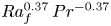 $Ra_f^{0.37}\,Pr^{-0.37}$, in contrast to the relation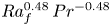 $Ra_f^{0.48}\,Pr^{-0.48}$ for starting plumes. This study provides a more comprehensive understanding of laminar thermal structures, which are relevant to a range of processes in nature and laboratory systems such as Rayleigh–Bénard convection.


The role of deubiquitinases in cardiac disease
-
- Journal:
- Expert Reviews in Molecular Medicine / Volume 26 / 2024
- Published online by Cambridge University Press:
- 25 March 2024, e3
-
- Article
-
- You have access
- Open access
- HTML
- Export citation
Abnormal theta and alpha oscillations in children and adolescents with first-episode psychosis and clinical high-risk psychosis
-
- Journal:
- BJPsych Open / Volume 10 / Issue 2 / March 2024
- Published online by Cambridge University Press:
- 22 March 2024, e71
-
- Article
-
- You have access
- Open access
- HTML
- Export citation
Structure and role of the pressure Hessian in regions of strong vorticity in turbulence
-
- Journal:
- Journal of Fluid Mechanics / Volume 983 / 25 March 2024
- Published online by Cambridge University Press:
- 15 March 2024, R2
-
- Article
-
- You have access
- Open access
- HTML
- Export citation
Revealing complexity: Segmentation of hippocampal subfields in adolescents with major depressive disorder reveals specific links to cognitive dysfunctions
-
- Journal:
- European Psychiatry / Accepted manuscript
- Published online by Cambridge University Press:
- 23 February 2024, pp. 1-31
-
- Article
-
- You have access
- Open access
- Export citation
Chinese stalagmite δ18O records reveal the diverse moisture trajectories during the middle to late last glacial period
-
- Journal:
- Geological Magazine , First View
- Published online by Cambridge University Press:
- 19 February 2024, pp. 1-13
-
- Article
-
- You have access
- Open access
- HTML
- Export citation
Theoretical and experimental study on cutting temperature in the presence of drilling fluid during ice-core drilling
-
- Journal:
- Journal of Glaciology , First View
- Published online by Cambridge University Press:
- 12 January 2024, pp. 1-12
-
- Article
-
- You have access
- Open access
- HTML
- Export citation
A one-step calibration method without redundant parameters for a laser stripe sensor
-
- Article
-
- You have access
- HTML
- Export citation
First Principles Ab Initio Study of CO2 Adsorption on the Kaolinite (001) Surface
-
- Journal:
- Clays and Clay Minerals / Volume 62 / Issue 2 / April 2014
- Published online by Cambridge University Press:
- 01 January 2024, pp. 153-160
-
- Article
- Export citation
Direct Synthesis of 5A Zeolite From Palygorskite: The Influence of Crystallization Directing Agent on the Separation Performance for Hexane Isomers
-
- Journal:
- Clays and Clay Minerals / Volume 68 / Issue 1 / February 2020
- Published online by Cambridge University Press:
- 01 January 2024, pp. 1-8
-
- Article
- Export citation
The Composition and Growth Mechanism of Coexisting 4M2 and 4A8 Biotite Polytypes from Rhyolite of Long Valley Caldera, California
-
- Journal:
- Clays and Clay Minerals / Volume 70 / Issue 1 / February 2022
- Published online by Cambridge University Press:
- 01 January 2024, pp. 48-61
-
- Article
- Export citation
-
Polytypism is common in micas, and the frequency of polytype occurrence is believed to be related closely to the crystallization conditions and chemical compositions of the corresponding fluids and melts. Coexisting multiple standard and complex/disordered polytypes in igneous rocks generally reflect a complicated magma evolution history. The purpose of the current study was to clarify the origin of coexisting biotite polytypes and their growth mechanism. Micro-X-ray diffraction (μXRD) and transmission electron microscopy (TEM) were used to investigate Fe-rich biotite phenocrysts in rhyolite from the Long Valley Caldera, California, USA. The μXRD analyses characterized various polytypes, and TEM observations revealed that common polytypes (e.g. 1M, 2M1, and 3T) and rare polytypes (e.g. 4M2 and 4A8) coexist within biotite monocrystals. The two 4-layer polytypes of Fe-rich biotite, 4M2 and 4A8, were identified via selected-area electron diffraction (SAED) and high-resolution scanning transmission electron microscopy (HRSTEM) at the atomic resolution, with unique stacking sequences ([0222] for 4M2 and [002
 ] for 4A8). Energy-dispersive X-ray spectroscopy (EDS) results showed differences in their chemical compositions, especially Fe and K. The 4A8 polytype is reported for the first time. The present study suggested that environmental changes, such as rapid cooling and inhomogeneous compositional distribution, led to chemical and structural oscillations and complex nucleation of the two 4-layer polytypes. Screw dislocations producing spiral growth enhance polytype stability and form ordered long-period/complex polytypes. These results are useful to understand the origin of long-period/complex polytypes and the intergrowths of diverse polytypes formed in non-equilibrium crystallization environments.

Thermal Characterization of Surfactant-Modified Montmorillonites
-
- Journal:
- Clays and Clay Minerals / Volume 53 / Issue 3 / June 2005
- Published online by Cambridge University Press:
- 01 January 2024, pp. 287-293
-
- Article
- Export citation
Identification of Key Biomarkers and Candidate Molecules in Non-Small-Cell Lung Cancer by Integrated Bioinformatics Analysis
-
- Journal:
- Genetics Research / Volume 2023 / 2023
- Published online by Cambridge University Press:
- 01 January 2024, e29
-
- Article
-
- You have access
- Open access
- HTML
- Export citation
Protective factors for children with autism spectrum disorder during COVID-19-related strict lockdowns: a Shanghai autism early developmental cohort study
-
- Journal:
- Psychological Medicine / Volume 54 / Issue 6 / April 2024
- Published online by Cambridge University Press:
- 24 November 2023, pp. 1102-1112
-
- Article
- Export citation
Competition among the two-plasmon decay of backscattered light, filamentation of the electron-plasma wave and side stimulated Raman scattering
-
- Journal:
- High Power Laser Science and Engineering / Volume 11 / 2023
- Published online by Cambridge University Press:
- 29 August 2023, e76
-
- Article
-
- You have access
- Open access
- HTML
- Export citation
-
Competition among the two-plasmon decay (TPD) of backscattered light of stimulated Raman scattering (SRS), filamentation of the electron-plasma wave (EPW) and forward side SRS is investigated by two-dimensional particle-in-cell simulations. Our previous work [K. Q. Pan et al., Nucl. Fusion 58, 096035 (2018)] showed that in a plasma with the density near 1/10 of the critical density, the backscattered light would excite the TPD, which results in suppression of the backward SRS. However, this work further shows that when the laser intensity is so high ( $>{10}^{16}$ W/cm2) that the backward SRS cannot be totally suppressed, filamentation of the EPW and forward side SRS will be excited. Then the TPD of the backscattered light only occurs in the early stage and is suppressed in the latter stage. Electron distribution functions further show that trapped-particle-modulation instability should be responsible for filamentation of the EPW. This research can promote the understanding of hot-electron generation and SRS saturation in inertial confinement fusion experiments.

Simple, stable and efficient nonlinear pulse compression through cascaded filamentation in air
-
- Journal:
- High Power Laser Science and Engineering / Volume 11 / 2023
- Published online by Cambridge University Press:
- 22 August 2023, e84
-
- Article
-
- You have access
- Open access
- HTML
- Export citation
Social mixing and network characteristics of COVID-19 patients before and after widespread interventions: A population-based study
-
- Journal:
- Epidemiology & Infection / Volume 151 / 2023
- Published online by Cambridge University Press:
- 14 August 2023, e141
-
- Article
-
- You have access
- Open access
- HTML
- Export citation
-
SARS-CoV-2 rapidly spreads among humans via social networks, with social mixing and network characteristics potentially facilitating transmission. However, limited data on topological structural features has hindered in-depth studies. Existing research is based on snapshot analyses, preventing temporal investigations of network changes. Comparing network characteristics over time offers additional insights into transmission dynamics. We examined confirmed COVID-19 patients from an eastern Chinese province, analyzing social mixing and network characteristics using transmission network topology before and after widespread interventions. Between the two time periods, the percentage of singleton networks increased from 38.9 $ \% $ to 62.8 $ \% $ $ (p<0.001) $; the average shortest path length decreased from 1.53 to 1.14 $ (p<0.001) $; the average betweenness reduced from 0.65 to 0.11 $ (p<0.001) $; the average cluster size dropped from 4.05 to 2.72 $ (p=0.004) $; and the out-degree had a slight but nonsignificant decline from 0.75 to 0.63 $ (p=0.099). $ Results show that nonpharmaceutical interventions effectively disrupted transmission networks, preventing further disease spread. Additionally, we found that the networks’ dynamic structure provided more information than solely examining infection curves after applying descriptive and agent-based modeling approaches. In summary, we investigated social mixing and network characteristics of COVID-19 patients during different pandemic stages, revealing transmission network heterogeneities.


