

Making a Psychologist: When AI meets Psychology

24 February 2026
Last update: 24/02/26 18:47


[This is Part 1 of a blog series called Making a Psychologist—about how AI is enabling
scientists, big tech companies, and obscure Redditors alike to build systems that are
simultaneously horrifically invasive, but also enormously powerful, and if we’re lucky, very
good for our well-being.
The series explores what it would mean to build a personal AI psychologist: a system that
continuously observes behavior, identifies patterns, and makes behavioral recommendations.
Along the way, I’ll show how people are already building these systems, how you could build
one yourself, and how to prepare for the social ills that their commercialization will inevitably
create.
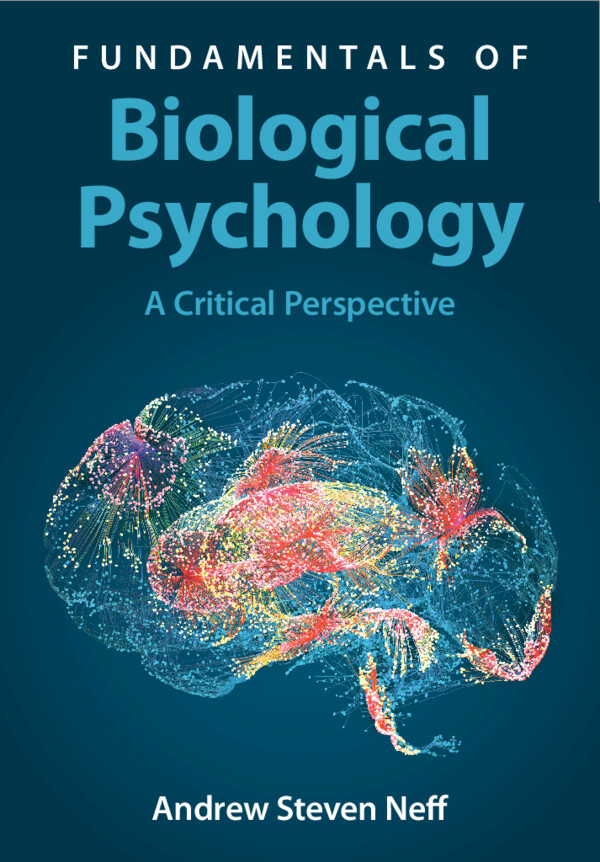
This series is a companion to, and extension of, my textbook, Fundamentals of Biological
Psychology: A Critical Perspective.]

I am, in a literal sense, a psychologist. I have a doctorate in neuroscience. I’ve held
professorships in psychology. I’ve published academic papers. Yes, I have heard the oracle’s
call and embarked upon a timeless human pursuit: thinking a lot about myself. Similarly, my
wife is a professional therapist. She works primarily with women struggling with anxiety
and trauma, and—professionally or otherwise—cannot resist steering conversations toward
people’s thoughts and motives.
Now, I have immense respect for my wife’s talents (and, without saying more, my own
talents), but we, mere human psychologists, are not enough.
We live in the age of talking, coding, robots, in which many inventors and hobbyists, myself
included, are creating systems that resemble personal psychological scientists. These
systems (apps and/or physical devices) are sometimes presented as journaling tools or
mindful assistants, but such gentle names conceal their nature: many of these creations are
monsters, created in our image, yet with far more power. These systems can continuously
observe our behavior, summarize it, and—when AI is properly harnessed—generate
predictions and recommendations that are more complete, more objective, and perhaps
more reliable than our own subjective judgment.
Coping with Little Data
Let’s take a step back and think more about my wife’s inadequacies. To do that, we need to
go back to John B. Watson, the early twentieth-century behaviorist who wanted to achieve
two practical goals: the 1) prediction and 2) control of behavior. To accomplish these goals,
he argued, we could simply monitor or control all the external stimuli to which an
individual was exposed. For example, we could control or record their diet, exercise, and
sleep, we could control their hobbies and media exposure, and in doing so, fully understand
or shape a person.
“Give me a dozen healthy infants, well-formed, and my own specified world to bring them
up in and I’ll guarantee to take any one at random and train him to become any type of
specialist I might select—doctor, lawyer, artist, merchant-chief and, yes, even beggar-man
and thief, regardless of his talents, penchants, tendencies, abilities, vocations, and race of
his ancestors.”
Ignoring many of the problems of behaviorism (and of Watson himself), a century later, in
one sense, Watson’s assertion hasn’t really been tested. We only have so much control over
a person’s environment, and if our goal is prediction, there’s only so much of a person’s life
that we can observe.
Think for a moment about how complex your day is, or rather… a short portion of my day.
On January 5th, at 5:03, my kids took turns hanging on a pull-up bar, at 5:09, they argued
about whose turn it was, at 5:15, my wife and I decided to make a salad for dinner, at 5:19,
my son asked if he could take a bath, and at 5:42, I sat down at my computer to write a blog
post that might sell my very good textbook, Fundamentals of Biological Psychology: A
Critical Perspective.
A human day is filled with thousands of such small, overlapping acts, most of which we
barely notice, let alone remember or quantify. But I would guess that playing with children,
mediating their disputes, and choosing to work in the evening all have some impact on my
future. This is what I think Watson meant: if you could detect or control all these little acts,
you could probably predict or control human behavior pretty well.
Harnessing Big Data
Today, one could… hypothetically… create an app that continuously records speech, assigns
that speech to unique speakers, detects tone of voice, determines your location, tracks
proximity to other devices, and integrates this with the rest of the behavioral exhaust
produced by a smartphone.
On my first day of collecting raw speech alone, I generated 271 pages of text, and coerced
an LLM to annotate over 500 discrete behaviors. A more powerful app that incorporates
more sensors could include heart rate, sleep-wake times, variations in large-scale neuronal
activity, and more.
Moreover, modern AI, particularly LLMs, have begun allowing us to interpret this data at
scale. Even I, a professionally self-interested person, have no desire to read 271 pages
describing my day, and I don’t have to. Large language models can first summarize and
categorize this material into reasonable-sounding behavioral, environmental, and mental
units. Those units could then be modeled as sequences, using transformer-like
architectures that predict what typically comes next, much as language models predict
sequences of words. Moreover, other statistical methods could help us determine, based on
our current context, which behaviors we could select in order to achieve the psychological
outcomes we desire, and therefore act as an evidence-based lifestyle coach.
I didn’t have to put my kids on the pull up bar, I didn’t have to mediate their dispute, and
this blog post could have waited until the next morning – I could have read a book or went
on a walk or talked to my wife about my emotions or did any of a hundred other
maybe-good things. Some of these choices probably would have been better, some worse,
I’d like to know which are which.
At first, this sounds like a Black Mirror episode. Surely there must be safeguards against
this kind of surveillance, and surely we should hesitate before letting a machine (or tech
company) know us this intimately. And there are safeguards—at least some. Modern
smartphones require apps to indicate when they are recording and restrict developers’
access to data in multiple ways. There are also legal limits on recording others, which vary
by country and, in the U.S., by state. In some states, including Michigan, people are generally
permitted to record conversations to which they are a party, while other states require the
consent of all participants.
Despite these limits, applications like this are already appearing. Commercial efforts such
as the Humane Pin, Meta and Google Glasses, Limitless AI and Omi’s pendant, and other
always-on (or often on) audio/video capture tools illustrate a growing interest in
continuous, body-worn behavioral sensing. Alongside these commercial endeavors, several
scientific papers have described things like continuous mood-tracking as inferred through
brain-recording devices. Meanwhile, entire online communities document parallel efforts
from the public. Reddit forums such as r/QuantifiedSelf, r/selftracking, r/LifeLogging, and
adjacent AI-builder communities are filled with discussions of continuous journaling
agents.
This development is being driven by two forces: (A) the omnipresence of electronic devices,
and (B) the sudden accessibility of coding, statistics, and app development, mediated by
AI—a phenomenon often called vibe coding. If you don’t think you can build an app, spend a
few hours in Cursor, VS Code, or simply asking ChatGPT to code for you. My bet is that
you’ll build something – it will be ugly, but it will be something. And once you realize that
you can do something, it becomes easy to imagine what millions of more-competent
computer science majors might be doing right now. Even a mere human psychologist can
feel the gold rush unleashed by AI-powered vibe coding. Someone will build this.
“I will build this,” said I, despite the pleadings of my merely-human wife who forecasts that
such an undertaking can lead only to my doom, and I headed west in search of gold. In the
posts that follow, I will tell you where I bought my pickaxe, which creeks and caves contain
precious metals, how the ore is extracted, and how all of this culminated in something that
is horribly buggy and ethically questionable, yet undeniably extant: my very own personal
AI psychologist.
Order an exam copy of Fundamentals of Biological Psychology
Purchase a copy of Fundamentals of Biological Psychology
Read the next blog in the ‘Making a Psychologist’ series
Related Posts

Where Physical and Digital Worlds Collide
In this blog for Data-Centric Engineering, Paul Clarke (Chief Technology Officer at Ocado) documents Ocado’s journey with building synthetic models of its business, its platforms and its underlying technologies, including the use of simulations, emulations, visualisations and digital twins. He explores the potential benefits of digital twins, including the opportunities for creating digital twins at […]

International Women’s Day 2020: Influential women in STEM
International Women’s Day 2020 falls on Sunday, 8th March this year. In the run up to this date, each week day we’ll be highlighting one woman whose accomplishments in science, technology, engineering and/or mathematics not only elevated their fields but also took us one step closer to a gender-equal world. We hope you’ll join us […]

Elephants, Kings, and Comparison, a Conversation with Tom Trautmann
We invited Trautmann to tell us why he writes about Indian war elephants, and how. He touched on several topics in the process: the value of analytical accidents, the recovery of lost knowledge systems, and the power and pluralism of human logics.

Wisconsin’s Response to the Coronavirus Pandemic – Now updated
From time to time, until the crisis has passed, the HEPL blog series authors will be given the opportunity to provide short updates on their country/region’s continuing response to this worldwide catastrophe and their further reflections on those responses. Each update will be labelled accordingly with the original response at the bottom of each post. […]


 ;
;


