
Making a Psychologist: Vibe Coding a Data Collector
This is part 2 of Making a Psychologist, a blog series written in part to promote my good new textbook, Fundamentals of Biological Psychology: A Critical Perspective.…


This is part 2 of Making a Psychologist, a blog series written in part to promote my good new textbook, Fundamentals of Biological Psychology: A Critical Perspective.…

Understanding Modern Warfare has established itself as a leading text in professional military education and undergraduate teaching. This third edition has been revised throughout to reflect dramatic changes during the past decade.…
Reading Biblical Greek is aimed at students who are studying New Testament Greek for the first time, or refreshing what they once learned.…

Elizabeth supports instructors throughout Western Canada: BC, AB, SK, MB, the Pacific Northwest United Stated of America: OR, WA, and Ontario: Guelph, Western, Waterloo, Laurier, Windsor and Trent Get in touch with Elizabeth: Ph: 604 328 8923 If you would prefer a conversation, book a virtual meeting.…
Karen supports instructors throughout the United Kingdom Contact Karen: Email : karen.mcwhirter@cambridge.org Mobile : +44 (0)7908798958 Can you tell us a bit about yourself and how you ended up in the world of sales?…

As many readers will know, COP30, the UN climate conference, got underway in Belém, Brazil this month. In this blog post, we’re pleased to report on another conference that was successfully held in Brazil earlier this year, showcasing the use of innovative data-driven approaches to understand changes to the climate.…
Bailey supports instructors throughout Northern Europe Get in contact with Bailey at: Email: bailey.shipp@cambridge.org Mobile: +44 (0)7549 935540 Can you tell us a bit about yourself and how you ended up in the world of sales?…

Professor Tierui Zhang, Technical Institute of Physics and Chemistry (TIPC), Chinese Academy of Sciences, China is the recently appointed Editor-in-Chief of Cambridge Materials: Energy.…

Announcing the launch of Cambridge Materials, a suite of four new journals dedicated to advancing materials science in the service of global sustainability. Each journal focuses on a critical challenge area—Circularity, Energy, Health, and Water—and is aligned with the UN Sustainable Development Goals (SDGs). Together, they will provide a unique platform where science, engineering, and policy intersect to drive real-world impact.

Sabrina supports instructors throughout California, Nevada, Alaska and Hawaii, USA Get in touch with Sabrina: Email: sabrina.russo@cambridge.org Phone: 951-756-1075 Can you tell us a bit about yourself and how you ended up in the world of sales?…
Zooarchaeology introduces students and practitioners to the identification and analysis of animal remains at archaeology sites. Learn more. Accessible and engaging, The Politics of Human Rights offers a fresh, empirical approach to understanding human dignity and the global responsibility to protect it.…
Callie supports instructors throughout Florida, Georgia, South Carolina, Alabama, and Tennessee USA Reach out to Callie via: 646-275-7198 callie.cole@cambridge.org Can you tell us a bit about yourself and how you ended up in the world of sales?…

Could an overlooked dairy by-product hold the key to more efficient poultry production? Our recent study, selected as Paper of the Month by The Journal of Agricultural Science, explored this very question using a model-based meta-analytic approach.

Since last year, Renewable Agriculture and Food Systems has published two additional papers related to bees and pollinator health and are celebrating World Bee Day with an update to their World Bee Day Collection.

From his early years growing up in Argentina, through his university education in Colorado and becoming an esteemed scientist in Arizona, Professor Osvaldo Sala has maintained a life-long passion for biology and ecology. Working from local to global levels, his achievements have been truly transdisciplinary, collaborating with geologists, social scientists, mathematicians, and humanists – a perfect match for his recent appointment as joint Editor-in-Chief of Cambridge Prisms: Drylands, alongside Professor David Eldridge.

“There’s something amazing about deserts, about wide open spaces and the relative tranquillity you find there,” says Professor David Eldridge. “Whenever I go back to my study areas in western New South Wales, Australia, I feel really centred and calm; it’s these places, my special places, where I get to think about new ideas or contemplate where my life is heading. Deserts and drylands, to me, are very calming.”

Jeremy Burchardt is Associate Professor in Rural History at the University of Reading. He is Principal Investigator of the Arts & Humanities Research Council research network ‘Changing Landscapes, Changing Lives’.…
The acclaimed historian of Imperial Germany and Europe John Röhl has died. John Röhl was a longtime author with Cambridge University Press, where he published his most influential writing over several decades. …

Between 2012 and 2014, I held a two-year Wellcome Trust Research Leave Award (WT096499AIA) for a project on women surgeons in Britain, 1860-1918.…

We were excited to hold the JFM/FLOW 2023 China Symposium in Hefei in July 2023

We had a pleasure of welcoming Lucia Browne for work experience week at Cambridge University Press & Assessment. Lucia spent a whole week with Library Marketing team. In this blog post she shares her thoughts on this experience and new skills she learnt.
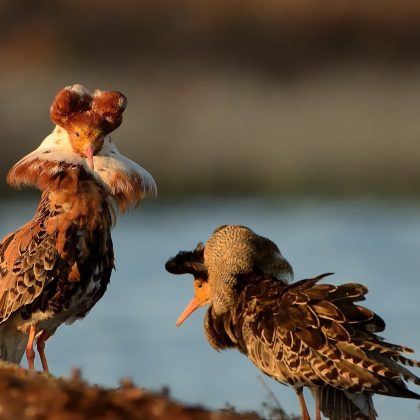
A new paper in BCI reveals that 38% of Europe’s 546 bird species are of conservation concern, including 14% of global concern.…

Q&A with Luciano Rezzolla about his upcoming Cambridge Festival event
Q&A with Author Kostas Kampourakis about his upcoming Cambridge Festival event
Q&A with professors Mark Hanson and Lucy Green on their upcoming Cambridge Festival event based on their illuminating book.
Q&A with Historian and Author, Stuart Ward, on his upcoming Cambridge Festival event.
Q&A with author and internationally renowned psychiatrist, Lynne Drummond about OCD & her upcoming Cambridge Festival event.

In celebration of International Women’s Day 2023, we are showcasing the voices of women in academia. Hear from just a selection of our wonderful female authors as they tell us their stories of being a woman in their field of study, experiences of inequity, and what they believe to be key in tackling equity in academia and beyond.…

I think like most people I struggle with acronyms within my work life. I find myself explaining EDIB in most meetings.…
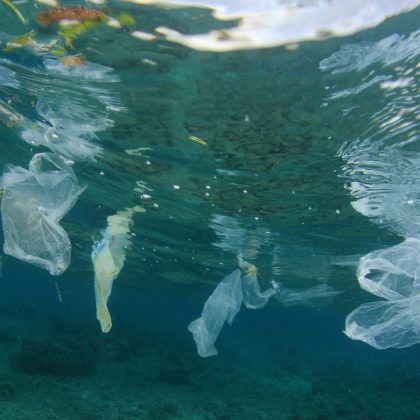
Cambridge Prisms: Plastics Editor-in-Chief Steve Fletcher describes his hopes for a circular plastics economy and the opportunity to drive global policy changes ‘It’s funny how careers evolve,’ laughs Steve Fletcher.…

Editor-in Chief of The Gut Microbiome Journal, Andrea Azcarate-Peril, answers 3 questions for International day of Women and Girls in Science.
Author of The Cosmic Observational Molecular Astronomy, Serena Viti, answers 3 questions for International day of Women and Girls in Science
Author of Fundamental Planetary Science, Imke de Pater, answers 3 questions for International day of Women and Girls in Science

Author of The Cosmic Microwave Background 2nd Edition, Ruth Durrer, answers 3 questions for International day of Women and Girls in Science
Author of The Cosmic Microwave Background 2nd Edition, Ruth Durrer, answers 3 questions for International day of Women and Girls in Science
Author of Just as Deadly, Marissa A. Harrison, answers 3 questions for International day of Women and Girls in Science
Q&A with Editor-in-Chief of the Precision Medicine Journal, Dame Anna Dominiczak, for International day of Women and Girls in Science
Author of Worlds Fantastic, Worlds Familiar, Dr. Bonnie J. Buratti, answers 3 questions for International day of Women and Girls in Science
Eugenia Cheng, Author of The Joy of Abstraction, answers 3 questions for International day of Women and Girls in Science
Interview with Professor Charlotte Markey, expert in body image, about her career in Psychology.
Dr. Fay Clarke speaks to us about her career in social and biological science.
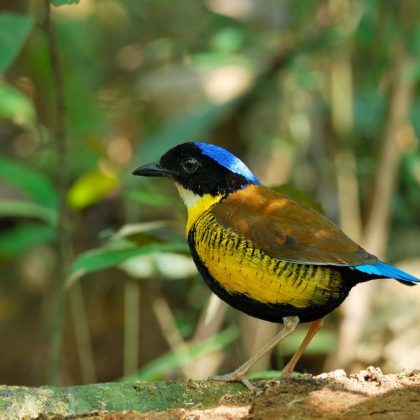
Tropical forests harbour a very high proportion of the planet’s terrestrial biodiversity, supporting wildlife communities that are more diverse and more species-rich than any other habitat.

We are in the midst of a biodiversity, climate, and pollution crisis for which solutions are urgently needed. As the drivers of this crisis span all aspects of society, science and technology, a shift in the evidence base used to find solutions is required. We need to move beyond traditional mono-disciplinary paths if we are to achieve the scale and urgency of change needed. Yet how we define these new approaches is fraught with difficulty. As researchers, we are increasingly asked to work in transdisciplinary, interdisciplinary, multi-disciplinary, cross-cutting, cross-disciplinary or cross-curricular ways. These terms are often used synonymously and without much reference to their origins, meaning or the methodological or philosophical differences they imply. Despite these challenges, the adoption of research approaches that examine global challenges more holistically is critical.

Cameroon has pledged to restore over a quarter of its land or 12,062,800 ha, Guatemala has pledged over 10% of its land for restoration with 1.2 million ha, India committed over 8% of its land, a staggering 26,500,000 ha to restoration, and the list of countries pledging hectares of land to restoration continues.

The new policy from the OSTP promises a leap forward in the speed of transition to open research in the United States.

Anna Munks, Managing Editor of BJPsych Advances and BJPsych Open, speaks to us about the importance of peer review for the Royal College of Psychiatrists (RCPsych).

We asked our authors what they consider to be the biggest obstacles when it comes to peer reviewing. Author 1: The reader who just doesn’t connect with my approach, or even see what I’m trying to do.…

Cambridge authors offer their opinions on what makes a good peer reviewer. Author 1: A good peer reviewer should be a person of integral academic standing and an acknowledged expert in the field.…

A selection of our authors describe how they see the peer review process evolving in the future, and discuss what change has already taken place.…

A selection of Cambridge authors tell us what they like and what they don’t like about peer review reports. Author 1: Most helpful are comments on concrete issues attached to what is on paper in the manuscript, from spelling errors to formats of quotation to ambivalent expressions; unclear reasoning; missing or faulty references; suggestions for shortening; avoidance of redundancies; necessary/suggested expansion of reasoning; addition of illustrative examples etc.,…

If you’re about to begin peer reviewing your first book, you need to read these dos and don’ts from a selection of Cambridge authors.…

The University Collaboration Budget (UCB) funds initiatives that involve direct collaboration between the University and Cambridge University Press (Academic). Winning initiatives strive to further our shared aims, such as research excellence and integrity, scholarly communication and challenging elitism. UCB initiatives are wide-ranging - from developing free online teaching resources for learning scientific computing, to hosting a major academic event to celebrate the anniversaries of Mahatma Gandhi’s birth and visit to Cambridge.

About Constance: I’m currently studying for my master’s in publishing at University College London, and in 2021 I graduated from Durham University with a degree in English Literature.…

We were excited to hold the JFM/FLOW 2022 China Symposium in Xi’an in June 2022. This is the second time Journal of Fluid Mechanics (JFM) has held a symposium in China but the first which included our new journal Flow. …

Why Cambridge University Press will no longer be offering deeply discounted print as part of new journals agreements.

As part of our celebrations for Pride Month, we hear from Mandy Hill (Managing Director, and EDIB Champion, Academic), Valarie Guagnini (Head of EDIB, Academic), and Ian McIver (Content Team Lead, Academic Books, and Pride Network committee member) as they discuss LGBTQ+ awareness and representation at Cambridge University Press.…
Open research is currently a major topic for researchers in the social sciences. We spoke to applicants Meng Liu and Kiera McNeice to find out more about their UCB initiative ‘Promoting Open Scholarship in Applied Linguistics’.

The University Collaboration Budget (UCB) funds initiatives that involve direct collaboration between the University and Cambridge University Press (Academic).

When I first worked in Madagascar in 2005, I was carrying out biodiversity surveys in little known forests, but by the time I left a decade later I was spending much more time working with rural farming and fisher communities that I was with the birds and the beasts.…

The ratification of the Paris Agreement opened a new chapter in Turkey’s climate policies. Followed by the declaration of a net-zero emissions target for 2053, Turkey’s ratification of the agreement came after a six-year delay, with exhausting bilateral post-Paris negotiations.…

As the 2022 ALPSP University Press Redux Conference co-organised with Cambridge University Press draws close, Ben Denne reflects on the importance of this year’s event.

As the 2022 ALPSP University Press Redux Conference co-organised with Cambridge University Press draws close, Andri Johnston highlights the sustainability panels at this year’s event.

Today marks the release of the first batch of articles in Environmental Data Science (EDS). We are thrilled to celebrate Earth Month with this first release of articles!…

Valarie Guagnini highlights the upcoming Redux 2022 panels on diversity and EDIB.

How practical changes can result in significant environmental gains.

Cambridge University Press are delighted to be supporting and celebrating International Women’s Day 2022. We are actively working to #BreakTheBias by calling out gender bias, discrimination and stereotyping to forge a diverse, equitable and inclusive world.…

Water is a basic subsistence need for all forms of life, but its supply is limited. Therefore, increasing water conservation efforts worldwide is essential and particularly under the current increasing warming.…

When The Global Pandemic started two years ago, Cambridge University Press was quick to react with a number of extraordinary initiatives that supported not only the goal to work towards eradicating the virus, but also our mission to advance learning, research and knowledge worldwide. …

We recently partnered with Tsinghua University on a three-day virtual event "The Voice of Chinese Scholars”.

In July 2021 Cambridge University Press worked with an external research agency to explore a number of key areas around researcher awareness and needs in open access (OA), impact and pain points.…

2021 may be over, but we couldn’t pass up the opportunity to sit back, relax, and look back at some of our publishing highlights from the past year! Which books and Elements were you reading in 2021? What articles were being talked about on Twitter? Welcome to our 2021 content roundup!

In 2020 Cambridge reviewed our policy of providing print copies to Editorial Board members of Cambridge-owned journals. In our Q&A with Ella Colvin , Director of Publishing – Journals, reflects on this project and our plans for a greener future.…

Transforming how we operate at conferences, by significantly reducing the number of print copies, as we seek to reduce our global organisation’s carbon footprint.

Open Access Week is always a good chance to reflect on the progress since last year and think about what needs to happen next.…

Recently, we reached out to our textbook authors to find out how remote teaching impacted them during the COVID-19 pandemic, and how they are approaching the new academic year.…

We hope you enjoyed our recent post about students’ study motivation tips. This week, we round up advice from the Student Panel on their top digital tools and online resources for studying.…

Earlier this year, Avi Staiman, CEO of Academic Language Experts, interviewed Chris Harrison, Publishing Development Director of Humanities and Social Sciences at Cambridge University Press on new and creative models of academic publications that scholars should be aware of that extend beyond the classic manuscript and journal article. This is the final of a three-part series resulting from that interview. The first part can be found here. The second part can be found here. You can also watch the full recording of the interview, held on March 22, 2021 as part of the Academic Language Experts ‘Publication Success Interview Series’.

Looking back on 2020 with metrics and highlights from our Journals team.
Earlier this year, Avi Staiman, CEO of Academic Language Experts, interviewed Chris Harrison, Publishing Development Director of Humanities and Social Sciences at Cambridge University Press on new and creative models of academic publications that scholars should be aware of that extend beyond the classic manuscript and journal article.
This month, we are launching our Good Student campaign to support learners who are starting their Higher Education journey. We recently consulted our Student Panel, which is made up of students from around the world, to find out what advice they had to share with incoming students.…

Earlier this year, Avi Staiman, CEO of Academic Language Experts, interviewed Chris Harrison, Publishing Development Director of Humanities and Social Sciences at Cambridge University Press on new and creative models of academic publications that scholars should be aware of that extend beyond the classic manuscript and journal article.

Ella Colvin reflects on the many changes affecting our publishing partners and the importance of working together towards a common goal of sustainability.

A Q&A with Jenny Mathias, Global Marketing and Operations Director

We are delighted to announce ChemRxiv has been re-launched on our early open research website Cambridge Open Engage today, Thursday 17th June 2021!…

The shift to home-working for those in developing countries without access to low-cost and widely embedded domestic broadband networks, was potentially catastrophic.

We speak to Jen Wright, Research Services Manager at Cambridge Univeristy Press, and Rhys Morgan Head of Research Policy, Governance and Integrity at the University of Cambridge, about Publishing Ethics and Research Integrity across our organisations.…

Find out more about Cambridge's partnership with Research4Life which opens up our collection to 125 lowere and middle income countries.

As part of our blog post series looking at how Cambridge University Press works with Cambridge University, we learn more about the University Collaboration Budget.…

Discover how our team in India is engaging with researchers during the pandemic.
As part of our blog post series looking at how Cambridge University Press works with Cambridge University we talk to the Chair and Syndicate member of the Academic Publishing Committee, Professor Kenneth Armstrong.…

The first in a series of posts from our global team on how they have changed how they communicate with our authors, readers and customers during the pandemic and how virtual solutions have opened up new opportunities.

How our author surveys have helped to improve our publishing processes Since August 2018 our Author care team have sent email surveys to our book authors asking for both the likelihood they would recommend publishing with Cambridge University Press to a friend or colleague, and what their reasons were for this answer.…

We kick-off our blog post series looking at how Cambridge University Press works with Cambridge University by talking to the Director of Syndicate Affairs, Kevin Taylor, about the the role of the Syndicate at Cambridge University Press.…

Experience as an Apprentice at Cambridge University Press

We are delighted to have won the inaugural Sustainability Award at this year’s UK Independent Publishing Awards!

As a Society Member your engagement with your publications is incredibly important. Here are 5 ways you can support your Society Publications.

The recent publication of both 2019 CiteScore™ and the 2019 Journal Citation Reports prompted us to have a look back on 2019 and celebrate what a standout year it was for Cambridge Journals.…

As part of our blog post series looking at how Cambridge University Press works with Cambridge University, we explore the overall structural and financial relationship.…


Listen to @BBCRadio4's Start the Week, featuring @NineDotsPrize winner @jkkusiak, talking about her book, 'Radically Legal'. Learn how a group of ordinary people inspired the book when they reclaimed over 240,000 apartments back from corporate landlords 🔗

Start the Week - ‘Left behind’, but not forgotten - BBC Sounds
Tom Sutcliffe with Paul Collier, Joanna Kusiak and Matthew Xia.
cup.org
Sparking curiosity from geopolitics in Japan to the cultural implications of AI!
Explore the seven new titles we are welcoming to Cambridge and the seven #OpenAccess titles we are launching in 2025 🚀 🔗 https://cup.org/3yhAuAx
Our Flip it Open programme has published titles from authors @GibbsSpike, @liederfollower and Inés Valdez!
Discover how we are funding the publication of #OpenAccess books without changing purchasing habits 🔗 https://cup.org/4diDHii


 ;
;


