Tim Gillett

(22) rss icon
Sustainable paths and diverse partnerships

From his early years growing up in Argentina, through his university education in Colorado and becoming an esteemed scientist in Arizona, Professor Osvaldo Sala has maintained a life-long passion for biology and ecology. Working from local to global levels, his achievements have been truly transdisciplinary, collaborating with geologists, social scientists, mathematicians, and humanists – a perfect match for his recent appointment as joint Editor-in-Chief of Cambridge Prisms: Drylands, alongside Professor David Eldridge.

Read more

Social survival in hostile places

“There’s something amazing about deserts, about wide open spaces and the relative tranquillity you find there,” says Professor David Eldridge. “Whenever I go back to my study areas in western New South Wales, Australia, I feel really centred and calm; it’s these places, my special places, where I get to think about new ideas or contemplate where my life is heading. Deserts and drylands, to me, are very calming.”

Read more

A Flagship Venture in Humanities

As Editors-in-Chief of a new cross-disciplinary journal with an audience spanning a huge range of sectors, it is fitting that Zoe Hope Bulaitis and Jeffrey R. Wilson have remarkably distinct backgrounds. Zoe, a first-generation literature scholar, grew up in London with a passion for indie music and later developed a love of the sea during a decade at the University of Exeter – while Jeff grew up in Kansas, in the middle of the USA and in his words “pretty far off the usual pathways to academia”. What unites them is a love of literature; Jeff’s interest in public humanities was spawned by a fascination in debates around the works of William Shakespeare, while Zoe pursued journalism as a potential career before “falling in love with longer-forms of writing and collaborative academic work” during her MA at Exeter.

Read more

From nightmares to sweet dreams

Daniel Kay, Editor in Chief of Research Directions: Sleep Psychology, reveals how a bad dream experience in childhood led to a fascinating career in sleep science “When I was a child,” recalls Daniel Kay, “I had a recurring nightmare that proved to be one of the most impactful experiences of my life.…

Read more

Capitalising on multi-disciplinary insights into depression

Following the launch of Research Directions: Depression by Cambridge University Press, Editor-in-Chief Ian Hickie explains why a question-led and global approach will reveal new insights into mood disorders The launch of Research Directions: Depression represents ‘a chance to co-ordinate a real global effort in the field’, according to Editor-in-Chief Ian Hickie.…

Read more

Getting smart with water security

Dragan Savic, Editor-in-Chief of Cambridge Prisms: Water, explains how technology, combined with the right management philosophy, can help solve global water challenges “Water security is a multi-dimensional and enduring human goal,” states Professor Dragan Savic.…

Read more

“Too interesting to ignore”

Following the launch of Research Directions: Bioelectronics by Cambridge University Press, Editor-in-Chief Samit Chakrabarty explains more about this fascinating branch of science A translated version of a Russian university textbook on human physiology might seem an unlikely source of inspiration for a leader in the world of neuroscience – but that is exactly what set Dr.…

Read more

Water – the new oil

Richard Fenner, Editor-in-Chief of Cambridge Prisms: Water, explains why a multi-disciplinary approach is crucial to meet human needs and maintain healthy ecosystems Ensuring water security, which is threatened by the twin threats of climate change and a growing population, is one of the biggest challenges of our time.…

Read more

Building a new frontier

Martyn Dade-Robertson, Editor-in-Chief of Research Directions: Biotechnology Design, explains more about this emerging branch of science Can we grow a building?…

Read more

“We need action absolutely right now”

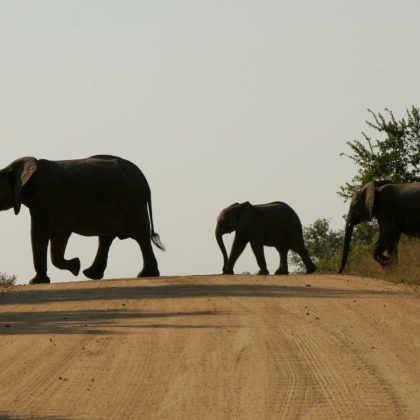
Cambridge Prisms: Extinction Co-Editors-in-Chief John Alroy and Barry Brook explain why swift and decisive action is required from governments, policy-makers and the public Public understanding of the main drivers of extinction – habitat loss, climate change, over-exploitation, invasive species, and pollution – is crucial if we are to stop biodiversity loss and maintain the ecosystems that sustain human populations.…

Read more

Quantum quest

Daniel Oi, Editor-in-Chief of Research Directions: Quantum Technologies sheds light on a challenging subject ‘Science is driven as much by what we don’t know as it is by what we already know,’ states Daniel Oi.…

Read more

‘Everything is connected’

Professor Andrea Azcarate-Peril tells the marathon story of her journey from Argentina, via North Carolina, to becoming Editor-in-Chief of Gut Microbiome, an open access journal co-published by Cambridge University Press and The Nutrition Society

Read more

Embracing a sea change

Emeritus Professor Tom Spencer, Editor-in-Chief of Cambridge Prisms: Coastal Futures, reflects on the influence of ‘wonderful’ teachers and the need to understand a plethora of viewpoints in relation to our coastlines The window for meaningful action relating to the world’s coastlines is closing fast, but Tom Spencer remains ‘guardedly optimistic’ that there is still time for societies and communities to come up with sustainable strategies for those that live and work at the coast. …

Read more

Sphere of influence

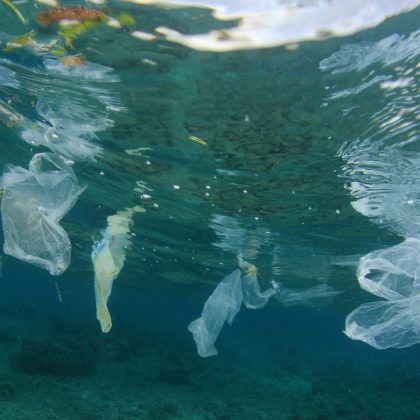
Cambridge Prisms: Plastics Editor-in-Chief Steve Fletcher describes his hopes for a circular plastics economy and the opportunity to drive global policy changes ‘It’s funny how careers evolve,’ laughs Steve Fletcher.…

Read more

Cultivating new paradigms in mental health

On a global basis, mental health is an issue almost unimaginable in its scale. The World Health Organisation (WHO) recently estimated that some 300 million people suffer from depression worldwide, and that every 40 seconds someone commits suicide with causes including mental health afflictions, such as depression. Indeed, the WHO says that, among those aged 15 to 29, suicide is a ‘leading cause of death’ – and that the majority of these are in low- or middle-income countries.

Read more