


191 results

Australian Banking and Finance Law and Regulation
- Coming soon
-
- Expected online publication date:
- July 2024
- Print publication:
- 31 July 2024
-
- Textbook
- Export citation
Formation and evolution of laminar thermal structures: correlation to the thermal boundary layer and effects of heating time
-
- Journal:
- Journal of Fluid Mechanics / Volume 984 / 10 April 2024
- Published online by Cambridge University Press:
- 08 April 2024, A60
-
- Article
- Export citation
-
We report an experimental study of the formation and evolution of laminar thermal structures generated by a small heat source, with a focus on their correlation to the thermal boundary layer and effects of heating time $t_{heat}$. The experiments are performed over the flux Rayleigh number ( $Ra_f$) range $2.1\times 10^6 \leq Ra_f \leq 3.6\times 10^{7}$ and the Prandtl number ( $Pr$) range $28.6 \leq Pr \leq 904.7$. The corresponding Rayleigh number ( $Ra= t_{heat}\,Ra_{f}/\tau _0\,Pr$) range is $900 \leq Ra \leq 4\times 10^{4}$, where $\tau _0$ is a diffusion time scale. For thermal structures generated by continuous heating (i.e. starting plumes), their formation process exists three characteristic times that are well reflected by changes in the thermal boundary layer thickness. These characteristic times, denoted as $t_{emit}$, $t_{recover}$ and $t_{static}$, correspond to the moments when the plume emission begins and completes, and when the thermal boundary layer becomes quasi-static, respectively. Their $Ra_f$– $Pr$ dependencies are found to be $t_{emit}/\tau _0\sim Ra_f^{-0.41}\,Pr^{0.41}$, $t_{recover}/\tau _0\sim Ra_f^{-0.48}\,Pr^{0.48}$ and $t_{static}/\tau _0\sim Ra_f^{-0.49}\,Pr^{0.33}$, respectively. Thermal structures generated by finite $t_{heat}$ exhibit similar evolution dynamics once $t_{heat} \ge t_{emit}$, with the accelerating stage behaving like starting plumes and the decay stage like thermals (i.e. a finite amount of buoyant fluids). It is further found that their maximum rising velocity experiences a transition in the $Ra$-dependence from $Ra$ to $(Ra\ln Ra)^{0.5}$ at $Ra \simeq 6000$; and their maximum acceleration reaches the value of starting plumes at $t_{heat}\simeq t_{recover}$, and remains unchanged for larger $t_{heat}$. In particular, the maximum rising velocity for the cases with $t_{heat} = t_{recover}$ follows a scaling relation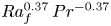 $Ra_f^{0.37}\,Pr^{-0.37}$, in contrast to the relation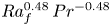 $Ra_f^{0.48}\,Pr^{-0.48}$ for starting plumes. This study provides a more comprehensive understanding of laminar thermal structures, which are relevant to a range of processes in nature and laboratory systems such as Rayleigh–Bénard convection.


An improved iterative approach with a comprehensive friction model for identifying dynamic parameters of collaborative robots
-
- Journal:
- Robotica , First View
- Published online by Cambridge University Press:
- 20 March 2024, pp. 1-23
-
- Article
- Export citation
DFT study of Atomic and electronic structures of trans-vacant 1M Al-rich illite
-
- Journal:
- Clay Minerals / Accepted manuscript
- Published online by Cambridge University Press:
- 01 March 2024, pp. 1-26
-
- Article
-
- You have access
- Export citation
Chinese stalagmite δ18O records reveal the diverse moisture trajectories during the middle to late last glacial period
-
- Journal:
- Geological Magazine , First View
- Published online by Cambridge University Press:
- 19 February 2024, pp. 1-13
-
- Article
-
- You have access
- Open access
- HTML
- Export citation
Distribution and Fractionation of Rare Earth Elements (REE) in the Ion Adsorption-type REE Deposit (IAD) at Maofeng Mountain, Guangzhou, China
-
- Journal:
- Clays and Clay Minerals / Volume 71 / Issue 3 / June 2023
- Published online by Cambridge University Press:
- 01 January 2024, pp. 340-361
-
- Article
- Export citation
The Composition and Growth Mechanism of Coexisting 4M2 and 4A8 Biotite Polytypes from Rhyolite of Long Valley Caldera, California
-
- Journal:
- Clays and Clay Minerals / Volume 70 / Issue 1 / February 2022
- Published online by Cambridge University Press:
- 01 January 2024, pp. 48-61
-
- Article
- Export citation
-
Polytypism is common in micas, and the frequency of polytype occurrence is believed to be related closely to the crystallization conditions and chemical compositions of the corresponding fluids and melts. Coexisting multiple standard and complex/disordered polytypes in igneous rocks generally reflect a complicated magma evolution history. The purpose of the current study was to clarify the origin of coexisting biotite polytypes and their growth mechanism. Micro-X-ray diffraction (μXRD) and transmission electron microscopy (TEM) were used to investigate Fe-rich biotite phenocrysts in rhyolite from the Long Valley Caldera, California, USA. The μXRD analyses characterized various polytypes, and TEM observations revealed that common polytypes (e.g. 1M, 2M1, and 3T) and rare polytypes (e.g. 4M2 and 4A8) coexist within biotite monocrystals. The two 4-layer polytypes of Fe-rich biotite, 4M2 and 4A8, were identified via selected-area electron diffraction (SAED) and high-resolution scanning transmission electron microscopy (HRSTEM) at the atomic resolution, with unique stacking sequences ([0222] for 4M2 and [002
 ] for 4A8). Energy-dispersive X-ray spectroscopy (EDS) results showed differences in their chemical compositions, especially Fe and K. The 4A8 polytype is reported for the first time. The present study suggested that environmental changes, such as rapid cooling and inhomogeneous compositional distribution, led to chemical and structural oscillations and complex nucleation of the two 4-layer polytypes. Screw dislocations producing spiral growth enhance polytype stability and form ordered long-period/complex polytypes. These results are useful to understand the origin of long-period/complex polytypes and the intergrowths of diverse polytypes formed in non-equilibrium crystallization environments.

Intelligent Optimization of Parameters for Tens of MA-Class Z-Pinch Accelerators
-
- Journal:
- Laser and Particle Beams / Volume 2022 / 2022
- Published online by Cambridge University Press:
- 01 January 2024, e10
-
- Article
-
- You have access
- Open access
- HTML
- Export citation
LncRNA MBNL1-AS1 Suppresses Cell Proliferation and Metastasis of Pancreatic Adenocarcinoma through Targeting Carcinogenic miR-301b-3p
-
- Journal:
- Genetics Research / Volume 2023 / 2023
- Published online by Cambridge University Press:
- 01 January 2024, e21
-
- Article
-
- You have access
- Open access
- HTML
- Export citation
Mineralogical Evolution of the Paleogene Formations in the Kyzyltokoy Basin, Kyrgyzstan: Implications for the Formation of Glauconite
-
- Journal:
- Clays and Clay Minerals / Volume 66 / Issue 1 / February 2018
- Published online by Cambridge University Press:
- 01 January 2024, pp. 43-60
-
- Article
- Export citation
Correlation between Photoluminescence Properties of Surface Defects and Laser-Induced Damage Threshold of Fused Silica
-
- Journal:
- Laser and Particle Beams / Volume 2021 / 2021
- Published online by Cambridge University Press:
- 01 January 2024, e10
-
- Article
-
- You have access
- Open access
- HTML
- Export citation
Digital generation of super-Gaussian perfect vortex beams via wavefront shaping with globally adaptive feedback
-
- Journal:
- High Power Laser Science and Engineering / Volume 12 / 2024
- Published online by Cambridge University Press:
- 29 November 2023, e5
-
- Article
-
- You have access
- Open access
- HTML
- Export citation
China On the Legislative Concept and the New Rules of the Succession System of the Civil Code in China
-
-
- Book:
- International Survey of Family Law 2023
- Published by:
- Intersentia
- Published online:
- 03 April 2024
- Print publication:
- 31 October 2023, pp 225-258
-
- Chapter
- Export citation
Local structural and functional MRI markers of compulsive behaviors and obsessive–compulsive disorder diagnosis within striatum-based circuits
-
- Journal:
- Psychological Medicine / Volume 54 / Issue 4 / March 2024
- Published online by Cambridge University Press:
- 29 August 2023, pp. 710-720
-
- Article
- Export citation
Social mixing and network characteristics of COVID-19 patients before and after widespread interventions: A population-based study
-
- Journal:
- Epidemiology & Infection / Volume 151 / 2023
- Published online by Cambridge University Press:
- 14 August 2023, e141
-
- Article
-
- You have access
- Open access
- HTML
- Export citation
-
SARS-CoV-2 rapidly spreads among humans via social networks, with social mixing and network characteristics potentially facilitating transmission. However, limited data on topological structural features has hindered in-depth studies. Existing research is based on snapshot analyses, preventing temporal investigations of network changes. Comparing network characteristics over time offers additional insights into transmission dynamics. We examined confirmed COVID-19 patients from an eastern Chinese province, analyzing social mixing and network characteristics using transmission network topology before and after widespread interventions. Between the two time periods, the percentage of singleton networks increased from 38.9 $ \% $ to 62.8 $ \% $ $ (p<0.001) $; the average shortest path length decreased from 1.53 to 1.14 $ (p<0.001) $; the average betweenness reduced from 0.65 to 0.11 $ (p<0.001) $; the average cluster size dropped from 4.05 to 2.72 $ (p=0.004) $; and the out-degree had a slight but nonsignificant decline from 0.75 to 0.63 $ (p=0.099). $ Results show that nonpharmaceutical interventions effectively disrupted transmission networks, preventing further disease spread. Additionally, we found that the networks’ dynamic structure provided more information than solely examining infection curves after applying descriptive and agent-based modeling approaches. In summary, we investigated social mixing and network characteristics of COVID-19 patients during different pandemic stages, revealing transmission network heterogeneities.


Identification of novel functional brain proteins for treatment-resistant schizophrenia: Based on a proteome-wide association study
-
- Journal:
- European Psychiatry / Volume 66 / Issue 1 / 2023
- Published online by Cambridge University Press:
- 14 April 2023, e33
-
- Article
-
- You have access
- Open access
- HTML
- Export citation
Diet supplementation of organic zinc positively affects growth, antioxidant capacity, immune response and lipid metabolism in juvenile largemouth bass, Micropterus salmoides
-
- Journal:
- British Journal of Nutrition / Volume 130 / Issue 10 / 28 November 2023
- Published online by Cambridge University Press:
- 11 April 2023, pp. 1689-1703
- Print publication:
- 28 November 2023
-
- Article
-
- You have access
- HTML
- Export citation
Human–animal–environment dynamics and formation of pastoralism in the southern Tibetan Plateau during the Middle–Late Holocene
-
- Journal:
- Quaternary Research / Volume 114 / June 2023
- Published online by Cambridge University Press:
- 11 April 2023, pp. 30-51
-
- Article
-
- You have access
- Open access
- HTML
- Export citation
A note on the nuclear dimension of Cuntz–Pimsner $C^*$-algebras associated with minimal shift spaces
- Part of
-
- Journal:
- Canadian Journal of Mathematics / Volume 76 / Issue 1 / February 2024
- Published online by Cambridge University Press:
- 12 December 2022, pp. 104-125
- Print publication:
- February 2024
-
- Article
- Export citation
-
For every minimal one-sided shift space X over a finite alphabet, left special elements are those points in X having at least two preimages under the shift operation. In this paper, we show that the Cuntz–Pimsner $C^*$-algebra $\mathcal {O}_X$ has nuclear dimension $1$ when X is minimal and the number of left special elements in X is finite. This is done by describing concretely the cover of X, which also recovers an exact sequence, discovered before by Carlsen and Eilers.


