
Hobby drones, repurposed as peacekeepers, save Elephants
A study published in the journal Oryx finds off-the-shelf drones can be used to guard crops and keep elephants safe along the borders of Tanzanian parks.


A study published in the journal Oryx finds off-the-shelf drones can be used to guard crops and keep elephants safe along the borders of Tanzanian parks.

Photo credit: Antonella Dalle Zotte The animal article of the month for December is ‘Black soldier fly as dietary protein source for broiler quails: apparent digestibility, excreta microbial load, feed choice, performance, carcass and meat traits‘.…

A proposed power transmission line at the edge of the Tonle Sap Floodplain Protected Landscape (TSFPL), which might be constructed as early as next year, would pose a new threat to the Critically Endangered Bengal Florican.
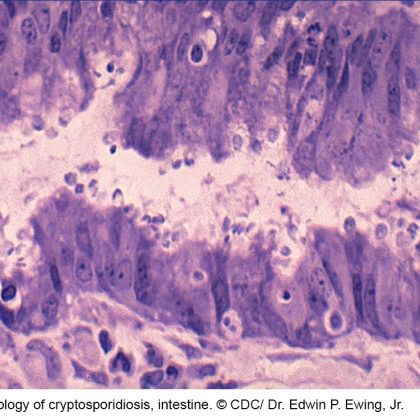
The latest Parasitology Paper of the Month is “Origin of a major infectious disease in vertebrates: The timing of Cryptosporidium evolution and its hosts” by Juan C.…

The animal article of the month for November is ‘An approach to including protein quality when assessing the net contribution of livestock to human food supply‘ Worldwide, livestock provide more than a quarter of the protein in human diets.…

A wildlife corridor facilitates tiger movement without the locals suffering, a new study published in Oryx shows.
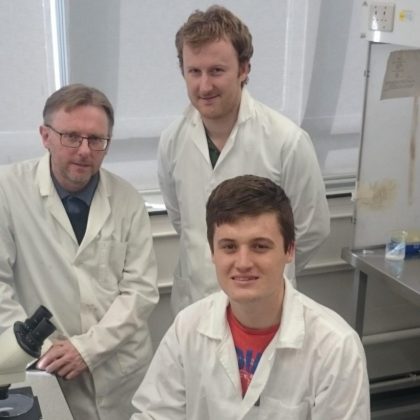
A study by scientists at Aberystwyth University’s IBERS working with Wales YFC reveals that rumen fluke (Calicophoron daubneyi) is now prevalent on Welsh farms.…

The organic food industry is gaining more and more market share worldwide, partly due to consumers’ concerns about food safety and food quality.

A post from the new Cambridge Open Access title Global Sustainability Since the notion of Sustainable Development has become widespread with the publication of the UN Commission on Environment and Development in 1986, there has been the tension between the aspiration to develop on the one hand and to stay within ‘planetary boundaries’ on the other.…

By the mid 1990s, after ten years of development, we had working robotic milkers. Once it launched on farms we could turn to the question “How do we monitor cows when there are no humans?”

The animal article of the month for September is entitled “Precision livestock farming: a ‘per animal’ approach using advanced monitoring technologies”
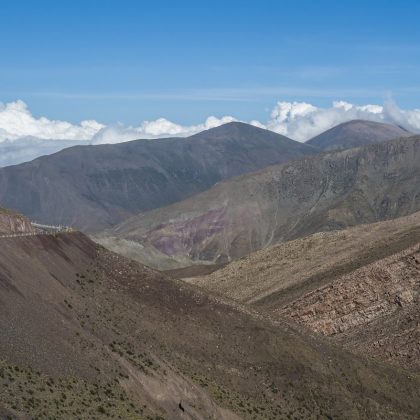
In this blog Guest Editor Professor Olivier Lacombe discusses the latest thematic issue from Geological Magazine on Tectonic evolution and mechanics of basement-involved fold-and-thrust belts.…

The Weed Science Society of America (WSSA) and Cambridge University Press are pleased to announce the formation of a new publishing partnership beginning in January 2017.

The animal article of the month for August is entitled 'Review: In vivo and post-mortem effects of feed antioxidants in livestock: a review of the implications on authorization of antioxidant feed additives'

We are at a remarkable point in human development. Until now, the perception of sustainability has primarily focused on environmental protection, morality and efficiency.…

Watch an interview with Professor Raymond E. Goldstein

Light-duty vehicles (LDV) are a huge source of greenhouse gas (GHG) emissions in the United States. To avoid the worst effects of global climate change, we need to cut these emissions by 80% by 2050.

In the past few years, pig farms around the world have seen an increase in the total number of piglets born per litter. This has been achieved by genetic selection for litter size and by improved management of the sows.

In this blog Professor Andy Fenton discusses the recent special issue of Parasitology on Mathematical modelling of infectious diseases. The field of disease ecology – the study of the spread and impact of parasites and pathogens within their host populations and communities – has a long history of using mathematical models.…

The climate is changing. We have left the Holocene and entered the Anthropocene, the era in which human enterprise is pushing the planetary functioning of essential cycles (e.g. of CO2) into a potentially unstable regime. Human enterprise, by burning fossil fuels for electrical, heat and motive power is the central cause of climate change, and is driven by an economic system that promotes insatiable consumption.

The latest Parasitology Paper of the Month is Do differences in Toxoplasma prevalence influence global variation in secondary sex ratio? Preliminary ecological regression study by Madhukar S.…

In this blog post Joseph Gale and Amri Wandel discuss their recent review article in International Journal of Astrobiology, The potential of planets orbiting red dwarf stars to support oxygenic photosynthesis and complex life.…

The success of livestock breeding programs depends on the selection of the best animals to become the parents of the next generation of production animals. The more accurate and the faster this selection step takes place, the more genetic improvement can be made per generation.
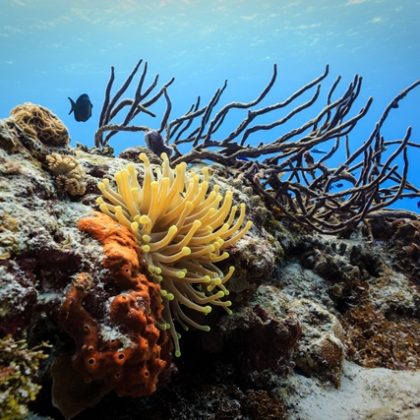
In this blog Dr Dirk Erpenbeck talks about his co-authored paper Nothing in (sponge) biology makes sense – except when based on holotypes which featured in the New Frontiers in Sponge Science special issue from Journal of the Marine Biological Association.…

In this blog Dr Marcio Custódio talks about the co-authored paper Reduction of RBL–2H3 cells degranulation by nitroaromatic compounds from a Bacillus strain associated to the Amazonian sponge Metania reticulata which featured in the New Frontiers in Sponge Science special issue from Journal of the Marine Biological Association.…

Two sets of scientists have written commentaries in the latest issue of the British Journal of Nutrition querying the findings of a recent article published in the same journal by scientists from Newcastle University that suggested potential nutritional benefits of consuming organic milk.

Feed unit systems (FUS) have been a major factor of progress in livestock production for calculating optimal diets. For more than a century and a half, these systems have been periodically updated to take account of advances in scientific knowledge and new demands of farm to fork chains.

Extinct flagships: linking extinct and threatened species, by Peter M. Kyne and Vanessa M. Adams Extinct species as conservation champions The Earth is in the midst of its sixth mass extinction event.…
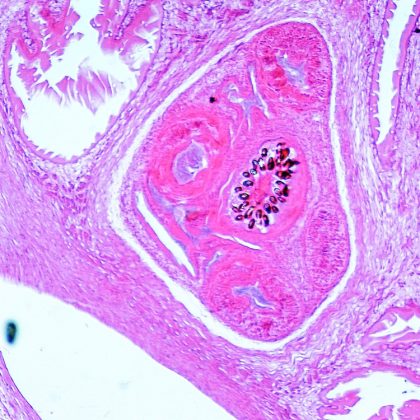
The latest Parasitology Paper of the Month is Microdiversity of Echinococcus granulosus sensu stricto in Australia by C. A. Alvarez Rojas et al.…

Kelsey's James' article addresses growing concern over the effects of fishery's non-target catch on sharks, rays and skates worldwide.

Wildlife trade is a multi-billion-dollar business with hundreds of millions of specimens being traded annually. Hunted for their scales and meat, the pangolin has become the most trafficked mammal in the world.…

Special Epigenetics issue of Twin Research and Human Genetics Twins are at the forefront of research into human health and disease.…

The animal article of the month for April is entitled ‘Quantifying the consequences of nutritional strategies aimed at decreasing phopsphorus excretion from pig populations: a modelling approach‘ Although pigs need Phosphorus in their feed in order to thrive, this can pose environmental problems. …

In the past decade or so, sustainability research has expanded rapidly to explore how societies interact with Earth systems. This research is of tremendous importance: without major societal changes, the planet will become a considerably more hostile place to live.…

Source: Study says Alaska could lose massive icefield by 2200 The study Modeling the evolution of the Juneau Icefield between 1971 and 2100 using the Parallel Ice Sheet Model (PISM) by Florian A.…
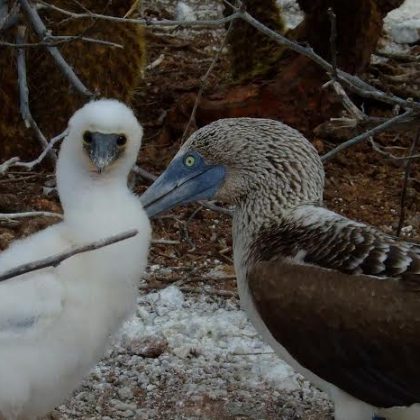
Prevalence of Haemoproteus sp. in Galápagos blue-footed boobies: effects on health and reproduction by Dr Larisa Lee-Cruz et al. is the Parasitology Open Paper of the Month for March.…

For young farm animals, surviving birth and the neonatal period, is an important goal for the animal and the farmer, affecting animal welfare and farm profitability, yet still an average of 15% of sheep and goat neonates do not survive.

Cancer and life-history traits: lessons from host–parasite interactions is the March Parasitology Paper of the Month. Cancer is a disease associated with clonal evolution and cell competition within the body.…

Scientists from BirdLife International estimate that 20 locations in the Mediterranean may be responsible for eight million individual birds being illegally killed or taken alive each year.…

In this blog post, Paddy Brock discusses his co-authored review ‘Plasmodium knowlesi transmission: integrating quantitative approaches from epidemiology and ecology to understand malaria as a zoonosis’, which is the Parasitology article of the month.…

In this blog Veronica French describes the context for her co-authored paper An economic perspective on oceans and human health which features in the Oceans and Human Health special issue from Journal of the Marine Biological Association.…

In this blog Mathew White describes the context for his co-authored paper The ‘Blue Gym’: What can blue space do for you and what can you do for blue space?…

In this blog Thomas Appleby discusses his recent co-authored paper The marine biology of law and human health which features in the Oceans and Human Health special issue of Journal of the Marine Biological Association.…

This blog is an extract from the Editorial to the new Parasitology special issue on Naturally Acquired Immunity to Malaria by Alyssa Barry and Diana Hansen.…

Source: Study: Giant iceberg decimates Adélie penguin colonies – UNSW Science for society Adélie penguin numbers at Cape Denison in Antarctica have crashed from more than 160,000 birds in 2011 down to just a few thousand following the grounding of a giant 97-kilometre long iceberg in Commonwealth Bay.…

I am pleased to announce the launch of a new online guide to Graphics for Conservation. The aim of the guide is to provide advice on designing maps and data plots, advice on the wise use of graphics formats, and screencast demonstrations to help with drafting beautiful figures.…

What’s the problem with militarising anti-poaching efforts? The increasing calls for a more militarised and forceful approach to tackle poaching, especially of elephant and rhinos, demand more attention and interrogation

Oceans and Human Health Special Issue from JMBA Marine Biology is undergoing a “sea change” in its outlook and approach. Driven by the need for us all to think more about the impact of our work and its relevance to the wider public, the marine sciences are now embracing ideas and establishing closer collaborative links with the Social Sciences – including economics and the law – , and the public health communities.…

In this blog Elisa Berdalet discusses her recent Journal of the Marine Biological Association paper Marine harmful algal blooms, human health and wellbeing: challenges and opportunities in the 21st century.…

The palatability of meat is mainly determined by marbling and tenderness. Tender meat, which contains more intramuscular fat and less connective tissue, is demanded by consumers and the presence and cross-linking of intramuscular connective tissue reduces meat tenderness and is mainly synthesized by fibroblasts.
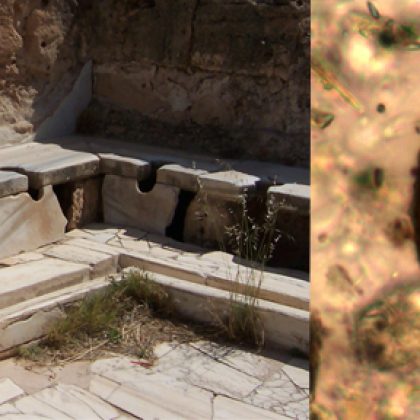
Archaeological evidence shows that intestinal parasites such as whipworm became increasingly common across Europe during the Roman Period, despite the apparent improvements the empire brought in sanitation technologies.…

New research findings, published in Journal of Fluid Mechanics, are yielding insights into the physics behind the swimming behavior of bacteria and spermatozoa that could lead to a better understanding of the mechanisms affecting fertility and formation of bacterial biofilms that foul everything from implantable medical devices to industrial pipes.


Listen to @BBCRadio4's Start the Week, featuring @NineDotsPrize winner @jkkusiak, talking about her book, 'Radically Legal'. Learn how a group of ordinary people inspired the book when they reclaimed over 240,000 apartments back from corporate landlords 🔗

Start the Week - ‘Left behind’, but not forgotten - BBC Sounds
Tom Sutcliffe with Paul Collier, Joanna Kusiak and Matthew Xia.
cup.org
Sparking curiosity from geopolitics in Japan to the cultural implications of AI!
Explore the seven new titles we are welcoming to Cambridge and the seven #OpenAccess titles we are launching in 2025 🚀 🔗 https://cup.org/3yhAuAx
Our Flip it Open programme has published titles from authors @GibbsSpike, @liederfollower and Inés Valdez!
Discover how we are funding the publication of #OpenAccess books without changing purchasing habits 🔗 https://cup.org/4diDHii


 ;
;


