

Why pilots sometimes persist when it’s safer to stop

30 January 2026
Last update: 30/01/26 04:51


The Aeronautical Journal February 2026 Vol 130 No 1344
Modern airline pilots operate in a highly proceduralised, wellregulated environment. It is often said that procedures are clear: if an approach is unstable, a go-around should be flown. Yet accident and incident data repeatedly show that this does not always happen. My recent paper examines why capable, well-trained airline pilots sometimes persist with a plan even when conditions have clearly changed. The apparent contradiction, between knowledge and action, forms the starting point for the paper.
The concept at the centre of this work is cognitive lockup. Simply put, it describes a human tendency to stay engaged with an ongoing task instead of switching to a new, more critical one. In the cockpit, this often appears near task completion, on final approach, when time pressure is high, workload is elevated, and the goal of “getting the aircraft on the ground” feels close.
This is not about recklessness or poor professionalism. Cognitive lockup arises from normal human mechanisms: the pull of task completion, the discomfort of abandoning progress, framing effects that portray go-arounds as failure, and the mental effort required to reorient under stress. When these factors combine, they can delay or prevent timely task switching, even when pilots consciously “know” the safer option.
The paper explores these mechanisms using findings from psychology, human factors research, and aviation-specific studies, and then looks at what can realistically help. Training that deliberately practices task switching, organisational language that positively frames go-arounds, and technological cues that make shrinking safety margins more visible all play a role.
I also discuss how simple attention-regulation practices may help pilots recognise fixation earlier, without replacing procedures or judgement. These practices are complementary elements, and not substitutes for procedures or discipline. They are tools that may help pilots notice fixation earlier and create a brief mental pause under pressure.
Understanding cognitive lockup shifts the conversation from blame to design of training, policy, and systems, and offers a more human, and ultimately safer, way to think about decision-making on the flight deck.
The paper Failure to switch tasks due to cognitive lockup in airline pilots: a review of mechanisms, influences and mitigation strategies by A Singh appears in Volume 130 Issue 1344 of The Aeronautical Journal and is free to access for one month.

The Aeronautical Journal has, for over a century, been the UK’s leading scientific and technical aeronautics Journal and is the world’s oldest Aerospace Journal that remains in production. Published monthly, The Aeronautical Journal draws upon the expertise and resources of The Royal Aeronautical Society providing a world-wide forum for authors from the UK and overseas. Research papers are solicited on all aspects of research, design and development, construction and operation of aircraft and space vehicles. Papers are also welcomed which review, comprehensively, the results of recent research developments in any of the above topics.
The Royal Aeronautical Society is the world’s only professional body dedicated to the entire aerospace community. Established in 1866 to further the art, science and engineering of aeronautics, the Society has been at the forefront of developments ever since.
www.aerosociety.com | National Aerospace Library catalogue & e-books
Book reviews covering academic, scientific and technical books covering aeronautical engineering and topics relating to it can be found here: www.aerosociety.com/news-expertise/national-aerospace-library/book-reviews
The Aeronautical Journal has, for over a century, been the UK’s leading scientific and technical aeronautics Journal and is the world’s oldest Aerospace Journal that remains in production. Published monthly, The Aeronautical Journal draws upon the expertise and resources of The Royal Aeronautical Society providing a world-wide forum for authors from the UK and overseas. Research papers are solicited on all aspects of research, design and development, construction and operation of aircraft and space vehicles. Papers are also welcomed which review, comprehensively, the results of recent research developments in any of the above topics.
Related Posts

Improving pilots’ tactical decisions in air combat training
The good, the bad, and the ugly: this article explores improving pilots' tactical decisions in air combat training using the critical decision method and introduces a paper published by Cambridge University Press in The Aeronautical Journal.

Where Physical and Digital Worlds Collide
In this blog for Data-Centric Engineering, Paul Clarke (Chief Technology Officer at Ocado) documents Ocado’s journey with building synthetic models of its business, its platforms and its underlying technologies, including the use of simulations, emulations, visualisations and digital twins. He explores the potential benefits of digital twins, including the opportunities for creating digital twins at […]
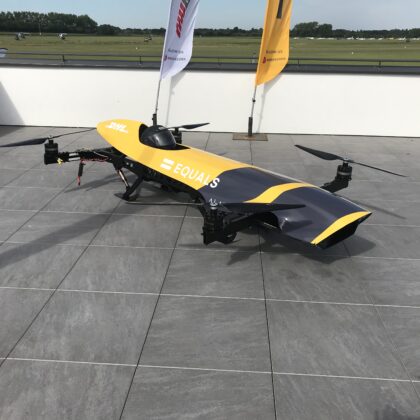
A human factors accident analysis framework for UAV loss of control in flight
The number of Uncrewed Aerial Vehicles (UAVs) or ‘drones’ in UK skies has increased significantly over the last decade and this trend is set to continue.

Elephants, Kings, and Comparison, a Conversation with Tom Trautmann
We invited Trautmann to tell us why he writes about Indian war elephants, and how. He touched on several topics in the process: the value of analytical accidents, the recovery of lost knowledge systems, and the power and pluralism of human logics.


 ;
;


