The Aeronautical Journal

(54) rss icon
Hierarchical regression analysis of FOQA data to predict touchdown G for the Boeing 787

Hazards such as runway incursions, runway excursions, and in-flight loss of control, are appropriately well documented and emphasised within aviation safety literature given their catastrophic potential. Less well known, yet operationally significant, is Abnormal Runway Contact (ARC), a category of hazardous events encompassing tail strikes, nose-wheel-first contacts, and hard landings.

Read more

Advances in Unsteady Computational Aerodynamics with Separation: The 61st Lanchester Memorial Lecture

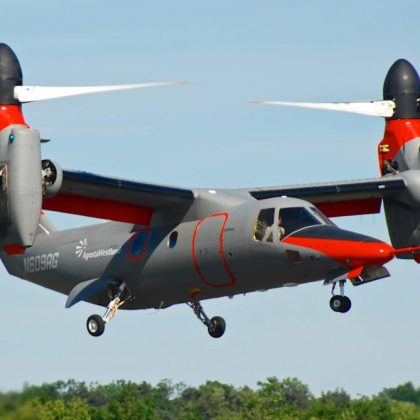
Advanced Air Mobility (AAM) is a burgeoning sector of the Aerospace industry exploring new design concepts from multi-passenger vehicles to small uncrewed autonomous systems for observations. These applications also expand operations into airspaces that were not previously engaged in commercial operations. The compounding of these with traditional aerospace vehicles and operations requires accuracy in aerodynamic analyses.
Read more

On the Performance of Highly Aggressive Inter Compressor Ducts

A major research focus of the Institute of Propulsion Technology at the German Aerospace Center (DLR) is increasing engine compressor efficiency. In this context, the intermediate compressor duct (ICD), which connects the low-pressure compressor (LPC) with the high-pressure compressor (HPC) in a civil jet engine is of eminent significance.

Read more

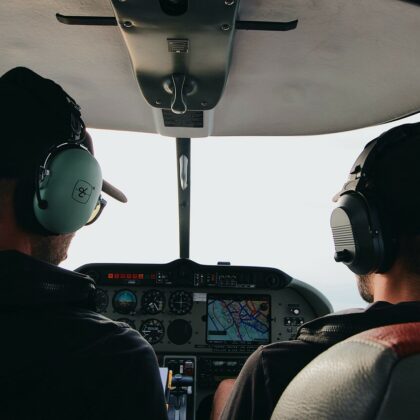
Assessing Evidence-Based Training in a Collaborative Virtual Reality Flight Simulator

Imagine training for a life-or-death situation, only to find that the skills you learnt do not translate when it matters most. This gap in training tragically became a reality in the case of Air France 447, where ineffective responses to an abnormal situation contributed to a fatal crash. While flight simulators have long been a cornerstone of pilot training, their limitations are pushing the industry to explore new technologies. Could virtual reality (VR) revolutionise how pilots are trained?

Read more

A simple model for the estimation of turbofan engine performance in all airborne phases of flight

The Aeronautical Journal December 2024 Vol 128 No 1330 Global air transport is a significant contributor to anthropogenic environmental impact. The use of kerosene for propulsion produces carbon dioxide and water vapour, both greenhouse gases, plus a mixture of nitric oxide and nitrogen dioxide that changes the levels of atmospheric, ozone and methane, also greenhouse gases.…

Read more

Editorial for Bristol 75 Anniversary Issue

This online collection commemorates 75 years of aerospace engineering teaching and research at the University of Bristol.  However, interactions with the aircraft industry started long before the Department was formed in 1946 1, for instance when in 1918 the University began teaching a class in Aircraft Manufacturing . 

Read more

The Light Beyond the Clouds

Beyond the dark clouds there is light. Is this a topical description for the past, present and future of our industry? In the past, it was our ambition to travel fast and above the weather that inspired the development of the jet engine by its inventors, Sir Frank Whittle and Dr Hans von Ohain in the late 1930s and early 1940s.

Read more

The Aeronautical Journal and the ICAS Congress

The Aeronautical Journal October 2019 Vol 123 No 1268 The Aeronautical Journal is unusual in ‘covering all aspects of aerospace’. This is something of a rarity nowadays, with conferences and journals aiming to attract high-profile experts by maximising specialist content – more ‘bang for the buck’, as the expression goes.…

Read more