Advances in Archaeological Practice

(47) rss icon
Photogrammetry in Three Acts

In “Without a Roadmap: Reflections on the Emergent Methods of Community-Based Archaeology,” I examine the ways that working with community can shape and transform research design over the course of a project.…

Read more

Representation Matters in Archaeology

In January, my husband and I (Sam) took our six-year-old daughter to get a flu shot at a local pharmacy. As she became increasingly bored in the waiting room, she began to offer commentary, asking the closed door, “Doctor, when are you coming out?”…

Read more

Archaeological Practice in the Southeast United States

As the Southeastern Archaeological Conference (SEAC) begins, I examined Southeastern-focused articles in Advances in Archaeological Practice to identify emerging trends. Southeastern methodology may best be known for the 1950s Ford-Spaulding debate; however, this review shows that Southeastern methodology is still breaking new ground in archaeology.…

Read more

Monico Origins, a Bayesian Story

The acknowledgments section of the Monico Bayesian paper expresses gratitude to “Deb Nichols, John Watanabe, Sophie Nichols-Watanabe, Robert (Bob) L. Kelly, and the Dartmouth Coach for inspiring and facilitating the development of some concepts in this paper.”

Read more

Teaching Data Reuse

In the spring semester of 2020, I developed and taught a class on archaeological data reuse and digital literacy at the University of Wisconsin – Milwaukee.…

Read more

Lidar in Mesoamerica since 2016: Acquisition, Ownership, and Accessibility

In 2016, we were privileged to edit a special section in Advances in Archaeological Practices on lidar in Mesoamerica and are delighted that the editors of AAP have invited us to provide an update to that special section in this blog. At that time, lidar acquisition was still uncommon, with only a handful of projects being fortunate enough to acquire the data that was revolutionizing settlement studies in tropical areas like Mesoamerica.

Read more

A Complicated History of Collaboration with Collectors of Spirit Eye Cave, Texas

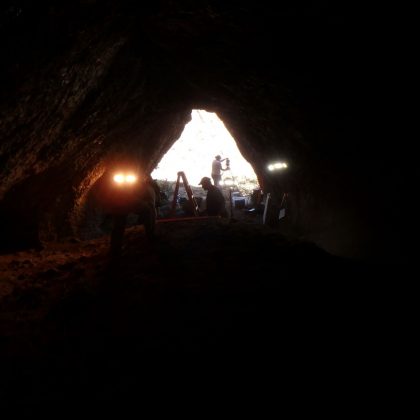
Research at Spirit Eye Cave did not take the course I envisioned. In the 1950s and 1960s, this cave, located on a private ranch in West Texas, was a pay-to-dig site. It was extensively dug, all too common with the vast tracts of private land that typify Texas. Initially, the goal of my research was to salvage any information about when the cave was occupied, and to examine the perishable collections.

Read more

Digital Methods for Archaeological Currents

Archaeology has long contributed new perspectives to past events, transcending written records through the interpretation of material culture. Applied to the present, archaeology has the potential to disrupt and nuance the memorialization of contemporary occurrences as they are inscribed.…

Read more