

The Melsonby Hoards: rerouting the evidence for vehicles in Iron Age Britain
Our article for Antiquity provides the first overview of the Melsonby Hoards, probably the largest deposit of Iron Age metalwork ever encountered in Britain.…


Our article for Antiquity provides the first overview of the Melsonby Hoards, probably the largest deposit of Iron Age metalwork ever encountered in Britain.…
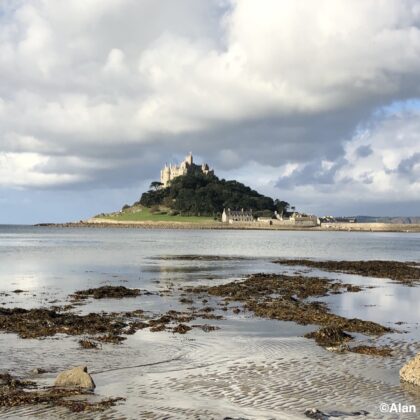
In 2025, we published an article in Antiquity, demonstrating through chemical and isotopic analyses that, c. 1300 BC, tin ingots made from tin ores in southwest Britain are found on shipwrecks off the coast of Israel, around 4000 km away.…

Our recent Antiquity Project Gallery article introduced Semiyarka as one of the most extensive and carefully planned Bronze Age settlements yet identified on the Kazakh steppe — a 140-hectare landscape including rectilinear compounds, a larger central structure, and unmistakable evidence of organised tin-bronze production.…

On 12 October, 2025, Typhoon Halong reached the shores of Southwestern Alaska, with devastating consequences for many of the Indigenous communities living here.…
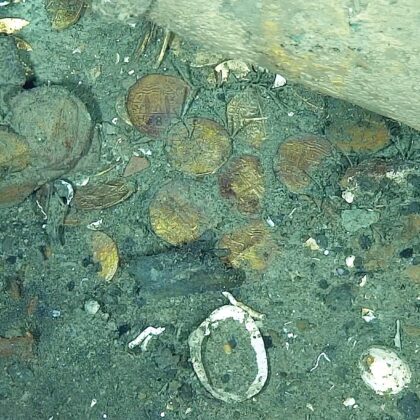
Many sites around the world have been harmed because they were targeted for profit rather than for research. When objects are valued mainly for their economic worth, we miss out on the reach and diverse stories they can tell.…
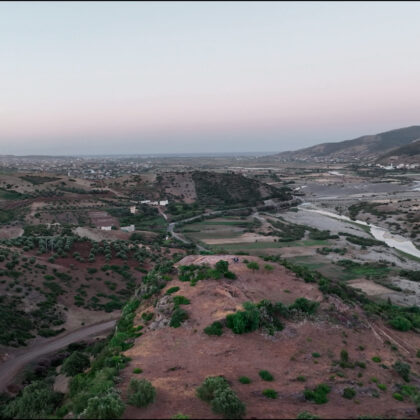
When we think of the Bronze and Early Iron Age Mediterranean, it’s easy to picture the flourishing societies of Europe and the eastern Mediterranean.…

Horses played an indispensable role in the world of the Iron Age steppe, influencing everyday life, warfare, and ceremonial practices. Comprising a flamboyant art style and a unique way of life including horseback archery, Scythian material culture has long intrigued archaeologists.…
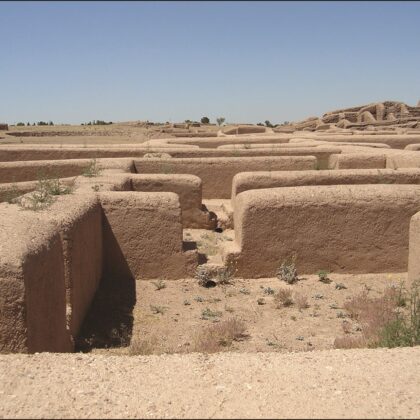
Have you taken a direct-to-consumer ancestry test and had an unexpected or shocking result? Perhaps your ancestors were from a different part of the globe than you expected, or you found a long-lost relative.…

Antiquity author and Diving and Maritime Archaeology Officer at Bournemouth University Tom Cousins explores the exciting discovery of a rare example of a medieval shipwreck in English waters.…

DNA increasingly shows up in our public and private lives. Researchers use DNA to advance medical treatments. Ancient DNA (aDNA) studies trace human migrations and interactions in the distant past.…
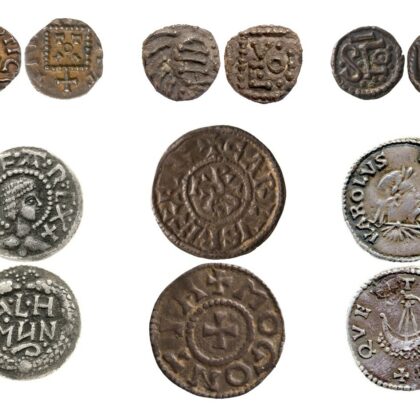
If you were living in north-west Europe in the late 7th century, you would have experienced something that your parents, grandparents, and more distant ancestors had not: coinage.…
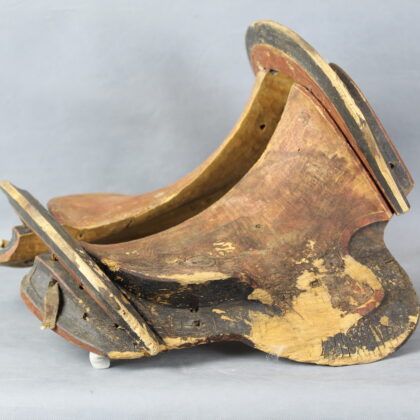
If you’ve gotten on a horse in the 21st (or even 20th) century, your experience probably went something like this: you placed one foot in a stirrup, heaving yourself into a large, rigid saddle that helped secure your seat.…

The North Eurasian inland heaths are open landscapes, dominated by evergreen sclerophyllus plants, most typically Calluna vulgaris L. (Hull). These thrive in the Atlantic humid climate on sandy acidic soils.…

In a recent article I published with Antiquity, I argued that ancient Greek architects built accessibility into religious healing sanctuaries, such as the Sanctuary of Asclepius at Epidaurus.…
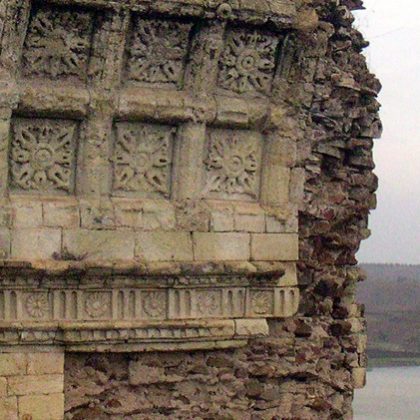
The opportunity to showcase some of the exciting archaeological research currently underway on medieval Ethiopia in a journal as widely read as Antiquity is important.

Spring is underway in the United Kingdom, with daffodils blooming outside in gardens and verges, and chocolate eggs multiplying inside our supermarkets.…

Lucy Donkin, Lecturer in History and History of Art at the University of Bristol, discusses her forthcoming article, ‘Mons manufactus: Rome’s man-made mountains between history and natural history’, in Papers of the British School at Rome (2017), which will shortly be published via FirstView on Cambridge Core.
Q&A with Editor-in-Chief of the Precision Medicine Journal, Dame Anna Dominiczak, for International day of Women and Girls in Science


How long will humankind survive? Besides the fact that we have been able to eliminate ourselves with nuclear weapons for decades, even without a third world war, the challenge to take care of the resources of our planet remains; we need to use them in a way that our children and their children can have a place on Earth as well. In this blog post Andreas Losch discusses his recent review article in the International Journal of Astrobiology, The need of an ethics of planetary sustainability

The English language contains a wealth of insults and terms of abuse. Personal insults attack the core and immutable aspects of a person, such as their race, ethnicity, appearance, age, or a disability.…

In this post Niva Golan-Nadir and Daniel Smith expand on their recent Politics and Religion article ‘From religious to secular perspectives of religion and state – tracing the American Blue law‘.…

Even though findings from genetics and other sciences unequivocally refute biological conceptions of race, this erroneous viewpoint remains widespread among the general public.…

In January, my husband and I (Sam) took our six-year-old daughter to get a flu shot at a local pharmacy. As she became increasingly bored in the waiting room, she began to offer commentary, asking the closed door, “Doctor, when are you coming out?”…

Why understanding contemporary youth militancy demands history Al-Shabaab fighters patrolling Afgooye-Mogadishu road (2025) In civil war-era Somalia in the early 1990s, global media headlines about ‘stoned teenagers’ cruising Mogadishu on jeeps mounted with machine guns became synonymous with the construction of Somalia as a ‘chaotic African country’ in which one could be killed for nothing more than ‘the clothes on your back’ (New York Times, 1992).…
How long will humankind survive? Besides the fact that we have been able to eliminate ourselves with nuclear weapons for decades, even without a third world war, the challenge to take care of the resources of our planet remains; we need to use them in a way that our children and their children can have a place on Earth as well. In this blog post Andreas Losch discusses his recent review article in the International Journal of Astrobiology, The need of an ethics of planetary sustainability


It is an article of faith among ordinary Filipinos that American troops will die with Filipino troops defending Philippine claims to the Spratly Islands in the South China Sea (SCS).…

Q&A with Editor-in-Chief of the Precision Medicine Journal, Dame Anna Dominiczak, for International day of Women and Girls in Science

More and more research is finding inflammation as a potential contributing factor towards to the development of various mental illnesses. A systematic review was conducted to determine the association between parasitic infection and mental illnesses in various African populations. Two parasite groups were evaluated; helminths and protozoans, and four mental illness classifications; depressive disorders, anxiety disorders, schizotypal disorders and unspecified mental illnesses.
This is the first post in our new series: “Conversations with Authors.” For our inaugural post, we asked Dr. Vesla Weaver to meet (virtually) with Dr.…

The March article of Muses – the arts blog from BJPsych International is the first blog of the series. The blog is written by Dr Dami Ajayi, Specialty Doctor, Barnet Enfield and Haringey Mental Health NHS Foundation Trust and Trainee/Blog Editor, BJPsych International.…
The English language contains a wealth of insults and terms of abuse. Personal insults attack the core and immutable aspects of a person, such as their race, ethnicity, appearance, age, or a disability.…


Listen to @BBCRadio4's Start the Week, featuring @NineDotsPrize winner @jkkusiak, talking about her book, 'Radically Legal'. Learn how a group of ordinary people inspired the book when they reclaimed over 240,000 apartments back from corporate landlords 🔗

Start the Week - ‘Left behind’, but not forgotten - BBC Sounds
Tom Sutcliffe with Paul Collier, Joanna Kusiak and Matthew Xia.
cup.org
Sparking curiosity from geopolitics in Japan to the cultural implications of AI!
Explore the seven new titles we are welcoming to Cambridge and the seven #OpenAccess titles we are launching in 2025 🚀 🔗 https://cup.org/3yhAuAx
Our Flip it Open programme has published titles from authors @GibbsSpike, @liederfollower and Inés Valdez!
Discover how we are funding the publication of #OpenAccess books without changing purchasing habits 🔗 https://cup.org/4diDHii


 ;
;


