

Moving mental health science forward
The RCPsych Article of the Month for September is ‘A better future for mental health science‘ and the blog is written by author Niall Boyce and the article is published in The British Journal of Psychiatry.…


The RCPsych Article of the Month for September is ‘A better future for mental health science‘ and the blog is written by author Niall Boyce and the article is published in The British Journal of Psychiatry.…

The RCPsych Article of the Month for June is ‘Subjective, behavioural and physiological correlates of stress in women using hormonal contraceptives‘ and the blog is written by authors Zoé Bürger and the article is published in The British Journal of Psychiatry Despite their widespread use, we still know surprisingly little about how hormonal contraceptives affect the body’s response to stress.…

In the February 2025 edition of Magnify – the Journal Club blog from BJPsych – Dr Angharad de Cates and Dr Merryn Anderson chair a journal club in collaboration with Cornwall Partnership Trust, discussing ‘Associations between multimorbidity and neuropathology in dementia: consideration of functional cognitive disorders, psychiatric illness and dementia mimics’. They are joined by a group of early career psychiatrists who presented an appraisal of the paper, and who have written a blog post discussing their reflections on the process. An expert panel, including the senior author of the paper, also joined the discussions.

An analysis of the political, social and cultural factors behind extremism, racism and riots, and their profound effects on mental health across communities.

Deaths from physical illnesses account for most of the scandalous toll of premature deaths in people with severe mental disorders that include psychotic disorders, bipolar disorder or severe depression. But it is not clear whether they die too soon because physical illnesses are more common in this group, or whether those illnesses are more likely to be fatal when they develop them.
Dementia remains the number one modern day public health challenge and it is becoming clear that therapies targeting neurodegeneration pathology once people already have significant symptoms is unlikely to allow us to address it comprehensively. Digital technologies may offer a solution by allowing identification of and intervention in personal risk factors for dementia in later life. In our recent paper in the BJPsych we demonstrate the high usability and reliability of an app designed to address this challenge.

In the March 2024 edition of Magnify – the Journal Club blog from BJPsych – Dr Angharad de Cates and Dr Merryn Anderson chair a journal club in collaboration with Cornwall Partnership Trust, discussing ‘Suicide and other causes of death among working-age and older adults in the year after discharge from in-patient mental healthcare in England: matched cohort study’. They are joined by a group of early career psychiatrists who presented an appraisal of the paper, and who have written a blog post discussing their reflections on the process. An expert panel, including the senior author of the paper, also joined the discussions.
In recent years our team has been focusing on the relationship between adolescent brain development, cognition, and mental disorders.

We are honoured that our paper “Longitudinal trajectories in negative symptoms and changes in brain cortical thickness: 10-year follow-up” has been chosen as RCPsych Article of the Month. During recent years, our team has been part of the “Programa de Atención a Fases Iniciales de Psicosis (PAFIP)”. PAFIP is a three-year early intervention initiative designed for individuals who have experienced their first episode of psychosis (FEP). Those who willingly joined this program received comprehensive care from a team of professionals, including psychiatric nursing, psychology, psychiatry, and social work. A decade after the onset of psychotic disorders, the PAFIP team reconnected with the participants for a follow-up evaluation.

Canada is debating expanding its medical assistance in dying law to include mental illness as the sole underlying condition. Initially planned for March 2023, the rollout has now been paused, yet the discussion continues.

In the March edition of Magnify – the Journal Club blog from BJPsych – Dr Angharad de Cates and Dr Mariana Pinto da Costa chair a journal club in collaboration with the WPA, discussing ‘Efficacy of interventions to reduce coercive treatment in mental health services: umbrella review of randomised evidence’.

The RCPsych Article of the Month for January is ‘Ethnic inequalities in involuntary admission under the Mental Health Act: an exploration of mediation effects of clinical care prior to the first admission’ and the blog is written by authors Daniela Fonseca Freitas, Susan Walker, Patrick Nyikavaranda, Johnny Downs, Rashmi Patel, Mizanur Khondoker, Kamaldeep Bhui and Richard D. Hayes. The article is published in The British Journal of Psychiatry.

The RCPsych Article of the Month for August is ‘Antidepressant prescribing for adult people with an intellectual disability living in England’ and the blog is written by authors Dr David Branford & Professor Rohit Shankar MBE published in The British Journal of Psychiatry.…

Our 5-year-old-daughter has been evaluated by multiple clinical psychologists for autism spectrum disorder with all of them saying she doesn't meet the criteria for ASD, even though we strongly believe that she has the disorder’, a case and a conundrum I first heard from a mother in 2011 and from countless other parents since then.

University College London People who had higher pre-pandemic levels of depression or anxiety have been more severely affected by disruption to jobs and healthcare during the pandemic, according to a new study co-led by UCL researchers.…

Fortunately, we have moved on from a time when individuals with intellectual disability may have been considered incapable of experiencing mental health problems. However, in the context of current talk about mental health crises, the mental health of children and young people with intellectual disability is perhaps the biggest crisis of them all. Children with intellectual disability face a quadruple inequality in relation to their mental health.

Hikikomori is a Japanese term that refers to extreme social isolation. First introduced to the medical community by psychiatrist Tamaki Saito in a bestselling book in 1998, the condition has since seen much interest. In Japan, prevalence studies estimating it to occur in 1.2% of 20-49yr olds seemed to confirm anecdotal concerns from many parents worried about whether their children might suffer from the condition and attracted government attention.

The RCPsych Article of the Month for April is ‘Systematic evaluation of the QualityRights programme in public mental health facilities in Gujarat, India’ and the blog is written by Authors Soumitra Pathare, Jasmine Kalha.…

The RCPsych Article of the Month for January is from The British Journal of Psychiatry (BJPsych) and is entitled ‘Antipsychotic and antidepressant prescribing for 704 297 children and young people with and without intellectual disabilities: record linkage study’ by Angela Henderson, Deborah Kinnear, Michael Fleming et al.

Recent policy campaign Personal tragedies, public crisis led by Autistica, the UK’s leading autism medical research charity, emphasises that investigating rates and causes of premature mortality in autistic people is of paramount importance.
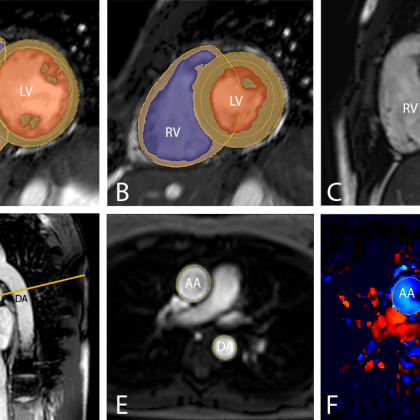
The RCPsych Article of the Month for August is from The British Journal of Psychiatry (BJPsych) and is entitled ‘Cardiac structure and function in schizophrenia: cardiac magnetic resonance imaging study’ by Emanuele F. Osimo, Stefan P. Brugger, Antonio de Marvao et al.

A new study by King’s College London, published in The British Journal of Psychiatry has shown an association between increases in alcohol related hospital admissions and decreases in spending on alcohol services since they came under the responsibility of local authorities in 2012.

Amid the COVID-19 pandemic, new research from The British Journal of Psychiatry finds that past stressors and traumatic events increase vulnerability to mental illnesses, such as post-traumatic stress disorder (PTSD) and major depressive disorder (MDD).

The British Journal of Psychiatry (BJPsych) has collaborated with the World Psychiatric Association to examine the mental health aspects of disasters and trauma, aiming to strengthen the contribution of psychiatrists to reduce distress, illness and suicidal behaviour among vulnerable populations.

The RCPsych Article of the Month for January is from The British Journal of Psychiatry (BJPsych) and is entitled ‘Clinical effectiveness of the START (STrAtegies for RelaTives) psychological intervention for family carers and the effects on the cost of care for people with dementia: 6-year follow-up of a randomised controlled trial’

We were delighted to welcome delegates to our Cambridge University Press/RCPsych Publishing stand during Congress where they were able to explore our impressive portfolio of books and journals and meet the Journal Editors-in-Chief and Managing Editors during “Meet the Editor” sessions.

Treatment-resistant depression is the most unfavourable outcome for patients suffering from depression: one-third of depressed patients do not respond to at least two different treatments and they continue to suffer from depression and its consequences, including social isolation, decline in work functioning and – in the worst case – suicide.

RCPsych Article of the Month for April is from The British Journal of Psychiatry (BJPsych) and is entitled ‘Involving patients with dementia in decisions to initiate treatment: effect on patient acceptance, satisfaction and medication prescription’ by Authors Jemima Dooley, Nick Bass, Gill Livingston and Rose McCabe.

New study from The British Journal of Psychiatry finds clear link between cultural engagement and lower risk.

Computers can ‘spot the difference’ between healthy brains and the brains of people with Dissociative Identity Disorder (DID), formerly known as ‘multiple personality disorder’.

Research from King’s College London, published in The British Journal of Psychiatry suggests that reorganisation of mental health services can have a negative effect on the health of people with severe mental illness, due to the disruption of relationships between patients and carers.

New research from King’s College London, published in the British Journal of Psychiatry suggests the conflicts in Iraq and Afghanistan may have led to an increase in the rate of probable Post Traumatic Stress Disorder (PTSD) among members of the UK Armed Forces.

Alcohol is fast becoming one of the most common causes of illness in over-50-year-olds, according to an editorial published in The British Journal of Psychiatry (BJPsych)

A new King’s College London study published Thursday 4 January in The British Journal of Psychiatry, found that 1 in 4 pregnant women have mental health problems. This is more common than previously thought – but two simple questions can help identify these problems so that women can be treated.

The Royal College of Psychiatrists (RCPsych) and Cambridge University Press are pleased to announce the formation of a new publishing partnership beginning in January 2018.
Q&A with Editor-in-Chief of the Precision Medicine Journal, Dame Anna Dominiczak, for International day of Women and Girls in Science


How long will humankind survive? Besides the fact that we have been able to eliminate ourselves with nuclear weapons for decades, even without a third world war, the challenge to take care of the resources of our planet remains; we need to use them in a way that our children and their children can have a place on Earth as well. In this blog post Andreas Losch discusses his recent review article in the International Journal of Astrobiology, The need of an ethics of planetary sustainability

The English language contains a wealth of insults and terms of abuse. Personal insults attack the core and immutable aspects of a person, such as their race, ethnicity, appearance, age, or a disability.…

In January, my husband and I (Sam) took our six-year-old daughter to get a flu shot at a local pharmacy. As she became increasingly bored in the waiting room, she began to offer commentary, asking the closed door, “Doctor, when are you coming out?”…

Why understanding contemporary youth militancy demands history Al-Shabaab fighters patrolling Afgooye-Mogadishu road (2025) In civil war-era Somalia in the early 1990s, global media headlines about ‘stoned teenagers’ cruising Mogadishu on jeeps mounted with machine guns became synonymous with the construction of Somalia as a ‘chaotic African country’ in which one could be killed for nothing more than ‘the clothes on your back’ (New York Times, 1992).…

Even though findings from genetics and other sciences unequivocally refute biological conceptions of race, this erroneous viewpoint remains widespread among the general public.…

Some disability-related names have dropped out of usage, because they are now considered to be offensive due to their origins. Down Syndrome (Trisomy 21) is one example.…
How long will humankind survive? Besides the fact that we have been able to eliminate ourselves with nuclear weapons for decades, even without a third world war, the challenge to take care of the resources of our planet remains; we need to use them in a way that our children and their children can have a place on Earth as well. In this blog post Andreas Losch discusses his recent review article in the International Journal of Astrobiology, The need of an ethics of planetary sustainability


It is an article of faith among ordinary Filipinos that American troops will die with Filipino troops defending Philippine claims to the Spratly Islands in the South China Sea (SCS).…

Q&A with Editor-in-Chief of the Precision Medicine Journal, Dame Anna Dominiczak, for International day of Women and Girls in Science

More and more research is finding inflammation as a potential contributing factor towards to the development of various mental illnesses. A systematic review was conducted to determine the association between parasitic infection and mental illnesses in various African populations. Two parasite groups were evaluated; helminths and protozoans, and four mental illness classifications; depressive disorders, anxiety disorders, schizotypal disorders and unspecified mental illnesses.

This is the first post in our new series: “Conversations with Authors.” For our inaugural post, we asked Dr. Vesla Weaver to meet (virtually) with Dr.…

The March article of Muses – the arts blog from BJPsych International is the first blog of the series. The blog is written by Dr Dami Ajayi, Specialty Doctor, Barnet Enfield and Haringey Mental Health NHS Foundation Trust and Trainee/Blog Editor, BJPsych International.…
The English language contains a wealth of insults and terms of abuse. Personal insults attack the core and immutable aspects of a person, such as their race, ethnicity, appearance, age, or a disability.…


Listen to @BBCRadio4's Start the Week, featuring @NineDotsPrize winner @jkkusiak, talking about her book, 'Radically Legal'. Learn how a group of ordinary people inspired the book when they reclaimed over 240,000 apartments back from corporate landlords 🔗

Start the Week - ‘Left behind’, but not forgotten - BBC Sounds
Tom Sutcliffe with Paul Collier, Joanna Kusiak and Matthew Xia.
cup.org
Sparking curiosity from geopolitics in Japan to the cultural implications of AI!
Explore the seven new titles we are welcoming to Cambridge and the seven #OpenAccess titles we are launching in 2025 🚀 🔗 https://cup.org/3yhAuAx
Our Flip it Open programme has published titles from authors @GibbsSpike, @liederfollower and Inés Valdez!
Discover how we are funding the publication of #OpenAccess books without changing purchasing habits 🔗 https://cup.org/4diDHii


 ;
;


