

Just-So Stories vs Science: Why Testing Ideas Matters
Evolutionary explanations for human behaviour are everywhere. They appear in academic research, across social media, and increasingly within online communities like the manosphere.


Evolutionary explanations for human behaviour are everywhere. They appear in academic research, across social media, and increasingly within online communities like the manosphere.
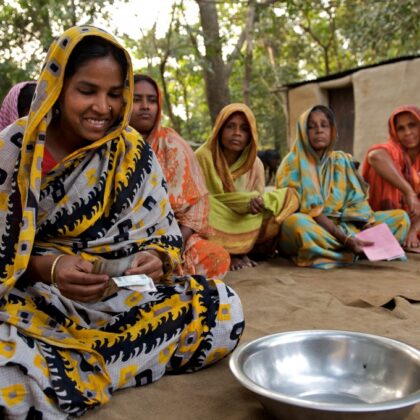
A central aim in the study of cooperation is to test whether mechanisms identified in theory and laboratory experiments operate in the messy conditions of human societies.…

Two research branches in evolutionary psychology can make similar predictions about treatment expectations in contexts of conflict of interest, where, for those involved, costs and benefits are at stake.…

Talk to me and I may listen! Dogs react differently to human verbal signals, depending on the original function of their breed Since the seminal paper by Topál et al.…

For decades, scientists have debated why Neanderthals didn’t seem to make much art. The usual answer? They just weren’t as cognitively advanced as us.…

In evolutionary biology, one of the most powerful ideas for explaining major leaps in complexity is the evolutionary transition in individuality (ETI).…

What can Pac-Man, Space Invaders, and Mortal Kombat teach us about cultural evolution? In shopping malls of the 1970s, arcades were where people played digital games together, huddled around custom-built cabinets.…

You may be familiar with the blowgun, which appears as a five-minute DIY, life-saving weapon in some popular movies and series (e.g.,…

Even though findings from genetics and other sciences unequivocally refute biological conceptions of race, this erroneous viewpoint remains widespread among the general public.…

Languages spoken by southern African foragers are easily identified by their iconic click consonants. In the past, these languages and their speakers were often referred to by the umbrella term “Khoisan”.…

For more on this topic, read the full article, Relationship between trackmakers of the Laetoli footprints from gait synchronization, by Wataru Nakahashi.…

Cross-cultural research in the social sciences is expanding rapidly, helping us understand how different cultures shape human behaviour. But here’s the big question: Are the tools we use actually measuring what we think they are in diverse populations? This issue of construct validity—ensuring research instruments truly capture what they are meant to—becomes even more complicated when studying children in diverse cultural settings. Our recent paper, Construct Validity in Cross-Cultural, Developmental Research: Challenges and Strategies for Improvement, reveals why this matters and how researchers can (try to, at least!) get it right
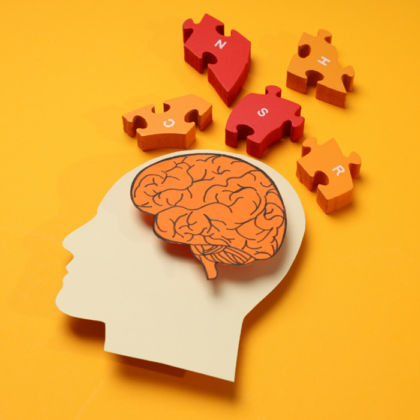
Verbal language, one of the hallmarks of human beings, enables us to express intricate thoughts, transmit cultural knowledge, and connect through generations. It is also one of the most studied domains in disciplines ranging from social sciences to neuroscience. Within this broad realm, the suffixing bias has turned out to be a particularly compelling phenomenon that continues to fascinate researchers as they attempted to provide an answer to the following question: Why do most world's languages use suffixes more than prefixes to convey grammatical meanings like tense or number? And what is this related to? Our general cognition? Is it language-specific? Or even an accidental distribution caused by some random factors that are not related to language cognition per se?
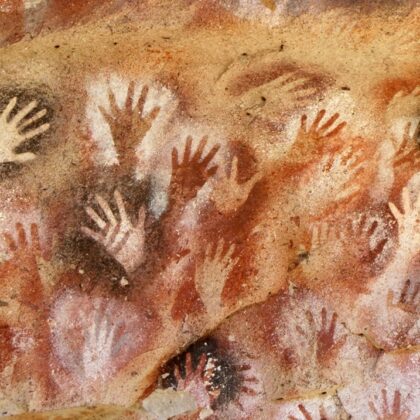
Most humans have a preference for—or display a better performance when—using their right hand. This bias has probably existed for around seven million years.

Grandmothers often help the mother-child dyad, but when does this help start? In our lives, we may see many people increase helping behaviors towards a close friend or family member when she has a child to offset her increasing needs. From an evolutionary perspective, these kin and non-kin helpers (or ‘allomothers’) buffer maternal workloads to increase the health and survival of the mother-child dyad. One critical category of allomother that has been studied extensively is grandmothers because of their child-care expertise as well as their often close geographic proximity and emotional connections to the dyad. Much of the research has focused on this allomaternal help at weaning, or more generally, after the child is born. However, given recent evidence that maternal conditions during pregnancy can alter birth outcomes and increase the risk of postnatal morbidities, more evolutionary research is needed to explore prenatal allomaternal effects.
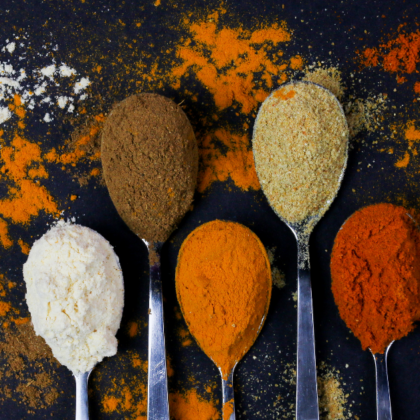
Is human cultural diversity partly shaped by the diversity of environments in which human societies live? Finding that a particular cultural feature is significantly associated with specific environmental variables adds weight to an argument that human diversity is shaped by environment. For example, many aspects of human cultural diversity have been found to correlate with parasite load, and these correlations have been interpreted as support for the hypothesis that cultures with high pathogen load develop features that limit the chance of infection, such as ritualized behaviours, xenophobia, belief in supernatural agents, and inclusion of antimicrobial ingredients in food.

As evolutionary human scientists, we care about causality. We usually want to know whether something causes something else, rather than whether things are just correlated. We want to know whether aspects of our culture, social structure or ecology cause a given behaviour, as opposed to being merely associated with it, for instance. Experiments are the gold standard for assessing causality, but for obvious reasons cannot answer everything, especially many of the evolutionary questions we’re interested in – Randomising infants to be raised as religious or not, for instance, would be both impossible and ethically questionable (to put it mildly!).
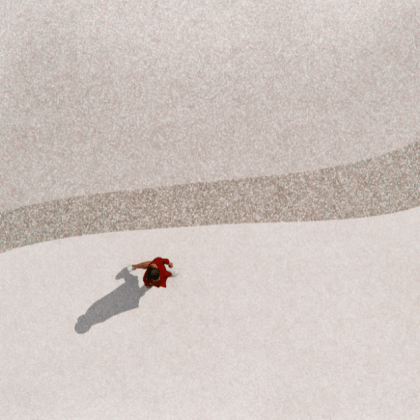
We are living in a world of increasing social divisions that shape the way we interact with one another. Do these social divisions also affect our health? After all, from children eating cake sprinkled with a bit of saliva from an over exuberant birthday boy to fans exchanging jeers and airborne particles at the championship game, our social behaviors are regularly seized on by pathogens as opportunities to infect new hosts. Beyond potential fodder for gossip on local message boards, the way that we interact with our neighbors may determine how infectious diseases spread between us. In our new paper “Social divisions and risk perception drive divergent epidemics and large later waves,” we develop a mathematical model to show how group differences in risk perception and behavior can transform how outbreaks unfold.

In a minority of societies, kinship follows the female line rather than the male line. The men in these matrilineal societies invest in their sisters’ offspring more than their own, which is a puzzle given that they are more related to the latter than the former.…

Evolutionary theory has long been used to explain species and sex differences, but individual differences in cognition and behaviour have mostly been left out of the picture.
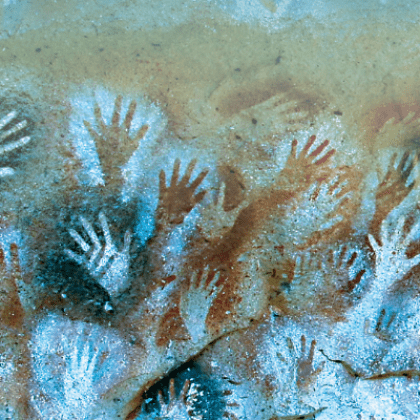
The languages we speak today are an incredibly rich record of the past. By analyzing the words they’re made up of, and the rules that guide how those words have evolved, we can gain insights into cultural contacts and the movements of peoples reaching back thousands of years.

Traditional models of conformity posit that individuals respond to the frequency of a behaviour amongst a social group only. This gives the impression that conformity functions like a rule-of-thumb to ‘always copy the majority’. This view does not align with recent research which shows that our use of social learning strategies is likely to be flexible. To extend this research, we ask whether an individuals’ decision to conform to the majority of a group will be flexible based on certain social information about the group from whom they learn.

Lansing is an American anthropologist and complexity scientist, currently a Fellow at the Center for Advanced Study in the Behavioral Sciences at Stanford University. His most recent book is Islands of Order (with Murray Cox), Princeton University Press.
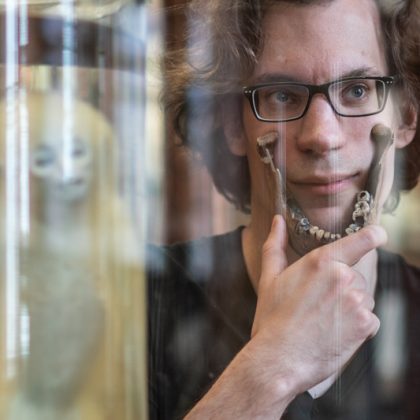
There are several studies which investigated how environmental harshness influences mate choice, in particular whether masculine or feminine faces are perceived as more attractive when the environment is harsh.
Evolution has shaped women’s ovulatory cycles to be characterised by complex recurring physiological processes of changing hormones and organ tissue. However, these changes often bring about unwanted aspects – be it premenstrual symptoms such as mood swings, feeling bloated or anxious, menstrual pain, or – still way too often – menstrual shame.…

There are literally hundreds, maybe even thousands of papers with the same introduction. Human cooperation. Enduring conundrum. Selection. Model. Prisoners’ dilemma.…
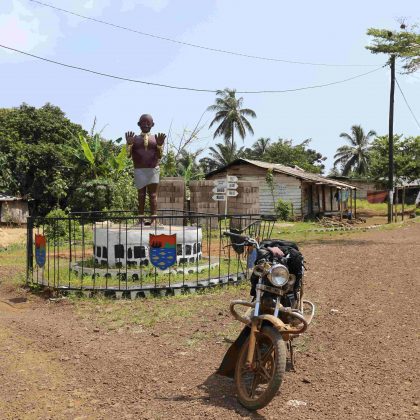
According to evolutionary theory of human attraction, facial traits which are perceived as attractive are honest cues of various aspects of biological fitness, in particular healthiness and fertility.…
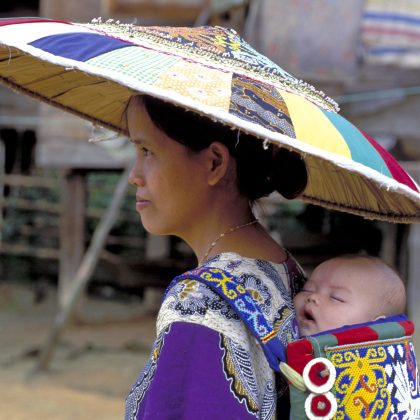
Evolutionary researchers have long puzzled over declining fertility rates wanting to understand the reproductive decision-making process. One critical question for this research is: ‘who decides’?
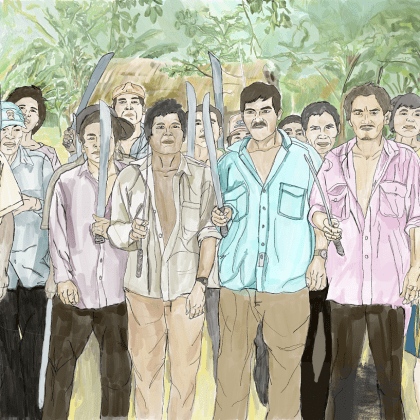
In the Bolivian Tsimané, who supports who during conflicts is affected by physical size, social status, and existing cooperative and antagonistic relationships.
In our recent article, Paula Sheppard and I tested the assumptions of life history theory, which is commonly used in evolutionary anthropology and related disciplines.…
The English language contains a wealth of insults and terms of abuse. Personal insults attack the core and immutable aspects of a person, such as their race, ethnicity, appearance, age, or a disability.…

Even though findings from genetics and other sciences unequivocally refute biological conceptions of race, this erroneous viewpoint remains widespread among the general public.…

The March article of Muses – the arts blog from BJPsych International is the first blog of the series. The blog is written by Dr Dami Ajayi, Specialty Doctor, Barnet Enfield and Haringey Mental Health NHS Foundation Trust and Trainee/Blog Editor, BJPsych International.…

Some disability-related names have dropped out of usage, because they are now considered to be offensive due to their origins. Down Syndrome (Trisomy 21) is one example.…

A few months ago, we responded to a call for papers for a themed issue for Advances in Archaeological Practice entitled “Advances in Archaeological Labor Management.”…

The Paper of the Month for March is ‘Impact of omega-3 fatty acid supplementation on clinical manifestations in autism spectrum disorders: an umbrella review of meta-analyses“.…

With the latest issue of the Journal of Classics Teaching off the press, we spoke to editor Professor Susan Deacy to find out what readers can expect, why this issue feels particularly timely, and how teachers, practitioners and researchers can get involved.…
How long will humankind survive? Besides the fact that we have been able to eliminate ourselves with nuclear weapons for decades, even without a third world war, the challenge to take care of the resources of our planet remains; we need to use them in a way that our children and their children can have a place on Earth as well. In this blog post Andreas Losch discusses his recent review article in the International Journal of Astrobiology, The need of an ethics of planetary sustainability


It is an article of faith among ordinary Filipinos that American troops will die with Filipino troops defending Philippine claims to the Spratly Islands in the South China Sea (SCS).…

Q&A with Editor-in-Chief of the Precision Medicine Journal, Dame Anna Dominiczak, for International day of Women and Girls in Science

More and more research is finding inflammation as a potential contributing factor towards to the development of various mental illnesses. A systematic review was conducted to determine the association between parasitic infection and mental illnesses in various African populations. Two parasite groups were evaluated; helminths and protozoans, and four mental illness classifications; depressive disorders, anxiety disorders, schizotypal disorders and unspecified mental illnesses.
The March article of Muses – the arts blog from BJPsych International is the first blog of the series. The blog is written by Dr Dami Ajayi, Specialty Doctor, Barnet Enfield and Haringey Mental Health NHS Foundation Trust and Trainee/Blog Editor, BJPsych International.…
This is the first post in our new series: “Conversations with Authors.” For our inaugural post, we asked Dr. Vesla Weaver to meet (virtually) with Dr.…

The English language contains a wealth of insults and terms of abuse. Personal insults attack the core and immutable aspects of a person, such as their race, ethnicity, appearance, age, or a disability.…


Listen to @BBCRadio4's Start the Week, featuring @NineDotsPrize winner @jkkusiak, talking about her book, 'Radically Legal'. Learn how a group of ordinary people inspired the book when they reclaimed over 240,000 apartments back from corporate landlords 🔗

Start the Week - ‘Left behind’, but not forgotten - BBC Sounds
Tom Sutcliffe with Paul Collier, Joanna Kusiak and Matthew Xia.
cup.org
Sparking curiosity from geopolitics in Japan to the cultural implications of AI!
Explore the seven new titles we are welcoming to Cambridge and the seven #OpenAccess titles we are launching in 2025 🚀 🔗 https://cup.org/3yhAuAx
Our Flip it Open programme has published titles from authors @GibbsSpike, @liederfollower and Inés Valdez!
Discover how we are funding the publication of #OpenAccess books without changing purchasing habits 🔗 https://cup.org/4diDHii


 ;
;


