Is human handedness the handiwork of kin selection?
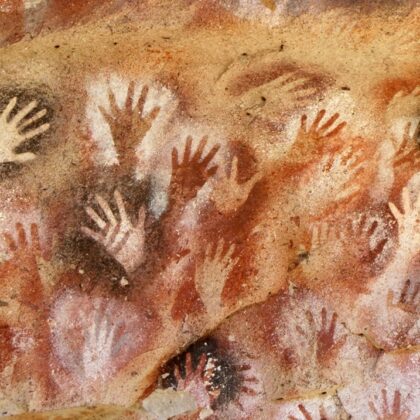
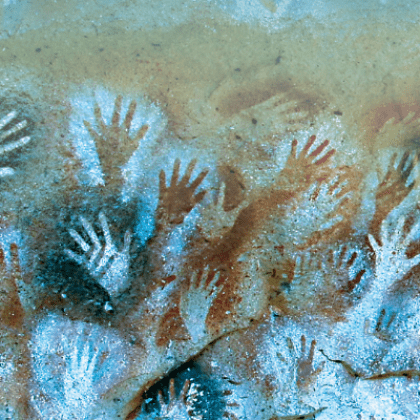
Most humans have a preference for—or display a better performance when—using their right hand. This bias has probably existed for around seven million years.

Most humans have a preference for—or display a better performance when—using their right hand. This bias has probably existed for around seven million years.

The languages we speak today are an incredibly rich record of the past. By analyzing the words they’re made up of, and the rules that guide how those words have evolved, we can gain insights into cultural contacts and the movements of peoples reaching back thousands of years.

Traditional models of conformity posit that individuals respond to the frequency of a behaviour amongst a social group only. This gives the impression that conformity functions like a rule-of-thumb to ‘always copy the majority’. This view does not align with recent research which shows that our use of social learning strategies is likely to be flexible. To extend this research, we ask whether an individuals’ decision to conform to the majority of a group will be flexible based on certain social information about the group from whom they learn.

Lansing is an American anthropologist and complexity scientist, currently a Fellow at the Center for Advanced Study in the Behavioral Sciences at Stanford University. His most recent book is Islands of Order (with Murray Cox), Princeton University Press.

There are several studies which investigated how environmental harshness influences mate choice, in particular whether masculine or feminine faces are perceived as more attractive when the environment is harsh.