

Permian water fleas reinterpreted as oldest record of clitellate worm cocoons
Clitellates (Clitellata: Annelida) are small, aquatic, segmented worms, including leeches and earthworms, that occupy many habitats from land, to freshwater, to oceans.…


Clitellates (Clitellata: Annelida) are small, aquatic, segmented worms, including leeches and earthworms, that occupy many habitats from land, to freshwater, to oceans.…

The bones of terrestrial vertebrates are often found in riverine sediments. However, this doesn’t always mean they were living nearby. The sheer nature of fluvial sediments means there is often a spectrum of distances travelled from origin to final deposition, especially when it comes to the interaction of bones with fluid flow.…

Mass extinctions, though destructive to ecosystems, provide unique opportunities for evolution to take an unexpected direction as a result of changes to available habitats and food resources.…

Pterygotids (Eurypterida; Pterygotidae), known more commonly as ancient sea scorpions, were large apex predators of the Silurian-Devonian marine realm, and included some of the largest arthropods in Earth’s history, with some species reaching up to 2.5 meters in length. They are the only family of eurypterids to be found globally in marine deposits owing to their domination of the Mid-Palaeozoic seas.

Fifty years ago, palaeontologists Niles Eldredge and Stephen Jay Gould published one of the most provocative ideas in evolutionary science: punctuated equilibria. In their 1972 paper, they argued that species don’t always evolve through slow, steady change. Instead, the fossil record shows long periods of stasis, times when species remain remarkably stable, interrupted by brief bursts of evolutionary innovation linked to the origin of new species.

When we picture mosasaurs, the giant marine reptiles that ruled the oceans during the Late Cretaceous, we often imagine long, snake-like monsters propelling through the water. But what did their tails really look like? The fossil record rarely preserves the soft tissues from which fins and muscles are constructed, leaving paleontologists with only bones to infer what these propulsive features may have looked like.

The Late Ordovician Mass Extinction (LOME) was the second largest mass extinction of the ‘Big Five’ extinctions in Earth’s history, responsible for the loss of approximately 85% of marine species. Following an important diversification in the middle Ordovician, crinoids experienced substantial loss during the LOME, and species saw a significant decrease in body size, known in paleontology as the ‘Lilliput Effect’.

The first geographically widespread animals in geological history appear in the Ediacaran period, in the Avalon assemblage, between 574 and 560 million years ago. The first animal communities were host to strange and unfamiliar organisms known as rangeomorphs and arboreomorphs, as well as more recognisable cnidarians (invertebrates like sea anemone and jellyfish).

From tenacious trilobites, to scavenging shrimp, for the last 500 million years of Earth’s history, marine arthropods have scuttled around the sea floor, forming a dominant part of the ocean’s ecosystem.…

Net winged beetles (Lycidae) are cosmopolitan pollinators, known for their intricate vein-like wing patterns and eye-catching colours, but behind these diverse delicate beetles lies an evolutionary enigma.…

The Brandon Bridge Formation Lagerstätte (site of exceptional fossil preservation) also known as the Waukesha Biota, from Wisconsin, is noteworthy for being one of the best sources of soft-bodied early Silurian fossils.…

Palaeontologists have known the fossil rich laminated platy limestones from Kozja dnina (Slovenia) since the beginning of the 20th century. Locality of Kozja dnina is situated in the Vrata valley in the north-eastern part of the Julian Alps.

The digit-like branches of Codium, or Dead Man’s Fingers, are a common sight in modern day salt-water bays and lagoons, particularly in areas impacted by fertilizer-rich runoff.…

Mayflies, present in many modern freshwater streams, are often known by their mass hatches in which large numbers gain wings and fly in the air for as little as one day to procreate before dying.…

The Early Jurassic meat-eating dinosaur Dilophosaurus wetherilli is a common figure of many dinosaur movies, books, art, and toys. The distinctive two crests on its head, for which Dilophosaurus owes its name, are unique among dinosaurs and make the animal fascinating to the fossil enthusiast and paleontologist alike.…

Researchers have discovered the first fossil of a Jurassic dinosaur from the Isle of Eigg in Scotland. The limb bone is thought to belong to a stegosaurian dinosaur, like Stegosaurus.…

Scientists are increasingly breaking away from the lab or leaving their computer screens to talk to the public about their research.…
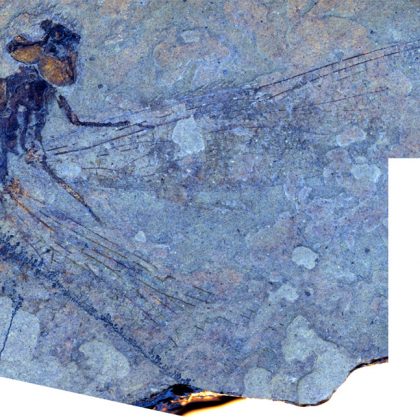
Paleontologists say these fossils can now help us understand the ancient history of these insects in our region. Six fossil dragonfly species, dating from about 50 million years ago, are the first from British Columbia and Washington to receive scientific names.…

Studying how biodiversity on our planet has developed through time and how it reacted to environmental changes would be relatively straight-forward if we could time-travel, as ecologists.…

A new special issue from the Journal of Paleontology, brings together a collection of 17 papers focused on different aspects of echinoderm paleobiology. Author David F. Wright discusses his article 'Bayesian estimation of fossil phylogenies and the evolution of early to middle Paleozoic crinoids (Echinodermata)'.
A new special issue of the Journal of Paleontology, published on 12th June 2017, brings together a collection of 17 papers focused on different aspects of echinoderm paleobiology.
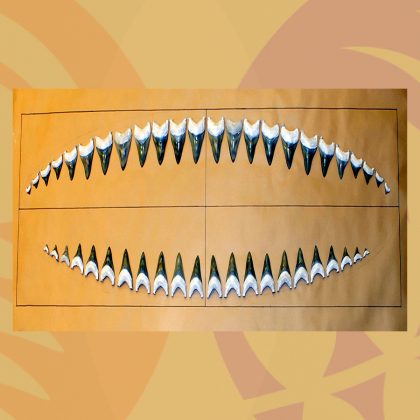
University of Florida researchers are taking down the Plexiglas walls between museum collections and K-12 classrooms with an educational program that uses 3-D printed fossils and hands-on lessons to spark young learners’ interest in science, technology, engineering and math. The researchers published an assessment of their pilot lesson plan in “Paleontological Society Special Publications” The study '3-D Fossils for K-12 Education: A Case Example Using the Giant Extinct Sharkcarcharocles Megalodon'
Q&A with Editor-in-Chief of the Precision Medicine Journal, Dame Anna Dominiczak, for International day of Women and Girls in Science


The English language contains a wealth of insults and terms of abuse. Personal insults attack the core and immutable aspects of a person, such as their race, ethnicity, appearance, age, or a disability.…

How long will humankind survive? Besides the fact that we have been able to eliminate ourselves with nuclear weapons for decades, even without a third world war, the challenge to take care of the resources of our planet remains; we need to use them in a way that our children and their children can have a place on Earth as well. In this blog post Andreas Losch discusses his recent review article in the International Journal of Astrobiology, The need of an ethics of planetary sustainability

Even though findings from genetics and other sciences unequivocally refute biological conceptions of race, this erroneous viewpoint remains widespread among the general public.…

Why understanding contemporary youth militancy demands history Al-Shabaab fighters patrolling Afgooye-Mogadishu road (2025) In civil war-era Somalia in the early 1990s, global media headlines about ‘stoned teenagers’ cruising Mogadishu on jeeps mounted with machine guns became synonymous with the construction of Somalia as a ‘chaotic African country’ in which one could be killed for nothing more than ‘the clothes on your back’ (New York Times, 1992).…

Some disability-related names have dropped out of usage, because they are now considered to be offensive due to their origins. Down Syndrome (Trisomy 21) is one example.…

In January, my husband and I (Sam) took our six-year-old daughter to get a flu shot at a local pharmacy. As she became increasingly bored in the waiting room, she began to offer commentary, asking the closed door, “Doctor, when are you coming out?”…
How long will humankind survive? Besides the fact that we have been able to eliminate ourselves with nuclear weapons for decades, even without a third world war, the challenge to take care of the resources of our planet remains; we need to use them in a way that our children and their children can have a place on Earth as well. In this blog post Andreas Losch discusses his recent review article in the International Journal of Astrobiology, The need of an ethics of planetary sustainability


It is an article of faith among ordinary Filipinos that American troops will die with Filipino troops defending Philippine claims to the Spratly Islands in the South China Sea (SCS).…

Q&A with Editor-in-Chief of the Precision Medicine Journal, Dame Anna Dominiczak, for International day of Women and Girls in Science

More and more research is finding inflammation as a potential contributing factor towards to the development of various mental illnesses. A systematic review was conducted to determine the association between parasitic infection and mental illnesses in various African populations. Two parasite groups were evaluated; helminths and protozoans, and four mental illness classifications; depressive disorders, anxiety disorders, schizotypal disorders and unspecified mental illnesses.

This is the first post in our new series: “Conversations with Authors.” For our inaugural post, we asked Dr. Vesla Weaver to meet (virtually) with Dr.…

The March article of Muses – the arts blog from BJPsych International is the first blog of the series. The blog is written by Dr Dami Ajayi, Specialty Doctor, Barnet Enfield and Haringey Mental Health NHS Foundation Trust and Trainee/Blog Editor, BJPsych International.…
The English language contains a wealth of insults and terms of abuse. Personal insults attack the core and immutable aspects of a person, such as their race, ethnicity, appearance, age, or a disability.…


Listen to @BBCRadio4's Start the Week, featuring @NineDotsPrize winner @jkkusiak, talking about her book, 'Radically Legal'. Learn how a group of ordinary people inspired the book when they reclaimed over 240,000 apartments back from corporate landlords 🔗

Start the Week - ‘Left behind’, but not forgotten - BBC Sounds
Tom Sutcliffe with Paul Collier, Joanna Kusiak and Matthew Xia.
cup.org
Sparking curiosity from geopolitics in Japan to the cultural implications of AI!
Explore the seven new titles we are welcoming to Cambridge and the seven #OpenAccess titles we are launching in 2025 🚀 🔗 https://cup.org/3yhAuAx
Our Flip it Open programme has published titles from authors @GibbsSpike, @liederfollower and Inés Valdez!
Discover how we are funding the publication of #OpenAccess books without changing purchasing habits 🔗 https://cup.org/4diDHii


 ;
;


