2014

rss
Combating illegal fishing in offshore marine reserves

Conservation scientists say there needs to be a new approach to protecting offshore marine reserves. Researchers at the ARC Centre of Excellence for Coral Reef Studies (Coral CoE) at James Cook University in Australia have found a way to predict illegal fishing activities to help authorities better protect marine reserves.…

Read more

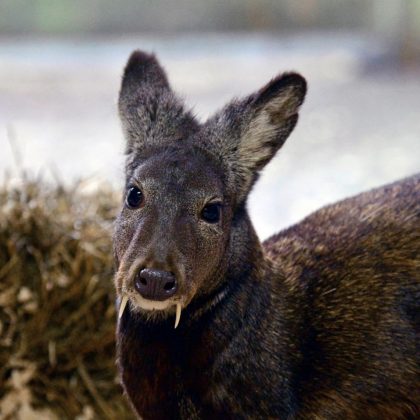
Fanged deer persists in Afghanistan

Wildlife Conservation Society study confirms that endangered musk deer still live in Nuristan Province – some 60 years after last sighting species targeted by poachers: Musk deer scent glands are more valuable than gold Study appears in the October issue of the journal Oryx.…
Read more

Reducing rumen protozoa mitigates methane emission

Livestock farming is responsible for 14.5% of total anthropogenic greenhouse gas emissions, with half of them represented by methane emissions, mostly produced by ruminants. In addition, enteric methane production by ruminants represents up to 6% of energy loss for the animal. Reduction of methanogenesis is then important to limit the negative environmental impacts of ruminants and to improve their feed efficiency.

Read more

The effect of heat damaged feed on pigs

Many of the feed ingredients that are used in formulating diets for pigs have gone through heating or drying to make the ingredient stable for conservation. However, every time heat is applied to a feed ingredient, there is a risk that the ingredient can be overheated, which will result in the Maillard reaction that induces heat damage to the ingredient.

Read more

Organically Grown Foods May Offer Greater Health and Safety than Foods Conventionally Grown

Scientists have long recognized the dangers of cadmium (Cd) exposure to the human body. Now, an invited commentary, place this finding in the context of the growing epidemiology linking Cd exposure to adverse health outcomes, and conclude that consistent consumption of organic foods over a lifetime could be expected to favorably influence health and mortality risk.

Read more

Land Use vs. Greenhouse Gas Emissions: Localising Livestock Feed Production

Soya beans is an important protein feedstuff for livestock. It is common practice that farmers would produce grains for livestock and import soya beans from other farms (mainly from South America). But this practice, which disconnects the production of grains and protein crops, reduces the effectiveness of some ecological functions (e.g. nutrient cycling and pest control) that could mitigate greenhouse gas (GHG) emissions from livestock production. Moreover, soya bean production and expansion in South America is linked to GHG emissions resulting from deforestation in that region.

Read more

Mixed crop-livestock farming systems: a sustainable way to produce beef?

Mixed crop–livestock farming has gained broad consensus as an economically and environmentally sustainable farming system. But while such a farming system could ideally reduce both the inputs needed for production as well as fluxes of nutrients towards the atmosphere and hydrosphere, there seems to be a gap between the conceptual model and observations in commercial farms

Read more