

Scientist offer important guidance for treating invasive plants after a wildfire
The period after a wildfire can offer a great window of opportunity for treating invasive plants. But scientists from the U.S.…


The period after a wildfire can offer a great window of opportunity for treating invasive plants. But scientists from the U.S.…

For more than a decade, growers have waged a high-profile battle against glyphosate-resistant pigweed. But pigweed is by no means the only weed resistant to glyphosate. …

Organic growers can face tough challenges when it comes to weed control. But new research published in the journal Weed Science shows weather conditions and well-timed cultural management techniques can make a big difference.…
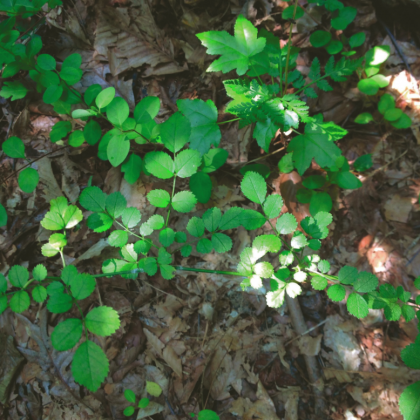
Which environmental factors are most important to the establishment of new plants of invasive species? Is it seed dispersal from existing plants?…

With the introduction of crops engineered for resistance to the auxin herbicides, concern has soared about unintentional injury to auxin-sensitive crops through off-target spray drift, volatility and spray tank contamination.…
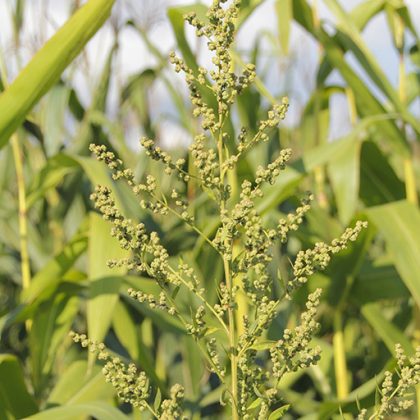
A study featured in the journal Weed Science is certain to keep many corn and soybean growers up at night. Researchers have identified a waterhemp population in Missouri that is resistant to a record-breaking six herbicide mechanisms of action.…

Australian farmers have long considered harvest-time weed seed control their “last chance” opportunity to battle herbicide-resistant weeds that survive in-crop treatments.…

Chinese privet is a common fixture in the southeastern United States – typically found growing in dense thickets along roadsides, on rights of way and in forests. …

Today genetically engineered, glyphosate-resistant crops are often singled out as a major contributor in the evolution of herbicide-resistant weeds. But a new data analysis featured in the journal Weed Science shows it may be time to revisit that common assumption.…

Scientists at Purdue University have just answered an important question that has plagued many corn and soybean growers. Why does mixing glyphosate with other selective herbicides sometimes fail to control glyphosate-resistant giant ragweed plants?…

Cover-crop mulch has long been the weed control tactic of choice for organic no-till corn and soybean systems. But new research featured in the journal Weed Science shows that adding new control tactics can deliver much better results.…
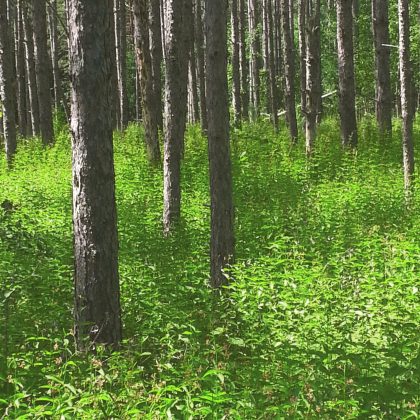
What if you could predict which nonnative plant species would become invasive weeds and when? Would it change your weed management plan?…

Since the U.S. EPA’s 2005 ban of methyl bromide, winter strawberry growers have faced a perplexing dilemma. How do you control those pesky broadleaf weeds, grasses and nutsedge species that emerge through the transplanting holes in polyethylene mulch?…
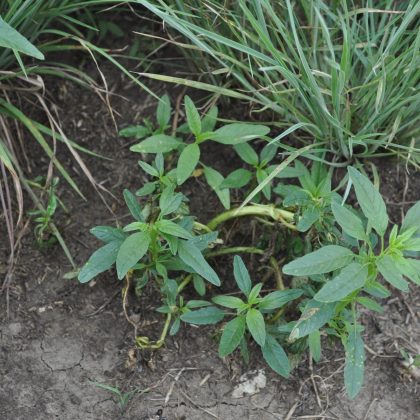
Waterhemp is already one of the most problematic weeds in the Midwest and South. But researchers writing in the latest edition of the journal Weed Science say its control challenges are getting even tougher. …

Lots of research has been conducted on the ecology and biology of invasive plants. But are we really any closer to understanding why some plant invaders succeed and others don’t?…

Scientists have discovered an important new reason to focus on removal of invasive plant species. A recent study featured in the journal Invasive Plant Science and Management shows that removing invaders alongside a stream or river can greatly improve the biodiversity of aquatic organisms.…
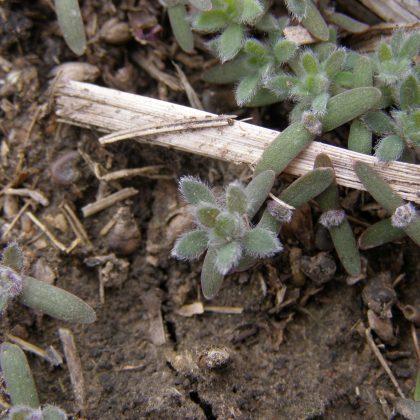
The latest issue of the journal Weed Science contains an article with intriguing new insights about the control of herbicide-resistant kochia, a weed that competes with both dryland and irrigated crops across the Great Plains states.…
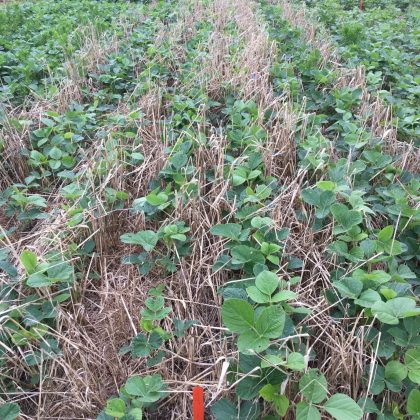
Fall-planted cover crops are frequently a component of integrated weed control programs in herbicide-resistant soybeans. But does it matter which cover crop is used?…
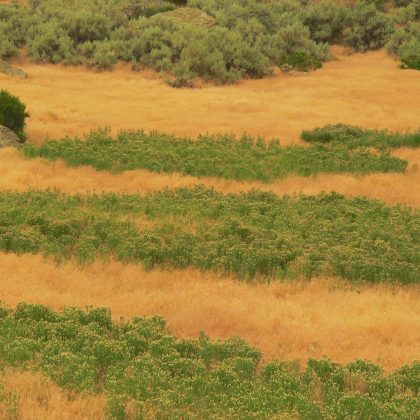
A recent study featured in the journal Invasive Plant Science and Management suggests it’s time to rethink control of Russian knapweed, an invasive plant classified as a “noxious weed” in 18 U.S.…

With the recent introduction of soybean and cotton traits resistant to synthetic auxin herbicides, farmers have new, much needed options for managing glyphosate-resistant broadleaf weeds. Researchers writing in the journal Weed Technology say use of the auxins isn’t without risk.

In a study featured in the most recent edition of Weed Science, a team of researchers tilled four fields every two weeks during the growing season.
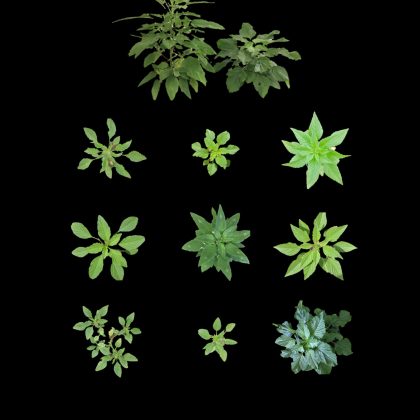
New research featured in the journal Weed Science, shows “life history” traits may be contributing to crop losses by making Palmer amaranth more aggressive and difficult to control.
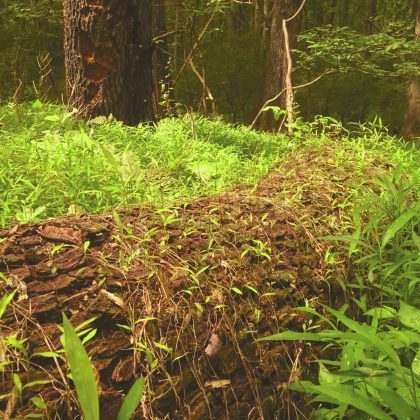
A new study featured in the journal Invasive Plant Science and Management shows the impact of weedy invaders can linger for years.

Scanning electron microscopic image of two spray hoses showing wear and possible adsorption sites for auxinic herbicides. See article by Cundiff et al.…
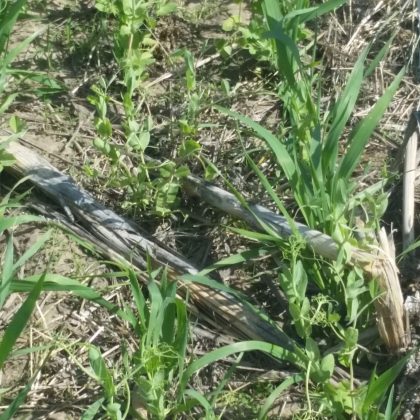
Cover crops are attracting widespread attention for the benefits they provide in crop rotations, especially for soil health. However, many growers of corn and soybean crops know it can be challenging to establish fall-seeded cover crops.

Researchers writing in the latest issue of the journal Weed Science provide important insights on the control of herbicide-resistant giant ragweed
Archaeology and cultural heritage work have fully entered the digital age. Today, researchers rely on tools like 3D scanners, a variety of GIS software, and Lidar equipped drones to document the past in ways that were unimaginable just a few decades ago.…


A critical milestone for the archaeological ecosystem has been the publication this April of the National Archaeology Plan (NAP), part of a larger framework for cultural heritage that the Spanish Ministry of Culture has been developing for almost 40 years.…

The English language contains a wealth of insults and terms of abuse. Personal insults attack the core and immutable aspects of a person, such as their race, ethnicity, appearance, age, or a disability.…

One year after publication, we look back at the first titles in David Tong’s Lectures on Theoretical Physics series.

Even though findings from genetics and other sciences unequivocally refute biological conceptions of race, this erroneous viewpoint remains widespread among the general public.…

The March article of Muses – the arts blog from BJPsych International is the first blog of the series. The blog is written by Dr Dami Ajayi, Specialty Doctor, Barnet Enfield and Haringey Mental Health NHS Foundation Trust and Trainee/Blog Editor, BJPsych International.…

Some disability-related names have dropped out of usage, because they are now considered to be offensive due to their origins. Down Syndrome (Trisomy 21) is one example.…
How long will humankind survive? Besides the fact that we have been able to eliminate ourselves with nuclear weapons for decades, even without a third world war, the challenge to take care of the resources of our planet remains; we need to use them in a way that our children and their children can have a place on Earth as well. In this blog post Andreas Losch discusses his recent review article in the International Journal of Astrobiology, The need of an ethics of planetary sustainability


It is an article of faith among ordinary Filipinos that American troops will die with Filipino troops defending Philippine claims to the Spratly Islands in the South China Sea (SCS).…

Q&A with Editor-in-Chief of the Precision Medicine Journal, Dame Anna Dominiczak, for International day of Women and Girls in Science

More and more research is finding inflammation as a potential contributing factor towards to the development of various mental illnesses. A systematic review was conducted to determine the association between parasitic infection and mental illnesses in various African populations. Two parasite groups were evaluated; helminths and protozoans, and four mental illness classifications; depressive disorders, anxiety disorders, schizotypal disorders and unspecified mental illnesses.
The March article of Muses – the arts blog from BJPsych International is the first blog of the series. The blog is written by Dr Dami Ajayi, Specialty Doctor, Barnet Enfield and Haringey Mental Health NHS Foundation Trust and Trainee/Blog Editor, BJPsych International.…

This is the first post in our new series: “Conversations with Authors.” For our inaugural post, we asked Dr. Vesla Weaver to meet (virtually) with Dr.…
The English language contains a wealth of insults and terms of abuse. Personal insults attack the core and immutable aspects of a person, such as their race, ethnicity, appearance, age, or a disability.…


Listen to @BBCRadio4's Start the Week, featuring @NineDotsPrize winner @jkkusiak, talking about her book, 'Radically Legal'. Learn how a group of ordinary people inspired the book when they reclaimed over 240,000 apartments back from corporate landlords 🔗

Start the Week - ‘Left behind’, but not forgotten - BBC Sounds
Tom Sutcliffe with Paul Collier, Joanna Kusiak and Matthew Xia.
cup.org
Sparking curiosity from geopolitics in Japan to the cultural implications of AI!
Explore the seven new titles we are welcoming to Cambridge and the seven #OpenAccess titles we are launching in 2025 🚀 🔗 https://cup.org/3yhAuAx
Our Flip it Open programme has published titles from authors @GibbsSpike, @liederfollower and Inés Valdez!
Discover how we are funding the publication of #OpenAccess books without changing purchasing habits 🔗 https://cup.org/4diDHii


 ;
;


