20th Century

(45) rss icon
Crushing anti-Fascism in the empire: judicial repression in Mussolini’s Libya

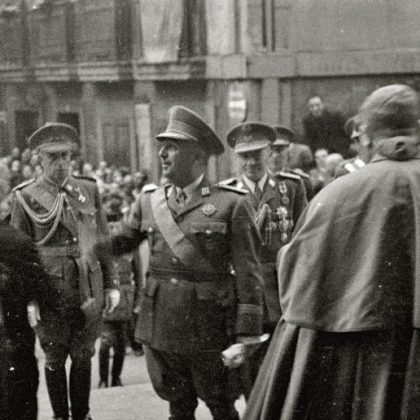
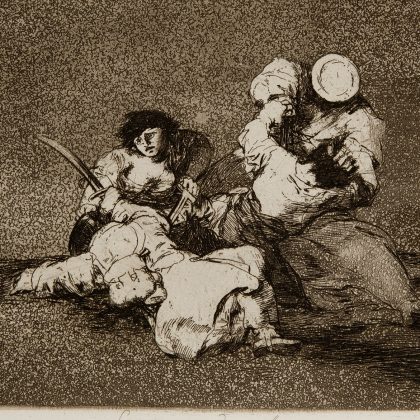
Fighting the enemies of Fascist Italy was a major concern for Benito Mussolini’s regime not only within the peninsular borders but also within the colonial administration. This was especially true in the colonial territories that constitute present-day Libya at the time of Fascist rule, where the Duce government established a branch of the Special Tribunal for the Defence of the State based in Rome, having an analogous composition and goal.

Read more

Queer Belfast during the First World War

I wrote this article to take this past more seriously on its own terms, and to understand how the political, religious, and economic context of Ireland and its diaspora shaped a culture that, for historians of sexuality, will be familiar yet distinctive.

Read more

CEH Prize winning article ‘From National Catholicism to Romantic Love. The Politics of Love and Divorce in Franco’s Spain’

The editorial team of Contemporary European History is delighted to announce the 2020 CEH Prize winner, Mónica García-Fernández (University of the Basque Country, Euskal Herriko Unibertsitatea), for her forthcoming article ‘From National Catholicism to Romantic Love. The Politics of Love and Divorce in Franco's Spain’.

Read more

A ‘Swedish Offensive’ at the World Fairs in the 1930s

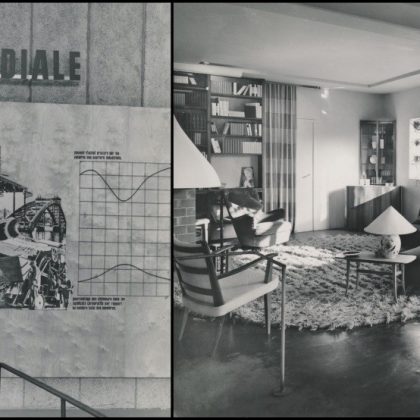
How does a country project a certain image of itself? What place have the advertising professions had in the history of cultural diplomacy? How have small countries attempted to attract the attention of foreign publics? Our research seeks to answer these questions, and the Swedish national pavilions at the world’s fairs in Brussels 1935, Paris 1937 and New York 1939 provide a very rich case study.

Read more

The Political Theory of American Populism

The study of the late nineteenth-century American Populist movement has long been one of the liveliest fields in American historiography. This stature definitely is fitting for one of the most formidable social movements in American history – and an uncomfortable outlier to today’s anti-populist consensus.

Read more

Comparing the First and Second Gilded Ages

Asking whether this era is a Second Gilded Age similar to the First Gilded Age, which began at the end of the Civil War and extended into the early twentieth century, creates a blind man and the elephant problem. Examining different parts of the era can yield disparate conclusions.

Read more

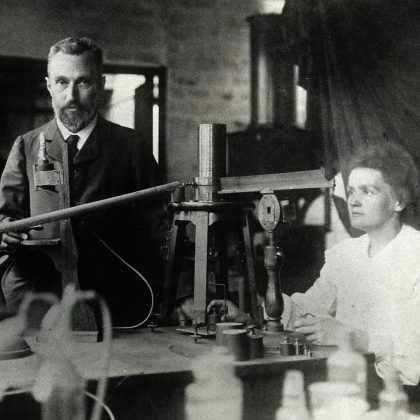
Sociability, radium and the maintenance of scientific culture and authority in 20th century Ireland: a case study of the Royal Dublin Society

The discovery of radium in 1898 spurred a range of public, industrial and scientific reactions. The public were enthralled by this near mystical element. Its ability to produce its own energy soon gave rise to a ‘radium craze’ in which promises of its health-giving properties were prominent. A range of supposed radium-based products, such as creams and fortified water, were quickly on sale.

Read more

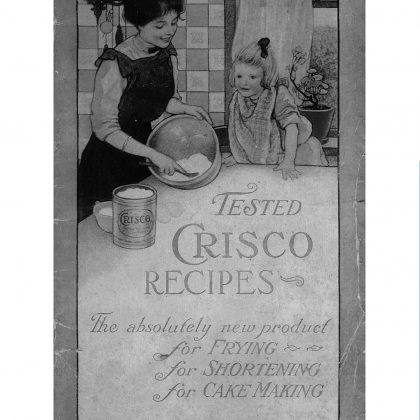
Food Studies and the Gilded Age and Progressive Era

The kind of research and development in commercial food products that began in this era has clearly shaped our world today, not just in the products that we expect to see on market shelves but in our continual anticipation that there will be new products soon and that they will be improvements on the old ones...

Read more

The White Ant’s Burden

My article explores the different meanings of termites, or white ants, for the British empire in India... and shows how South Asians in the 19th and 20th centuries themselves internalised the British imperial rhetoric of white ants to pursue their own distinct political agendas.

Read more