Agriculture

(87) rss icon
Developing a novel machine learning-based index (ISA) for reproductive cow selection for wetlands

Traversing a time marked by frequent revisionist intentions, the revaluation of findings, and the high speed of information suggested by modern algorithms, we recognise the real need to incorporate different approaches into the strong bioenvironmental system, shaped by the fundamental interaction between cattle–environment–humans, with branches leading towards strategic aspects of today, such as: the production of animal-based protein, the rational use of sensitive environmental systems, animal welfare, traditional socio-economic sectors, alongside the powerful tools of artificial intelligence, inferential statistics, and mathematical equations.

Read more

Harvest management strategies for tall and dwarf elephant grass genotypes

Elephant grass [Cenchrus purpureus (Schum.) Morrone] is an outstanding forage crop widely used in tropical regions due to its high biomass yield and climatic adaptability. However, considerable variability exists among cultivars, making it essential to understand how the management of genotypes with differing in stem elongation potential can impact forage accumulation and quality for ruminants

Read more

The Future of Global Corn Production: A Data-Driven Outlook

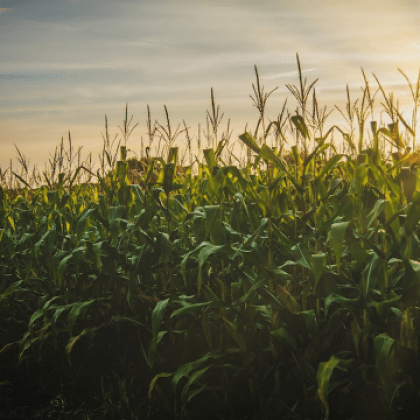
Corn (Zea mays L.) is one of the world’s most vital crops, supporting food security, livestock feed, and biofuel industries. Since 1960, the global corn harvested area has undergone significant transformations driven by technological advances, economic shifts, and environmental constraints. In our recent study, Global Corn Area from 1960 to 2030: Patterns, Trends, and Implications, we analyzed over 60 years of data and used 1,000 ARIMA models to project future trends, providing critical insights for policymakers, researchers, and the agricultural sector.

Read more

Intensive Grazing: Maximising Pasture Potential and Animal Performance Through Infrastructure

Grazing pasture provides a highly nutritious, low cost feed and energy supply for ruminant animals, while also converting a human inedible feed source into a human edible feed source in the form of meat and dairy products. However, to efficiently convert the pasture into animal products requires optimal management practices in pasture based production systems. Two of the fundamental requirements for pasture based systems, are rotational grazing and optimal roadway networks for animal movement on the farm.

Read more

Sainfoin: A Climate-Resilient Super Forage for the Future

As the world copes with the impacts of climate change, sustainable agriculture and resilient crops are more important than ever. Enter Onobrychis viciifolia (commonly known as sainfoin), a versatile forage legume that could be a game-changer for ecosystems and agriculture in the face of rising temperatures and unpredictable weather patterns.

Read more

Bridging the Yield Gap: Lessons from Brazil to Boost Maize Production in Sub-Saharan Africa

A recent study by Leticia G. Gasparotto and colleagues from the University of São Paulo explores how Brazil's agricultural advancements can help close this yield gap in SSA. The yield gap refers to the difference between the potential yield under ideal conditions and the actual yield achieved by farmers. In Brazil, the yield gap for maize is about 50% of its water-limited yield potential. In SSA, this gap is much larger, with actual yields representing only about 9% of the potential.

Read more

Essential oils improve gut histomorphometry and performance of broilers: systematic review and meta-analysis

In the last few years, the interest for the development of feed additives has significantly increased, with the essential oils emerging as a promising alternative for the substitution of antibiotics in animal production. The interest in the search for alternatives to antibiotics in poultry production has been increasing, especially with the focus on essential oils due to their remarkable bioactive properties. This interest is based on the biological properties of the essential oils, such as antimicrobial, antioxidant, anti-inflammatory and immunomodulatory activities.

Read more

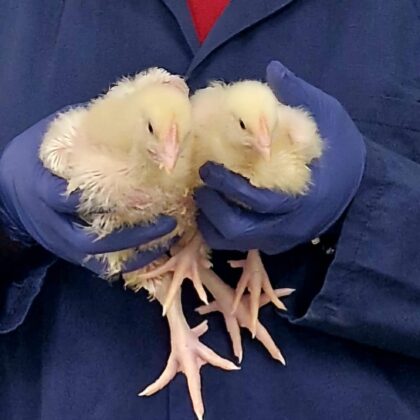
A tale of two chickens; Understanding the physiological and transcriptomic differences associated with bodyweight in broilers

The contemporary broiler chicken exhibits an impressive growth rate and robust constitution under commercial production systems resulting in an economical and high quality protein source. Broiler chickens are selectively bred to produce an animal which displays predictable growth performance and hence a high level of flock uniformity.

Read more

World Soil Day December 5th

December 5th is World Soil Day. Recommended by the International Union of Soil Sciences in 2002, the establishment of World Soil Day was led by the Kingdom of Thailand as part of the Global Soil Partnership—it was formally adopted by the UN General Assembly after endorsement by the FAO in December 2013.…

Read more

From Waste to Harvest: Exploring the Use of Human Waste in Agriculture

To recognize World Toilet Day, Renewable Agriculture and Food Systems is featuring a series of four articles reviewing the use of human waste in agriculture. They investigate what drives growers to use human waste as a fertilizer supplement, particularly in sub-Saharan Africa, along with the potential benefits and risks of such use. One study also looks at US growers’ perceptions of recycled water and municipally treated wastewater, including how different understandings impact risk and willingness of use.

Read more

World Bee Day

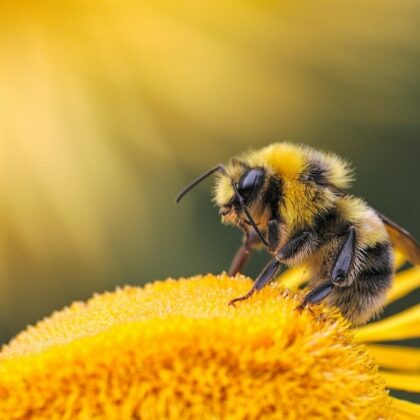
Monday, May 20th is World Bee Day.  Designated by the United Nations in 2017, World Bee Day recognizes the urgent need to protect bees and other pollinators in support of innovative, coordinated, and environmentally sound sustainable development. Bees and other pollinators provide key services in sustainable agriculture systems that support human livelihoods, nutrition, and food security.

Read more

Maximising beef cattle growth on our cheapest feed resource

The paper “Effect of pre-grazing herbage mass and post-grazing sward height on herbage production and intake and performance of suckler-bred steers within a weanling-to-beef production system“, published in The Journal of Agricultural Science, has been chosen as the latest Editorial Highlight and is freely available to download for one month.…

Read more

Mitigation of nitrogen pollution in rivers using aerobic biological denitrification

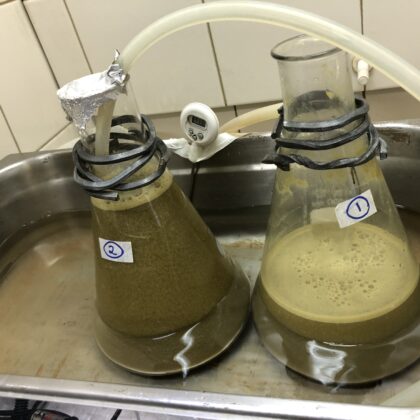
The paper “Aerobic ammonia removal with heterotrophic nitrification and denitrification of Alcaligenes faecalis strain No.4 to mitigate nitrogenous pollution caused by piggery wastewater: a feasibility study”, published in The Journal of Agricultural Science, has been chosen as the latest Editorial Highlight and is freely available to download for one month.…

Read more

Analysing seed germination and emergence data with R

Germination/emergence assays are relatively easy to perform, by following clear and standardised procedures. Most often, we take samples of seeds and we put them in Petri dishes/boxes/pots in some selected conditions (relating to, e.g., humidity content, light and temperature). We inspect those containers according to a tight schedule (e.g., daily) and, at each inspection, we count the number of germinated/emerged seeds and remove them from the containers.

Read more

Impact of missing data on animal social networks

The paper “Network analysis of tail-biting in pigs – the impact of missed biting events on centrality parameters”, published in The Journal of Agricultural Science, has been chosen as the latest Editorial Highlight and is freely available to download for one month.…

Read more

Many hands breed better crops

Why would farmers in the Global North take time to work on plant breeding when they are busy farming with access to markets and can buy seed of modern varieties in catalogs? The authors of the paper, “Exploring the emergence of participatory plant breeding in countries of the global North - a review”, set out to answer that question and discovered much more.

Read more

Organic smallholders are cultivating resilient rice systems

In the Philippines, organic rice systems are proving to be more climate resilient than conventional rice systems. This is according to a Self-evaluation and Holistic Assessment of climate Resilience of farmers and Pastoralists (SHARP), a methodological tool developed by a team at the United Nations’ Food and Agriculture Organization.…

Read more

‘Lost city’ used 500 years of soil erosion to benefit crop farming

Researchers at the University of York working on a 700-year old abandoned agricultural site in Tanzania have shown that soil erosion benefitted farming practices for some 500 years. The study, published in Quaternary Research, shows that historical practices of capturing soils that were eroded from the hillside could be valuable to modern day farming techniques.

Read more

Cultivating Urban Agriculture in the USA

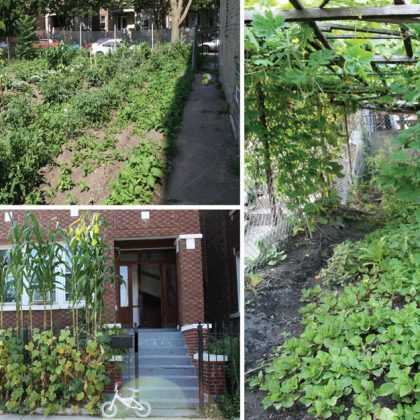
Local food was once considered the purview of consumers and small-scale producers. Recently, policymakers, including those in cities, began embracing local food systems as a solution to a myriad of urban problems, including a lack of green space and access to healthy foods. As part of this shift, cities and other jurisdictions have embraced agricultural production in the urban environment

Read more

Organically Grown Foods May Offer Greater Health and Safety than Foods Conventionally Grown

Scientists have long recognized the dangers of cadmium (Cd) exposure to the human body. Now, an invited commentary, place this finding in the context of the growing epidemiology linking Cd exposure to adverse health outcomes, and conclude that consistent consumption of organic foods over a lifetime could be expected to favorably influence health and mortality risk.

Read more

Growing Organically: A 30 year retrospective

Dr. Garth Youngberg and Suzanne DeMuth have made a fundamental contribution to the literature on organic and sustainable agriculture with the recently published first view article: ‘Organic Agriculture in the United States: A Thirty-Year Retrospective’.…

Read more