

New assessment of bird species of European conservation concern underlines urgent need for restoration
A new paper in BCI reveals that 38% of Europe’s 546 bird species are of conservation concern, including 14% of global concern.…

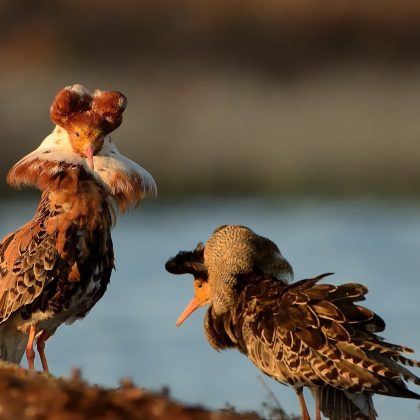
A new paper in BCI reveals that 38% of Europe’s 546 bird species are of conservation concern, including 14% of global concern.…

2023 is set to be another landmark year for the journal, as a new contract between BirdLife International and Cambridge University Press coincides with a move to continuous, online-only publication, benefitting not only authors but also the range of conservation practitioners and decision-makers reliant on their important research.
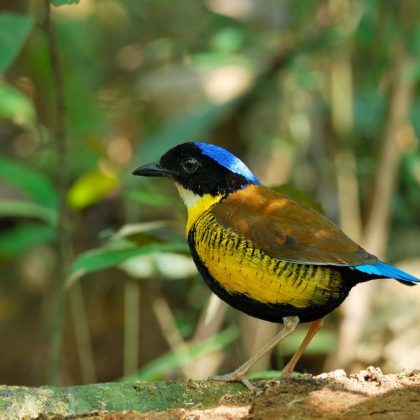
Tropical forests harbour a very high proportion of the planet’s terrestrial biodiversity, supporting wildlife communities that are more diverse and more species-rich than any other habitat.
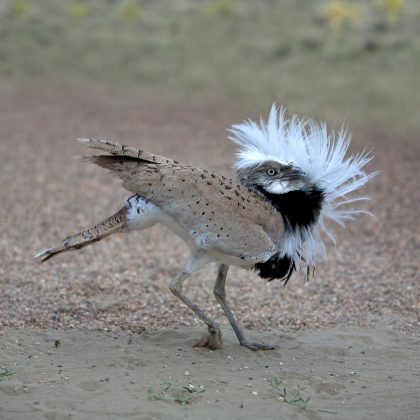
Bustards are deeply challenging birds to conserve. Their grassland habitats are in irresistible demand for food production—both agriculture and livestock—throughout their ranges in the Eastern Hemisphere.

Over 50 million waterbirds of more than 200 species migrate along the East Asian-Australasian Flyway (EAAF) each year. However, many of their populations have declined severely in recent decades.

Through their travels, migratory birds link countries and continents. Many populations of migratory birds are in decline and more than 200 species are currently globally threatened.…

Vultures are keystone species that perform a vital ecosystem service by disposing of carrion. Veterinary use of the painkilling drug diclofenac to treat livestock has caused the collapse of vulture populations throughout South Asia, with dramatic ecological and socio-economic consequences.

Direct exploitation of organisms has been recognised as the second biggest driver of global extinction risk, and over a third of all bird species may be affected by international trade. Trade in living or dead birds taken from the wild is a multi-billion dollar industry that represents a major direct threat to the survival of many species and is a source of invasive species and zoonotic diseases. However, it has also been argued that trade may be sustainable in some areas, making important contributions to livelihoods and the viability of natural areas.

For more than 40 years, the Important Bird and Biodiversity Areas (IBA) programme of BirdLife International has aimed to identify, document, safeguard, manage and monitor a network of sites of international significance for birds. The global list now extends to more than 13,500 IBAs, and is among the most extensive site-based, spatially explicit, systematically rigorous biodiversity datasets yet compiled.
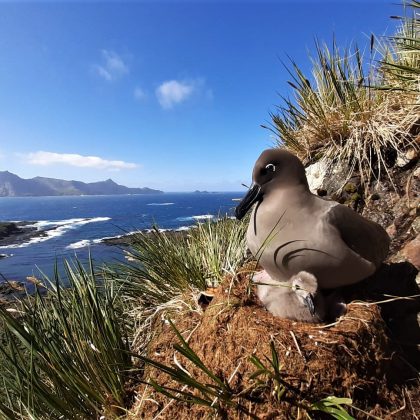
To celebrate World Albatross Day on 19 June 2022, this month’s third centenary collection of BCI papers focuses on the theme of seabirds and bycatch.…

Evidence of hunting, harvesting and persecution of wild birds dates back to the earliest of human societies. However, as human populations have grown, and technologies have advanced, the exploitation of wild birds has increased dramatically.…
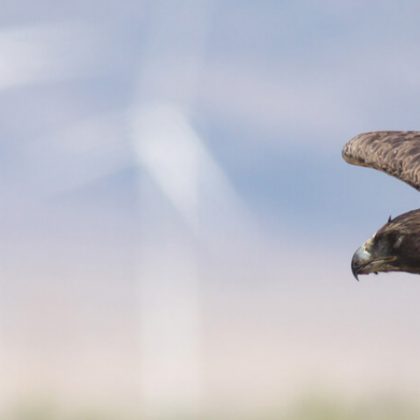
Our ever-spreading infrastructure of housing, industry, water, energy and transport networks is destroying and degrading natural habitats. Artificial structures of various kinds, from fences to cell-phone masts, and electricity power lines to wind farms, pose a direct threat to many birds.…

The BCI Centenary Collections 2022 marks 100 years since the founding of the International Council for Bird Preservation (ICBP) – now BirdLife International, the largest international partnership for nature conservation.…
The English language contains a wealth of insults and terms of abuse. Personal insults attack the core and immutable aspects of a person, such as their race, ethnicity, appearance, age, or a disability.…


As Christopher Nolan's 'The Odyssey' reaches cinemas, explore the scholarship behind one of history's most enduring and influential stories.

Even though findings from genetics and other sciences unequivocally refute biological conceptions of race, this erroneous viewpoint remains widespread among the general public.…

Some disability-related names have dropped out of usage, because they are now considered to be offensive due to their origins. Down Syndrome (Trisomy 21) is one example.…

The March article of Muses – the arts blog from BJPsych International is the first blog of the series. The blog is written by Dr Dami Ajayi, Specialty Doctor, Barnet Enfield and Haringey Mental Health NHS Foundation Trust and Trainee/Blog Editor, BJPsych International.…

Archaeology and cultural heritage work have fully entered the digital age. Today, researchers rely on tools like 3D scanners, a variety of GIS software, and Lidar equipped drones to document the past in ways that were unimaginable just a few decades ago.…

A few months ago, we responded to a call for papers for a themed issue for Advances in Archaeological Practice entitled “Advances in Archaeological Labor Management.”…
How long will humankind survive? Besides the fact that we have been able to eliminate ourselves with nuclear weapons for decades, even without a third world war, the challenge to take care of the resources of our planet remains; we need to use them in a way that our children and their children can have a place on Earth as well. In this blog post Andreas Losch discusses his recent review article in the International Journal of Astrobiology, The need of an ethics of planetary sustainability


It is an article of faith among ordinary Filipinos that American troops will die with Filipino troops defending Philippine claims to the Spratly Islands in the South China Sea (SCS).…

Q&A with Editor-in-Chief of the Precision Medicine Journal, Dame Anna Dominiczak, for International day of Women and Girls in Science

More and more research is finding inflammation as a potential contributing factor towards to the development of various mental illnesses. A systematic review was conducted to determine the association between parasitic infection and mental illnesses in various African populations. Two parasite groups were evaluated; helminths and protozoans, and four mental illness classifications; depressive disorders, anxiety disorders, schizotypal disorders and unspecified mental illnesses.
The March article of Muses – the arts blog from BJPsych International is the first blog of the series. The blog is written by Dr Dami Ajayi, Specialty Doctor, Barnet Enfield and Haringey Mental Health NHS Foundation Trust and Trainee/Blog Editor, BJPsych International.…

This is the first post in our new series: “Conversations with Authors.” For our inaugural post, we asked Dr. Vesla Weaver to meet (virtually) with Dr.…

The English language contains a wealth of insults and terms of abuse. Personal insults attack the core and immutable aspects of a person, such as their race, ethnicity, appearance, age, or a disability.…


Listen to @BBCRadio4's Start the Week, featuring @NineDotsPrize winner @jkkusiak, talking about her book, 'Radically Legal'. Learn how a group of ordinary people inspired the book when they reclaimed over 240,000 apartments back from corporate landlords 🔗

Start the Week - ‘Left behind’, but not forgotten - BBC Sounds
Tom Sutcliffe with Paul Collier, Joanna Kusiak and Matthew Xia.
cup.org
Sparking curiosity from geopolitics in Japan to the cultural implications of AI!
Explore the seven new titles we are welcoming to Cambridge and the seven #OpenAccess titles we are launching in 2025 🚀 🔗 https://cup.org/3yhAuAx
Our Flip it Open programme has published titles from authors @GibbsSpike, @liederfollower and Inés Valdez!
Discover how we are funding the publication of #OpenAccess books without changing purchasing habits 🔗 https://cup.org/4diDHii


 ;
;


