

Between Rome, Berlin and Brussels: Rexism and the Circulation of Fascist Models in Europe
On 10 July 1938, several thousand supporters of the Rexist movement gathered in the Flemish village of Lombeek-Notre-Dame, on the outskirts of Brussels.…


On 10 July 1938, several thousand supporters of the Rexist movement gathered in the Flemish village of Lombeek-Notre-Dame, on the outskirts of Brussels.…

In June 2025, German foreign minister Johann Wadephul (CDU) gave a keynote speech at the annual dinner of the Arthur F.…

“Joey: Anyway, I started on what I’m gonna say for the ceremony. You want to hear it? Monica: Yeah. Joey: Listen, this is just the first draft, so… “We gathered here today on this joyous occasion to celebrate the special love that Monica and Chandler share” Eh?…
It’s always nice to receive a gift. However, receiving a gift that permanently transforms the living conditions of a significant proportion of society is disruptive, much like a product or process innovation.…

The First World War is often described as the moment when the United States government started its first attempts to design and implement a coordinated, though still germinal, form of public diplomacy.…

In February 2025, Ukrainian President Volodymyr Zelensky visited the White House seeking continued military and economic support for his embattled country from the incoming second Trump administration.…

As far-right extremism surges across Europe, the editors of Contemporary European History have been searching through the journal’s archives to see what we have published on the topic over the years.…

As we – like many other journals – transition towards digital-only publication, we have become acutely aware of how difficult it can be to find out what is happening with Contemporary European History. …

The Scottish Farm Servant is not a well-known journal. Established in 1913, amongst the wider maelstrom of the ‘Labour Unrest’, the journal served as the official organ of the Scottish Farm Servants Union (SFSU) and was explicitly aimed towards Scotland’s agricultural labour force.…

The history of European imperial agriculture has often been told through the lens of technological innovation, such as the development of the agricultural automotive industry or the application of advanced irrigation systems.…
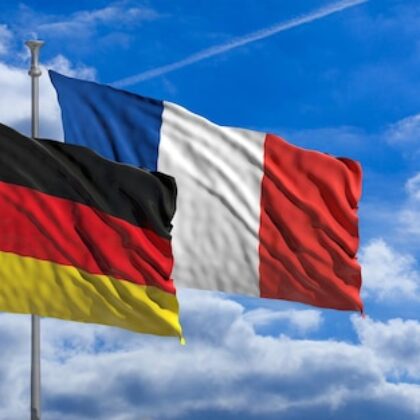
When the Franco-German Brigade (FGB) was established in 1989, it was hailed as a unique experiment in postwar Europe. Never before had soldiers from two former enemies served permanently under a shared command structure in times of peace.…

As we – like many other journals – transition towards digital-only publication, we have become acutely aware of how difficult it can be to find out what is happening with Contemporary European History.…

Contemporary European History's 2022 prize-winner, Luca Provenzano, wrote a blog introducing the argument of his (prize-winning) article.
In 2020, the city of Rijeka, which is located in the Kvarner gulf in present-day Croatia, was awarded the title of European Capital of Culture. Although the Covid surge heavily affected the cultural programmes, Rijeka’s multi-layered history has still proved able to stir up historical controversies.

This reflection was prompted by my research into Poland's display at the International Labour Exhibition Turin in 1961 which is the subject of my current article. An unassuming symbol of a stick figure placed within parentheses was designed by a creative duo Wojciech Zamecznik and Jan Lenica.
The times they are a-changing, Bob Dylan once noted, and so are the concepts we use to make sense of the world.…

In 1978, an internal report by the Securitate, the Romanian political police, openly blamed the National Office for Tourism-Carpathians (ONT-Carpathians), the state agency in charge of running tourism, of ‘commercialism’.

Myers’s work excavates how the subjective shock of the end of a long-standing model of the organized industrial workplace in Italy manifested as a disruption of people’s sense of temporal continuity.

Fighting the enemies of Fascist Italy was a major concern for Benito Mussolini’s regime not only within the peninsular borders but also within the colonial administration. This was especially true in the colonial territories that constitute present-day Libya at the time of Fascist rule, where the Duce government established a branch of the Special Tribunal for the Defence of the State based in Rome, having an analogous composition and goal.
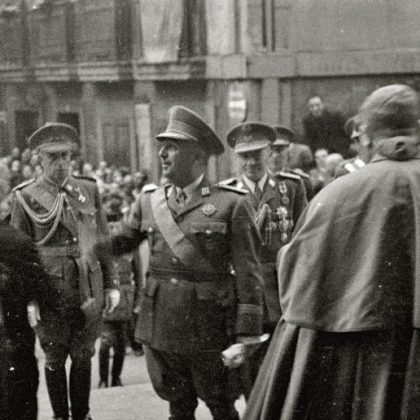
Between 1945 and 1953, scores of former fascists flocked to the Spanish capital; initially, they were just looking for a safe lay-over in their escape from Allied justice.
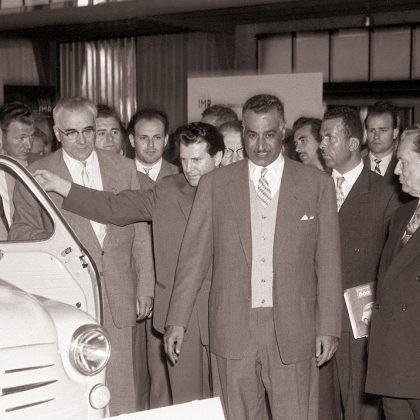
The aim of this special issue is to study the Middle East and Eastern Europe, including South-Eastern Europe, as one interwoven space and to use it as a laboratory to explore conceptual issues regarding modern societal transnational and state international history.…

"...interdependence was seen both as an opportunity and a threat in the relations between smaller non-oil producing countries such as Yugoslavia and the rich Middle East."

What I show is that, due to an Orientalist take on South Yemen and Dhofar, the Soviet side widely failed to appreciate the political importance and potential of socialist currents in the Middle East, reducing cooperation to a selfish ‘pragmatism’.

The existence of this institution invites a number of questions about the early 20th century relations between the Austro-Hungarian and the Ottoman empires, from economy to politics.
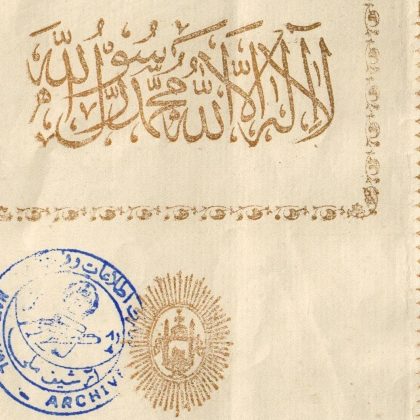
Diplomatic historians have long pointed out that the early months of 1921 featured the culmination of a campaign of Soviet revolutionary diplomacy in which Moscow established diplomatic relations with newly reinstated governments in Ankara, Tehran and Kabul.
The editorial team of Contemporary European History is delighted to announce the 2020 CEH Prize winner, Mónica García-Fernández (University of the Basque Country, Euskal Herriko Unibertsitatea), for her forthcoming article ‘From National Catholicism to Romantic Love. The Politics of Love and Divorce in Franco's Spain’.
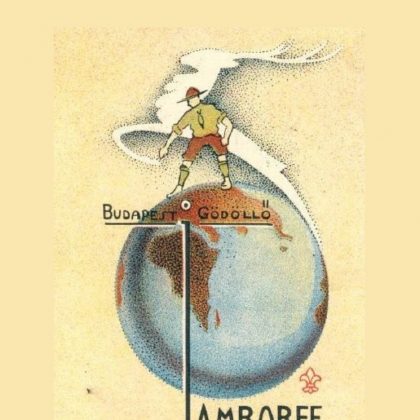
This event was designed to boost Hungary’s international image as part of an ambitious cultural diplomatic campaign led by the Hungarian government in the 1930s.
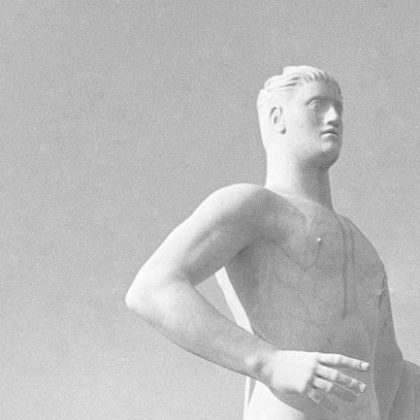
...the cultural treaties Mussolini signed in February 1935 applied state power to international cultural exchange, and mobilised the idea of ‘culture’ itself, in ways that were new – and that would prove influential long after his fascist regime had fallen.

As the expansion of Spanish culture in interwar Europe shows, however, state efforts were not the only means of success for cultural promotion abroad.

PEN’s 1927 charter encapsulated both the tensions between and the interrelatedness of nationalism and internationalism which permeated the political and cultural spheres in the interwar period.
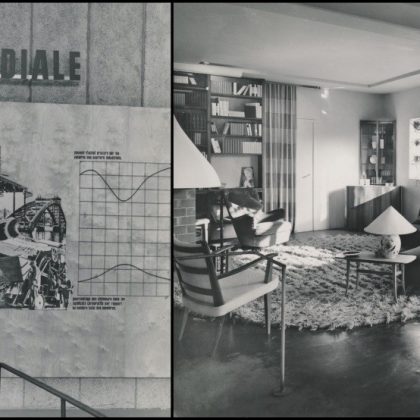
How does a country project a certain image of itself? What place have the advertising professions had in the history of cultural diplomacy? How have small countries attempted to attract the attention of foreign publics? Our research seeks to answer these questions, and the Swedish national pavilions at the world’s fairs in Brussels 1935, Paris 1937 and New York 1939 provide a very rich case study.

My article tells the story of how Germany and Poland cooperated on a common summer camp exchange for each other’s borderland children from Upper Silesia between 1924 and 1939.

most of the core practices of modern cultural diplomacy emerged in a period of desperate military and economic danger: the period between the world wars that E. H. Carr famously called ‘the twenty years’ crisis’.
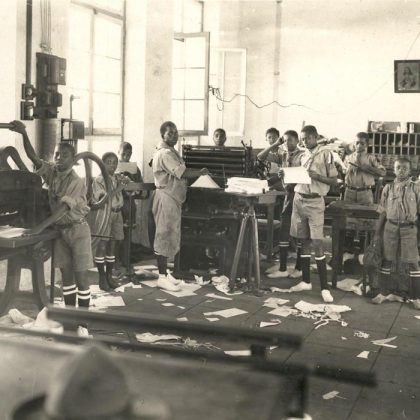
The editors of Contemporary European History are delighted to announce the results of the 2019 CEH Prize, which was set up to encourage, recognize and promote high-quality research among postgraduate and early career scholars.…

A look through the Contemporary European History (CEH) archives shows that the journal has led the charge to reevaluate the meaning of 1989 and the fall of the Berlin Wall.
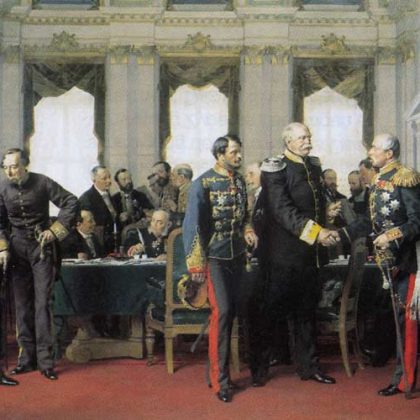
The nineteenth century just isn’t what it used to be. Any number of indicators – from academic job postings and doctoral dissertations to journal articles and conference panels –suggest that interest in the nineteenth century among historians of Europe has been declining over the past three decades.…

The editors of Contemporary European History are delighted to present this roundtable on the Soviet famines of the 1930s, which brings into conversation leading scholars from around the world working in the field of Soviet history.

Last year marked the anniversary of two of the most important scholarly debates about modern German history and the Holocaust: the so-called Historikerstreit (“historians’ quarrel”) that erupted thirty years ago in West Germany, as well as the lively debate sparked exactly a decade later by the publication in 1996 of Daniel J.…
The English language contains a wealth of insults and terms of abuse. Personal insults attack the core and immutable aspects of a person, such as their race, ethnicity, appearance, age, or a disability.…


Even though findings from genetics and other sciences unequivocally refute biological conceptions of race, this erroneous viewpoint remains widespread among the general public.…

The March article of Muses – the arts blog from BJPsych International is the first blog of the series. The blog is written by Dr Dami Ajayi, Specialty Doctor, Barnet Enfield and Haringey Mental Health NHS Foundation Trust and Trainee/Blog Editor, BJPsych International.…

Some disability-related names have dropped out of usage, because they are now considered to be offensive due to their origins. Down Syndrome (Trisomy 21) is one example.…

A few months ago, we responded to a call for papers for a themed issue for Advances in Archaeological Practice entitled “Advances in Archaeological Labor Management.”…

The Paper of the Month for March is ‘Impact of omega-3 fatty acid supplementation on clinical manifestations in autism spectrum disorders: an umbrella review of meta-analyses“.…

With the latest issue of the Journal of Classics Teaching off the press, we spoke to editor Professor Susan Deacy to find out what readers can expect, why this issue feels particularly timely, and how teachers, practitioners and researchers can get involved.…
How long will humankind survive? Besides the fact that we have been able to eliminate ourselves with nuclear weapons for decades, even without a third world war, the challenge to take care of the resources of our planet remains; we need to use them in a way that our children and their children can have a place on Earth as well. In this blog post Andreas Losch discusses his recent review article in the International Journal of Astrobiology, The need of an ethics of planetary sustainability


It is an article of faith among ordinary Filipinos that American troops will die with Filipino troops defending Philippine claims to the Spratly Islands in the South China Sea (SCS).…

Q&A with Editor-in-Chief of the Precision Medicine Journal, Dame Anna Dominiczak, for International day of Women and Girls in Science

More and more research is finding inflammation as a potential contributing factor towards to the development of various mental illnesses. A systematic review was conducted to determine the association between parasitic infection and mental illnesses in various African populations. Two parasite groups were evaluated; helminths and protozoans, and four mental illness classifications; depressive disorders, anxiety disorders, schizotypal disorders and unspecified mental illnesses.
The March article of Muses – the arts blog from BJPsych International is the first blog of the series. The blog is written by Dr Dami Ajayi, Specialty Doctor, Barnet Enfield and Haringey Mental Health NHS Foundation Trust and Trainee/Blog Editor, BJPsych International.…

This is the first post in our new series: “Conversations with Authors.” For our inaugural post, we asked Dr. Vesla Weaver to meet (virtually) with Dr.…

The English language contains a wealth of insults and terms of abuse. Personal insults attack the core and immutable aspects of a person, such as their race, ethnicity, appearance, age, or a disability.…


Listen to @BBCRadio4's Start the Week, featuring @NineDotsPrize winner @jkkusiak, talking about her book, 'Radically Legal'. Learn how a group of ordinary people inspired the book when they reclaimed over 240,000 apartments back from corporate landlords 🔗

Start the Week - ‘Left behind’, but not forgotten - BBC Sounds
Tom Sutcliffe with Paul Collier, Joanna Kusiak and Matthew Xia.
cup.org
Sparking curiosity from geopolitics in Japan to the cultural implications of AI!
Explore the seven new titles we are welcoming to Cambridge and the seven #OpenAccess titles we are launching in 2025 🚀 🔗 https://cup.org/3yhAuAx
Our Flip it Open programme has published titles from authors @GibbsSpike, @liederfollower and Inés Valdez!
Discover how we are funding the publication of #OpenAccess books without changing purchasing habits 🔗 https://cup.org/4diDHii


 ;
;


