HPL

(27) rss icon
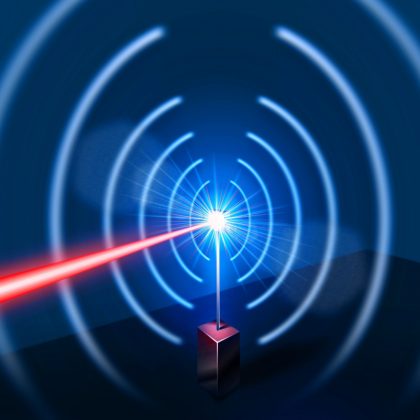
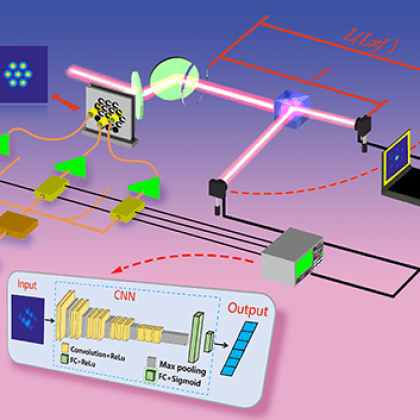
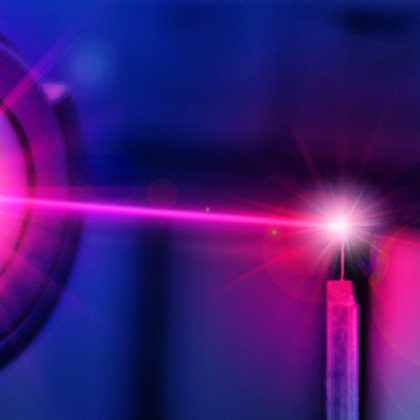
On the Cover of HPL: Optical control of transverse motion of ionization injected electrons in a laser plasma accelerator

In recent years, the plasma wakefield acceleration driven by ultra-short and ultra-intense laser pulses has become increasingly mature, which can produce electron beams with ultra-high beam density and femtosecond beam duration; By using this electron beam, a new table-top radiation light source with collimation, ultrafast and high brightness can be produced.…

Read more

10 PW peak power femtosecond laser pulses at ELI-NP

The first 1PW laser was commissioned in the USA in the late 1990s with many systems globally coming on-line throughout the 2000s opening up new and exciting areas of science. In the following years many laboratories strived to increase the power, and hence the focussed intensity, to the 10PW regime, to realise new theoretical thresholds of fundamental science. Several lasers throughout the world, are in the process of construction/commissioning to achieve this goal in China, Romania, Czech Republic, and France with others planned in Japan, USA, Russia and the UK. The first of these systems, ELI-NP in Romania, has recently been the first to demonstrate this landmark achievement.

Read more

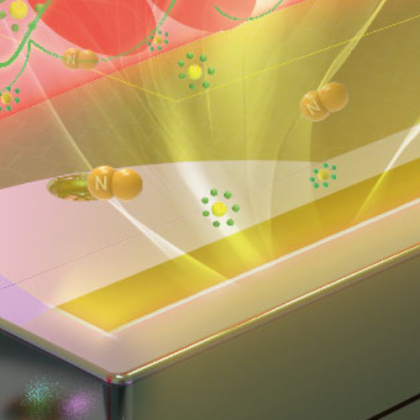
On the Cover of HPL: Ultra-broadband near-infrared NOPAs based on the nonlinear crystals BiBO and YCOB

Ultrashort and broadband laser sources are formidable tools for a wide range of scientific areas. In the field of ultrafast science, laser pulses lasting only a few optical cycles are used to generate secondary sources employed in probing matter at atomic scales. Such sources are also widely adopted in applications in ultrafast spectroscopy, pump-probe in chemistry, and optical coherence tomography among many other fields.

Read more

On the Cover of HPL: Petawatt and exawatt class lasers worldwide

An international team of scientific experts has gathered to examine the current status of ultra-high-powered lasers around the world and look to the future to predict what the next generation of laser systems will offer. The culmination of their work is a major review paper ‘Petawatt and Exawatt Class Lasers Worldwide’, which looks at the historical context of this technology, its current and future use, and direction.

Read more

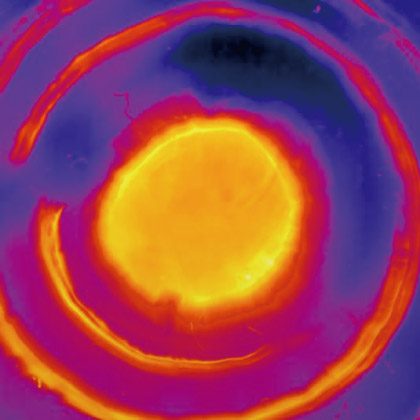
On the Cover of HPL: Bremsstrahlung emission from high power laser interactions with constrained targets for industrial radiography

Due to the range of size, density, and resolution demands associated with industrial X-ray radiography, there is not a source that is “one-size fits all”... Altering the source characteristics to deliver what is needed requires continued study. This publication explores the X-ray emission from spatially constrained targets compared to standard foil targets. The research results are published in High Power Laser Science and Engineering, Volume 7, No. 2, 2019 (Armstrong, C. D. , et al. Bremsstrahlung emission from high power laser interactions with constrained targets for industrial radiography.)

Read more

Nobel Prize in Physics 2018 awarded for pioneering laser work

(note: this has been adapted from the Nobel Prize committees press release) The Royal Swedish Academy of Sciences has decided to award the Nobel Prize in Physics 2018“for groundbreaking inventions in the field of laser physics” with one half to Arthur Ashkin, Bell Laboratories, Holmdel, USA “for the optical tweezers and their application to biological systems” and the other half jointly to Gérard Mourou, École Polytechnique, Palaiseau, France & University of Michigan, Ann Arbor, USA and Donna Strickland, University of Waterloo, Canada “for their method of generating high-intensity, ultra-short optical pulses”.

Read more

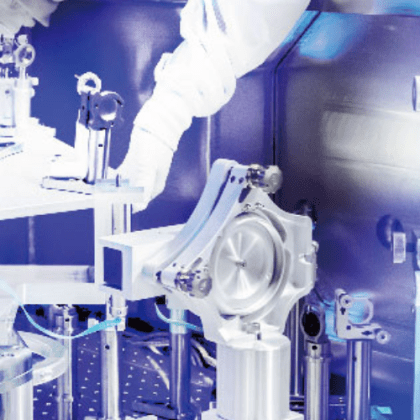
On the Cover of HPL: Research on cleanliness optimization of multisegment disk amplifier based on vectorized flow mode

Rigorous cleanliness on the National Ignition Facility (NIF) is essential to assure that 99.5% optical efficiency is maintained on each of its 192 beam lines by minimizing obscuration and contamination-induced laser damage.” said James A. Pryatel and William H. Gourdin from Akima Infrastructure Services and Lawrence Livermore National Laboratory

Read more

In memory of Prof. Zunqi Lin

Prof. Zunqi Lin, co-editor-in-chief of HPL, passed away aged 76 in Shanghai, China, on 28th May. He was one of the pioneers of inertial confinement fusion science in China, and a well-respected scientist in high power laser from Shanghai Institute of Optics and Fine Mechanics. He was elected the academician of CAS in 2003.

Read more

On the Cover of HPL: Assembly and Metrology of NIF target subassemblies using robotic systems

When the first targets for the National Ignition Campaign (NIC) at Lawrence Livermore National Laboratory (LLNL) were built to be fielded on the National Ignition Facility (NIF) in the late 2000’s, the assemblies were handcrafted, meticulously measured, and carefully tested. The resulting assemblies were literally one-of-a-kind and fairly fragile pieces of art, as well as fully functional high energy density physics targets. They were true engineering marvels.

Read more