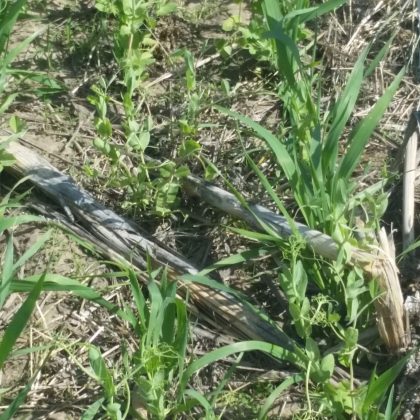
How Preemergent Herbicides May Be Driving Waterhemp Resistance
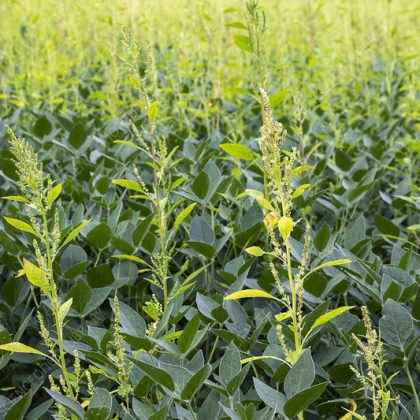
A new Weed Science Society of America research article highlights the need for stewardship to preserve PPO-inhibitor herbicides as an effective waterhemp control option

A new Weed Science Society of America research article highlights the need for stewardship to preserve PPO-inhibitor herbicides as an effective waterhemp control option

A recently published article in the journal Weed Science shows electric control technologies can eradicate weeds just as effectively as herbicides or mechanical methods, with minimal risks to the crop, soil or the environment.

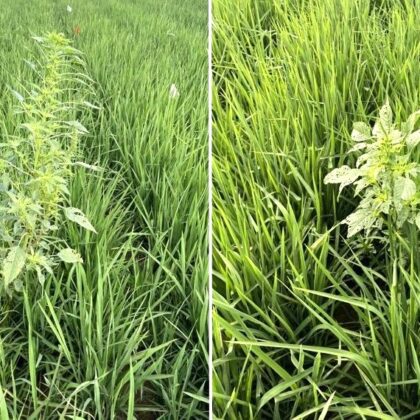
A recently published article in the journal Weed Science shows that successful, in-furrow rice production greatly hinges on Palmer amaranth (Amaranthus palmeri) weed pressure – before, during and after the growing season.

Recent research shows promise for controlling herbicide-resistant weeds, such as waterhemp, in soybean fields by using a seed impact mill at harvest.

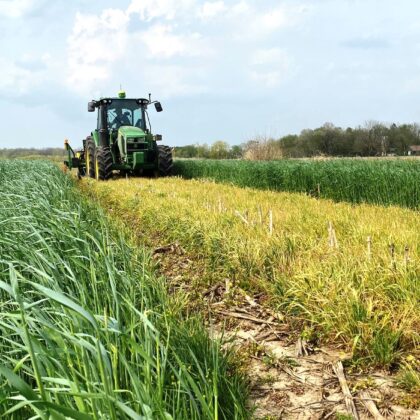
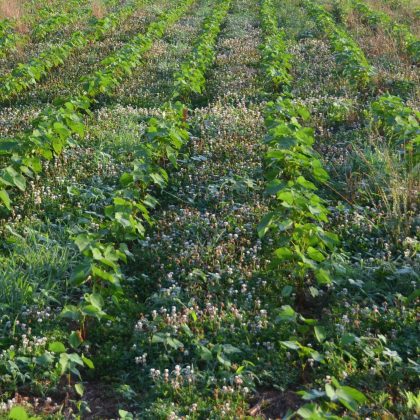
Recently published research in the journal Weed Science shows planting soybean into a green, living cover crop effectively suppresses two problematic Amaranthus weed species – waterhemp and Palmer amaranth – when integrated with pre-emergence (PRE) herbicides.

Recently published research in the journal Weed Science shows that drill-interseeded cover crops into vegetative growth stage 3 (V3) corn performs well in Northeast U.S. production regions.

Recently published research in the journal Weed Science provides new mechanistic insights into S-metolachlor resistance in waterhemp.

Organically produced sweetpotato crops can be significantly more profitable than those grown in conventional production systems. But it’s not all smooth sailing. Growers know it can be tough to manage weed infestations in the absence of synthetic herbicides.

Buffelgrass is a highly invasive perennial that reduces the biodiversity of native ecosystems and provides ready fuel for wildfires in the arid regions where it thrives. After examining a decade of data from Arizona’s Saguaro National Park, researchers writing in the journal Invasive Plant Science and Management describe best practices for buffelgrass control.

Though planting crops more densely can be an effective approach for suppressing weeds in problem areas, many growers fail to adopt this approach because of the high cost of seed. New research featured in the journal Weed Science, though, describes a bioeconomic model growers can use to overcome that cost barrier.

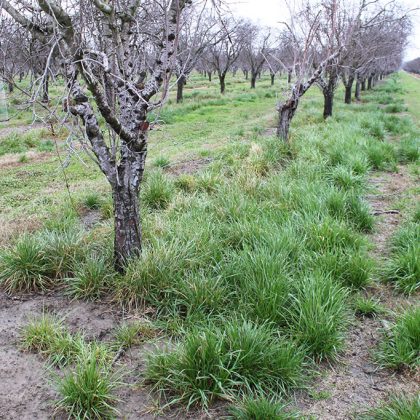
California’s commercial orchards produce a variety of crops valued by consumers – from stone fruit to almonds and walnuts. A successful harvest depends on the effective management of weeds that can interfere with irrigation lines, compete with crops for water, and impede sweepers and other harvesting equipment.

Cover crops can be a valuable tool for weed suppression. They compete with weeds for light, water, nutrients and space and reduce the ability of weeds to germinate, grow and reproduce. But which is better – planting a single cover crop or using one of the new cover crop mixtures that are now readily available?

Palmer amaranth has a well-earned reputation as one of the most problematic weeds in agriculture. It is known for its many weedy traits and for its propensity to evolve resistance to herbicides of varying sites of action. An article featured in the latest issue of the journal Weed Science shows the number of tools available to control this weedy invader is continuing to shrink.

Germination/emergence assays are relatively easy to perform, by following clear and standardised procedures. Most often, we take samples of seeds and we put them in Petri dishes/boxes/pots in some selected conditions (relating to, e.g., humidity content, light and temperature). We inspect those containers according to a tight schedule (e.g., daily) and, at each inspection, we count the number of germinated/emerged seeds and remove them from the containers.

Herbicide-resistant crops are now commonplace throughout the U.S. and Canada. But are they friend or foe when it comes to the prevention and management of herbicide-resistant weeds?

Scouting fields for weeds in person can be a time-consuming process. UAVs and other remote sensing tools may soon be able to automate the process, though.…
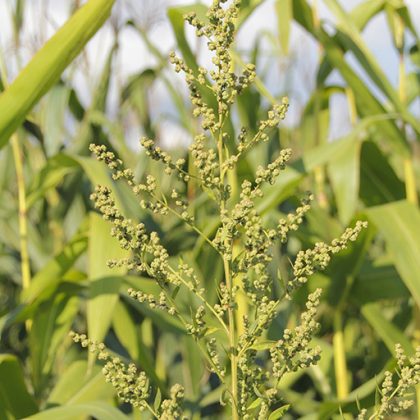
It is clear nonnative plant invaders can devastate native plant communities. But weed management efforts can also hold the potential to cause harm.

Horseweed is one of the most common and troublesome weeds in soybeans – able to cause significant yield losses when left uncontrolled. That’s not surprising when you consider a single horseweed plant can produce up to 200,000 feather-light seeds that can be easily spread across vast distances.

Rice is mainstay of the human diet and is grown in almost every region of the world. Its main competitor is “weedy rice,” a weed similar in size, shape and structure to the crop it infests.…

Horseweed is a prolific and unpredictable weed that threatens many agricultural systems and natural landscapes. Unlike most weedy plants, it can emerge at any time of the year.…

As instances of resistance to multiple herbicides continue to rise, it is important that growers have the information needed to respond quickly.…

Today there is a growing demand for nonchemical weed controls to aid growers in the battle against herbicide-resistant weeds. Some are now turning to chaff carts, impact mills and other harvest-time practices to remove or destroy weed seeds instead of leaving them on the field to sprout. …

Previous research has shown that tillage-based, organically grown crops benefit from better soil quality than those grown under conventional tillage. They compete more effectively against weeds and produce better yields.…

Horseweed is undoubtedly one of the most troublesome weeds in the world. Herbicide-resistant populations are now found in 18 countries, and many are resistant to multiple herbicide sites of action.…

Greenskeepers and landscape managers may be losing their battle with annual bluegrass – an unsightly weed that competes with desirable turf and produces an uneven surface for golf and other sports.…

Cover crops are a proven tool for suppressing many troublesome weeds. But what about the residues they leave behind? Research featured in the journal Weed Science shows the composition of those residues matters – influencing both the control of summer annual weeds and the yields produced by crops.…

Today the use of cover-crop mixtures has become commonplace. Surveys show most farmers use them and believe them to be superior to any single cover-crop species for weed control.…

Harvest-time weed seed controls have proven highly effective at reducing herbicide-resistant weeds in Australian cropping systems. One of the most popular tactics is the use of an impact mill that intercepts chaff as it exits the harvester.…

When it comes to weed control, today’s growers face a double whammy. Weeds have developed resistance to many of our existing herbicide options at a time when new herbicide discoveries have plummeted.…

Corn and soybean growers in Nebraska are now facing their worst nightmare. A research study featured in the journal Weed Science shows a population of waterhemp has evolved resistance to four distinct herbicide sites of action – including PPO inhibitors, ALS inhibitors, EPSPS inhibitors and PS II inhibitors.…

Palmer amaranth and waterhemp are two troublesome amaranthus species weeds that are resistant to multiple herbicides. They also have unique reproductive features.…

Herbicide resistance is a costly and growing problem. In fact, many weed populations now exhibit resistance to multiple herbicide mechanisms of action.…

What if you had a simple, web-based app that could analyze weather data and issue an alert when pesky weeds are most likely to emerge and compete with your cash crop? …

The broadleaf weed kochia is a real and growing threat to major cropping systems and soil conservation practices across the Great Plains.…

Italian ryegrass has become a weedy nuisance in California – often found in orchards and vineyards where fruits and nuts are grown.…

For more than a decade, growers have waged a high-profile battle against glyphosate-resistant pigweed. But pigweed is by no means the only weed resistant to glyphosate. …

A study featured in the journal Weed Science is certain to keep many corn and soybean growers up at night. Researchers have identified a waterhemp population in Missouri that is resistant to a record-breaking six herbicide mechanisms of action.…

Scientists at Purdue University have just answered an important question that has plagued many corn and soybean growers. Why does mixing glyphosate with other selective herbicides sometimes fail to control glyphosate-resistant giant ragweed plants?…

Cover-crop mulch has long been the weed control tactic of choice for organic no-till corn and soybean systems. But new research featured in the journal Weed Science shows that adding new control tactics can deliver much better results.…

Waterhemp is already one of the most problematic weeds in the Midwest and South. But researchers writing in the latest edition of the journal Weed Science say its control challenges are getting even tougher. …

The latest issue of the journal Weed Science contains an article with intriguing new insights about the control of herbicide-resistant kochia, a weed that competes with both dryland and irrigated crops across the Great Plains states.…

A recent study featured in the journal Invasive Plant Science and Management suggests it’s time to rethink control of Russian knapweed, an invasive plant classified as a “noxious weed” in 18 U.S.…

With the recent introduction of soybean and cotton traits resistant to synthetic auxin herbicides, farmers have new, much needed options for managing glyphosate-resistant broadleaf weeds. Researchers writing in the journal Weed Technology say use of the auxins isn’t without risk.

In a study featured in the most recent edition of Weed Science, a team of researchers tilled four fields every two weeks during the growing season.

New research featured in the journal Weed Science, shows “life history” traits may be contributing to crop losses by making Palmer amaranth more aggressive and difficult to control.

Scanning electron microscopic image of two spray hoses showing wear and possible adsorption sites for auxinic herbicides. See article by Cundiff et al.…

Cover crops are attracting widespread attention for the benefits they provide in crop rotations, especially for soil health. However, many growers of corn and soybean crops know it can be challenging to establish fall-seeded cover crops.

Researchers writing in the latest issue of the journal Weed Science provide important insights on the control of herbicide-resistant giant ragweed

The Weed Science Society of America (WSSA) and Cambridge University Press are pleased to announce the formation of a new publishing partnership beginning in January 2017.