2018

rss
Fish welfare in research and aquaculture

The animal article of the month for January is ‘Review: Assessing fish welfare in research and aquaculture, with a focus on European directives‘ In recent years, teleost fish have been increasingly exploited as animal models for scientific research in both the biomedical and ecological fields by using various ‘omics’ approaches, as they offer several practical advantages compared with mammals or other vertebrates.…

Read more

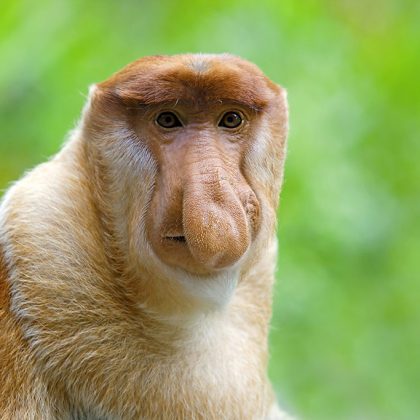
Riparian forest protection is crucial to the long-term viability of the endangered proboscis monkey

Nearly half of all primate species are threatened with extinction, with habitat destruction being the biggest threat to their survival. Studies on the impact of habitat changes on primate populations are limited and often based on inferences because primates are long-lived mammals with slow life cycles, and generally respond very slowly to environmental changes.…

Read more

A promising approach to optimize pig genomics

The animal article of the month for November is ‘Genotype imputation from various low-density SNP panels and its impact on accuracy of genomic breeding values in pigs‘ The rapid increase in the world population, which is expected to reach 9.8 billion in 2050, needs to be accompanied by a substantial increase in food production.…

Read more

Engineering nature to make materials

New research published within MRS Bulletin explores how materials engineers are 'hacking life' using synthetic biology. This exciting new research could lead to sustainable solutions that benefit the health and technology industries.

Read more

A New Herbicide for Watermelon Crops?

Watermelon growers face tough weed control challenges. One example: Crop seedlings need to be planted with plenty of elbow room – leaving wide spaces where broadleaf and grassy weeds can become established and reduce yields.…

Read more

Organic smallholders are cultivating resilient rice systems

In the Philippines, organic rice systems are proving to be more climate resilient than conventional rice systems. This is according to a Self-evaluation and Holistic Assessment of climate Resilience of farmers and Pastoralists (SHARP), a methodological tool developed by a team at the United Nations’ Food and Agriculture Organization.…

Read more

Towards an improved estimation of animal feed efficiency

The animal article of the month for July is ‘Isolating the cow-specific part of residual energy intake in lactating dairy cows using random regressions ‘ Improving feed efficiency is essential for sustainable livestock farming: it is expected to reduce feed resources use and to decrease waste and environmental impacts.…

Read more

Managing egg incubation to benefit chicken bone strength

The animal article of the month for April is ‘Incubation and hatch management: consequences for bone mineralization in Cobb 500 meat chickens‘ Following two field observations of newly hatched chicks that had soft bones and were having difficulty standing,  we wanted to find out what causes soft bones and, what could be done to prevent this from occurring in the future.   …

Read more

Acceleration of growth disturbs health

The animal article of the month for March is ‘Invited review: resource allocation mismatch as pathway to disproportionate growth in farm animals – prerequisite for a disturbed health‘ Resources are nutrients and energy which must be properly used during growth and development, and later on for performance.…

Read more

The Global Livestock Environmental Assessment Model (GLEAM)

The animal article of the month for February is ‘Invited review: a position on The Global Livestock Environmental Assessment Model (GLEAM)‘ The livestock sector is one of the fastest growing subsectors of the agricultural economy and it makes a major contribution to global food supply and economic development.…

Read more

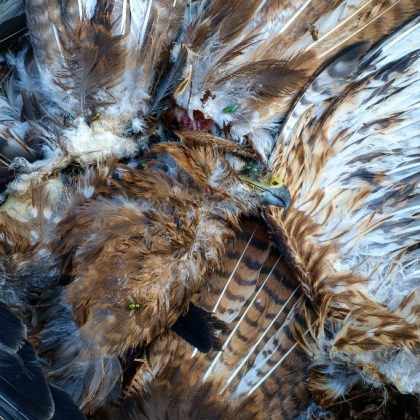
Illegal killing of birds still occurring in Europe

In spite of national legislation and international obligations, a new BirdLife International-led review showed illegal killing and taking is still occurring in Northern and Central Europe and the Caucasus, birds being primarily killed illegally for ‘sport’, ‘food’ or ‘predator and pest control’.…

Read more