2022

rss
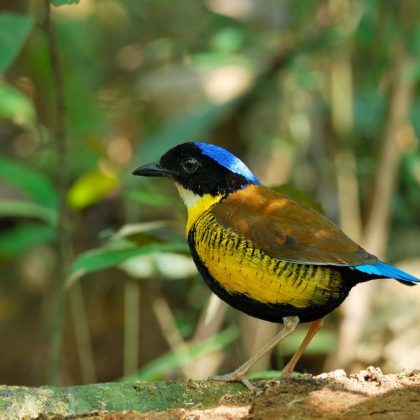
Forest birds and plantations

Tropical forests harbour a very high proportion of the planet’s terrestrial biodiversity, supporting wildlife communities that are more diverse and more species-rich than any other habitat.

Read more

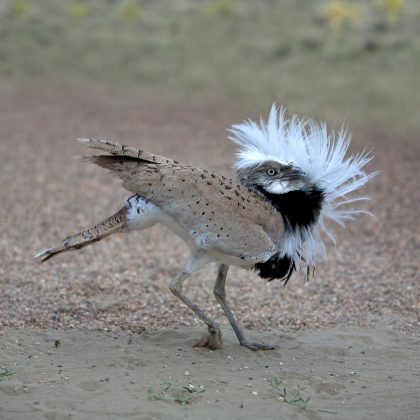
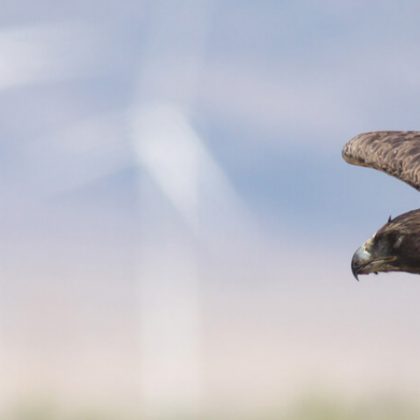
Bustard Conservation

Bustards are deeply challenging birds to conserve. Their grassland habitats are in irresistible demand for food production—both agriculture and livestock—throughout their ranges in the Eastern Hemisphere.

Read more

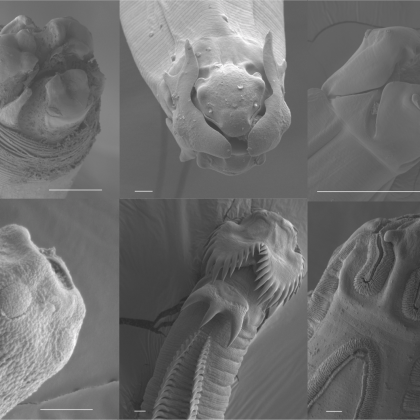
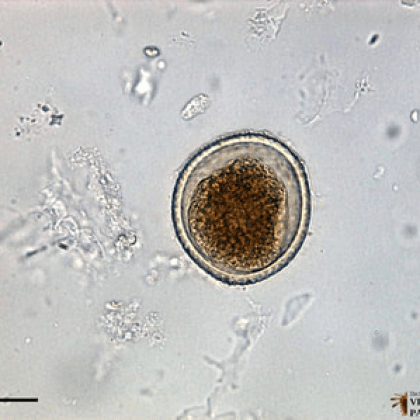
Parasitology celebrates World Fisheries Day with Special Issue on fish parasites

Over the past 18 months, several authors and two Guest Editors have worked together on a Special Issue (SI) on Fish Parasites for the Cambridge University Press journal, Parasitology, the longest-running journal among periodicals in the field. Our SI contains 13 articles, including reviews and original research articles, co-authored by world-leading experts in individual research fields of fish parasitology.

Read more

South Asian vultures and diclofenac

Vultures are keystone species that perform a vital ecosystem service by disposing of carrion. Veterinary use of the painkilling drug diclofenac to treat livestock has caused the collapse of vulture populations throughout South Asia, with dramatic ecological and socio-economic consequences.
Read more

The impact of parasite infection on mental illness

More and more research is finding inflammation as a potential contributing factor towards to the development of various mental illnesses. A systematic review was conducted to determine the association between parasitic infection and mental illnesses in various African populations.  Two parasite groups were evaluated; helminths and protozoans, and four mental illness classifications; depressive disorders, anxiety disorders, schizotypal disorders and unspecified mental illnesses.

Read more

Wild Bird Trade

Direct exploitation of organisms has been recognised as the second biggest driver of global extinction risk, and over a third of all bird species may be affected by international trade. Trade in living or dead birds taken from the wild is a multi-billion dollar industry that represents a major direct threat to the survival of many species and is a source of invasive species and zoonotic diseases. However, it has also been argued that trade may be sustainable in some areas, making important contributions to livelihoods and the viability of natural areas.

Read more

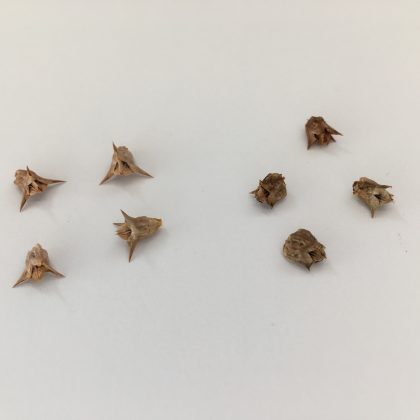
Tools for Palmer Amaranth Control Continue to Shrink

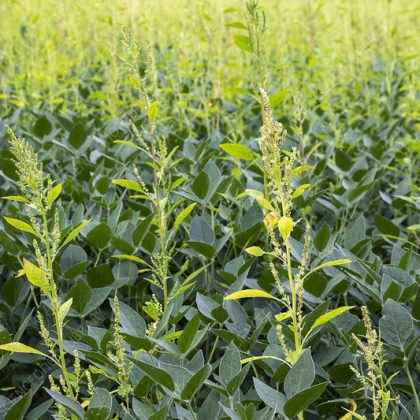
Palmer amaranth has a well-earned reputation as one of the most problematic weeds in agriculture. It is known for its many weedy traits and for its propensity to evolve resistance to herbicides of varying sites of action. An article featured in the latest issue of the journal Weed Science shows the number of tools available to control this weedy invader is continuing to shrink.

Read more

Important Bird and Biodiversity Areas

For more than 40 years, the Important Bird and Biodiversity Areas (IBA) programme of BirdLife International has aimed to identify, document, safeguard, manage and monitor a network of sites of international significance for birds. The global list now extends to more than 13,500 IBAs, and is among the most extensive site-based, spatially explicit, systematically rigorous biodiversity datasets yet compiled.

Read more

Analysing seed germination and emergence data with R

Germination/emergence assays are relatively easy to perform, by following clear and standardised procedures. Most often, we take samples of seeds and we put them in Petri dishes/boxes/pots in some selected conditions (relating to, e.g., humidity content, light and temperature). We inspect those containers according to a tight schedule (e.g., daily) and, at each inspection, we count the number of germinated/emerged seeds and remove them from the containers.

Read more

Lost in Time

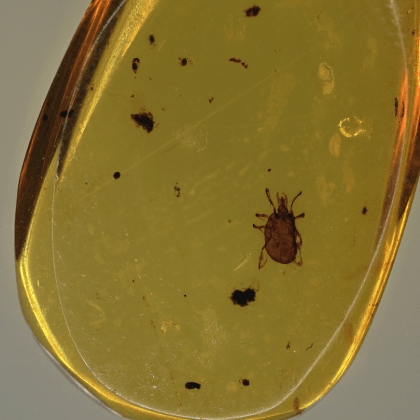
The latest Paper of the Month for Parasitology is “A remarkable assemblage of ticks from mid-Cretaceous Burmese amber” and is available open access.…

Read more

Hunting, harvesting and persecution

Evidence of hunting, harvesting and persecution of wild birds dates back to the earliest of human societies. However, as human populations have grown, and technologies have advanced, the exploitation of wild birds has increased dramatically.…

Read more

A Sincere Thanks to Our Parasitology Reviewers

It takes a lot of people to publish an issue of Parasitology. Each year the journal successfully publishes 14 issues, with over 170 papers contained therein. Essential, of course, are our dedicated authors but there are also many “behind-the-scenes” people crucial in making sure we disseminate high quality research into the public domain

Read more

What is the extent of a frequency-dependent social learning strategy space?

Traditional models of conformity posit that individuals respond to the frequency of a behaviour amongst a social group only. This gives the impression that conformity functions like a rule-of-thumb to ‘always copy the majority’. This view does not align with recent research which shows that our use of social learning strategies is likely to be flexible. To extend this research, we ask whether an individuals’ decision to conform to the majority of a group will be flexible based on certain social information about the group from whom they learn.

Read more

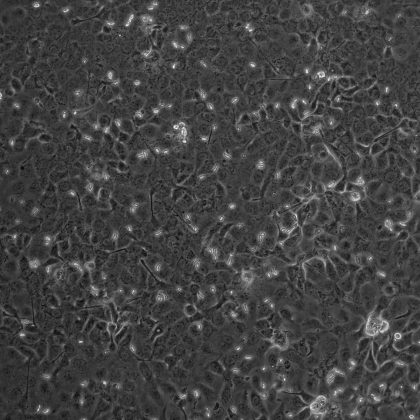
A novel culture model for Cystoisospora suis

Cystoisospora suis is an intestinal protozoan parasite of swine, especially of suckling piglets. It severely affects the host by causing diarrhoea and reduced weight gain. This considerably impairs animal health, welfare and productivity. The parasite has a worldwide distribution, and infections are very common. The parasite belongs to the phylum Apicomplexa, which also includes other species of great medical and veterinary relevance by causing malaria, toxoplasmosis or coccidiosis.

Read more

How sociality affects parasitism

The evolutionary arms race between parasites and their hosts have been fascinating/puzzling scientists for many years, and current World events have made even clearer about the importance of understanding host-parasite interactions.

Read more

100 years, 10 themes, 1 BirdLife

The BCI Centenary Collections 2022 marks 100 years since the founding of the International Council for Bird Preservation (ICBP) – now BirdLife International, the largest international partnership for nature conservation.…

Read more

“A Tale of a Man, a Worm and a Snail” – A Book Review

This year a new 275-page book, with 21 chapters, entitled "The Tale of a Man, a Worm and a Snail: The Schistosomiasis Control Initiative" written by Professor Alan Fenwick OBE, with the help of Wendie Norris and Becky McCall, first appeared in January. It is part autobiography, part scientific narrative, with an impressive bibliography. Typical of CABI publishers, the book has a high printed production standard with several colour photographs and schematic graphics that embellish its narrative.

Read more

Depending on the Planting Design, More Crop Diversity Means More Productivity – No Matter How You Estimate the Yields

As an ecologist, I am interested in conserving forgotten crop landraces and vanishing cropping systems of indigenous agrarian societies. Indigenous food production systems are always polycrop systems, growing diverse food and non-food crops on marginal lands, depending no external materials (e.g. agrochemicals, machiney, fossil fuel). Dozens of experimental studies proved the superior productive efficacy of multiple cropping systems, growing mostly 2 or 3 crops), over monocultures promoted by modern, industrial agriculture.

Read more