

Part One: An Interview with Modern American History Editors, Darren Dochuk and Sarah B. Snyder
New editors Darren Dochuk and Sarah B. Snyder. They discuss their background and the exciting future of Modern American History.


New editors Darren Dochuk and Sarah B. Snyder. They discuss their background and the exciting future of Modern American History.

Slate’s research into educations during the civil rights movement presents three distinct takeaways. Perhaps the most compelling part of Slate’s findings come not from the paper itself, but from his research journey.
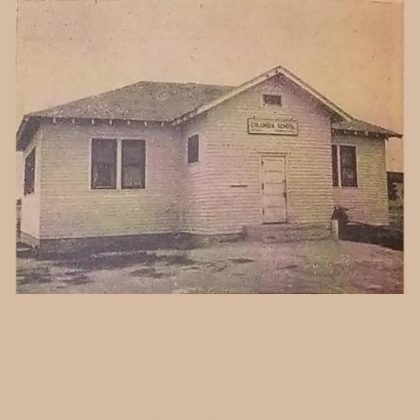
Guzmán’s article can be used to teach about and discuss the ways race, racism, and inequality have been—and continue to be—artificially constructed via extra-legal means and motives.
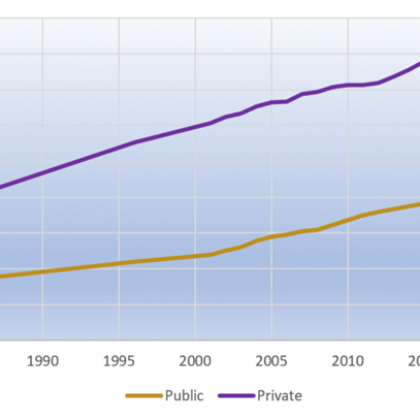
This accompanies the History of Education Quarterly articles How Austerity Politics Led to Tuition Charges at the University of California and City University of New York by Jennifer M.…
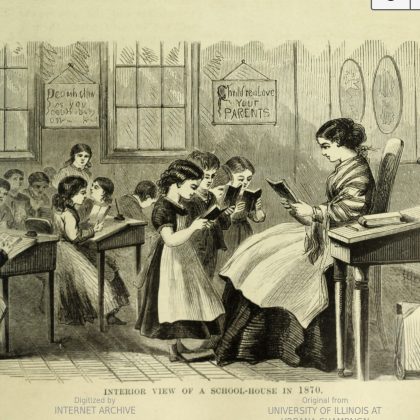
My findings underscore how critical teachers are in the school reform story. When we fail to see reform from the perches of these vital agents we miss a major piece of the reform story.
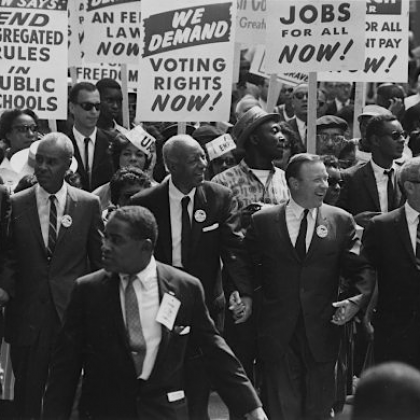
Cunningham gives us a way to interpret 21st century activism, particularly in understanding how employee policies and the courts follow a tradition of limiting teachers’ rights to freedom of speech and expression.

This article uses the material culture of smoking to connect an American-sourced intoxicant to changing tastes and expressions of masculinity in early seventeenth-century London.

The study of the late nineteenth-century American Populist movement has long been one of the liveliest fields in American historiography. This stature definitely is fitting for one of the most formidable social movements in American history – and an uncomfortable outlier to today’s anti-populist consensus.

We think this roundtable is a great place to start thinking about the many approaches to teaching about the Spanish Flu pandemic in the midst of our own.

The Gilded Age itself, and the progressive policies it led to, have made capitalism bearable for most who live under it.
We live in an age of great political fortunes. It is hardly the first. During the 1860s and 1870s, party politics was an enticing way for the ambitious to get rich quick.
Asking whether this era is a Second Gilded Age similar to the First Gilded Age, which began at the end of the Civil War and extended into the early twentieth century, creates a blind man and the elephant problem. Examining different parts of the era can yield disparate conclusions.

In Laudato Si’, Pope Francis writes that the poor and the environment are connected. The poor suffer physically from environmental degradation and cry out along with the earth, and those with power must heed their cry. An examination of the Appalachian region and its people reveals that each of these three themes needs some development
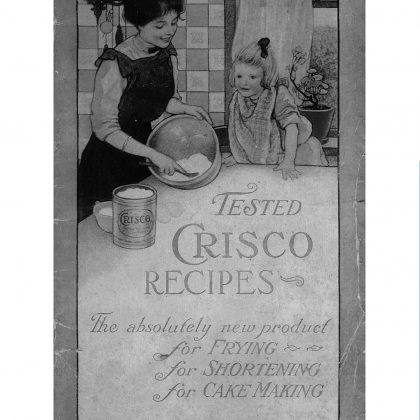
The kind of research and development in commercial food products that began in this era has clearly shaped our world today, not just in the products that we expect to see on market shelves but in our continual anticipation that there will be new products soon and that they will be improvements on the old ones...

What did samurai and African Americans in 1860 have in common? Quite a lot, according to the Weekly Anglo-African, Douglass’ Monthly, and other African American and abolitionist publications.

Unfolding the histories of women who invested in the Virginia Company was the starting-point of this research, but as I began tracing Romney and Hueriblock through the archives, I learned that their involvement in the Virginia Company was part of a wider story.

The time has come to take stock of both our historical understanding of the First Red Scare and what it means for us today. The January 2019 issue of The Journal of the Gilded Age and Progressive Era, which I had the honor to guest edit, is the first substantial scholarly collaboration entirely focused on the Red Scare of 1919-20 and marks the onset of its centennial by uniting exciting and recent, but previously disparate, perspectives.

This episode neatly captures the way in which Cold War politics framed much of the debate about the history of science in the twentieth century. My Retrospect essay, and the accompanying articles, chart that changing historiography.

The ability of scholars to conduct research on important political, social, and environmental events in modern American history is under a pressing if seemingly routine threat.…

In my piece, I emphasized the external pressures placed on individuals and institutions—what the American Association of University Professors termed “the tyranny of public opinion” in its landmark 1915 Declaration of Principles—because the connections were so clear and the challenges seemingly eternal.
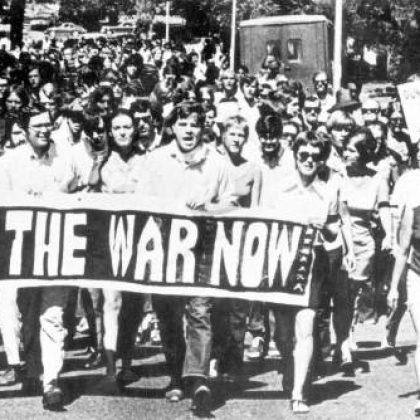
This blog accompanies the Forum on Academic Freedom published in History of Education Quarterly. In the past decade or so, there has been an uptick in assaults on academic freedom across the globe. …

When the History of Education Quarterly asked me to contribute to a symposium on academic freedom, I could hardly refuse. I had recently written a book about how anti-communist witch hunters in the late 1940s and 1950s attacked teachers and professors, and about the Supreme Court’s eventual (and much-belated) response in 1967–striking down a typical state loyalty law and announcing that academic freedom is a “a special concern of the First Amendment, which does not tolerate laws that cast a pall of orthodoxy over the classroom.”…

A Response to Michael Sherry’s “War as a Way of Life” The United States never experienced sustained conflict on its mainland during the twentieth century.…

Some of the United States’ most eminent arms manufacturers had their start in the middle of the nineteenth century. These were also the years that American industry began to surpass Europe’s, and that Americans’ belief in their right to “civilize” the continent became known as “Manifest Destiny.”…

The NFL is attempting to shut down protests like this one by members of the Cleveland Browns. AP Photo/David Richard Chad Williams, Brandeis University The recent decision by the NFL regarding player protests and the national anthem has yet again exposed the fraught relationship between African-Americans and patriotism.…
This text is taken from the Editor’s Foreward by Brooke L. Blower and Sarah T. Phillips Modern American history has long been a field of great vibrancy, but one without a “big tent” journal devoted to its particular themes, challenges, and concerns.…

The article A Shadow on the Past: Teaching and Studying Migration and Borders in the Age of Trump by Hasia Diner, Sonia Hernández, Benjamin H.…

This blog accompanies the Policy Forum on the 1966 Coleman Report published in History of Education Quarterly. For this History of Education Quarterly Policy Forum, we look at the historical significance of the 1966 Coleman Report from several different perspectives.…

This blog accompanies the new thematic issue of the Journal of the Gilded Age and Progressive Era reassessing John Dewey’s 1916 publication Democracy and Education.…

For the latest entry of our blog series introducing the board members of the new Cambridge University Press journal, Modern American History, Adriane Lentz-Smith shares how she came to study history and discusses how historians can reach a wider public.…

For the latest entry of our blog series introducing the board members of the new Cambridge University Press journal, Modern American History, Bruce J.…

For the latest entry of our blog series introducing the board members of the new Cambridge University Press journal, Modern American History, Tomiko Brown-Nagin shares how she came to study modern American history and where she sees the field heading.…
For the latest entry of our blog series introducing the board members of the new Cambridge University Press journal, Modern American History, Kevin M.…

For the latest entry of our blog series introducing the board members of the new Cambridge University Press journal, Modern American History, Brian Balogh shares this thoughts on the big issues that affect how we understand modern American history.…

As part of our ongoing blog series introducing the board members of the new Cambridge University Press journal, Modern American History, Madeline Y.…

In this installment of our blog series introducing the board members for the new Cambridge University Press journal, Modern American History, Christopher Capozzola gives us his take on United States history.…

In this first entry of the blog series introducing the board members of the new Cambridge University Press journal, Modern American History, Thomas G.…

We are pleased to announce the publication of the “Un-America” Special issue of of Journal of American Studies. As an introduction to the topic of Un-Americanism, Dr George Lewis, Guest Editor of the Special Issue examines the topic and asks what un-Americanism is and whether it is still a relevant term today.…
As Christopher Nolan's 'The Odyssey' reaches cinemas, explore the scholarship behind one of history's most enduring and influential stories.


Even though findings from genetics and other sciences unequivocally refute biological conceptions of race, this erroneous viewpoint remains widespread among the general public.…

The English language contains a wealth of insults and terms of abuse. Personal insults attack the core and immutable aspects of a person, such as their race, ethnicity, appearance, age, or a disability.…

The March article of Muses – the arts blog from BJPsych International is the first blog of the series. The blog is written by Dr Dami Ajayi, Specialty Doctor, Barnet Enfield and Haringey Mental Health NHS Foundation Trust and Trainee/Blog Editor, BJPsych International.…

Some disability-related names have dropped out of usage, because they are now considered to be offensive due to their origins. Down Syndrome (Trisomy 21) is one example.…

The Paper of the Month for March is ‘Impact of omega-3 fatty acid supplementation on clinical manifestations in autism spectrum disorders: an umbrella review of meta-analyses“.…

When we think about seeking help for depression, it’s likely that salsa dancing isn’t the first thing that springs to mind.…
How long will humankind survive? Besides the fact that we have been able to eliminate ourselves with nuclear weapons for decades, even without a third world war, the challenge to take care of the resources of our planet remains; we need to use them in a way that our children and their children can have a place on Earth as well. In this blog post Andreas Losch discusses his recent review article in the International Journal of Astrobiology, The need of an ethics of planetary sustainability


It is an article of faith among ordinary Filipinos that American troops will die with Filipino troops defending Philippine claims to the Spratly Islands in the South China Sea (SCS).…

Q&A with Editor-in-Chief of the Precision Medicine Journal, Dame Anna Dominiczak, for International day of Women and Girls in Science

More and more research is finding inflammation as a potential contributing factor towards to the development of various mental illnesses. A systematic review was conducted to determine the association between parasitic infection and mental illnesses in various African populations. Two parasite groups were evaluated; helminths and protozoans, and four mental illness classifications; depressive disorders, anxiety disorders, schizotypal disorders and unspecified mental illnesses.
The March article of Muses – the arts blog from BJPsych International is the first blog of the series. The blog is written by Dr Dami Ajayi, Specialty Doctor, Barnet Enfield and Haringey Mental Health NHS Foundation Trust and Trainee/Blog Editor, BJPsych International.…

This is the first post in our new series: “Conversations with Authors.” For our inaugural post, we asked Dr. Vesla Weaver to meet (virtually) with Dr.…
The English language contains a wealth of insults and terms of abuse. Personal insults attack the core and immutable aspects of a person, such as their race, ethnicity, appearance, age, or a disability.…


Listen to @BBCRadio4's Start the Week, featuring @NineDotsPrize winner @jkkusiak, talking about her book, 'Radically Legal'. Learn how a group of ordinary people inspired the book when they reclaimed over 240,000 apartments back from corporate landlords 🔗

Start the Week - ‘Left behind’, but not forgotten - BBC Sounds
Tom Sutcliffe with Paul Collier, Joanna Kusiak and Matthew Xia.
cup.org
Sparking curiosity from geopolitics in Japan to the cultural implications of AI!
Explore the seven new titles we are welcoming to Cambridge and the seven #OpenAccess titles we are launching in 2025 🚀 🔗 https://cup.org/3yhAuAx
Our Flip it Open programme has published titles from authors @GibbsSpike, @liederfollower and Inés Valdez!
Discover how we are funding the publication of #OpenAccess books without changing purchasing habits 🔗 https://cup.org/4diDHii


 ;
;


