

Biomedicine, Scientific Internationalism, and the Containment of Soviet Power
By the end of the Second World War, Britain and the United States discontinued their scientific and technological collaboration with the Soviet Union.…

By the end of the Second World War, Britain and the United States discontinued their scientific and technological collaboration with the Soviet Union.…

On 25 April 1832 the Royal Navy vessel HMS Beagle was anchored in the blue waters of Botafogo Bay, Brazil. The naturalist Charles Darwin (1809–1882) was leaving the Beagle in a small boat, en route to a temporary residence on the mainland, when a series of waves swamped the vessel and scattered his ‘most useful’ possessions into the sea.…

Lorraine Daston is an American historian of science whose work spans a broad range of topics in the early modern and modern history of science.…

Early modern globalisation—particularly maritime expansion and the discovery of the southern hemisphere—posed significant challenges to the traditional framework of astrology inherited from Ptolemaic cosmology.…
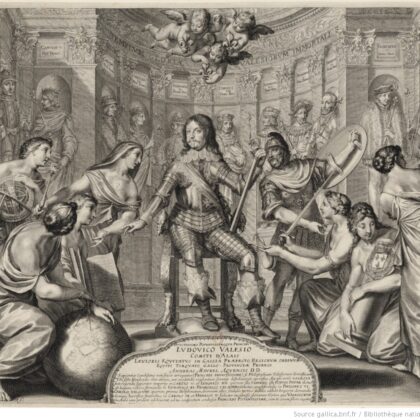
Astrology today is often seen as the epitome of pseudoscience. Yet, until the 17th century, it was considered a legitimate scholarly discipline, serving as the practical branch of astronomy.…

William Petty (1623-1687) is well known as a pioneer of political economy and statistics. He has been often celebrated as an ingenious thinker who was among the first to grasp that certain information, like data on different categories of landowners or the number of births and deaths, could be used to describe trends and tendencies occurring on the level of what he called the ‘political body’ – or what we would nowadays call ‘population phenomena’.…

Antoni van Leeuwenhoek (1632-1723) is universally acknowledged as the first person describing protozoa and bacteria using his self made microscopes. His seventeenth-century observations and depictions of ‘little animalcules’ were food for imagination in later centuries, in particular from the late nineteenth century.…

In his Telluris Theoria Sacra and its English translation The Theory of the Earth (1681–90), the English clergyman and schoolmaster Thomas Burnet (c. 1635–1715) constructed a geological history in which he proposed various natural causes to explain biblical events and their effects on the Earth and life on it.
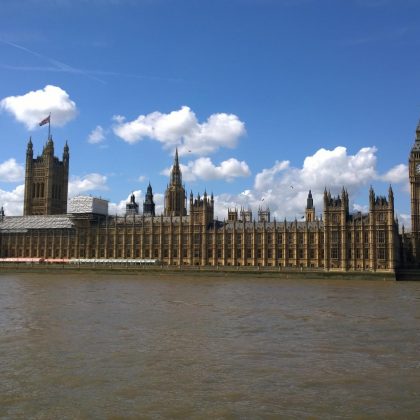
At times during the past few years, evidence sessions of the UK’s House of Commons Science and Technology Select Committee have made headline news, for example Dominic Cummings’ account of his time advising the Prime Minister during the COVID-19 pandemic, or controversial witness statements about diversity and inclusion in STEM careers.…

After over two years of living in a pandemic, most everyone is familiar with COVID-19’s periods of incubation, progression and contagion. Similar issues were of great concern to physicians in early modern Europe.

In the first half of the twentieth century, locust plagues were managed by imperial governments, advised by their scientific institutions.
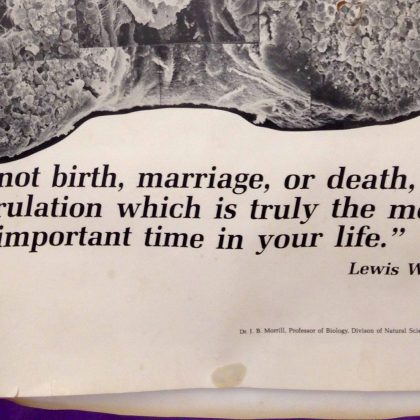
The history I tell in [my article] exemplifies how indispensable quotations can become... They invoke tradition, generating a sense of belonging and inspiring the young, and are involved in innovation, too.
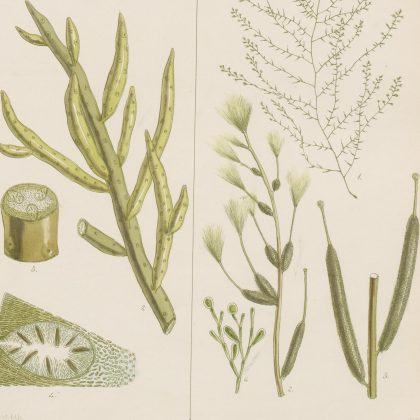
By focusing on the example of William Harvey and his travels, my article explores the difficulties encountered by those involved in collecting, preserving and transporting natural history specimens from the field to the museum or laboratory in the nineteenth century.

My article contributes to this line of inquiry by considering how an information infrastructure for keeping track of human genes was built and changed across the latter decades of the twentieth century.
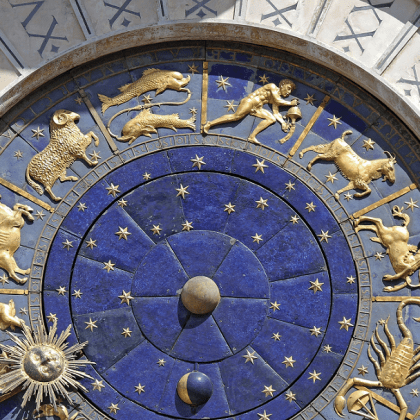
People facing plague and quarantine in early modern Europe also turned to astrologers. But rather than being chastised for supporting a ‘pseudoscience’, these people were more likely to be reprimanded for engaging with paganism.

...the observatory staff, the largest portion of whom were adolescent boys hired to do computational work, had to be managed too. Airy worked hard to deskill their positions, turning the observatory into a sort of factory...

Almost a century before Watson and Crick, Miescher had been working in the freezing cold former kitchen of Tübingen Castle that had now been converted into laboratories for the University, where he was carrying out investigations into the chemical composition of white blood cells...

My article thus focuses on transformations in the main metaphors in ancient to late medieval titles of Chinese medical books used to convey to potential readers their ‘learning-by-the-book’ contents.

The late eighteenth and early nineteenth centuries provide a particularly enlightening example of the ways that the meaning of race can shift and change in surprising ways over time.
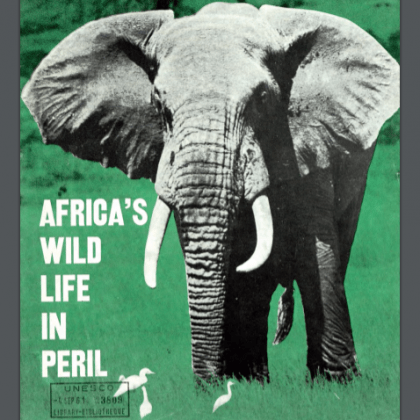
My article discusses how this approach of ‘conservation by slaughter’ – as one high-profile ecologist called it – managed to gain traction.

In the eighteenth century, the potato was viewed by many European countries as an exotic vegetable, introduced with numerous purposes: as animal feed, as a delicacy, and as a crop suitable for peasants and farm labourers to cultivate in small gardens and allotments.
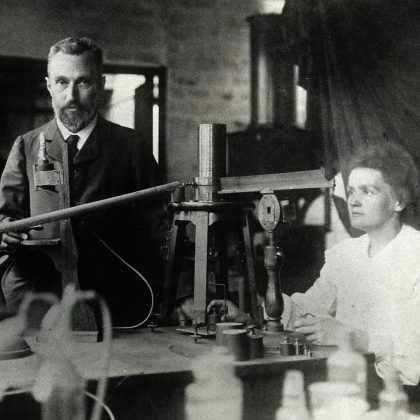
The discovery of radium in 1898 spurred a range of public, industrial and scientific reactions. The public were enthralled by this near mystical element. Its ability to produce its own energy soon gave rise to a ‘radium craze’ in which promises of its health-giving properties were prominent. A range of supposed radium-based products, such as creams and fortified water, were quickly on sale.

We live in interesting times for those seeking to inspire children and youth to take up science, technology engineering, and mathematics (STEM).…

Reproduction on Film, the recently published special issue of The British Journal for the History of Science, investigates the theme of biological reproduction in the history of cinema, television, and other screen media.…
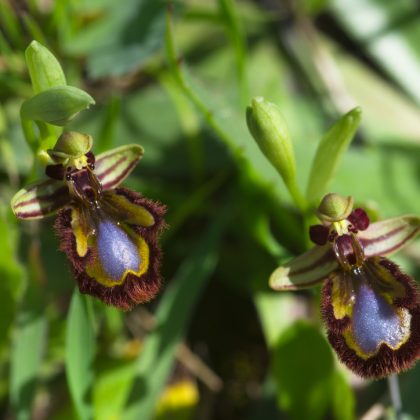
The Institute for Historical Research recently selected ten of the “most interesting articles and books” of 2016 and I was delighted to find my BJHS paper Deceived by Orchids: Sex, Science, Fiction and Darwin among them.…

I’m delighted to be able to announce that the subject of the inaugural issue of the new open access, edited-collection journal of the BSHS, called BJHS Themes, will be: “Intersections: Science and Technology in Twentieth Century China and India” The special issue editors will be Jahnavi Phalkey (King’s College London) and Tong Lam (University of Toronto) In the open competition held to select the issues of BJHS Themes, proposals are judged according to standards of focus, originality, timeliness, and breadth of appeal to readers.…
‘Dipping a toe into the water of open access’ : An Editor and Society’s perspective on the launch of a new open access history of science journal I think it is fair to say that both scholars and publishers are still feeling their way in the new world of open access.…

Running from Sunday 21st to Sunday 28th July 2013, the International Congress of History of Science, Technology and Medicine (iCHSTM) is the largest event in the field, and takes place every four years.…

If you promise not to tell anyone, then I will let you in on something that only select people know. Promise?…
The English language contains a wealth of insults and terms of abuse. Personal insults attack the core and immutable aspects of a person, such as their race, ethnicity, appearance, age, or a disability.…


Even though findings from genetics and other sciences unequivocally refute biological conceptions of race, this erroneous viewpoint remains widespread among the general public.…

The March article of Muses – the arts blog from BJPsych International is the first blog of the series. The blog is written by Dr Dami Ajayi, Specialty Doctor, Barnet Enfield and Haringey Mental Health NHS Foundation Trust and Trainee/Blog Editor, BJPsych International.…

Some disability-related names have dropped out of usage, because they are now considered to be offensive due to their origins. Down Syndrome (Trisomy 21) is one example.…

A few months ago, we responded to a call for papers for a themed issue for Advances in Archaeological Practice entitled “Advances in Archaeological Labor Management.”…

The Paper of the Month for March is ‘Impact of omega-3 fatty acid supplementation on clinical manifestations in autism spectrum disorders: an umbrella review of meta-analyses“.…

As newly minted Editor and Co-Editor, we (Shelome Gooden and Mike Putnam) are delighted to invite you to explore the latest issue of Language, the flagship journal of the Linguistic Society of America, now available for the first time on Cambridge Core!…
How long will humankind survive? Besides the fact that we have been able to eliminate ourselves with nuclear weapons for decades, even without a third world war, the challenge to take care of the resources of our planet remains; we need to use them in a way that our children and their children can have a place on Earth as well. In this blog post Andreas Losch discusses his recent review article in the International Journal of Astrobiology, The need of an ethics of planetary sustainability


It is an article of faith among ordinary Filipinos that American troops will die with Filipino troops defending Philippine claims to the Spratly Islands in the South China Sea (SCS).…

Q&A with Editor-in-Chief of the Precision Medicine Journal, Dame Anna Dominiczak, for International day of Women and Girls in Science

More and more research is finding inflammation as a potential contributing factor towards to the development of various mental illnesses. A systematic review was conducted to determine the association between parasitic infection and mental illnesses in various African populations. Two parasite groups were evaluated; helminths and protozoans, and four mental illness classifications; depressive disorders, anxiety disorders, schizotypal disorders and unspecified mental illnesses.
The March article of Muses – the arts blog from BJPsych International is the first blog of the series. The blog is written by Dr Dami Ajayi, Specialty Doctor, Barnet Enfield and Haringey Mental Health NHS Foundation Trust and Trainee/Blog Editor, BJPsych International.…
This is the first post in our new series: “Conversations with Authors.” For our inaugural post, we asked Dr. Vesla Weaver to meet (virtually) with Dr.…

The English language contains a wealth of insults and terms of abuse. Personal insults attack the core and immutable aspects of a person, such as their race, ethnicity, appearance, age, or a disability.…


Listen to @BBCRadio4's Start the Week, featuring @NineDotsPrize winner @jkkusiak, talking about her book, 'Radically Legal'. Learn how a group of ordinary people inspired the book when they reclaimed over 240,000 apartments back from corporate landlords 🔗

Start the Week - ‘Left behind’, but not forgotten - BBC Sounds
Tom Sutcliffe with Paul Collier, Joanna Kusiak and Matthew Xia.
cup.org
Sparking curiosity from geopolitics in Japan to the cultural implications of AI!
Explore the seven new titles we are welcoming to Cambridge and the seven #OpenAccess titles we are launching in 2025 🚀 🔗 https://cup.org/3yhAuAx
Our Flip it Open programme has published titles from authors @GibbsSpike, @liederfollower and Inés Valdez!
Discover how we are funding the publication of #OpenAccess books without changing purchasing habits 🔗 https://cup.org/4diDHii


 ;
;


