British history

(38) rss icon
From Brexit to Environmental Destruction: Understanding Modern Britain with James Vernon

What inspired you to write a book on the history of Modern Britain? There were two motivations. I was interested in rescuing national histories from the nativism of the right. Of course, in Britain that virulent type of nationalism swept the country with Brexit, but across the world authoritarian populists have also evoked nativist histories that they promise will make their country great again.

Read more

Bringing the Past to (Virtual) Life through Digital History Research and Pedagogy

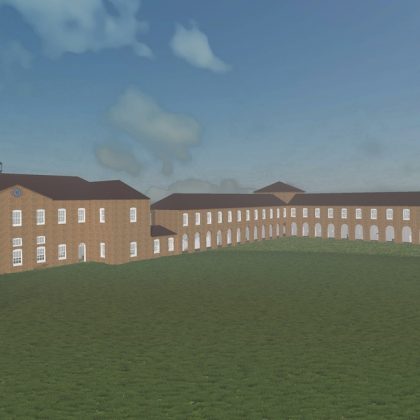
The Mitford and Launditch Hundred House of Industry, now the Gressenhall Farm and Workhouse Museum, presents the historian with major opportunities for (re)imagining the past. Our digital modelling necessitated pulling off the mask it currently wears as a museum, stripping away the residue of its time as a twentieth-century Old Age Home, and uncovering the architectural and functional changes that turned it into a Union Workhouse of the New Poor Law period, after 1834.

Read more

Why remember the fifth of November?

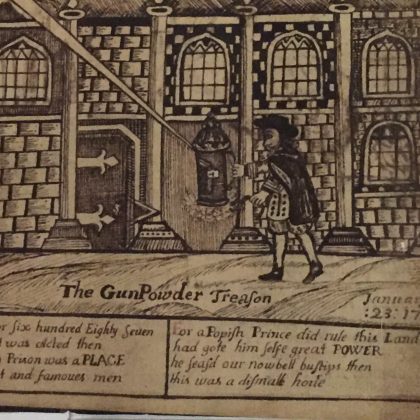
It shows that the king did not share the interpretation of the Gunpowder plot and the purposes of thanksgiving which were propounded by parliament and by generations of English preachers and writers... as further justification for anti-catholic beliefs and policies.

Read more

Envoy to Apartheid: The Royal Ballet in South Africa, 1960

In late 1959, before the tour began, the company’s decision to leave behind its only dancer of colour, the South African-born soloist Johaar Mosaval, ignited parliamentary debates and media uproar... [my article] shows how ballet worked as a tool of British ‘soft power’, aiding the decolonizing state in its effort to shore up ties with white South Africans.

Read more

Male Anxiety and the English Landed Gentry 1700-1900

Our article explores anxiety as a gendered emotion in a specific part of a social group across a long period of time: the anxieties of younger sons of the English landed gentry in the eighteenth and nineteenth centuries. Drawing on recent theories and empirical studies in the history of emotions, we analyse anxiety through the correspondence of 11 gentry families.

Read more

Rethinking the English Revolution of 1649

Rethinking the English Revolution of 1649 by Jonathan Fitzgibbons was published in The Historical Journal When the axe fell on 30 January 1649, cutting short the troubled life of King Charles I, one eyewitness claims that there followed ‘such a groan’ from the crowds of spectators ‘as I never heard before and desire I may never hear again’.…

Read more