

From Mycenaean Frescoes to Hellenistic Sculpture: Women’s Research in the Early Years of the ABSA
The first volume of the Annual of the British School at Athens was published in 1895, almost a decade after the foundation of the School in 1886.…


The first volume of the Annual of the British School at Athens was published in 1895, almost a decade after the foundation of the School in 1886.…

In the mid-1st century BCE, a freighter laden with Greek art was sailing westward in the Mediterranean when it crashed and rapidly foundered, taking some of its crew and passengers down with it.…

Aristotle is certainly one of the most foundational, influential, and therefore heavily commented on and thoroughly studied figures in the history of philosophy.…

Classical Review has recently expanded its standard work of publishing reviews and notices of single books to include also longer pieces covering more – and more varied – material.…

Can babies have honour? Can they be recognised as agents? And can they take part in dynamics of recognition? If we consider ancient Greek sources, both literary and philosophical, we can get a positive answer to these questions – an answer that strikingly converges with what developmental scientists tell us about babies’ psychology.…

Parthenon Ancient Greece Acropolis Athens Archaeology 3D CGI Reconstruction Athena Temple Greek
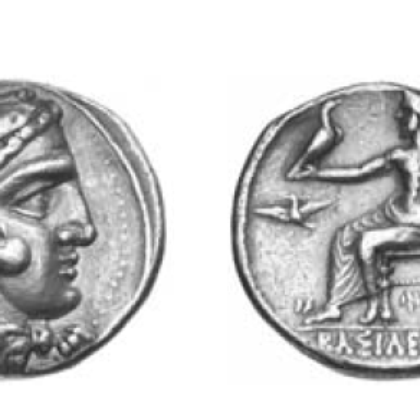
Once upon a time in Paphos, so tells Plutarch (Mor. 340d), Alexander the Great decided that the reigning king was unjust and wicked, and removed him from his throne.…

Last year, the editors of Classical Review announced that we would begin reviewing digital projects. This move recognises both the importance of digital resources for how we study and teach the ancient world, and the important roles that scholars of antiquity have played in the development of the digital humanities ecosystem.…

The Annual of the British School at Athens (ABSA) has long been a preferred repository of research on Sparta. This introduction provides a brief history of research in the region and an account of further developments in archaeological and historical research.…

Classical Review publishes hundreds of reviews every year. The books reviewed in our journal run the full range of topics related to antiquity and its reception; and the reviewers who write them are similarly diverse in their approaches.…

At the end of the Greek Bronze Age, between c.1400-1200 BCE, the Mycenaean palaces of Crete and mainland Greece used small clay tablets to keep their accounting documents.

Classical Review’s latest Profile, Greek Tragedy and Performance by Rosa Andújar (King’s College London) has just been published and is free to read.…

This text is identified as my own by the name placed above it, which seems sensible enough. Marking ownership was one of the earliest uses to which the ancient Greeks put their alphabet—which was to spawn among others the alphabet in which this text is written—but they had a strikingly different way of doing so. ‘I am the kylix of Korax’, declares an eighth-century BCE wine-drinking cup from Rhodes; ‘I am the lekythos of Tataie—whosoever steals me will go blind’, threatens a seventh-century oil flask from Cumae; ‘I am the remembrance of Ergotimos’, announces a shelf of Attic rock from the sixth century.

Two thousand four hundred years ago, a seven-year-old girl in Athens, whose parents had died, was taken by her legal guardian to the island of Lemnos.…
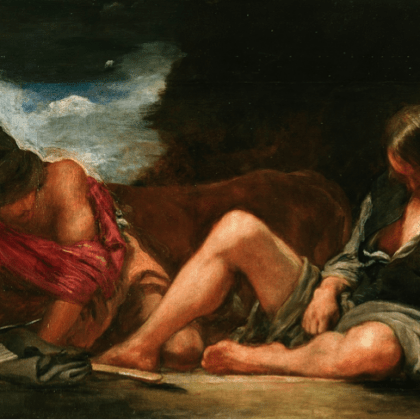
Napoleon once said that ‘there are only two powers in the world, the sword and the spirit’ and that ‘in the long run the sword will always be conquered by the spirit.’ The results of this study, which delves into the etymology and phraseology of Greek terms belonging to the semantic sphere of power, agree with the Emperor’s perspective.

Codex Climaci Rescriptus is worth knowing about. It is the only surviving Greek witness to Hipparchus’s previously lost star catalogue, is over seven centuries earlier than the next surviving witness of Eratosthenes, and is the earliest witness to parts of Aratus’s Phaenomena.…
The Journal of Hellenic Studies is making some key improvements which will better support authors and readers. Most importantly, from 17 August 2022, contributions to the journal should be submitted using the new online submission system on the Cambridge Core website.…

When only four words of a poet’s entire output in a specific genre survive to the present day, is there really anything of substance that we can say about this poetry on the basis of such slender remains?…
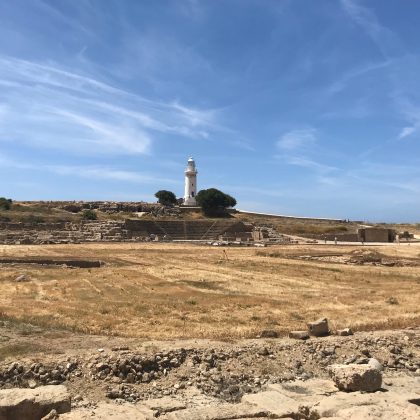
Portable braziers, frequently made of clay utensils and appearing in different shapes (Fig. 1:a), are associated with the process of cooking. They were popular across the Mediterranean from the Early Hellenistic to the Early Roman periods.
Valerius Flaccus’ Argonautica breaks off at a crucial and tantalising moment on the island of Peuce at the mouth of the Hister (Danube). With Medea’s assistance, Jason has managed to obtain the golden fleece and the Argonauts have departed Colchis for Greece with Medea in tow.
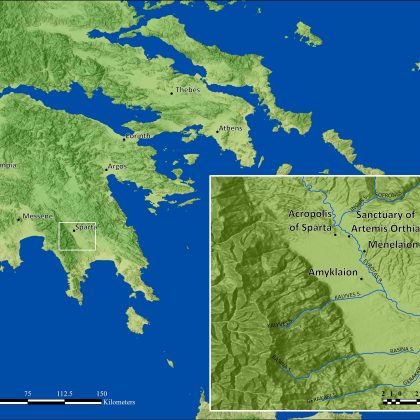
From 1906 through 1910, archaeologists from the British School at Athens (BSA) conducted excavations at the well-known sanctuary of Artemis Orthia in Sparta (see Dawkins 1929).…

Lexica are the workhorses of Classical Studies. They’re the tomes that come most easily to mind when we joke that we spend our days ‘looking things up’. And so, the launch of a new lexicon for Ancient Greek is an event to be noticed.
The Journal of Roman Studies has now lasted sixteen years longer than the Julio-Claudian dynasty, and is showing no particular signs of incipient senectitude.…

It may seem obvious to state that slavery existed within the Roman Empire. Afterall, there is a large corpus of epigraphic and literary evidence outlining the role of enslaved people during this period.…

War always has a high price, paid by people and their land. The land has no value without its secure human being.…

What is the Beautiful? In Plato’s Hippias Major, Socrates and the sophist Hippias set out to answer this question. Along the way, they evaluate such answers as ‘the appropriate’, ‘the beneficial’, ‘gold’, and even ‘burying your parents’.…

In popular imagination, the Roman Empire was an agent of law and peace in the ancient world. However, Rome had a brutal side, with the death penalty used for a wide range of crimes.
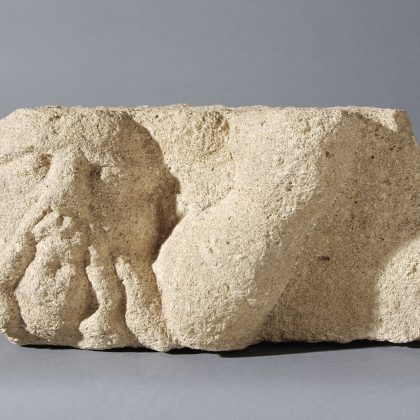
It was an amazing moment in 1990 in the course of the Historic England (HE) excavations at Stanwick Roman villa, when David Neal uncovered the first piece of sculpted stone, reused as a quoin in the north-eastern corner of the fourth-century villa building.…

A fair-haired, bull-necked, poetry-loving ruler, with an eye for interior design, pathetically desperate for his subjects’ affection, sexually incontinent, lazy and slapdash in his handling of public affairs, prone to showing off his knowledge of Greek in public, and later to be remembered as the most disastrous political leader his country had ever produced – why have the Roman Society and the British Museum chosen this year of all years to commemorate the emperor Nero?…

Questions on the extent of multiculturalism in Britain’s (Roman) past have never been more relevant. Thanks to the evidence of inscriptions and the recent scientific analysis of human skeletal remains we know that Romano-British cities were home to significant minorities of people with foreign origins from across the Roman empire and beyond, but what can the more everyday evidence of pottery tell us?…

A new blog from Professor Lin Foxhall looking at domestic interactions in the ancient world.

Lin Foxhall chats to Cambridge about her new editorship and hopes for the Journal's future.
Classical Review welcomes new Reviews Editor Greta Hawes

I would love to have a dinner with Philo of Alexandria even though we would be more likely to disagree on most issues.…

I probably should be naming some mighty and mysterious genius, one of the great philosophers I study or a mostly-lost tragic poet, but it would feel wrong somehow.…

In discussing the interconnections of action and character (ethos) in tragedy, Aristotle praises the Greek painter Polygnotos for his “fine depiction of character” (Poetics 1450a27), contrasting his work with that of Zeuxis, who, famous for his realism, does not depict character.…
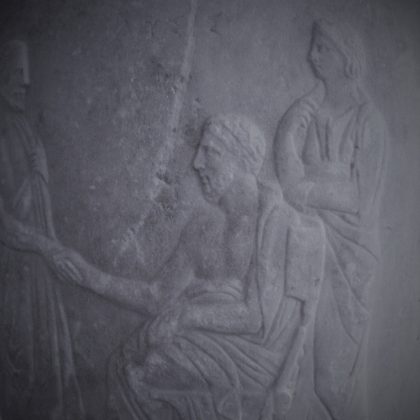
Visiting museums has been difficult this year, so it is with even greater longing that I often think these days of what is, to me, one of the most moving objects to have survived from antiquity: the gravestone of ‘Lysis, son of Democrates, of the deme Aexone’ (to cite the inscription), dating from around 350 BC and preserved in the Museum of Piraeus.…

“French, the son of a Yorkshire policeman, graduated with a BA in Classics from Cambridge University, but found his vocation as an archaeologist in Greece through encounters at the British School at Athens…” The latest digital publication of the British Institute at Ankara is a collection of papers that commemorate and appraise the work of David French, director of the BIAA from 1968 to 1994.…

Pity me, pitiable in many ways, I who am crying out, weeping like a girl, and no one can say he saw this man do such a thing before, but though racked with torments I never would lament!…

“Staying Here may be our only option during the current pandemic, but it would be too simple to declare this the only right answer for all time.”…

'On collaboration and a new analysis of Sappho' - Patricia Rosenmeyer and Giuliana Ragusa describe their research, 'A DELICATE BRIDEGROOM: HABROSUNĒ IN SAPPHO, FR. 115V'.
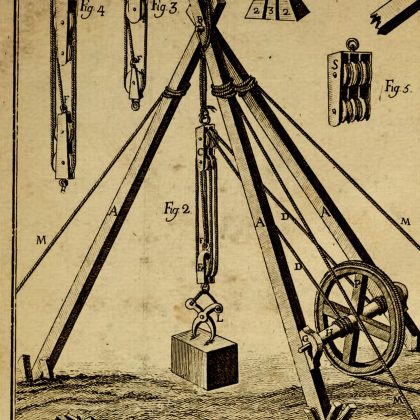
As modern Greeks undertake to reconstruct the Parthenon, largely using stone material from the site’s ruins, a question naturally arises: How did ancient Greeks construct massive temples and other buildings — lifting and placing one heavy block at a time, and up multiple rows in a wall — without modern advanced machinery?…

Shaping 2019: Introducing the Cambridge Philological Society Prize As the year draws to its conclusion, the Cambridge Philological Society was pleased to see that three articles in Classical Archaeology and Ancient History (published between 2015 and 2017 in our society journal – The Cambridge Classical Journal) featured among the most downloaded papers of 2018!…
Douglas Cairns concludes his exploration of his favourite articles from the Journal of Hellenic Studies archive. You can access these articles for free by following the links below, or you can read his previous post.…
Douglas Cairns continues exploring his favourite articles from the Journal of Hellenic Studies archive. You can access these articles for free by following the links below, or you can read his previous post.…
When I was asked to name my top five Journal of Hellenic Studies articles, it seemed to me that the only way to get any kind of handle on the huge treasury of classic scholarship that the JHS archives contain would be to take a personal view. …

Lucy Donkin, Lecturer in History and History of Art at the University of Bristol, discusses her forthcoming article, ‘Mons manufactus: Rome’s man-made mountains between history and natural history’, in Papers of the British School at Rome (2017), which will shortly be published via FirstView on Cambridge Core.

As a subscriber to Anatolian Studies for forty years, I am a loyal reader and very familiar with the academic literature and specialist studies about the antiquities of Turkey, but by any standards the 2016 volume of the journal must count as one of the best ever.

Michael Squire, Reader in Classical Art at King’s College London, introduces the picture-poems of Optatian, composed in the early fourth century AD, which are the subject of his forthcoming article ‘How to read a Roman portrait? Optation Porfyry, Constantine and the uultus Augusti’, to be published in Papers of the British School at Rome later this year

Meet the editors of the Papers of the British School at Rome as they discuss how they represent the journal and pick out their favourite articles.
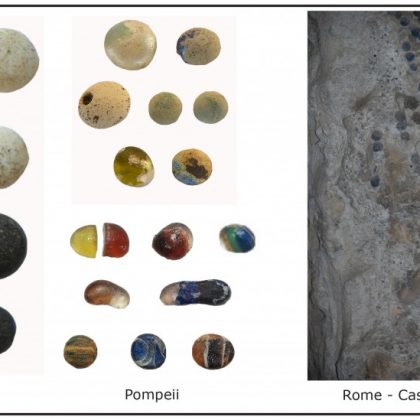
Hilary Cool, Barbican Research Associates, reflects on how she tackled the topic of her forthcoming article in Papers of the British School at Rome which is due to be published later this year.…
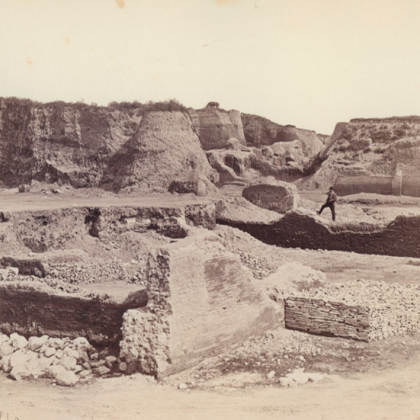
Peter Wiseman, University of Exeter, discusses his forthcoming article ‘Maecenas and the Stage’, which is due to be published in Papers of the British School at Rome later this year.

Professor Stephen Mitchell, council member of the BIAA, discusses the article Gladiatorial Games in the Greek East: A Complex of Reliefs from Cibyra in the latest issue in Anatolian Studies.…
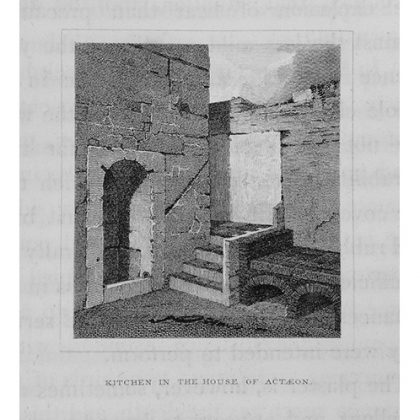
Rosemary Sweet, University of Leicester, discusses her forthcoming article, William Gell and Pompeiana (1817-19 and 1832), in Papers of the British School at Rome (2015) which is due to be published later this year.…
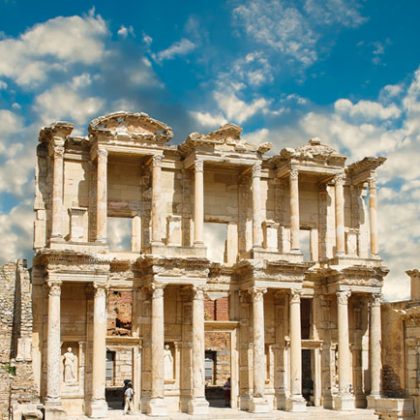
Many iconic ruins across the world are all that remains of the libraries of the past. Who built these libraries? Who created the first ‘public library’?…

Back in spring 2008 the new Doctor Who was entering its fourth season. David Tennant was the Doctor, Catherine Tate was his companion Donna, and Pompeii was the destination of their first journey through time together.…

As the second of two features marking Cambridge University Press’ sponsorship of the Cambridge Greek Play 2013, Dr Oliver Thomas, incoming Editor of The Cambridge Classical Journal, considers some of the ways of translating (and not translating) an ancient Greek play to keep it amusing.…
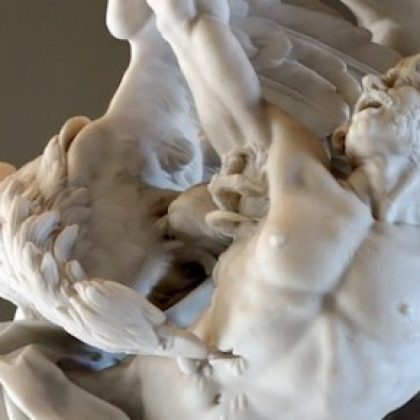
‘All human skills are from Prometheus’..or so Prometheus claims in the ancient Greek tragedy Prometheus Bound. As the first of two features marking Cambridge University Press’ sponsorship of the Cambridge Greek Play 2013, Dr Oliver Thomas, incoming Editor of The Cambridge Classical Journal, explores the enduring fascination of the figure of Prometheus.…

The British Museum is currently hosting a fascinating exhibition looking at life and death in Pompeii and Herculaneum. It will be running until the 29th September 2013, and you can find out further information here.…

This post has been adapted from the Blog post entitled ‘The Olympics: One year on…’ posted on The Classical Association Blog on 23rd May 2013.…

Professor Catharine Edwards is a member of The Journal of Roman Studies Editorial board and has contributed to a number of Classics journals.…

Greece & Rome is a journal which delivers scholarly research to a wide audience. Its ambition to challenge younger audiences, in particular school age children studying Ancient Greek and Latin, led to the journal publishing crosswords on a regular basis from 1932 to 1946, with additional puzzles in 1962 and 1970.…

The Classical Review publishes informative reviews from leading scholars on new work covering the literatures and civilizations of ancient Greece and Rome, and has done so since 1887.…

How does a learned Society communicate with members in the 21st Century? How can it use Social Media and to what end?…

The 2012 Olympic games are upon us. It is well known that the origins of the modern Olympic games lie in the Ancient Greek traditions, but how do they compare?…
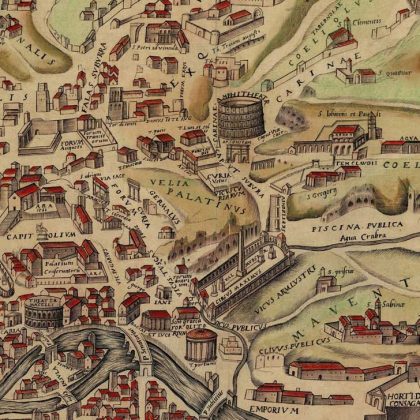
After 58 days, a great deal of mouse clicking and a lot of concentration the waiting is over. A total of 247 people attempted the jigsaw with only twenty two managing to complete the challenge.…
Ancient Rome is back on the map. The success of TV shows like Mary Beard’s Meet the Romans has helped viewers rediscover the city and illuminated the streets of Rome in the public’s imagination.…

‘Hunchbacks smothered in mustard and served on a silver platter’ and ‘the mangling of a Fisherman’s face with a live Lobster’.…
The English language contains a wealth of insults and terms of abuse. Personal insults attack the core and immutable aspects of a person, such as their race, ethnicity, appearance, age, or a disability.…


Even though findings from genetics and other sciences unequivocally refute biological conceptions of race, this erroneous viewpoint remains widespread among the general public.…

The March article of Muses – the arts blog from BJPsych International is the first blog of the series. The blog is written by Dr Dami Ajayi, Specialty Doctor, Barnet Enfield and Haringey Mental Health NHS Foundation Trust and Trainee/Blog Editor, BJPsych International.…

Some disability-related names have dropped out of usage, because they are now considered to be offensive due to their origins. Down Syndrome (Trisomy 21) is one example.…

The paper “The role of premenstrual syndrome in hedonic hunger and food craving during the menstrual cycle“, published in Journal of Nutritional Science, has been chosen as the latest Editorial Highlight and is freely available to download for one month.…

For over a century, the giant stone jars of northern Laos have remained one of Southeast Asia’s great archaeological mysteries. Scattered across remote ridgelines and forests on the Plain of Jars, these massive megalithic vessels have sparked debate over their true purpose: storage containers, symbolic monuments, or part of a complex mortuary tradition?…

The Paper of the Month for March is ‘Impact of omega-3 fatty acid supplementation on clinical manifestations in autism spectrum disorders: an umbrella review of meta-analyses“.…
How long will humankind survive? Besides the fact that we have been able to eliminate ourselves with nuclear weapons for decades, even without a third world war, the challenge to take care of the resources of our planet remains; we need to use them in a way that our children and their children can have a place on Earth as well. In this blog post Andreas Losch discusses his recent review article in the International Journal of Astrobiology, The need of an ethics of planetary sustainability


It is an article of faith among ordinary Filipinos that American troops will die with Filipino troops defending Philippine claims to the Spratly Islands in the South China Sea (SCS).…

Q&A with Editor-in-Chief of the Precision Medicine Journal, Dame Anna Dominiczak, for International day of Women and Girls in Science

More and more research is finding inflammation as a potential contributing factor towards to the development of various mental illnesses. A systematic review was conducted to determine the association between parasitic infection and mental illnesses in various African populations. Two parasite groups were evaluated; helminths and protozoans, and four mental illness classifications; depressive disorders, anxiety disorders, schizotypal disorders and unspecified mental illnesses.

This is the first post in our new series: “Conversations with Authors.” For our inaugural post, we asked Dr. Vesla Weaver to meet (virtually) with Dr.…
The March article of Muses – the arts blog from BJPsych International is the first blog of the series. The blog is written by Dr Dami Ajayi, Specialty Doctor, Barnet Enfield and Haringey Mental Health NHS Foundation Trust and Trainee/Blog Editor, BJPsych International.…

The English language contains a wealth of insults and terms of abuse. Personal insults attack the core and immutable aspects of a person, such as their race, ethnicity, appearance, age, or a disability.…


Listen to @BBCRadio4's Start the Week, featuring @NineDotsPrize winner @jkkusiak, talking about her book, 'Radically Legal'. Learn how a group of ordinary people inspired the book when they reclaimed over 240,000 apartments back from corporate landlords 🔗

Start the Week - ‘Left behind’, but not forgotten - BBC Sounds
Tom Sutcliffe with Paul Collier, Joanna Kusiak and Matthew Xia.
cup.org
Sparking curiosity from geopolitics in Japan to the cultural implications of AI!
Explore the seven new titles we are welcoming to Cambridge and the seven #OpenAccess titles we are launching in 2025 🚀 🔗 https://cup.org/3yhAuAx
Our Flip it Open programme has published titles from authors @GibbsSpike, @liederfollower and Inés Valdez!
Discover how we are funding the publication of #OpenAccess books without changing purchasing habits 🔗 https://cup.org/4diDHii


 ;
;


