

Racism and Colonialism in Hegel’s Philosophy:
A Conversation with the Guest Editors of the Hegel Bulletin Themed Issue, Daniel James and Franz Knappik

A Conversation with the Guest Editors of the Hegel Bulletin Themed Issue, Daniel James and Franz Knappik
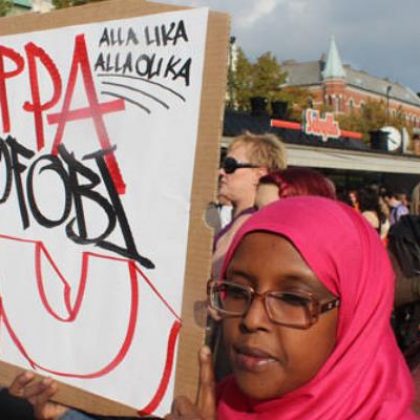
When, in September 2019, the editors of the Journal of Modern African Studies invited Professor Moses Ochonu, a historian at Vanderbilt University, to write a brief on recurrent xenophobia in South Africa, we were unsettled by the apparent contradiction between repeated attacks on individuals from other African countries, and the idea of Ubuntu, a philosophical insistence on Afro-human solidarity championed most vigorously within the South African academy.…

A hundred years later, the claims that KRA members made about widening political representation and constitutional reforms sit at the heart of the protests taking place on the streets of Hong Kong.
The editors of Contemporary European History are delighted to announce the results of the 2019 CEH Prize, which was set up to encourage, recognize and promote high-quality research among postgraduate and early career scholars.…

There is a unique pleasure that comes from being involved in research that exceeds the expertise of any single scholar. Perhaps every historian entertains ideas for such projects, yet demur when confronted with acquiring another language, familiarity with new archives or historiography, or proficiency in a different time period.

My article explores the different meanings of termites, or white ants, for the British empire in India... and shows how South Asians in the 19th and 20th centuries themselves internalised the British imperial rhetoric of white ants to pursue their own distinct political agendas.

Colonial and post-colonial port cities in the Atlantic and Indian Ocean regions functioned as crucial hubs in the commodity flows that accompanied the emergence and expansion of global capitalism.

What does an empty bottle of concentrated orange juice have to do with colonialism? Some of you may remember the Welfare Orange Juice that the British government provided to pregnant women and young children from the middle of the Second World War until 1971.…
The public influence attained internationally by such revisionism requires historians to expose the deep methodological flaws, misreading of historical facts, and misrepresentations of prior scholarship that it entails.

Unfolding the histories of women who invested in the Virginia Company was the starting-point of this research, but as I began tracing Romney and Hueriblock through the archives, I learned that their involvement in the Virginia Company was part of a wider story.

My article on feather-work in colonial Peru shows, above all, that we should no longer differentiate between non-literate (material) Native Americans with feathers on their heads and literate Europeans with feathers in their hands. Far more important should be the historian’s distinction between non-literacy and knot literacy as this separates or connects cultures in the stories that we tell about the past.
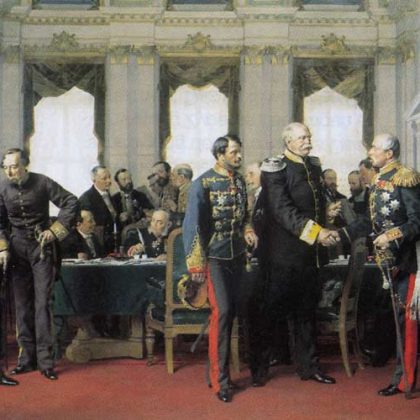
The nineteenth century just isn’t what it used to be. Any number of indicators – from academic job postings and doctoral dissertations to journal articles and conference panels –suggest that interest in the nineteenth century among historians of Europe has been declining over the past three decades.…
The English language contains a wealth of insults and terms of abuse. Personal insults attack the core and immutable aspects of a person, such as their race, ethnicity, appearance, age, or a disability.…


Even though findings from genetics and other sciences unequivocally refute biological conceptions of race, this erroneous viewpoint remains widespread among the general public.…

As Christopher Nolan's 'The Odyssey' reaches cinemas, explore the scholarship behind one of history's most enduring and influential stories.

The March article of Muses – the arts blog from BJPsych International is the first blog of the series. The blog is written by Dr Dami Ajayi, Specialty Doctor, Barnet Enfield and Haringey Mental Health NHS Foundation Trust and Trainee/Blog Editor, BJPsych International.…

Some disability-related names have dropped out of usage, because they are now considered to be offensive due to their origins. Down Syndrome (Trisomy 21) is one example.…

[This is Part IV of Making a Psychologist. In the last two posts, I described how to create an app that continuously records data from your phone, then interprets that raw data as a series of behavioral “episodes”.…

A few months ago, we responded to a call for papers for a themed issue for Advances in Archaeological Practice entitled “Advances in Archaeological Labor Management.”…
How long will humankind survive? Besides the fact that we have been able to eliminate ourselves with nuclear weapons for decades, even without a third world war, the challenge to take care of the resources of our planet remains; we need to use them in a way that our children and their children can have a place on Earth as well. In this blog post Andreas Losch discusses his recent review article in the International Journal of Astrobiology, The need of an ethics of planetary sustainability


It is an article of faith among ordinary Filipinos that American troops will die with Filipino troops defending Philippine claims to the Spratly Islands in the South China Sea (SCS).…

Q&A with Editor-in-Chief of the Precision Medicine Journal, Dame Anna Dominiczak, for International day of Women and Girls in Science

More and more research is finding inflammation as a potential contributing factor towards to the development of various mental illnesses. A systematic review was conducted to determine the association between parasitic infection and mental illnesses in various African populations. Two parasite groups were evaluated; helminths and protozoans, and four mental illness classifications; depressive disorders, anxiety disorders, schizotypal disorders and unspecified mental illnesses.
The March article of Muses – the arts blog from BJPsych International is the first blog of the series. The blog is written by Dr Dami Ajayi, Specialty Doctor, Barnet Enfield and Haringey Mental Health NHS Foundation Trust and Trainee/Blog Editor, BJPsych International.…
This is the first post in our new series: “Conversations with Authors.” For our inaugural post, we asked Dr. Vesla Weaver to meet (virtually) with Dr.…

The English language contains a wealth of insults and terms of abuse. Personal insults attack the core and immutable aspects of a person, such as their race, ethnicity, appearance, age, or a disability.…


Listen to @BBCRadio4's Start the Week, featuring @NineDotsPrize winner @jkkusiak, talking about her book, 'Radically Legal'. Learn how a group of ordinary people inspired the book when they reclaimed over 240,000 apartments back from corporate landlords 🔗

Start the Week - ‘Left behind’, but not forgotten - BBC Sounds
Tom Sutcliffe with Paul Collier, Joanna Kusiak and Matthew Xia.
cup.org
Sparking curiosity from geopolitics in Japan to the cultural implications of AI!
Explore the seven new titles we are welcoming to Cambridge and the seven #OpenAccess titles we are launching in 2025 🚀 🔗 https://cup.org/3yhAuAx
Our Flip it Open programme has published titles from authors @GibbsSpike, @liederfollower and Inés Valdez!
Discover how we are funding the publication of #OpenAccess books without changing purchasing habits 🔗 https://cup.org/4diDHii


 ;
;


