

The quiet champions driving genital schistosomiasis research forward
In this highlight of the month series, Professor Amaya Bustinduy highlights three papers: Lemin et al., Neufeld et al. and Smith et al.…


In this highlight of the month series, Professor Amaya Bustinduy highlights three papers: Lemin et al., Neufeld et al. and Smith et al.…

Introductions of alien species into new environments create major concerns including conservation and ecosystem disruption, agricultural production and economic loss. Problems are exacerbated where the introduced species transfer novel pathogens that carry new disease risks for native species.

Each year Parasitology hosts an open competition for authors and readers to submit either photographs or associated computer graphic imagery. In so doing, we hope to capture the essence of contemporary parasitological research across the world.…

Every year on 15 October, Global Handwashing Day reminds us of the critical role hand hygiene plays in protecting health and preventing disease. The 2025 theme, “It Might Be Gloves. It’s Always Hand Hygiene,” reinforces that even when gloves are used, hand hygiene remains essential.

New research uncovers how two marine nematode parasites are interbreeding, in a contact area of their range of distribution

The Galápagos Islands are famous for inspiring Charles Darwin’s theory of natural selection — their unique plants and animals have been studied for over a century.…

Welcome to our “Meet the Editors” series, where we interview the editorial team about their work and their relationship to the journal.…

When Richard Burton and John Speke came across Lake Tanganyika in 1858 as the first Europeans, they had no idea what they had just discovered.

What is your current job title within Parasitology and what does it involve? Where are you based in the world? I’m the Publisher at Cambridge University Press for Parasitology.…

When do parasites infect hosts? And does timing differ between separate host populations? Answers to these questions are fundamental to our understanding of host-parasite interactions and co-evolution. Yet often these aspects of host-parasite interactions are understudied.

Starting my PhD in 2020 on the conservation of Swedish parasitic freshwater mussels (Order: Unionida), I initially noted a lack of effort put into the study of what these mussels actually do to their hosts. If our goal is to increase the number of these mussels in our lakes and rivers, this will inevitably have some downstream impact on their host fishes.

Javier González Miguel was one of the winners of the Early Career Researcher Award 2019, awarded each year by Parasitology for first or last authors of outstanding papers published in the journal. Three years later we catch up with him to see how his career has progressed since then.

Over the past 18 months, several authors and two Guest Editors have worked together on a Special Issue (SI) on Fish Parasites for the Cambridge University Press journal, Parasitology, the longest-running journal among periodicals in the field. Our SI contains 13 articles, including reviews and original research articles, co-authored by world-leading experts in individual research fields of fish parasitology.

Welcome to our “Meet the Editors” series, where we interview the editorial team about their work and their relationship to the journal. In this post we meet Dr Cinzia Cantacessi, Editor for Parasitology.

A new analysis of ancient faeces found at the site of a prehistoric village near Stonehenge has uncovered evidence of the eggs of parasitic worms, suggesting the inhabitants feasted on the internal organs of cattle and fed leftovers to their dogs.…

It takes a lot of people to publish an issue of Parasitology. Each year the journal successfully publishes 14 issues, with over 170 papers contained therein. Essential, of course, are our dedicated authors but there are also many “behind-the-scenes” people crucial in making sure we disseminate high quality research into the public domain

The evolutionary arms race between parasites and their hosts have been fascinating/puzzling scientists for many years, and current World events have made even clearer about the importance of understanding host-parasite interactions.

Welcome to our “Meet the Editors” series, where we interview the editorial team about their work and their relationship to the journal. In this post we meet Dr Lisa Ranford-Cartwright, Editor for Parasitology

This year a new 275-page book, with 21 chapters, entitled "The Tale of a Man, a Worm and a Snail: The Schistosomiasis Control Initiative" written by Professor Alan Fenwick OBE, with the help of Wendie Norris and Becky McCall, first appeared in January. It is part autobiography, part scientific narrative, with an impressive bibliography. Typical of CABI publishers, the book has a high printed production standard with several colour photographs and schematic graphics that embellish its narrative.

Thank you so much for agreeing to participate in our Meet the Editors series on the Parasitology blog. We are very grateful for your time and input, and we hope that you enjoy the chance to share your work and a little bit about yourself with our readers.

When we think of the human roundworm, Ascaris lumbricoides, or the human whipworm, Trichuris trichiura, we tend to focus upon the similarities between these two parasites. Why is this so?

Young men often do dangerous things, extreme sports for example. It’s less common for eating something to be the concern. Paragonimus kellicotti was first named as a species in 1908.
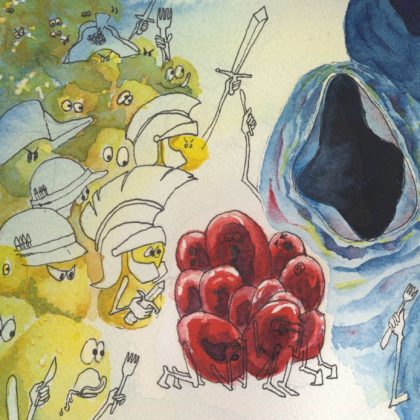
Why do some individuals become sicker than others when they are infected with the same pathogen? Two factors that can change how sick an individual becomes are the dose of the pathogen and the presence of another parasite. We studied these two factors in mice that were infected with malaria and hookworms.

The British Society for Parasitology (BSP) is affiliated with the Cambridge University Press (CUP) journal Parasitology and BSP/CUP frequently collaborate to produce special issues dedicated to showcasing BSP meetings. The present issue is unusual for several reasons; it showcases a BSP meeting held outside of the UK (in Granada, Spain), it is devoted to the Trypanosomiasis and Leishmaniasis Symposium, a biannual gathering of folks with interests in these diseases and also represents the only BSP meeting of 2020 due to the COVID-19 pandemic.

The latest Paper of the Month for Parasitology is “Historical contingency, geography and anthropogenic patterns of exposure drive the evolution of host switching in the Blastocystis species-complex” and is freely available for one month.…

The latest Paper of the Month for Parasitology is “Shining a light on parasite behaviour: daily patterns of Argulus fish lice” and is freely available for one month.…

We celebrate World Ocean Day to remind us of how important the marine habitat is today and its need for better environmental stewardship tomorrow.…
October 15 is Global Handwashing Day, a global advocacy day dedicated to increasing awareness and understanding about the importance of handwashing with soap as an effective and affordable way to prevent diseases and save lives.…
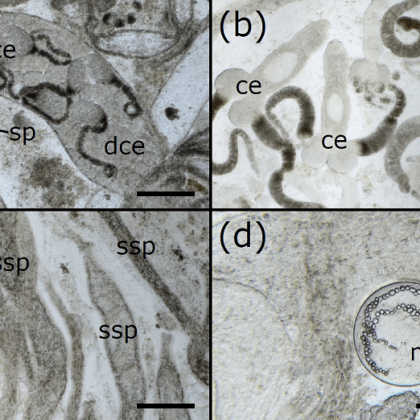
Trematodes (parasitic flatworms) frequently infect the gonad of molluscs such as mussels and snails, but no good methods exist for measuring the level of infection.
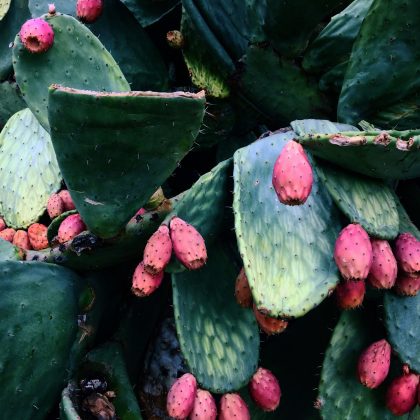
The latest Paper of the Month for Parasitology is Where mite flies lay eggs? Environment mediated parasite avoidance during Drosophila ovipositing.…

The impact of parasites can often reach beyond their individual hosts, shaping populations and communities in their ecosystems. Parasites often control the behaviour of their hosts, leading to their role as “ecosystem engineers,” changing the ways in which the hosts physically shape their environments.

The latest Paper of the Month for Parasitology is ‘Malacosporean myxozoans exploit a diversity of fish hosts’ by Juliana Naldoni, Edson A.…
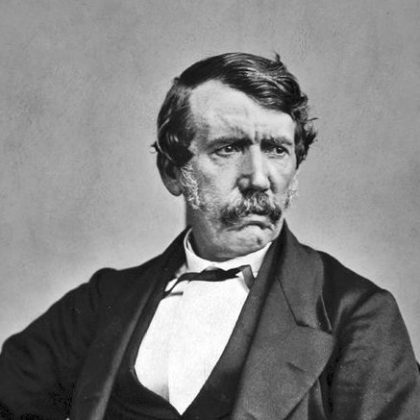
The latest Parasitology Paper of the Month is “Inside Doctor Livingstone: a Scottish icon’s encounter with tropical disease” by Michael Barrett and Federica Giordani.…

The latest Parasitology Paper of the Month is “Knowledge gaps in the epidemiology of Toxocara: the enigma remains” by Celia Holland.…
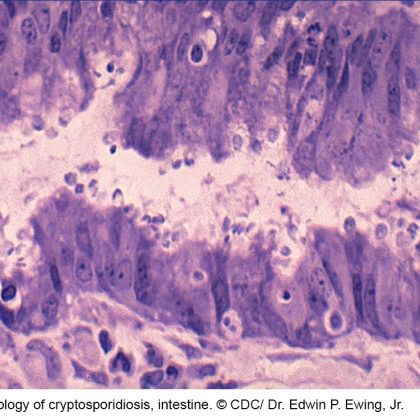
The latest Parasitology Paper of the Month is “Origin of a major infectious disease in vertebrates: The timing of Cryptosporidium evolution and its hosts” by Juan C.…

The December paper of the month from Parasitology is ‘Approaches for the vaccination and treatment of Neospora caninum infections in mice and ruminant models’ by Andrew Hemphill et al. …
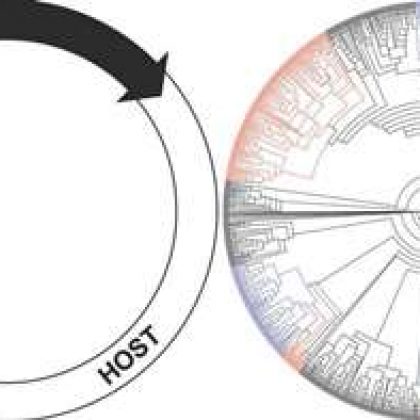
This Feburary Parasitology published an Open Access Supplement entitled The Evolution of Parasite Genomes and the Origins of Parasitism. The guest-editor Dr Andrew Jackson from the Department of Infection Biology at the University of Liverpool, discusses the special issue below.…

The June article of the month from Parasitology is “Successful vaccines for naturally occurring protozoal diseases of animals should guide human vaccine research.…

Guest editor on the recent special issue of Parasitology on Control of cestode zoonoses in Asia: role of basic and applied science, Akira Ito, talks here about why it is important to study neglected zoonotic diseases.…
The recent special issue of Parasitology on Genetic and Genomic Approaches to Understanding Drug Resistance in Parasites is discussed here by Guest Editor Eileen Devaney.…
Archaeology and cultural heritage work have fully entered the digital age. Today, researchers rely on tools like 3D scanners, a variety of GIS software, and Lidar equipped drones to document the past in ways that were unimaginable just a few decades ago.…


The English language contains a wealth of insults and terms of abuse. Personal insults attack the core and immutable aspects of a person, such as their race, ethnicity, appearance, age, or a disability.…

Even though findings from genetics and other sciences unequivocally refute biological conceptions of race, this erroneous viewpoint remains widespread among the general public.…

The March article of Muses – the arts blog from BJPsych International is the first blog of the series. The blog is written by Dr Dami Ajayi, Specialty Doctor, Barnet Enfield and Haringey Mental Health NHS Foundation Trust and Trainee/Blog Editor, BJPsych International.…

A critical milestone for the archaeological ecosystem has been the publication this April of the National Archaeology Plan (NAP), part of a larger framework for cultural heritage that the Spanish Ministry of Culture has been developing for almost 40 years.…

Some disability-related names have dropped out of usage, because they are now considered to be offensive due to their origins. Down Syndrome (Trisomy 21) is one example.…

A few months ago, we responded to a call for papers for a themed issue for Advances in Archaeological Practice entitled “Advances in Archaeological Labor Management.”…
How long will humankind survive? Besides the fact that we have been able to eliminate ourselves with nuclear weapons for decades, even without a third world war, the challenge to take care of the resources of our planet remains; we need to use them in a way that our children and their children can have a place on Earth as well. In this blog post Andreas Losch discusses his recent review article in the International Journal of Astrobiology, The need of an ethics of planetary sustainability


It is an article of faith among ordinary Filipinos that American troops will die with Filipino troops defending Philippine claims to the Spratly Islands in the South China Sea (SCS).…

Q&A with Editor-in-Chief of the Precision Medicine Journal, Dame Anna Dominiczak, for International day of Women and Girls in Science

More and more research is finding inflammation as a potential contributing factor towards to the development of various mental illnesses. A systematic review was conducted to determine the association between parasitic infection and mental illnesses in various African populations. Two parasite groups were evaluated; helminths and protozoans, and four mental illness classifications; depressive disorders, anxiety disorders, schizotypal disorders and unspecified mental illnesses.
The March article of Muses – the arts blog from BJPsych International is the first blog of the series. The blog is written by Dr Dami Ajayi, Specialty Doctor, Barnet Enfield and Haringey Mental Health NHS Foundation Trust and Trainee/Blog Editor, BJPsych International.…
This is the first post in our new series: “Conversations with Authors.” For our inaugural post, we asked Dr. Vesla Weaver to meet (virtually) with Dr.…
The English language contains a wealth of insults and terms of abuse. Personal insults attack the core and immutable aspects of a person, such as their race, ethnicity, appearance, age, or a disability.…


Listen to @BBCRadio4's Start the Week, featuring @NineDotsPrize winner @jkkusiak, talking about her book, 'Radically Legal'. Learn how a group of ordinary people inspired the book when they reclaimed over 240,000 apartments back from corporate landlords 🔗

Start the Week - ‘Left behind’, but not forgotten - BBC Sounds
Tom Sutcliffe with Paul Collier, Joanna Kusiak and Matthew Xia.
cup.org
Sparking curiosity from geopolitics in Japan to the cultural implications of AI!
Explore the seven new titles we are welcoming to Cambridge and the seven #OpenAccess titles we are launching in 2025 🚀 🔗 https://cup.org/3yhAuAx
Our Flip it Open programme has published titles from authors @GibbsSpike, @liederfollower and Inés Valdez!
Discover how we are funding the publication of #OpenAccess books without changing purchasing habits 🔗 https://cup.org/4diDHii


 ;
;


