2022

rss
Looking Forward to the End of ‘Digital Archaeology’

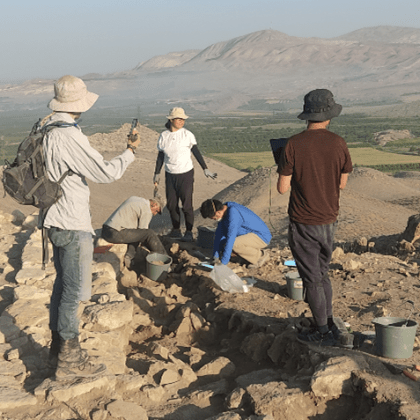
Part of a series of blog posts celebrating the 10th anniversary of the journal Advances in Archaeological Practice. It may come as somewhat of a surprise that the Digital Reviews Editor for Advances in Archaeological Practice is calling for an end to the concept of ‘Digital Archaeology’.…
Read more

Monico Origins, a Bayesian Story

The acknowledgments section of the Monico Bayesian paper expresses gratitude to “Deb Nichols, John Watanabe, Sophie Nichols-Watanabe, Robert (Bob) L. Kelly, and the Dartmouth Coach for inspiring and facilitating the development of some concepts in this paper.”

Read more

World Crime Fiction

At the end of “The Murders in the Rue Morgue,” Edgar Allan Poe’s detective Auguste Dupin, the prototype of the analytical detective, offers a disparaging verdict on the Parisian Prefect of Police.…

Read more

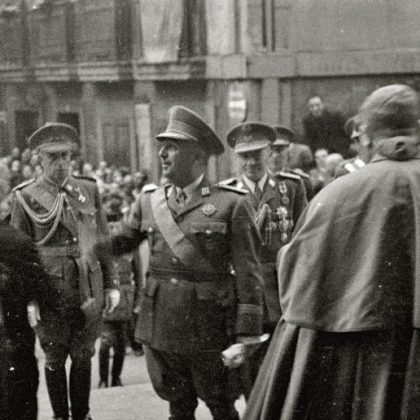
A Spanish Civil War Scrapbook

All I hoped as I embarked on my doctorate devoted to cross-cultural encounters between the International Brigades and the Spaniards who hosted them in the course of the Spanish Civil War was that those cross-cultural encounters had actually taken place.

Read more

Teaching Data Reuse

In the spring semester of 2020, I developed and taught a class on archaeological data reuse and digital literacy at the University of Wisconsin – Milwaukee.…

Read more

Cambridge to publish a new flagship journal in the fast-growing field of Pakistan studies

Critical Pakistan Studies will be the first international journal devoted to the study of Pakistan and its peopleJournal will be interdisciplinary and open accessAims to give the widest possible understanding of Pakistan, past, and present Cambridge University Press is to publish the world’s first international journal devoted to the study of Pakistan and its people.…

Read more

Embedding science scrutiny mechanisms in the UK Parliament

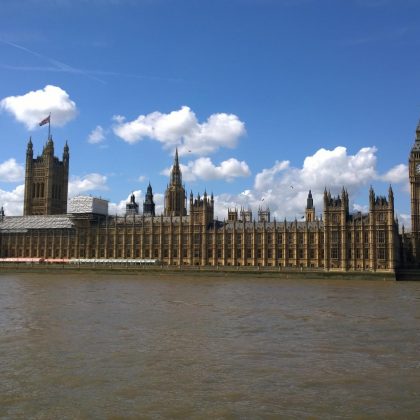
At times during the past few years, evidence sessions of the UK’s House of Commons Science and Technology Select Committee have made headline news, for example Dominic Cummings’ account of his time advising the Prime Minister during the COVID-19 pandemic, or controversial witness statements about diversity and inclusion in STEM careers.…

Read more

Beyond When and Why: North Korea’s Reluctant Embracing of “Peaceful” Nuclear Power

Nobody knows when and why did the Democratic People’s Republic of Korea (North Korea) begin its nuclear weapon program. Our current state of knowledge regarding these simple questions is at best partial; scholars point to different periods as its origin such as 1950 (when the Korean War broke out), 1958 (when the United Stated brought nuclear weapons to South Korea), 1964 (when the People’s Republic of China tested its first bomb), or 1979 (when South Korea started its undeclared enrichment activities that were revealed only in 2014).…

Read more

Circe’s Etruscan Drugs

When only four words of a poet’s entire output in a specific genre survive to the present day, is there really anything of substance that we can say about this poetry on the basis of such slender remains?…

Read more

The Loss of Fear as Civic Performance

Antiwar activists carve “no to war” in frozen rivers, spray-paint slogans of peace in the snow. They scrawl on banknotes, putting their opposition into circulation. Despite the looming threat of 15-year prison sentences, artists and activists in Russia continue to protest Putin’s ongoing invasion of Ukraine.

Read more

The “other side” of history: archaeological heritage and memory processes

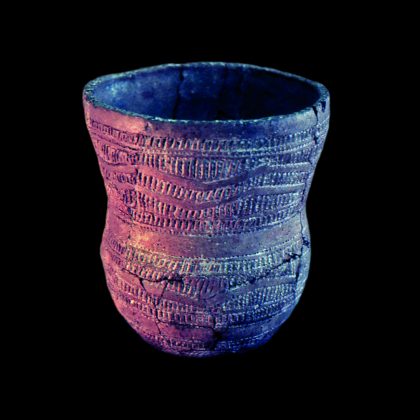
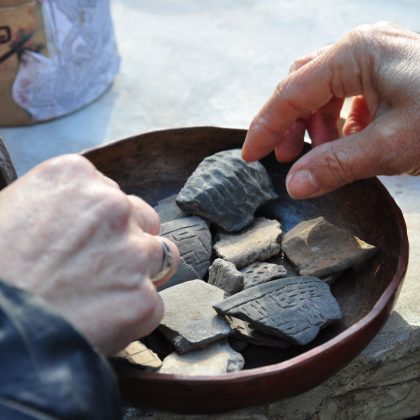
“I found my identity because of pottery,” says Amalia, who runs an Indigenous pottery workshop in General Paz, a city in Buenos Aires province, Argentina. Amalia and her family found archaeological pottery fragments by chance. These findings encouraged them to experiment and learn based on their observations of the techniques and designs of the ancient pottery.

Read more

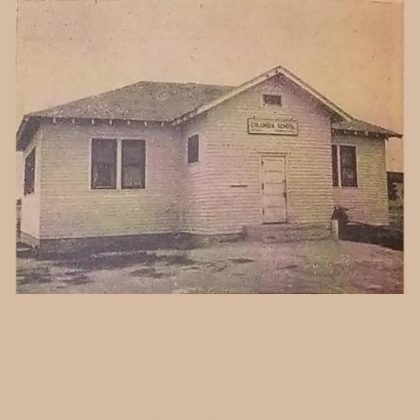
Public Education and Outreach in Archaeology

Archaeology in K-12 and undergraduate classrooms can be used to promote cultural awareness and sensitivity, provide a means of critical thinking, promote cultural awareness and sensitivity, create an awareness of archaeological research, as well as promoting the stewardship of the past.…

Read more

Lidar in Mesoamerica since 2016: Acquisition, Ownership, and Accessibility

In 2016, we were privileged to edit a special section in Advances in Archaeological Practices on lidar in Mesoamerica and are delighted that the editors of AAP have invited us to provide an update to that special section in this blog. At that time, lidar acquisition was still uncommon, with only a handful of projects being fortunate enough to acquire the data that was revolutionizing settlement studies in tropical areas like Mesoamerica.

Read more

Flip it Open: Opening up Roman studies

As one of the editors and authors of Rome: An Empire of Many Nations. New Perspectives on Ethnic Diversity and Cultural Identity, it seems to me that the volume’s becoming open access affirms the purpose of the book and the field which it investigates.…

Read more

A Complicated History of Collaboration with Collectors of Spirit Eye Cave, Texas

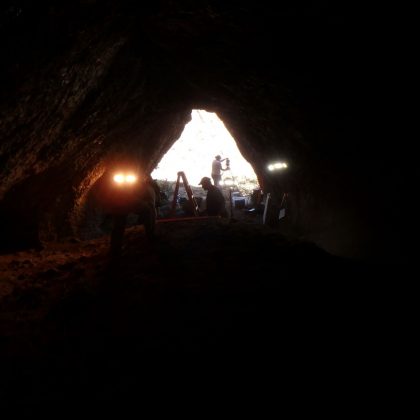
Research at Spirit Eye Cave did not take the course I envisioned. In the 1950s and 1960s, this cave, located on a private ranch in West Texas, was a pay-to-dig site. It was extensively dug, all too common with the vast tracts of private land that typify Texas. Initially, the goal of my research was to salvage any information about when the cave was occupied, and to examine the perishable collections.

Read more

Mr Hobbes goes to Paris

My aim in this piece, however, is to suggest that there is much to be gained from turning to Hobbes’s immediate Parisian surroundings—for, France had its own share of intellectual and political turmoil during the decade of 1640s.

Read more

Unravelling the Myth of Gandhian Non-violence: Why Did Gandhi Connect His Principle of Satyagraha with the “Hindu” Notion of Ahimsa?

Since the demise of Mohandas K. Gandhi (1869-1948), known as the “Mahatma” or the Great Soul, numerous studies have unsurprisingly been published about him, particularly concerning his concept of “non-violence,” a central virtue of his anti-colonial satyagraha campaign. It is tempting to think that nothing new can be offered on the subject. However, by reading his writings in Gujarati, his native tongue, it is possible to reveal important and original insights.

Read more

Pastoral Criticism, Structural Collaboration

The Roman Catholic Church has, in most historical and theological analyses, had a rather hostile relationship to liberal modernity, despite the fact that the church helped to produce the modern world and the thought patterns that continue to govern it.

Read more

Crushing anti-Fascism in the empire: judicial repression in Mussolini’s Libya

Fighting the enemies of Fascist Italy was a major concern for Benito Mussolini’s regime not only within the peninsular borders but also within the colonial administration. This was especially true in the colonial territories that constitute present-day Libya at the time of Fascist rule, where the Duce government established a branch of the Special Tribunal for the Defence of the State based in Rome, having an analogous composition and goal.

Read more

Freedom and equality: prospects for a unified university resistance in Turkish universities

For more than a year now, on every weekday at noon, academics at Boğaziçi University gather in the main courtyard for a silent vigil turning their backs against the Rector’s Building carrying posters demanding the removal of the appointed rector and his appointees, the reinstitution of rectorate elections and the annulment of arbitrary decisions such as the opening of new programs.…

Read more

Who was Iosif Lavrent’evich Mordovets?

This article explores the career of Iosif Lavrent’evich Mordovets who was the chief of the Soviet political police in the Moldavian Soviet Socialist Republic (MSSR) for more than a decade (1944-1955). His long career as a chekist started in Ukraine in the early 1930s continuing through the Great Terror in 1937-38 into 1940-41 Romanian Bessarabia occupied by the Soviet Union.

Read more

Queer Belfast during the First World War

I wrote this article to take this past more seriously on its own terms, and to understand how the political, religious, and economic context of Ireland and its diaspora shaped a culture that, for historians of sexuality, will be familiar yet distinctive.

Read more

Reviewing a new Greek Lexicon

Lexica are the workhorses of Classical Studies. They’re the tomes that come most easily to mind when we joke that we spend our days ‘looking things up’. And so, the launch of a new lexicon for Ancient Greek is an event to be noticed.

Read more