2019

rss
Food Studies and the Gilded Age and Progressive Era

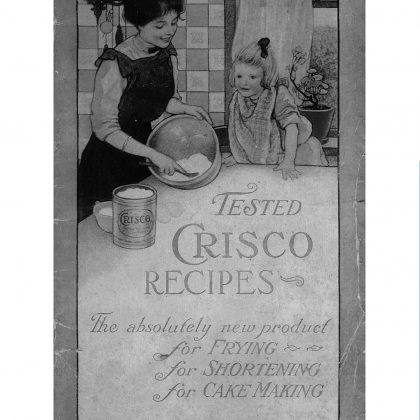
The kind of research and development in commercial food products that began in this era has clearly shaped our world today, not just in the products that we expect to see on market shelves but in our continual anticipation that there will be new products soon and that they will be improvements on the old ones...

Read more

The White Ant’s Burden

My article explores the different meanings of termites, or white ants, for the British empire in India... and shows how South Asians in the 19th and 20th centuries themselves internalised the British imperial rhetoric of white ants to pursue their own distinct political agendas.

Read more

‘Great things are done when (Wo)Men & Mountains meet’. Cécile Morette and the Les Houches Summer School for Theoretical Physics (1951-1972)

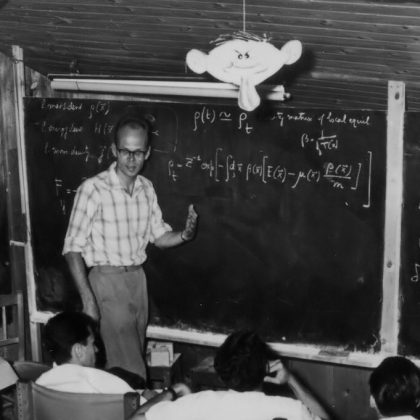
This article explores the history of what was surely one of the strongest elements of that social apparatus, and one of the most innovative: the first and most effective ‘crash course’ in theoretical physics, the Les Houches School of Theoretical Physics, a summer school founded in 1951 by the young Cécile Morette (1922-1971), in a small alpine village.

Read more

The Case of the Catalans Consider’d

The title “The Case of the Catalans Consider’d” was the name used by European chancellors early in the 18th century to refer to the debates and arrangements regarding the political destiny of the Principality of Catalonia in the context of the Peace of Utrecht (1712-1714), the agreement that ended the War of the Spanish Succession.…

Read more

Mobile armed mobs in deadly riots

Experts on ethnic riots agree that the ethnic composition of localities affects their susceptibility to violence. They are however divided on which are more prone to turmoil between ethnically segregated and diverse settings.…

Read more

On Not Recognizing Kadu: Russian place naming in the Pacific Islands, 1804–1830

Our umbrella theme is the poorly known contributions of early nineteenth-century Russian navigators and mapmakers to global cartographic knowledge of the far-flung Marshall, Caroline, and Tuamotu archipelagoes. A particular focus is the varied extent to which Russian place names registered local agency during encounters or drew on navigational knowledge divulged by expert Indigenous practitioners.
Read more

Why (not) Feathers? Period Hands and Material Encounters in Colonial Peru

My article on feather-work in colonial Peru shows, above all, that we should no longer differentiate between non-literate (material) Native Americans with feathers on their heads and literate Europeans with feathers in their hands. Far more important should be the historian’s distinction between non-literacy and knot literacy as this separates or connects cultures in the stories that we tell about the past.
Read more

Reassessing the First Red Scare of 1919-20 at its Centennial

The time has come to take stock of both our historical understanding of the First Red Scare and what it means for us today. The January 2019 issue of The Journal of the Gilded Age and Progressive Era, which I had the honor to guest edit, is the first substantial scholarly collaboration entirely focused on the Red Scare of 1919-20 and marks the onset of its centennial by uniting exciting and recent, but previously disparate, perspectives.

Read more