sustainability

(60) rss icon
Cambridge Materials Q&A with Hui Wei

As part of an ongoing series of Q&As with our Cambridge Materials Board Members, Hui Wei, a Cambridge Materials Health Editorial Board Member discusses their research, recent advances in biomaterials, medical device innovations and health-related applications of materials science - and perspectives on future challenges and opportunities in the field.

Read more

May Releases from Cambridge Aspire

Fully revised and updated, the new edition of Engineering Dynamics provides a comprehensive, self-contained and accessible treatment of classical dynamics. All chapters have been reworked to enhance student understanding, and new features include a stronger emphasis on computational methods, including rich examples using both Matlab and Python; new capstone computational examples extend student understanding, including modelling the flight of a rocket and the unsteady rolling of a disk.…

Read more

Cambridge Materials Q&A with Rumana Hossain

As part of an ongoing series of Q&As with our Cambridge Materials Board Members, Dr Rumana Hossain, UNSW Sydney, Australia a Cambridge Materials: Circularity Associate Editor discusses their research, recent advances in materials, and perspectives on future challenges and opportunities in the field.

Read more

Cambridge Materials Q&A with Yat Li

As part of an ongoing series of Q&As with our Cambridge Materials Board Members, Yat Li, UC Santa Cruz, USA, a Cambridge Materials: Energy Associate Editor discusses their research, recent advances in energy materials, and perspectives on future challenges and opportunities in the field.

Read more

Cambridge Materials Q&A with Hao-Cheng Yang

As part of an ongoing series of Q&As with our Cambridge Materials Board Members, Hao-Cheng Yang, Zhejiang University, China a Cambridge Materials: Water Associate Editor discusses their research, recent advances in materials, and perspectives on future challenges and opportunities in the field.

Read more

Cambridge Materials Q&A with Volker Presser

As part of an ongoing series of Q&As with our Cambridge Materials Board Members, Volker Presser, Leibniz Institute for New Materials, Germany a Cambridge Materials: Water Editorial Board Member discusses their research, recent advances in materials, and perspectives on future challenges and opportunities in the field.

Read more

Cambridge Materials Q&A with Yan Zeng

As part of an ongoing series of Q&As with our Cambridge Materials Board Members, Yan Zeng, Florida State University, USA a Cambridge Materials: Energy Associate Editor discusses their research, recent advances in energy materials, and perspectives on future challenges and opportunities in the field.

Read more

Cambridge Materials Q&A with Manny Teodoro

As part of an ongoing series of Q&As with our Cambridge Materials Board Members, Professor Manny Teodoro, University of Wisconsin, USA a Cambridge Materials: Water Editorial Board Member discusses their research, recent advances in materials, and perspectives on future challenges and opportunities in the field.

Read more

Cambridge Materials Q&A with Executive Editor-in-Chief Yanlei Yu

Professor Yanlei Yu, Fudan University, China is the recently appointed Executive Editor-in-Chief of Cambridge Materials. To celebrate her appointment and the launch of the Cambridge Materials journals, she participated in a Q&A to discuss the aims of the journals and their hopes for their role as a member of the Executive Editorial Board.

Read more

Cambridge Materials Q&A with Executive Editor-in-Chief Jason Robinson

Professor Jason Robinson, University of Cambridge, UK is teh recently appointed Executive Editor-in-Chief of Cambridge Materials. To celebrate her appointment and the launch of the Cambridge Materials journals, he participated in a Q&A to discuss the aims of the journals and their hopes for their role as a member of the Executive Editorial Board.

Read more

Cambridge Materials: Water Q&A with Seth B. Darling

Dr. Seth B. Darling Argonne National Laboratory, USA is the recently appointed Editor-in-Chief of Cambridge Materials: Water. To celebrate the launch of the Cambridge Materials journals, they participated in a Q&A to discuss the aims of the journals and their hopes for their role as EiC.…

Read more

Cambridge Materials: Health Q&A with Vincent Rotello

Professor Vincent Rotello UMass, Amherst, USA is the recently appointed Editor-in-Chief of Cambridge Materials: Health. To celebrate the launch of the Cambridge Materials journal, they participated in a Q&A to discuss the aims of the journals and their hopes for their role as EiC.…

Read more

Introducing Cambridge Materials [UPDATED February 2026]

Announcing the launch of Cambridge Materials, a suite of four new journals dedicated to advancing materials science in the service of global sustainability. Each journal focuses on a critical challenge area—Circularity, Energy, Health, and Water—and is aligned with the UN Sustainable Development Goals (SDGs). Together, they will provide a unique platform where science, engineering, and policy intersect to drive real-world impact.

Read more

Encouraging the consumption of pulses with cooking suggestions and recipes

Pulses, including dry beans, chickpeas and lentils, are healthy, sustainable, and low cost. Pulses, however, are not currently consumed as frequently or by as many people as is currently recommended for health benefits or for planetary gain. We sought to understand why this was, what could be done to encourage pulse consumption, and whether cooking suggestions and recipes can help.

Read more

Can health-related food taxes green our diets?

In a world increasingly concerned with both health and environmental sustainability, the way we eat plays a critical role. However, in our search for solutions for better health and a sustainable planet, we often find ourselves at a crossroads where the decisions we make can have significant trade-offs. This delicate balance between promoting human health and minimizing environmental impact is a central challenge of our time, one that requires careful consideration and informed choices. In our research we investigated whether policies such as food taxes can help the consumer make more healthy and sustainable food choices.

Read more

100 years, 10 themes, 1 BirdLife

The BCI Centenary Collections 2022 marks 100 years since the founding of the International Council for Bird Preservation (ICBP) – now BirdLife International, the largest international partnership for nature conservation.…

Read more

Making gratis greener

In 2020 Cambridge reviewed our policy of providing print copies to Editorial Board members of Cambridge-owned journals. In our Q&A with Ella Colvin , Director of Publishing – Journals, reflects on this project and our plans for a greener future.

Read more

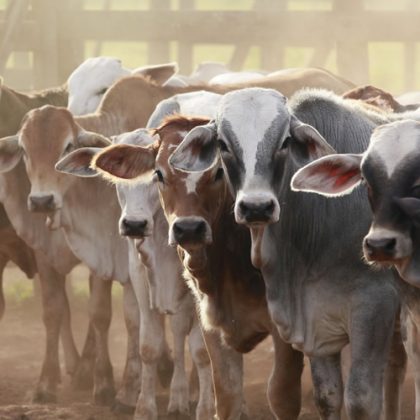
What’s the beef with beef?

It’s fair to say that beef is getting a bad press at the moment. Hundreds of column inches have been dedicated to the argument that – whichever way you slice it – beef is bad for the planet.…

Read more

Large-scale battery storage: Challenges and opportunities for technology and policy

Could a large-enough battery cushion the swings in wind and solar power? And can renewable energy be trusted, or are we just seeing technical challenges to implementation? In a recent review article published in MRS Energy & Sustainability, energy experts weigh in on these questions and consider the challenges and opportunities for technology and policy in relation to large-scale battery storage. The article also addresses a fascinating case study from South Australia, which currently houses the world's biggest battery.

Read more

Greening the Dark Side of Chocolate

A Qualitative Assessment to Inform Sustainable Supply Chains Fundamental changes are visible around the globe; part of Mozambique was recently flooded, large Californian forest areas have burned, and glaciers are shrinking.…

Read more

Making city infrastructure more resilient

The systems that help us heat and cool our homes, provide drinking water, take away our garbage, let us communicate instantly with one another and enable travel — collectively known as infrastructure — will need to be designed differently in the future to become more sustainable and resilient.

Read more

Engineering nature to make materials

New research published within MRS Bulletin explores how materials engineers are 'hacking life' using synthetic biology. This exciting new research could lead to sustainable solutions that benefit the health and technology industries.

Read more

Hydrogen: fuel of the future?

Hydrogen is the most abundant element in the universe. And as the race to find energy sources to replace our dwindling fossil fuel supplies continues, hydrogen is likely to play a crucial role.

Read more

The need of an ethics of planetary sustainability

How long will humankind survive? Besides the fact that we have been able to eliminate ourselves with nuclear weapons for decades, even without a third world war, the challenge to take care of the resources of our planet remains; we need to use them in a way that our children and their children can have a place on Earth as well. In this blog post Andreas Losch discusses his recent review article in the International Journal of Astrobiology, The need of an ethics of planetary sustainability

Read more

Waste not, want not: A Chicago sustainability story

The story of Chicago’s development is inextricably linked to its relationship with the natural environment, beginning 16,000 years ago when an enormous glacier sat on (and flattened) the land. Ever since, urban planners and policymakers have grappled with how to manage a city built on flat, swampy land, and what to do with the animal and human waste that accumulates in urban environments.

Read more

Hedging in the Anthropocene: the risks and rewards of a fossil fuel versus a photovoltaic energy supply

The climate is changing. We have left the Holocene and entered the Anthropocene, the era in which human enterprise is pushing the planetary functioning of essential cycles (e.g. of CO2) into a potentially unstable regime. Human enterprise, by burning fossil fuels for electrical, heat and motive power is the central cause of climate change, and is driven by an economic system that promotes insatiable consumption.
Read more